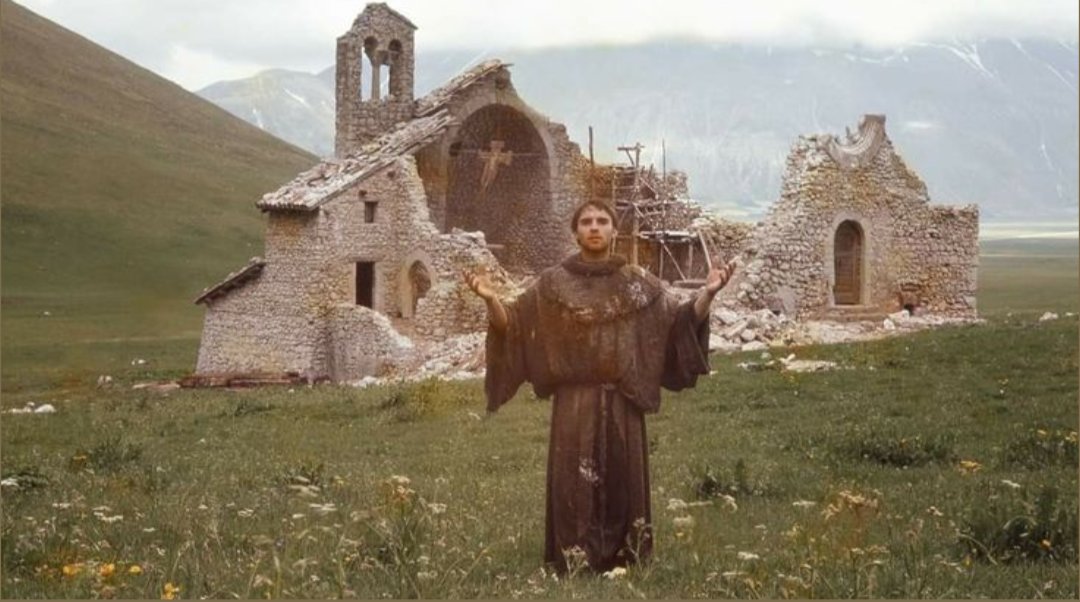
One of the all time great Pope Francis moments:
"If you do not love your country, I do not believe that you will be able to love Jesus and love God."
The people cheering give me chills.
"Love for one’s country is love for a mother, we call her “Mother Land”, because we are born here, and she teaches us, as every mother does, to walk, and she is entrusted to us so that she may survive for future generations. This is why I wanted to begin with this reference to the Mother, to our motherland. If you are not patriots – not isolationist patriots – real patriots, you are not going to achieve anything in life. May you love your land, young men and women."
I'm so glad we finally have the actual Vatican letter so everyone can see just how terribly the organizers were treated.
Here's what it says:
"Reverend Father,
In response to your letter of September 8 concerning the international Ad Petri Sedem pilgrimage, I inform you that it is not possible to grant your request.
Please accept, Reverend Father, the expression of my religious and devoted sentiments.
† Paolo Rudelli"
That's it.
Now, a few things worth noting...
First, we haven't seen the September 8 letter. We don't know exactly what was requested. Permission for the Mass? The procession? Use of a particular altar? We simply don't know.
Second, this pilgrimage was planned a year ago, yet the request referenced in this letter was dated SEPTEMBER 8. That's just six weeks before the pilgrimage.
Third, the Vatican responded on SEPTEMBER 30. Just 22 days later.
So this was not a last-minute decision made two days before the pilgrimage. The Vatican had issued its response more than three weeks earlier.
I've been organizing pilgrimages for two decades. Even when I'm bringing just 20 people, I often have to make requests six to nine months in advance. And I'm certainly not requesting a procession of hundreds of people or use of the Altar of the Chair.
The timing raises serious questions about how this was planned and communicated by the organizers.
But this letter does not establish that the Vatican mistreated anyone.
If the organizers have earlier correspondence showing what they requested, when they requested it, and how the Vatican responded, I'd genuinely like to see it.
Until then, what we actually have is a September 8 request and a September 30 response.
Twenty-two days.
And anyone who regularly deals with Vatican offices knows that's a remarkably quick turnaround.
Sometimes we do not see the immediate and visible results of the seeds we plant. Jesus calls us to be patient and to persevere. He assures us that our faithful witness, sacrifices, and good deeds will never be in vain. With his grace, they will bear much fruit. So, keep planting!
Our Lady of the Pillar, known in Spanish as Nuestra Señora del Pilar is venerated as the very first Marian apparition—predating all others by centuries—this extraordinary event occurred not in a vision after the Assumption, but through a miraculous bilocation while the Virgin Mary was still alive on earth. Her appearance to Saint James the Greater in A.D. 40 marks a pivotal moment in the spread of Christianity, transforming despair into devotion and laying the foundation for one of the world's oldest Marian shrines.
The story unfolds along the banks of the Ebro River in Zaragoza, Spain—then the Roman city of Caesaraugusta. Saint James, the brother of Saint John the Evangelist and one of Jesus' closest apostles, had ventured to Hispania on a missionary journey. Tasked with evangelizing the pagan tribes, he encountered fierce resistance and dishearteningly few conversions. Overwhelmed by failure, James knelt in prayer one night, his spirit nearly broken. It was then that Mary appeared, standing atop a jasper pillar and cradling the Child Jesus in her arms, surrounded by a host of angels. This was no ordinary vision; tradition holds it as a bilocation, with Mary physically present in Zaragoza while simultaneously residing with John in Jerusalem.
In a moment of profound tenderness, Mary consoled her "son" in the faith, urging him to persevere. "This pillar," she declared, pointing to the column beneath her feet, "will be the sign of my protection." She entrusted James and his eight disciples with a small wooden statue of herself—mere 15 inches tall—and instructed them to build a church on the spot. The pillar itself, a 5.9-foot column of reddish jasper, became the sacred heart of the shrine, symbolizing stability amid turmoil. Mary promised that this sanctuary would endure until the end of time, serving as a conduit for miracles and graces for all who sought her intercession. Emboldened, James completed the chapel, erecting the first church in history dedicated solely to the Virgin Mary.
Over nearly two millennia, the Basilica of Our Lady of the Pillar has stood as a testament to that promise, weathering invasions, wars, and natural disasters. The original structure, modest and unadorned, evolved into a Baroque masterpiece with 11 vibrant tiled domes, making it Spain's second-largest church. Its survival is nothing short of miraculous: during the Spanish Civil War in 1936–1939, three bombs dropped by communist forces pierced the roof and floor but failed to detonate, an event now commemorated by displaying the inert explosives on its walls. Such interventions underscore Mary's role as a steadfast "pillar" of faith, evoking the biblical imagery of stability and refuge.
The significance of Our Lady of the Pillar extends far beyond Zaragoza. As patroness of Spain and all Hispanic peoples, her feast day on October 12 holds deep cultural resonance. It was on this date in 1492 that Christopher Columbus first sighted the Americas, where the initial Mass on new shores was offered in her honor, linking her legacy to the evangelization of the New World. Devotees worldwide invoke her for strength in trials, viewing the statue—adorned with a sunburst crown of thousands of diamonds, pearls, and gems—as a beacon of maternal love.
In an age of fleeting certainties, Our Lady of the Pillar’s apparition to St. James was not merely a historical footnote but a timeless call to trust: amid the tempests of doubt, the Mother of God stands firm, inviting us to build our lives upon the unshakeable foundation of her Divine Son.
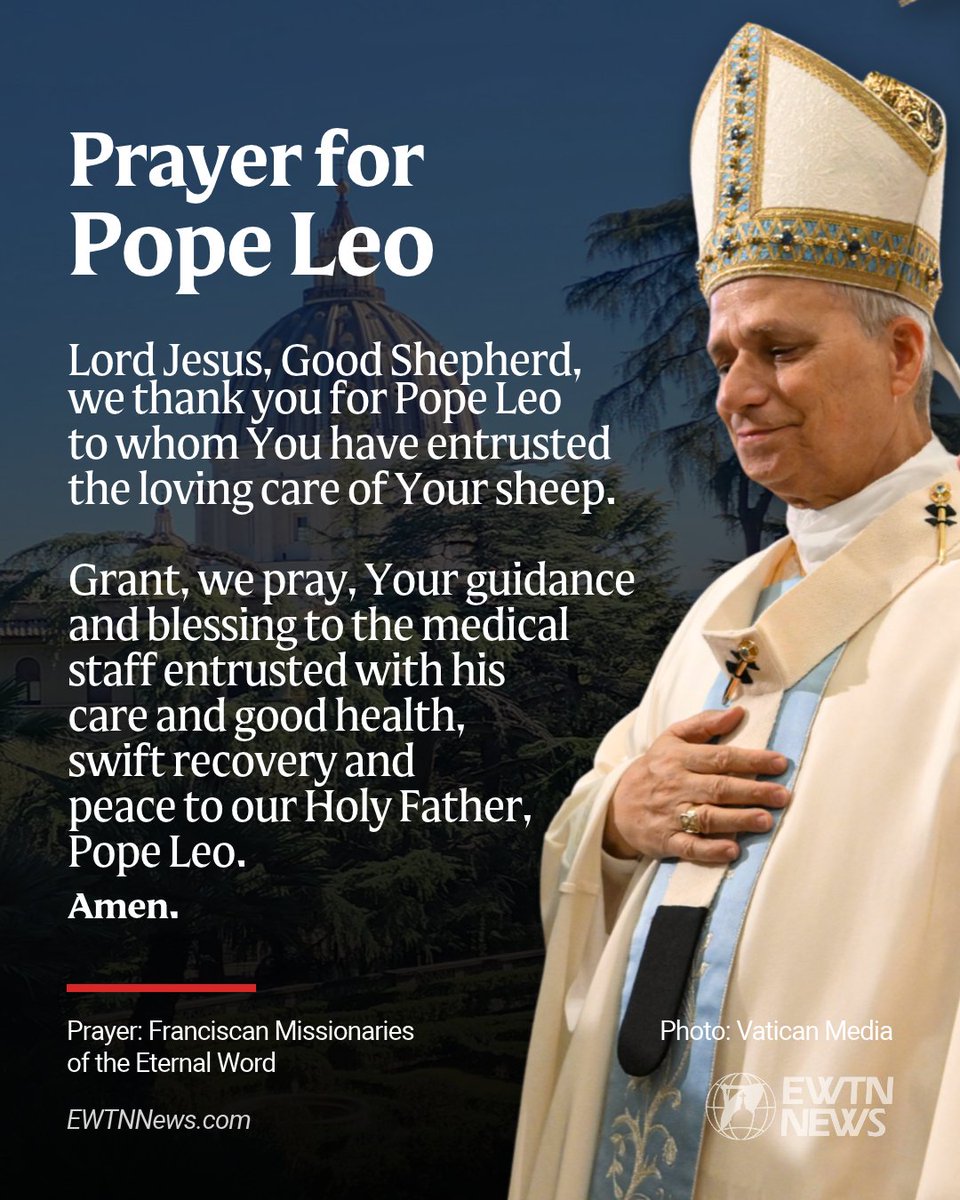
Pope Leo XIV has asked for our prayers as he prepares to undergo surgery this week. Let us unite in prayer for a successful procedure and a swift recovery.
Happy Feast Day of St. Carlo Acutis!
As we mark the day dedicated to the patron of computer programmers and young people, his mother, Antonia Salzano, shares the message her son would give to the world: “Life is precious and must not be wasted. We must make the most of our lives for eternity.”
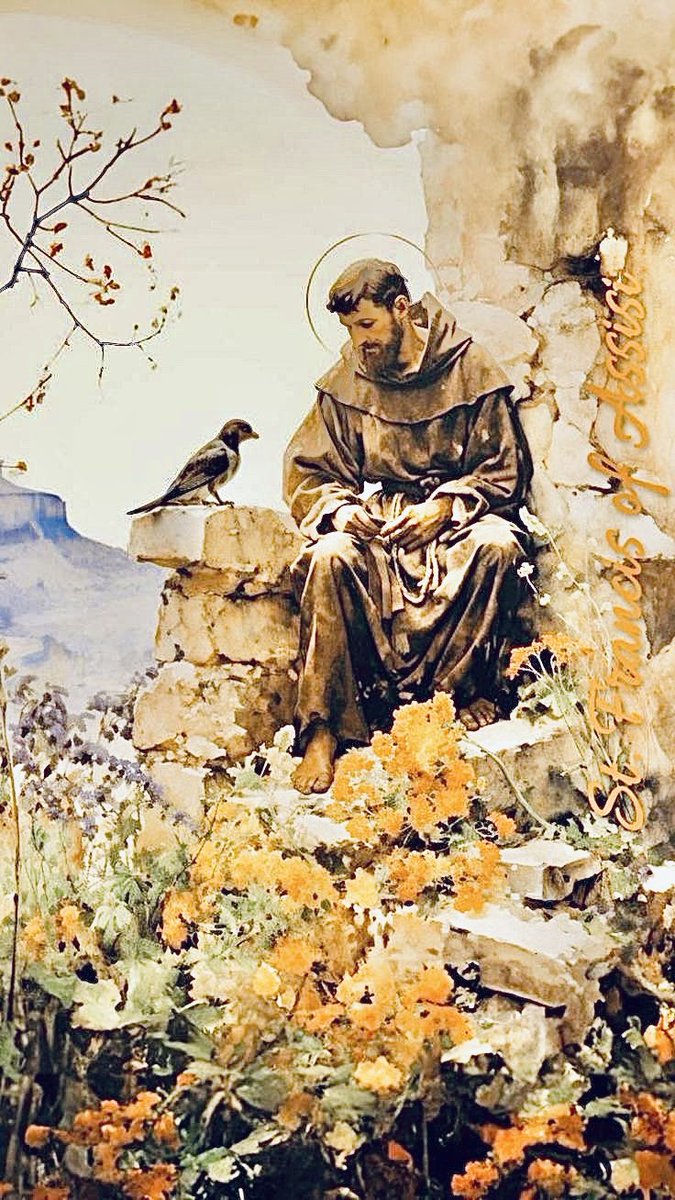
Today is the 800th Anniversary of the Blessed Transitus of St. Francis of Assisi- when the saint passed into Eternal glory. I’ve always loved this prayer of St Francis:
Most High and glorious God, enlighten the darkness of our hearts and give us a true faith, a certain hope and a perfect love. Give us a sense of the divine and knowledge of yourself, so that we may do everything in fulfillment of your holy will; through Jesus Christ our Lord. Amen. 🙏
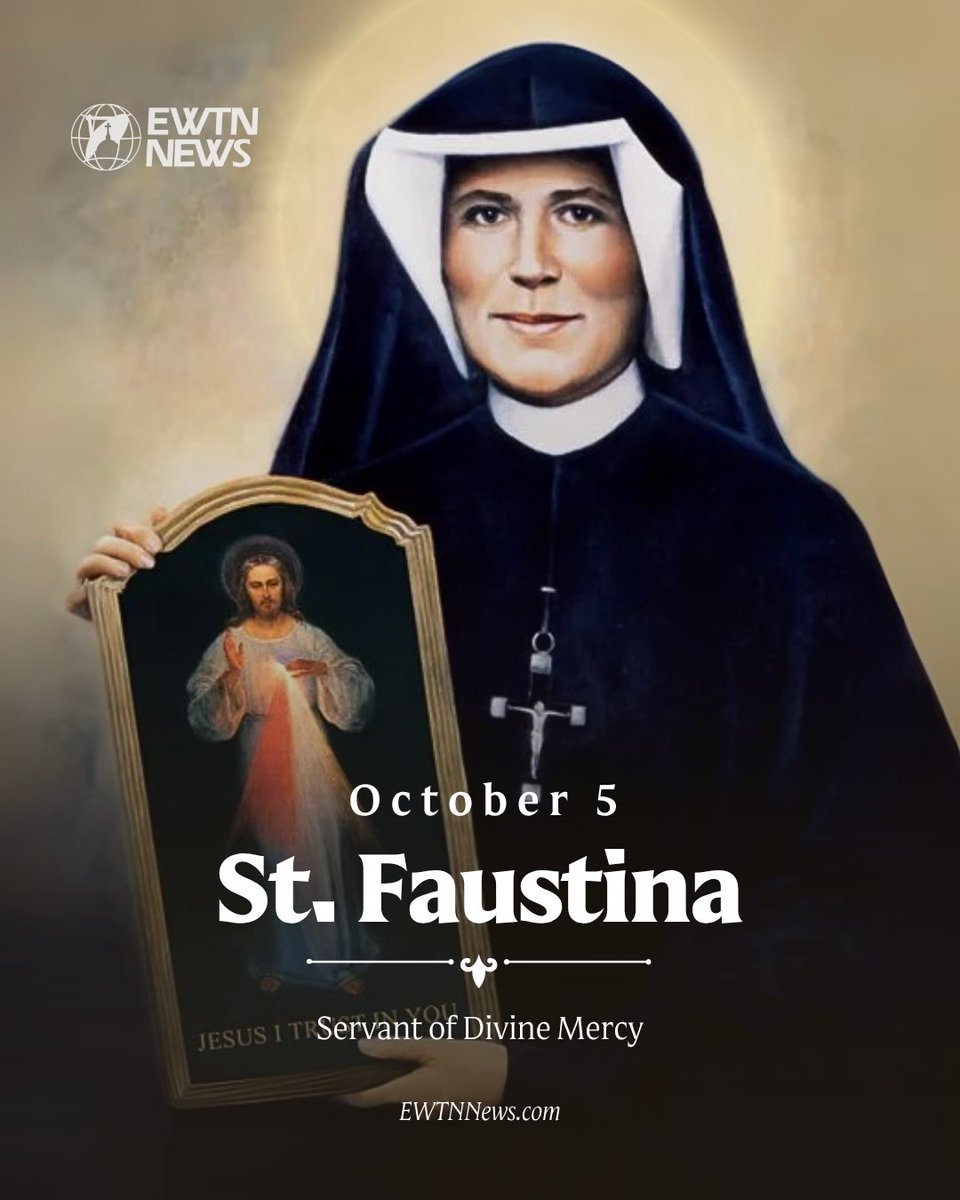
On October 5, the church celebrates the Memorial of St. Mary Faustina Kowalska, virgin.
St. Faustina was born Helena Kowalska on August 25, 1905 to a poor but devout Polish family in 1905. At the age of 20, with very little education, and having been rejected from several other convents because of her poverty and lack of education, Helen entered the Congregation of the Sisters of Our Lady of Mercy. There, she took the name Sr. Faustina and spent time in convents in both Poland and Lithuania.
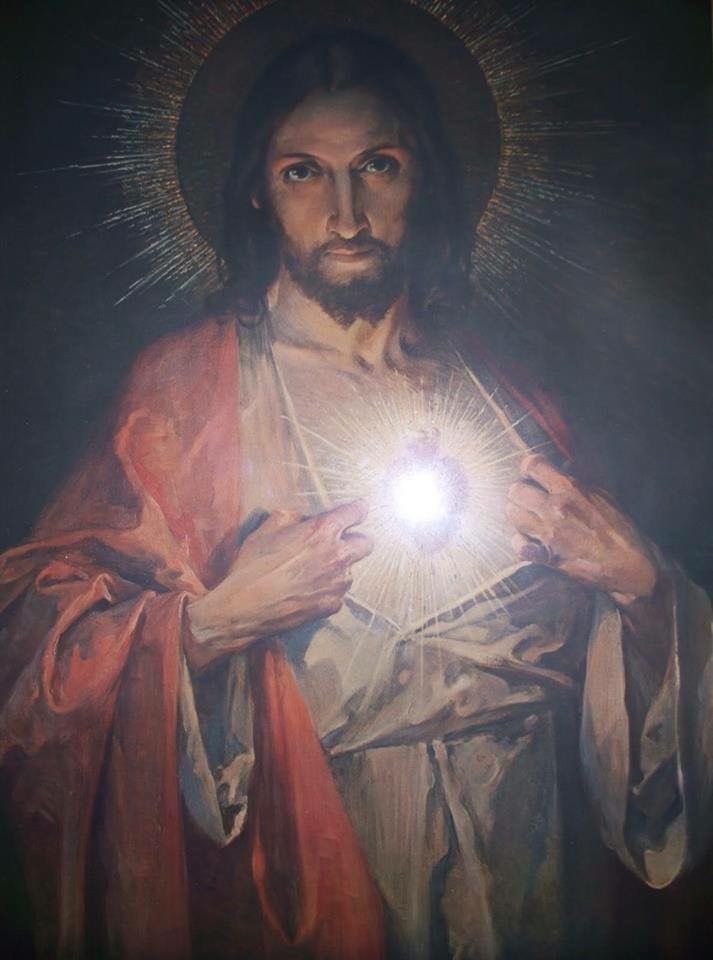
Throughout her life, Jesus appeared to Sr. Faustina. He asked her to become an apostle and secretary of his mercy, by writing down his messages of Divine Mercy for the world in her diary. Jesus also asked Sr. Faustina to have an image painted of his Divine Mercy, with red and white rays issuing from his heart, and to spread devotion to the Divine Mercy novena.
Even before her death on October 5, 1938, devotion to Divine Mercy began to spread throughout Poland.This little nun and Jesus’ message of Divine Mercy impacted Karol Wojtyla greatly, which became obvious to the world when he was elected Pope.
“It is truly marvelous how her devotion to the merciful Jesus is spreading in our contemporary world and gaining so many human hearts! This is doubtlessly a sign of the times — a sign of our twentieth century. The balance of this century, which is now ending, in addition to the advances which have often surpassed those of preceding eras, presents a deep restlessness and fear of the future. Where, if not in the Divine Mercy, can the world find refuge and the light of hope? Believers understand that perfectly,” Pope St. John Paul II wrote.
More: https://t.co/opkLWyarjJ