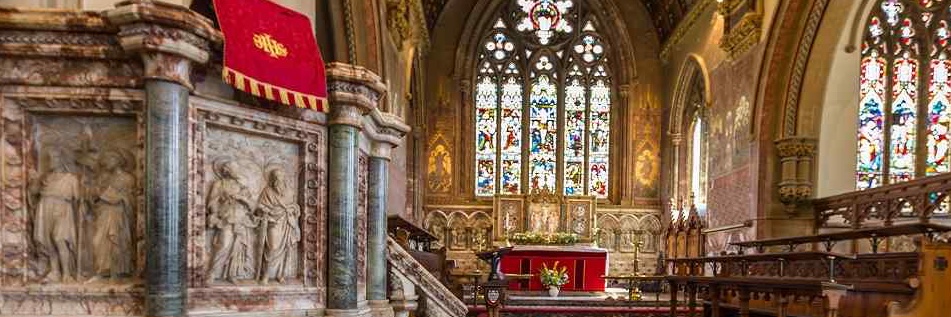
@JonathanNS1685@liturgicalben Yes, our the local communities are often supportive regardless of their worshipping habits. Which is exactly why they shouldn’t be told “no you can’t have the chairs you want - you have to have these less comfy & more expensive ones, because that’s what the Vic Soc prefer”.
The Church of England - or any other church - is not a buildings preservation society. However, it is reasonable for us to be responsible custodians of buildings we actually want and use.
Therefore, a modestly radical proposal: (1/n)
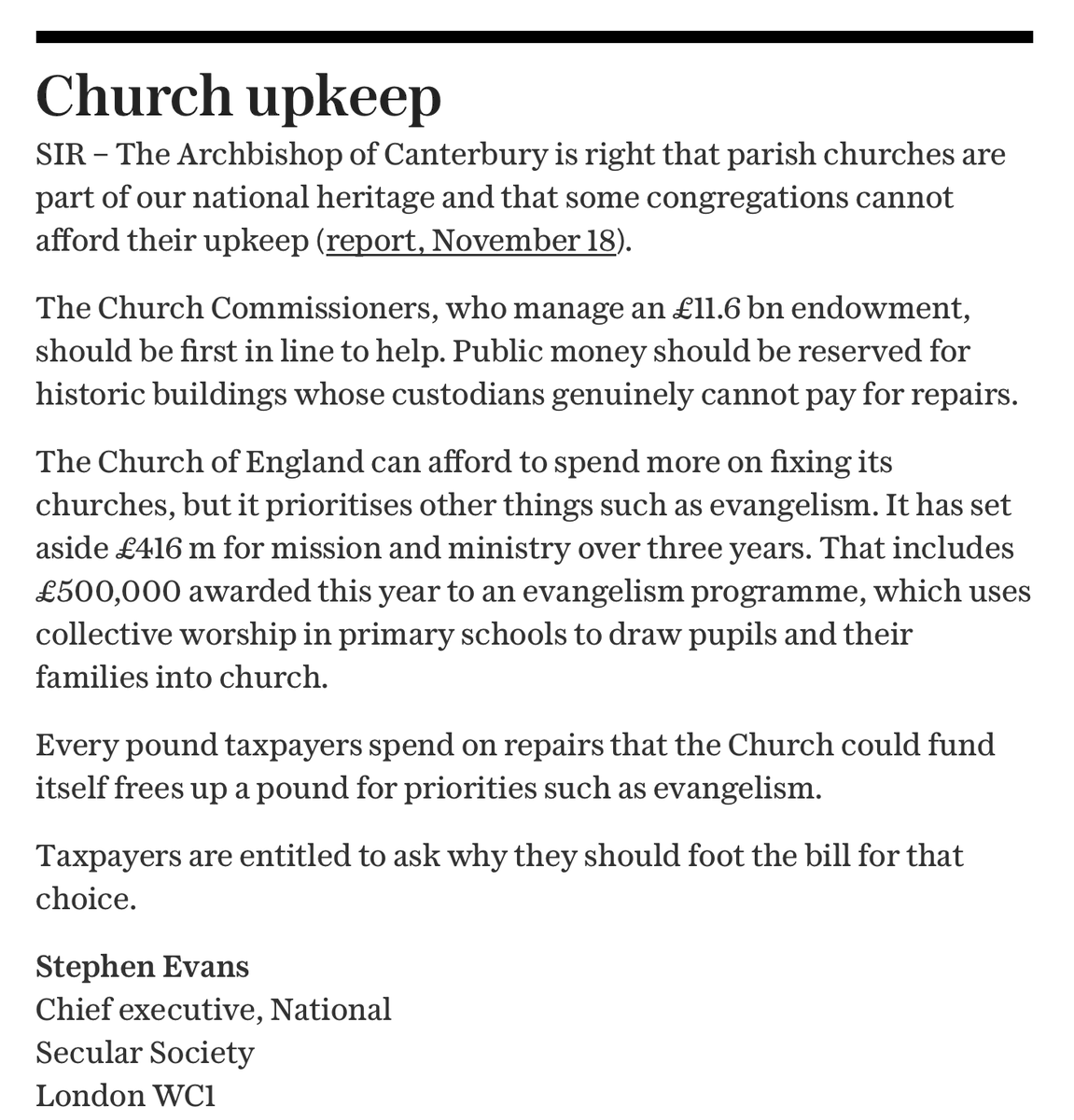
My letter in today’s Telegraph. The Archbishop of Canterbury is asking for public money to repair churches. The Church has an £11.6bn endowment and chooses to prioritise other things, like evangelism. Why should taxpayers foot the bill for the Church’s spending choices?
In summary: the church should pay for *churches*. But it shouldn’t pay for *preserving historic buildings*. And it’s about time the people who are only interested in the second started paying the bills they’re imposing on people who are focused on the first. (8/8)
A church building is a place for a living community to gather in living worship of the living God - and it’s right that the church foot the bill for that. But those who only want the building preserved as a monument shouldn’t expect the church to do that for them. (7/n)
@Psephizo@kayaburgess@MadsDavies@WalkerMarcus There is also the issue of what *isn’t* in the file, e.g. responses to requests for episcopal references in unsuccessful applications - which might explain why a cleric might suddenly find themself unable to get any interviews for posts after a change of diocesan leadership.
@talkChristianly@ChurchTimes Since that part isn’t in quotes, maybe it’s an assumption made by the reporter? I suspect the actual answer to ‘what if a cathedral goes bankrupt’ is the same as I got when I asked ‘what if a diocese goes bankrupt’ - which was, “we don’t know, but we’ll soon find out”.
@liambeadle@2D0XPS@Rgt71Robert Yes, because every marriage between a man and a woman is ‘typologically’ fulfilling this purpose. There are many reasons other than age why a specific union might not result in children, but that does not in itself invalidate either that marriage or the purpose described.
@joannacollicutt@RevMichaelLakey@MadsDavies Objections which might, in some cases, be assuaged if the legal and theological/doctrinal bases weren’t being presented (again, cf. the LLF process) as “trust us, it’s all fine, you don’t need to know any more than that”.
@liambeadle To be clear - I’m not saying the latter explanation is true (or that yours isn’t - it may well be). But either *could* be true, and some ‘progressive’ voices don’t seem to be able to even conceive the possibility that they might not have overwhelming support.
@liambeadle Fair enough in a specific case. But thinking more widely, pro-marriage-change commentary often seems to start from the premise that ‘the conservatives must be gaming the system’, and never considers the alternative explanation that most people don’t actually want changes.
@joannacollicutt@RevMichaelLakey@MadsDavies I think part of the disquiet about Project Spire stems from the feeling that it is just another example of how “central church” seems to be willing to spend money on everything *except* “normal” ministry in “normal” parishes. SMMIB feels the same way.
I don’t usually do shameless self-promotion on here. But…
Please consider this hymn for Remembrance Sunday. It comes with its own tune, but was first sung to ‘Diademata’ - so use that one if you prefer!
https://t.co/mPqBCJiZAU
@liturgicalben If nothing significant changes, then my not-entirely-uninformed guesstimate answer to the first question is “less than three years, and quite possibly less than two”.
@WalkerMarcus I fear that the destruction of continuity of the state and its legal system may *be* the justification, albeit not one that the architects of this change would be foolish enough to say in public.