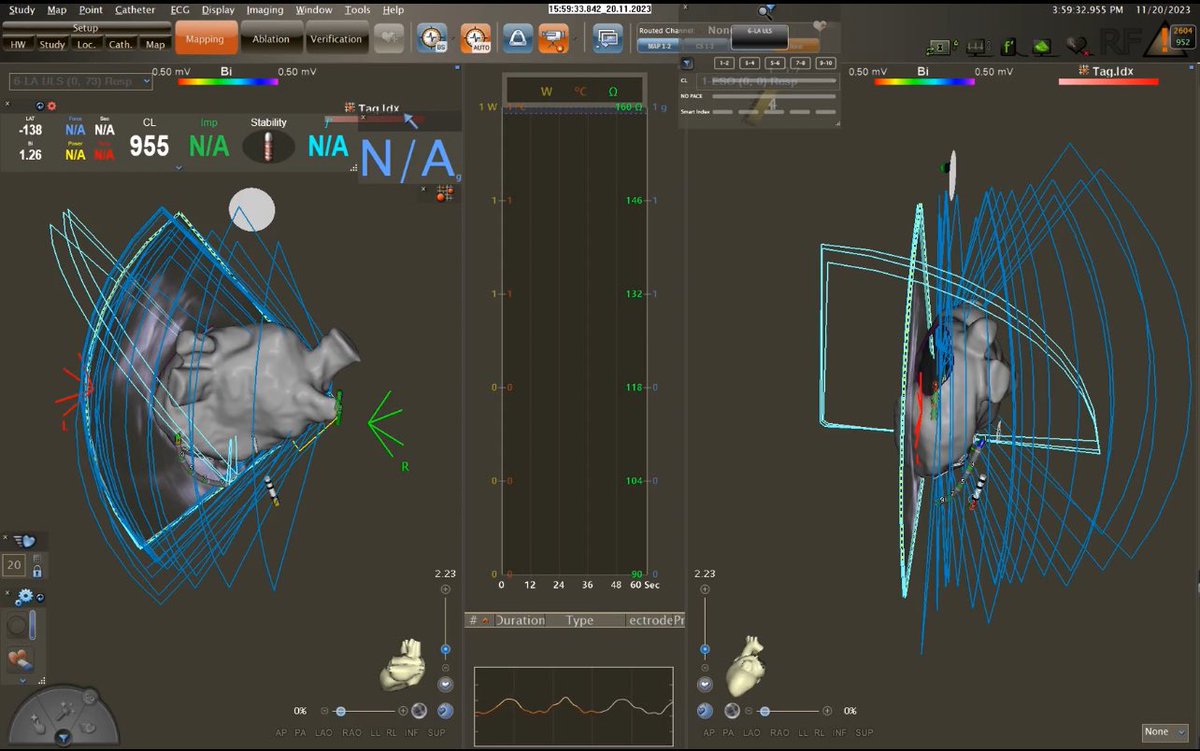
Doing the workflow is important.
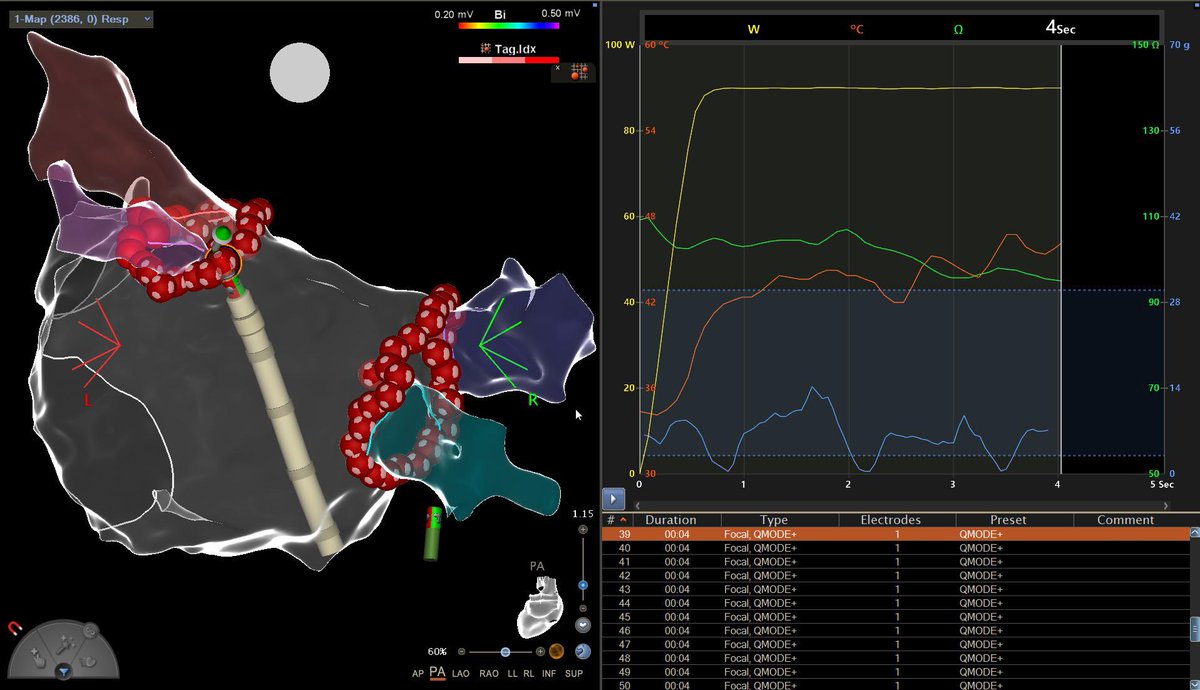
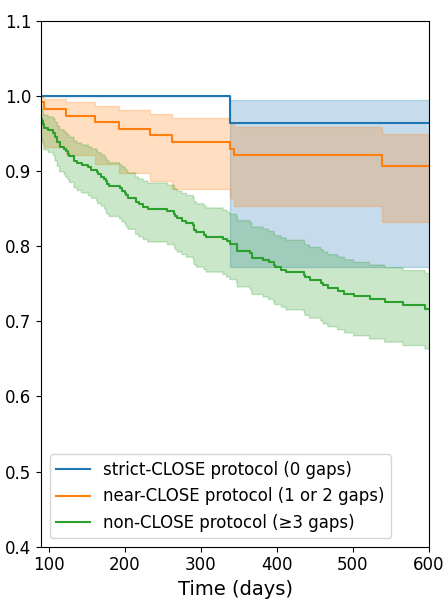
Measuring whether it was truly followed may be even more important.
https://t.co/Fq6fpgvek1
New paper in Revista Española de Cardiología
@RevEspCardiol explores strict intertag distance measurement in and its impact on AF ablation.
#EPeeps
Successful ablation of intermitent focal atrial tachycardia, discovered after PVI ablation, on the anterior aspect of the LA, precisely targeting the imprint near the aortic root.
Atrial or aortic origin? ⚡️🔥 #EPeeps#HUPM#Cadiz@EPeeps_Bot@EF_Cardiaca
Proud to announce that our team has just published an article in the Europace journal!
"Functional mapping to reveal slow conduction and substrate progression in atrial fibrillation"
https://t.co/52IPdudfeO
#Research#EuropaceJournal#EPeeps@EPeeps_Bot
1/2 ⏳
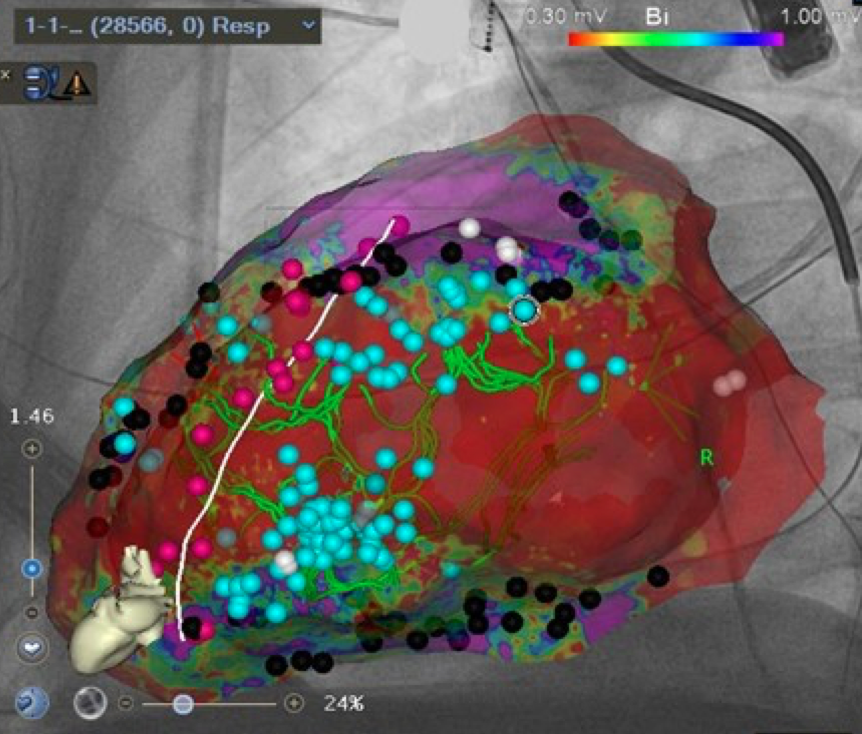
Mapa de sustrato epicárdico en RS. Extensa zona de cicatriz parcheada con afectación VI. EGM anormales anotados como entradas e internos (puntos negros y azules, respectivamente). Puntos rosas de captura frénica.
#EPeeps@EPeeps_Bot@EF_Cardiaca#HUPM
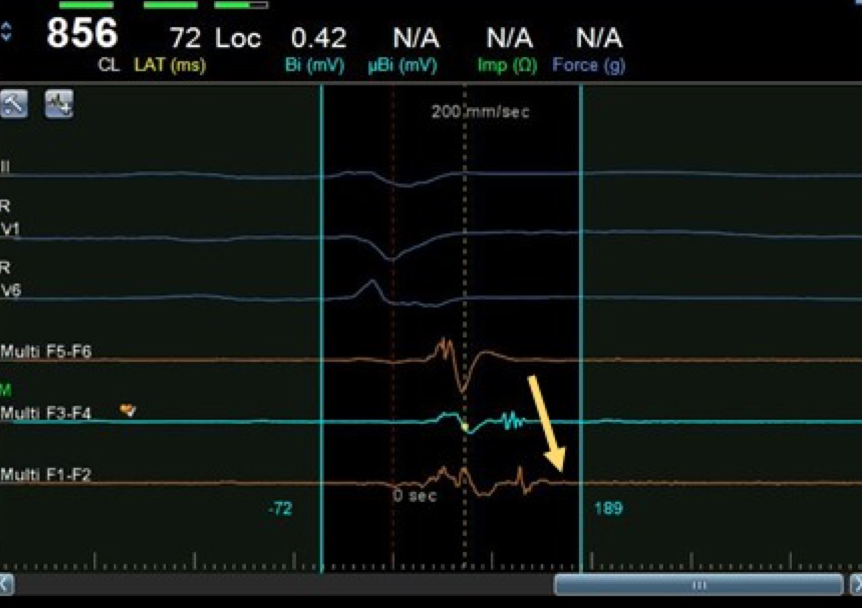
Mapa de sustrato. Canal de conducción lenta. Entrada a nivel basal (fusión EGM local y de campo lejano). EGM retrasados con activación concéntrica. A nivel apical no se localizan electrogramas con componente retrasado precoz (X).
¿Salida intramiocárdica?
Cicatriz epicárdica extensa lateral y mapa endocárdico normal.
Mapa en taquicardia identificando el istmo y ablación efectiva (Rf on). Mapa epicárdico sin completar el circuito de la TV.
#EPeeps@EPeeps_Bot@EF_Cardiaca#HUPM#Cádiz
High Frecquency Low Tidal (HFLT) in PVI
Real time Contact Force in patient w/Long PersAF.
Before starting right WACA, please see CF oscillation, from 5 gr to 50 gr.
After starting HFLT, CF becomes more stable.
Thanks @josoriomd for teaching this.
@BiosenseWebster
Have you ever seen a VT with the conduction channel between the LV and the RV going through the septum? I do not. 69 years old HCM with apical aneurysm. EF 40%Several ICD shocks. Map in VT well tolerated.#EPeeps#AblateVT@FSetienDodero@PumarinoGarcia
Even a typical atrial flutter may be not that typical😅
RF ablation through azygos vein in a patient with interruption of IVC. Not difficult to achieve line block,using steerable sheath to assess good contact.Thanks @SantiFdezT for superb technical support! #EPeeps#CardioTwitter
#Epeeps look,how COHERENT Algorithm @biosenseWebster can help us to understand the tachy mechanism (localized septal reentry+perimirtal reentry),when LAT gives no clue…PVI+septal line ➡️Termination,no induction
@evgeny_lyan@ThomasDemming@Adam_Kollek#EP_Kiel#Cardiotwitter
#EPeeps Activation map of the initial dual loop re-entrant tachycardia. The common isthmus in the posterior LA is shown with re-entry around an area of posterior scar and around the LSPV and RSPV. REDO AF
@Scanav1Mauricio
@BiosenseWebster
@LAHRSonline1@MujerSIAC#WomenInEP
Usefulness of the CARTOUNIVU® system in the ablation of a
typical atrial flutter in a patient with a mechanical tricuspid
prosthesis.
#EPeeps#EP_Bot#HUPM#Cádiz
Excited to perform the first AF ablation using the #QDOT MICRO catheter in our lab. A great experience. Thanks to the @BiosenseWebster team, @JNJNews and @JuanPabloBW1. The first of many.
#EPeeps#EP_Bot#HUPM#Cádiz
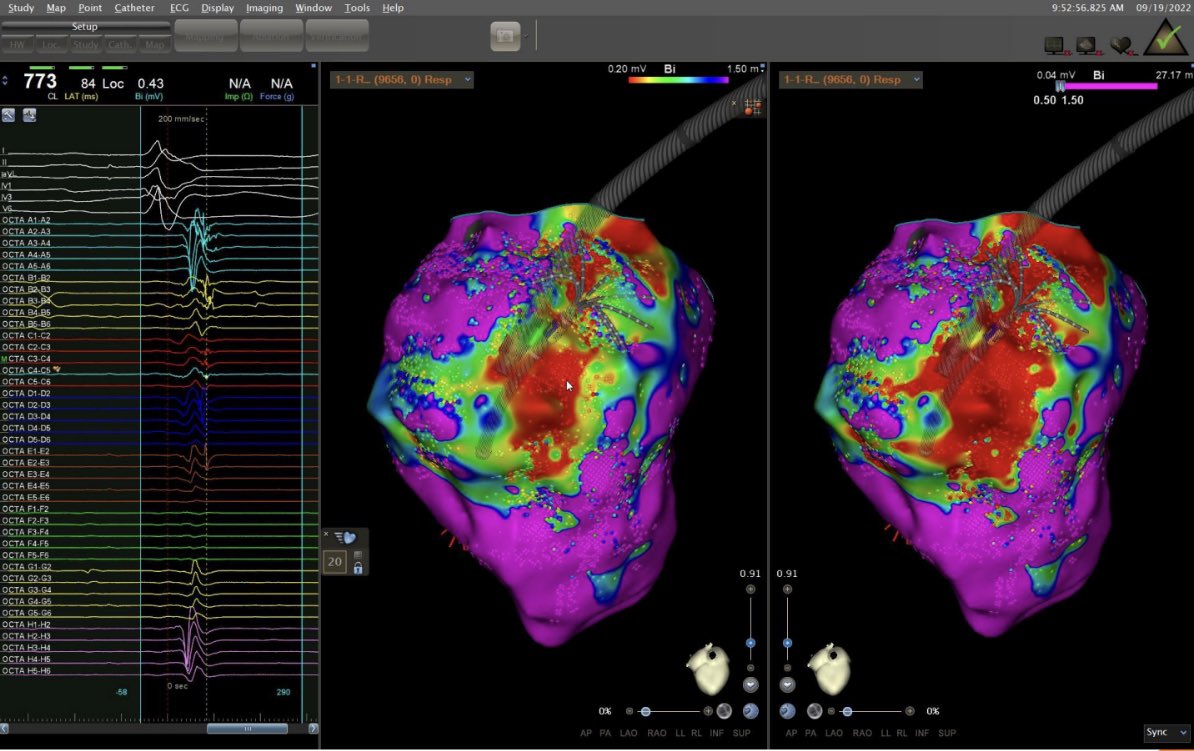
Flúter ístmico en paciente congénito. Se remapea con OCTARAY y se aprecia gap medio y distal. Cesa flúter con aplicación puntual. Imágenes ilustrativas que muestran el bloqueo bidireccional con un solo catéter (OCTARAY). Aplicable a otras líneas de ablación (techo, i. mitral…)