Existing lagea 2 meses, la medida lead es New Home Sales, ergo esto refleja pico pasado de tasas. NHS SAAR -4%oya (a sep). Existing tiene efecto lock-in xq vendedores no quieren desprenderse de hipoteca baja y retrae oferta. NHS median px -3%. Tasas > housing mas que rec gral
Saltaron todos los bancos a bajar su price target de NVIDIA. Me impresiona la cara de piedra para presentar opiniones con valor cero. La perla negra Wells Fargo, bajó su PT de 315 a 300
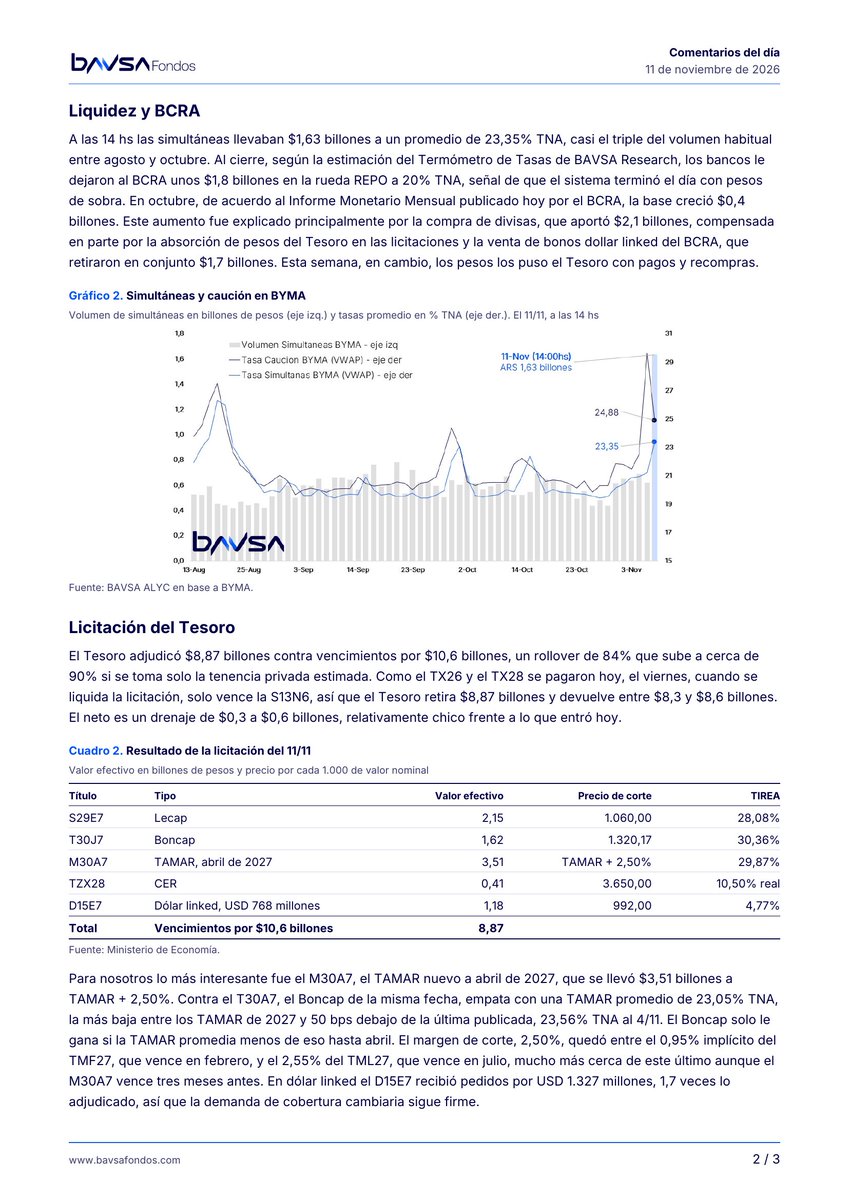
@FrancisMinieri Jajajajaa si hubieran sido 10 palos no habría sido el tema de la semana. Se opero casi medio billón de pesos a un promedio implícito del 111%.
No puedo evitar pensar en lo que habrán sufrido los padres de este imbécil. Un buen resultado no convierte una mala decisión en buena. Concepto que aplica también a la administración de riesgo del portafolio
In the summer of 2008, extreme sports legend Travis Pastrana performed one of the most daring stunts imaginable: jumping from an airplane without wearing a parachute.
As he plummeted toward Earth at tremendous speed, Pastrana relied entirely on a team of experienced skydivers to intercept him in midair. The stunt demanded extraordinary coordination, precise timing, and complete trust, as his friends maneuvered into position, caught him during freefall, and helped bring him safely back to the ground using their parachutes.
What made the stunt so remarkable wasn’t simply the danger involved, but the incredible level of faith Pastrana placed in the people around him. A single mistake could have been fatal, yet the team successfully executed a maneuver that seemed almost impossible.
More than just another extreme sports spectacle, the jump became an unforgettable demonstration of teamwork, courage, and trust under extraordinary circumstances. Pastrana literally put his life in his friends’ hands while falling from the sky.
Jamás comprenderé porque hablan del "cierre" de la caución como si fuera el cierre de un título. Es absolutamente irrelevante si se tomaron 10 palos al 190% en la previa de un feriado. Lo único relevante es comparar promedio ponderado de todo lo que se colocó en el día.
La caución pasó de 190% a 9,5% TNA en dos ruedas.
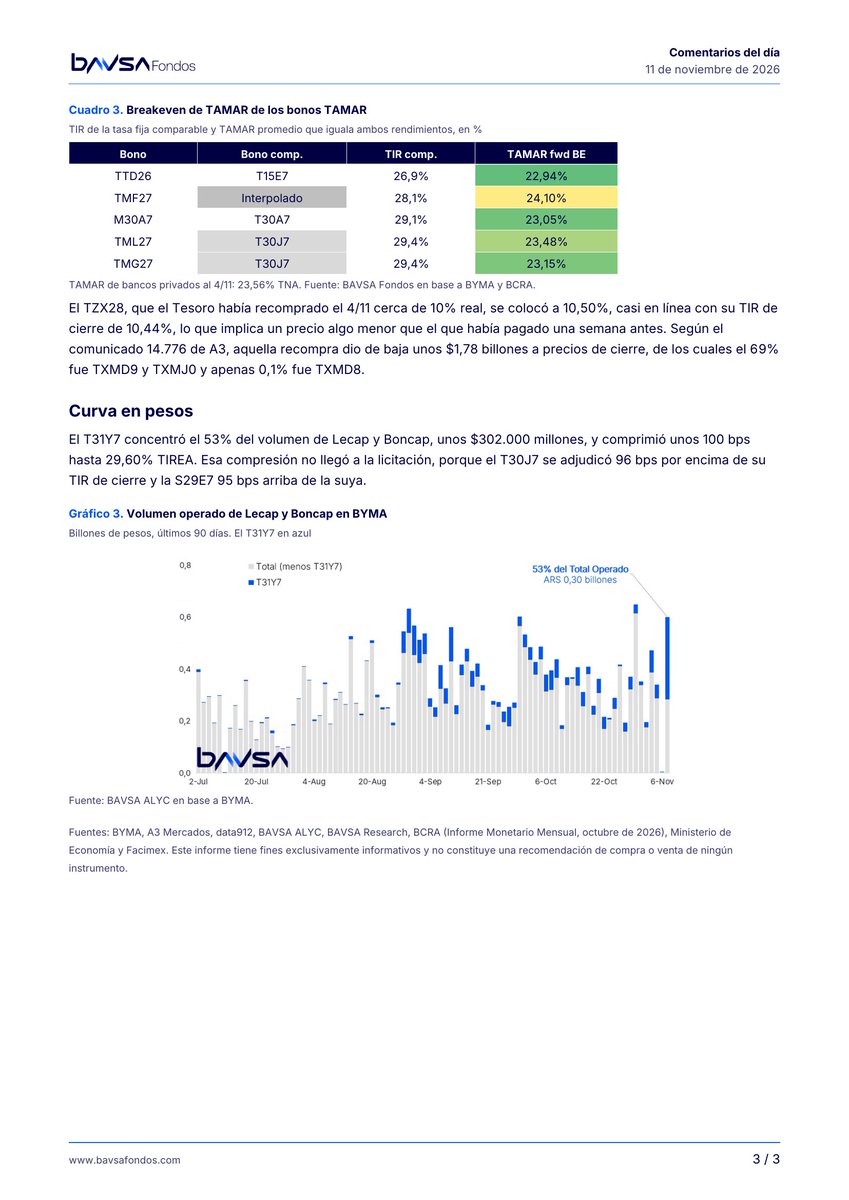
El jueves pesó la demanda por el encaje de 6 días. Hoy pesó la llegada tardía de los pagos del Tesoro, que recién se soltaron después de las 14 hs. En el informe, además, la licitación, los breakevens de TAMAR y la curva.
Escuchar. Y es lo que terminara pasando. Espero sea antes de que los extingan. Porque a los primeros que iran a buscar es a ellos, zurdos y putos, y luego iran por los cristianos, judios y ateos. La derecha es la unica garantia de eso que llaman "minorias"
Adicionalmente, sería verdaderamente revolucionario que se use en estructuras para financiar capital de trabajo de pymes así no vuelan a la primera crisis.
Con la puesta en marcha de los FAL, habra una demanda de hasta $250.000 millones mensuales de bonos en pesos del Tesoro argentino.
Este flujo comprador estructural contribuiría a comprimir las tasas de interés y mejorar las condiciones de financiamiento del Tesoro.
El efecto sobre el riesgo país sería indirecto, pero relevante: menores costos de financiamiento en pesos y una mayor capacidad de refinanciación reducen las necesidades de financiamiento en dólares y pueden mejorar la percepción de solvencia soberana.
Un factor positivo que el mercado no debería subestimar.
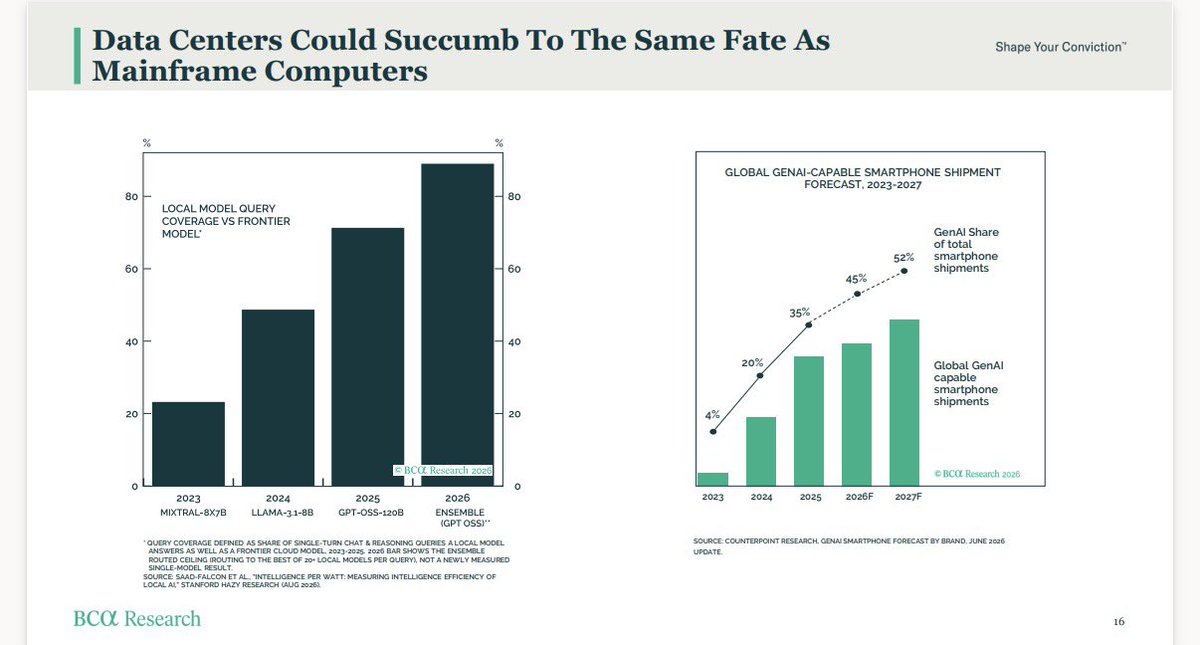
Local AI models, which are run on a laptop or smartphone, are becoming increasingly capable. Future phones will be able to perform most of the inference that data centers currently do. What will happen to the trillions of dollars spent on data centers then?
Here's some fuel for all the Europoor haters:
Germany just told us we'd have to fire one of our 3 founders to qualify for funding.
I was in talks with a German state-backed fund of fund managing billions, with one single mandate: invest in German funds to drive innovation and economic growth in the country.
They literally told me they like us a lot and are also impressed by our track record and performance so far, and even though not everyone in their team is a fan of our thesis, they believe in it.
But they passed for a whole different reason:
Because our all-male team of 3 people isn't "diverse enough" lol.
they literally told me: hire two more female partners (impossible on the economics of a fund our size), or let one of the three of us go to make room for a quota hire. do that, and they'd strongly consider investing.
I won't even get into how discriminatory this is toward men in the first place. nobody takes that seriously anyway, and honestly I don't care.
but what actually gets me is something bigger: as a German, I have to face the fact that the whole world continuing to laugh at Germany and overall Europe is completely justified.
a system that quietly kills the smallest, hungriest teams, the exact ones this money was created to support. and then everyone acts surprised that talent and capital keep leaving the country.
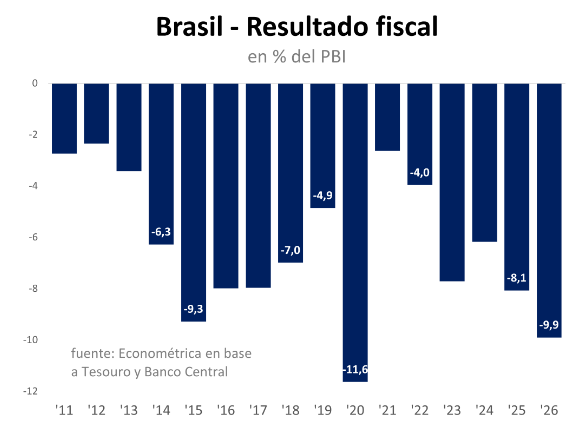
Jair Bolsonaro recibió la economía Brasilera con déficit primario del 2%. Terminó su mandato en 2022 con superávit primario del 2.4% y un déficit fiscal del 4% del PBI.
Lula en su actual presidencia volvió al déficit primario del 0.7% y amplió el déficit fiscal a casi el 10% del PBI.
La deuda pública de Brasil en 2013 era del 60% del PBI. Este año terminará en torno al 100%.
Deuda cada mas grande y que paga mas intereses que no se licúan.
El principal peso de las cuentas públicas en el país vecino son los intereses de la deuda (96% en moneda local) con elevada tasa (actualmente en el 14% versus inflación anual debajo del 4%).
Actualmente los intereses de deuda representan el 8.7% del PBI, el valor mas alto en 10 años para el país y se convirtieron en el segundo mayor componente del gasto público de Brasil.
Brasil destina mas dinero al pago de intereses de su deuda que a Educación, Salud, Seguridad y Defensa. No se escuchan muchas críticas a eso.
Cuadro de los amigos de Econométrica.
Poca profundidad. Culpa de clase.
Para @liendovictoria , el macrismo tuvo poder, pero le faltó algo más difícil de conseguir: profundidad.
Una mirada incómoda sobre una fuerza política que quiso cambiar la Argentina.
Me pregunto que hubiera titulado LN si el abogado personal de Milei hubiera extendido el horario de votación, con efecto en algunas zonas del país y en otras no. Los insultos no van, pero la verdad dan pena los medios tradicionales. Gracias Elon.
The point of no return by Richard von Mises is worth reading:
"A state becomes almost unreformable when the majority of the population is financially or structurally dependent on the state (state employees, civil servants, recipients of subsidies, grants, or transfer payments, etc.). As soon as those who net benefit from or are supported by the state outnumber those who do not, the system blocks reforms, since the majority votes out of self-interest for the preservation or expansion of state services."
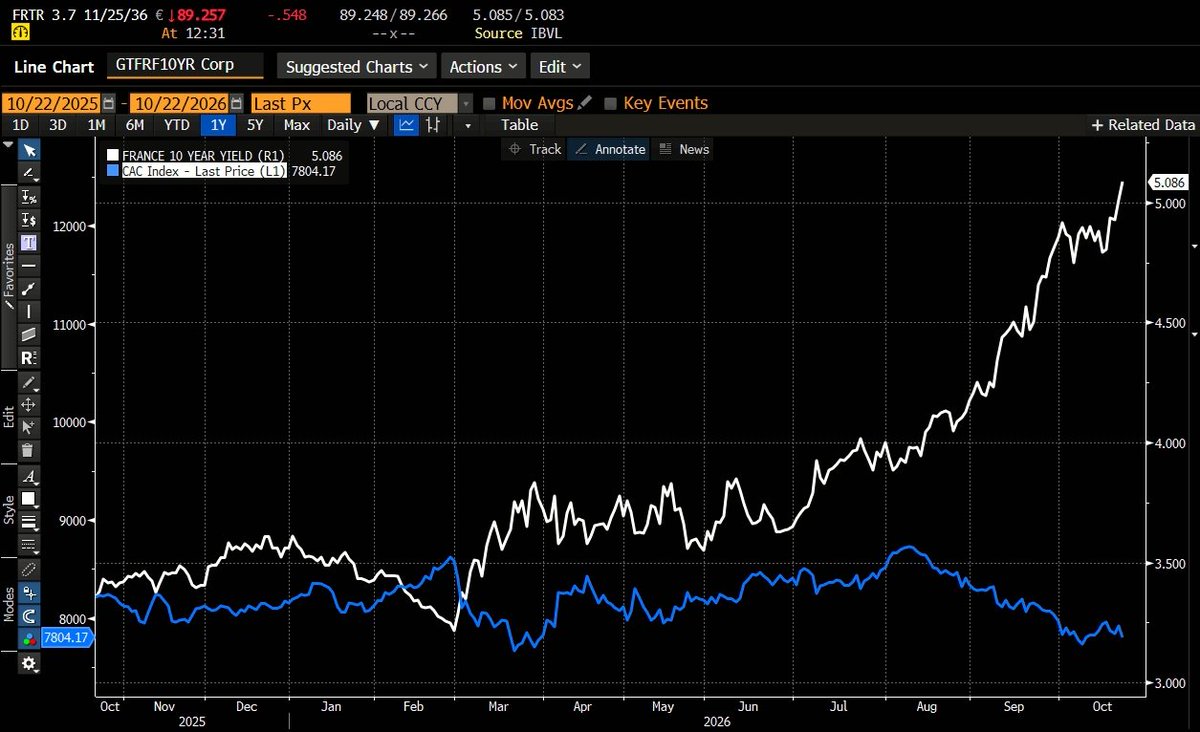
Does this sound familiar? Some European countries, France, Belgium, Finland are already way beyond that point, closely followed by Germany, Spain, Austria and Italy. It works for a while, as long as markets buy more sovereign debt at reasonable interest rates. The party ends when they stop though. For France, they stopped this month, Belgium will be next.
The longer the socialist illusion persists, the more painful the inevitable cuts and adjustments will be. It’s pure arithmetic. Good luck Europe, good luck Euro. Buckle up, it won’t be pretty.
🦔The riskiest corporate borrowers in America are losing access to money. Bonds from companies rated CCC, the lowest rung of junk, now pay their highest yields since the pandemic, and companies pulled more than $5 billion in planned bond and loan sales this month as buyers walked away. One fund manager woke up Thursday to a 5 a.m. message from a colleague that just said “total meltdown.”
My Take
A junk bond is a loan to a company that might not pay you back, so investors demand a big interest rate to take the chance. When that rate jumps, the weakest companies can’t refinance their old debt, and some of them go bust. AI squeezes this market from two sides. Lenders are nervous about the companies borrowing hundreds of billions to build AI, and they also want out of companies AI threatens, like older software firms and cable providers that keep losing customers to streaming and Starlink.
This is the usual order when credit turns. Trouble starts with the weakest borrowers and spreads up, and this month it moved from junk bonds to high-grade bonds and the cost of insuring blue-chip debt.
Some big investors say it’s just a few bad companies. I don’t buy that with oil over $100 and the Fed unlikely to cut. I expect more defaults next year, mostly from companies carrying cheap pandemic-era debt they can’t refinance at today’s rates. If you own a high-yield bond fund for the income, look at what’s in it, because that’s where we'll see the damage show up first.
Hedgie🤗
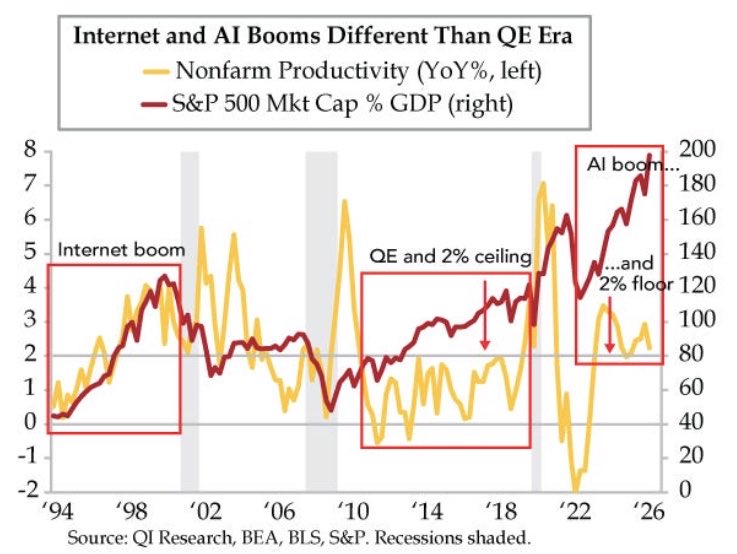
Poco relevante, 35% de las ventas ganancias vienen de afuera. Multinacionales que producen afuera y venden en todo el mundo. Con la globalizacion este indicador ha perdido relevancia.
"Embotellamiento"
Por este video que explica por qué se generan los embotellamientos en autopistas aún cuando no hay un accidente, y enseña un truco para evitarlos.
The French bond rout is spreading to banks, despite their recent core capital improvements and strength accumulated in the past years.
In the euro area, 70% to 80% of external corporate financing for firms comes through bank loans. Only a small minority of companies issue corporate bonds or raise capital through public equity markets.
In the United States, less than 20% to 25% of corporate debt relies on traditional bank credit. The remaining 75%-80% is secured directly through capital markets.
https://t.co/sXhoAC2p36