The University of Eldoret celebrates the recognition of Dr. Frank Masese during the inaugural National Outstanding Research Awards (NORA) organized by NRF Kenya during the National Research Festival 2024 held on 23rd August, 2024. @UoE_Main@nrfkenya
https://t.co/udUhfAR3DY
The curtains are coming down on the Kenya NRF Festival 2024. Among the events is the recognition of top scientists in Kenya with National Outstanding Research Awards (NORA).
Afisa Wa polisi nchini Kenya akiwasaidia waandamanaji Kwa kuwapa Maji, Wakati waandamanaji Hao walivyo Andaman siku YA leo.
@tanpol mnalo la kujifunza hapa!
@DRYvER_H2020 final conference on September 23-25, 2024. Join freely online for a glimpse of all exciting research done, explore synergies with research groups & prepare the future research on drying river networks: https://t.co/4fkfpR7qeC
Looking forward to welcoming you online!
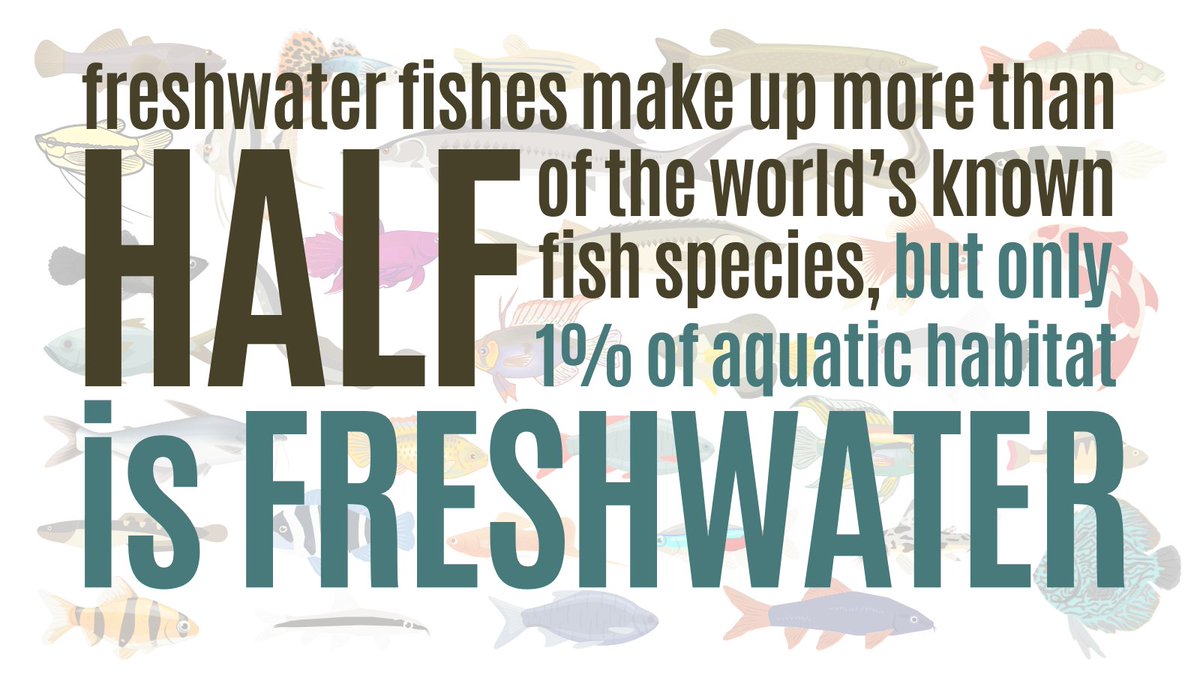
🐟 Global migratory fish populations have declined by 81% since 1970
📉 Due to habitat degradation - particularly river barriers - human over-exploitation, pollution & climate change
🌿 But positive signs that restoration can help reverse trend
https://t.co/ntgYnaLxjP
Excited to share our new paper with Dr. Frau in Ecohydrology: "Phytoplankton species and traits response to a gradient of urbanization in subtropical lowland streams." #urban#phytoplankton@NeolimnosRCL@nupelia_uem@EcohydrologyEds .
Read more: https://t.co/fpASN4UrFQ
New paper in L&O Letters showing high variations of #CO2 in #Streams and above streams in the air on short spatial and temporal scales
Interested? Check it out here👇
https://t.co/qloJdKmKQU
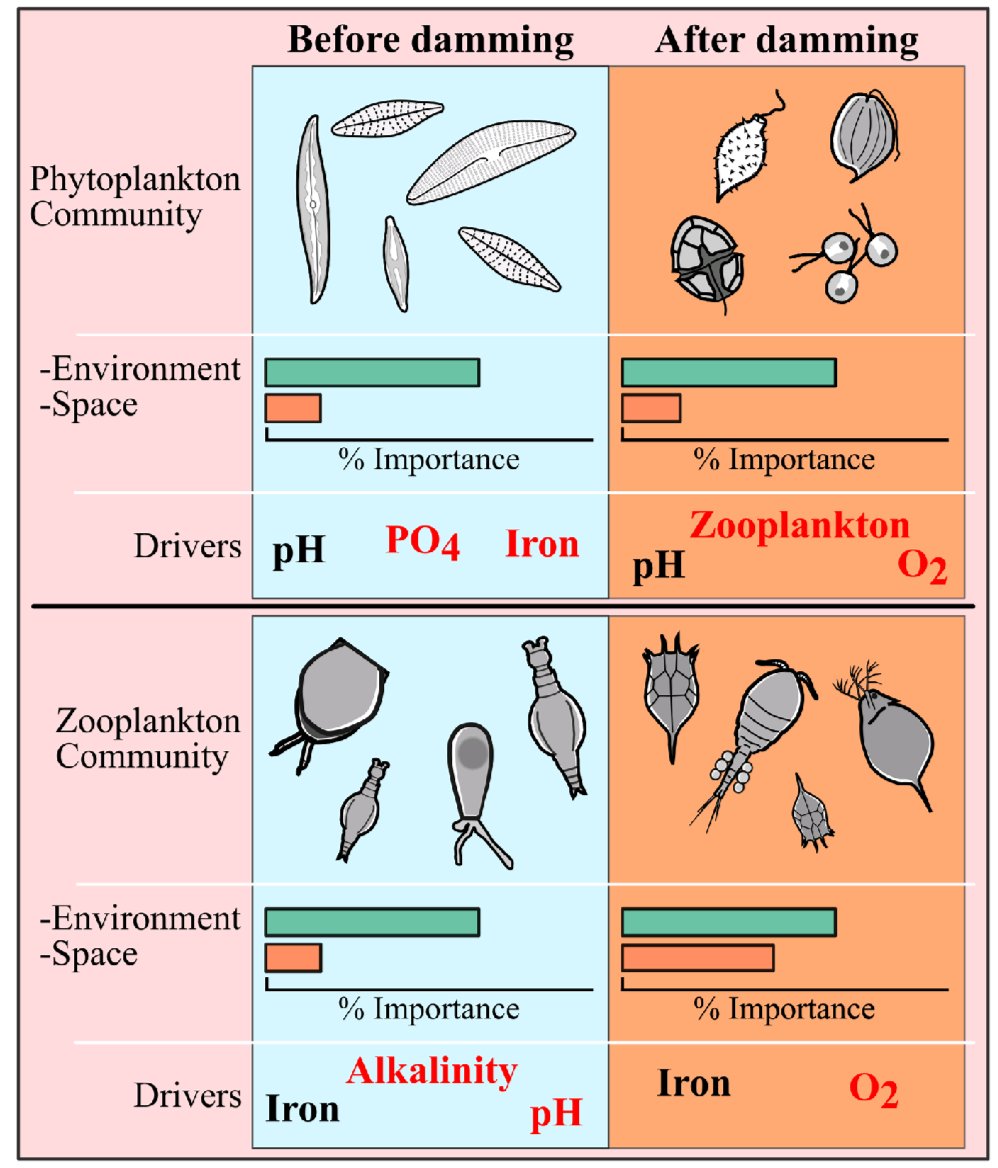
My new paper in Hydrobiologia! How a mega‑dam in the Amazon’s largest tributary altered
the drivers of planktonic communities. You can read for free at https://t.co/slRkvZCwA9
@HYDR_Springer@nupelia_uem#amazon#dam#plankton
David versus Goliath: Early career researchers in an unethical publishing system - Receveur - 2024 - Ecology Letters - Wiley Online Library https://t.co/z4FqyMdIeO
A growing collection of publications, training materials, policy briefs, videos, datasets and more valuable resources related to #water and #development, are now available at the click of a button, thanks to our new #onlinerepository. Find out more ➡️ https://t.co/X72clIMjLw
Received the eTA for my trip to Kenya this weekend. Really looking forward to the @JRSBiodiversity sponsored workshop next week. We will be doing some fishes and terrestrial insects as well. Now to print and bind all the protocols and get any last minute supplies!
For anyone interested in teaching or learning PCR and DNA barcoding, here’s some recommended reading: four articles written by DNA barcoding educators describing lesson plans, learning objectives, and experiences running their courses.
For teachers, these articles might be useful to build, structure, or improve a course.
For learners, they might provide interesting insights into what to learn and practice from a “teachers’ lesson plan” perspective, going way beyond what a basic protocol might offer.
All of these studies had very similar aims but used different methodological approaches in terms of DNA extraction, software, and course length. So there are plenty of methodological options to look into and find out what suits you best.
⭐ The first article, by Erasmus (2021), describes DNA barcoding as a component of a third-year biochemistry course in British Columbia, Canada. The lesson plan involved a one-hour lecture and two three-hour laboratory sessions based on DNA barcoding stoneflies (Plecoptera).
The practicals used Chelex resin for DNA extraction; FinchTV for chromatogram inspection and editing; and the Barcode of Life Data Systems (BOLD) and NCBI’s GenBank for sequence identification:
Erasmus, D. J. (2021). DNA barcoding: A different perspective to introducing undergraduate students to DNA sequence analysis. Biochemistry and Molecular Biology Education, 49(3), 416-421.
https://t.co/xb7S4j8Oal
⭐ The second article, by Shevcenko et al. (2019) covers a course of 10 one-hour sessions framed around the DNA barcoding of caddis flies (Trichoptera) in New Jersey, USA.
Over this course the students learned about sample collecting; insect diversity; vouchering and photographing of collections; extracting DNA using the HotSHOT method; PCR of the COI barcode region; gel electrophoresis amplicon visualisation; Sanger sequencing; editing DNA sequences; uploading results to the Barcode of Life Data Systems (BOLD); and phylogenetic analysis.
Shevcenko et al. (2019). Undergraduate teaching of scientific concepts using DNA barcoding of Trichoptera. Zoosymposia, 14, 16-31.
https://t.co/EduppmkGNW
⭐ A third article, by Casanova & Shumskaya (2021), covers the DNA barcoding of fungi over three laboratory classes. The practicals used a spin column kit DNA extraction (Powersoil from Qiagen), and DNA analysis via NCBI’s BLAST search tool and free MEGA phylogenetics software:
Suárez Casanova, V. M., & Shumskaya, M. (2021). Exploring DNA in biochemistry lab courses: DNA barcoding and phylogenetic analysis. Biochemistry and Molecular Biology Education, 49(5), 789-799.
https://t.co/0lxO4v6heJ
⭐ And finally, for those short of time or for remote homework purposes, two simple exercises by Al-Deeb (2021) in basic BLAST searching and phylogeny construction using the online https://t.co/wgUd48aWz5 tool, designed as a basic introduction and to break through barriers arising from the fear of bioinformatics:
Al-Deeb, M. A. (2021). Using DNA Sequences and Phylogenetic Trees as Tools for Teaching Entomology to Undergraduate Students: A Simple Approach. Advances in Entomology, 9(4), 147-154.
https://t.co/FQT66Qun6c
If any of these are useful to you, please let us know. We’d also be very glad to know of any similar articles we can add to this list for future posts!