When I first got into crypto back in 2016 it felt like a scam but it all change ones I understood Satoshi's vision and how it can change the world #bitcoin 🟧
Bitmap has no team to rug you. No founder who can vanish with the treasury. No centralized infrastructure to shut down. No insider allocation waiting to dump on you.
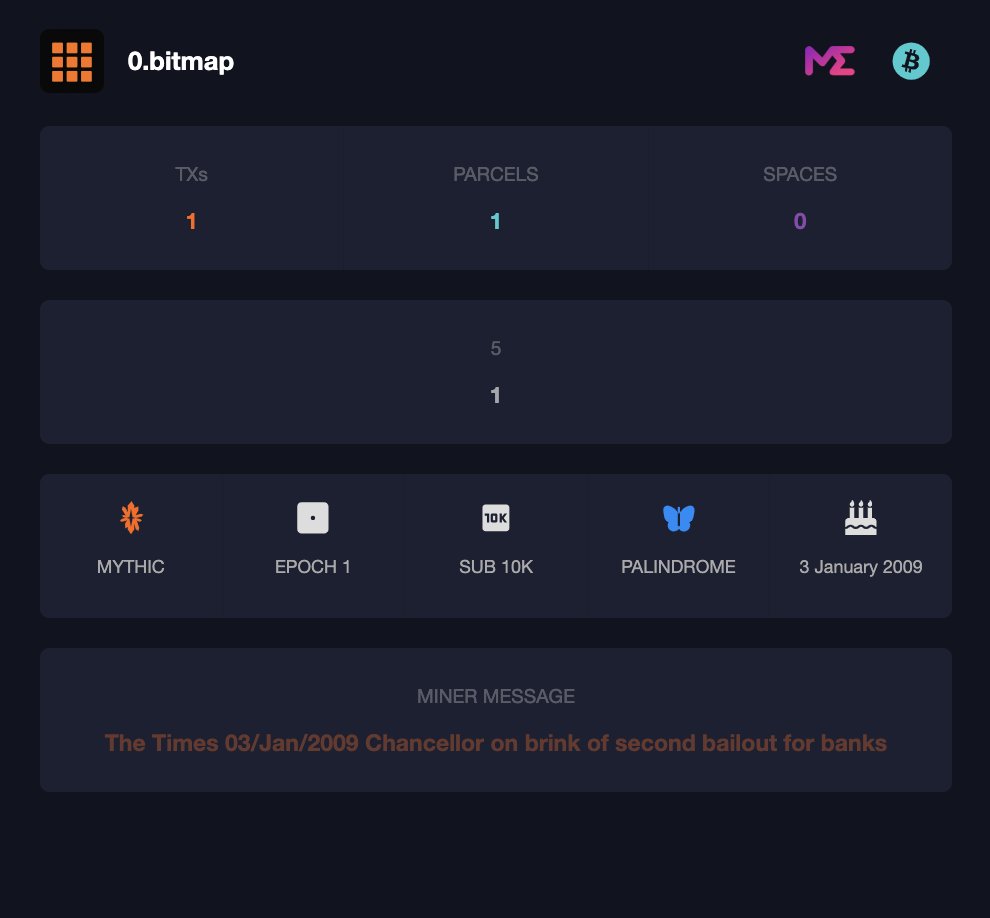
When will you realize that Bitmap may be one of the most important discoveries in crypto?
This needs more eyes! 👀
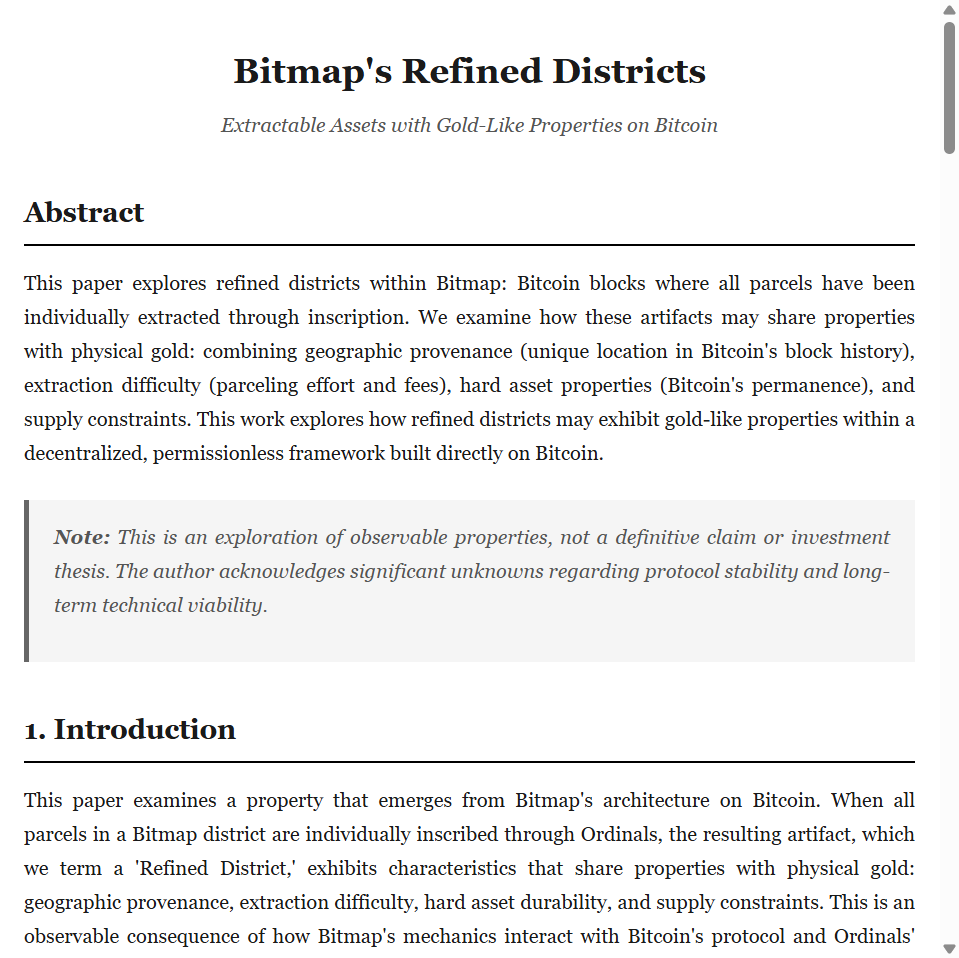
A whitepaper proposing Refined Districts as a new term for Bitmap, and comparing it to Gold.
A Refined District is one that has had all of its Parcels inscribed, and discusses properties such as difficulty (cost-to-inscribe). 📜
https://t.co/oHzWyThyQV
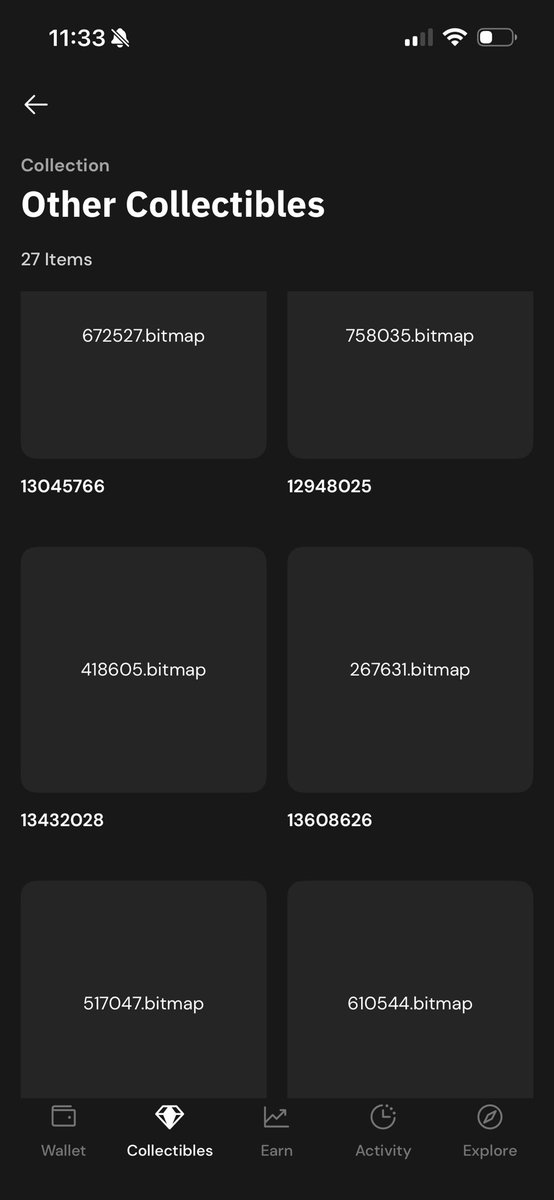
Who holds #BitMap 🙋♂️till this day ?? Real State on #Bitcoin#Chain. The power of owning a peace of the internet on #Bitcoin and BUILD on it is beyond belief 🔥🔥🚀🚀🚀 and if your not seen it ur still early to get in the game before builders come on board and start swapping everything.
Gavin Wood and the Fight to Bring Crypto Back to Its Roots Through @Polkadot
Crypto was never meant to be about hype coins and corporate assimilation. Its founding ethos was truth over trust. A system where rules, not rulers, protect sovereignty. Yet somewhere along the way, the industry lost its way. Meme tokens crowd headlines, regulators reshape the playing field, and “Layer 2 shortcuts” are presented as progress when they often compromise decentralisation.
In his When Shift Happens interview, @gavofyork, co-founder of Ethereum, creator of Solidity, and founder of Polkadot, argued that this shift strikes at the very heart of crypto’s purpose.
“What I want is less trust, more truth,” he said. “I don’t want to rely on arbitrary, opaque decisions made behind closed doors. That’s what regulation means, unfortunately. It’s the assimilation of crypto into the traditional banking establishment.”
Why Gavin Stepped Away
Wood has never seen himself as a frontman. Unlike founders who thrive on personality, he believes “charismatic leaders have no place in crypto.” For him, decentralisation only works when systems replace personalities with rules that are transparent and enforceable.
That belief shaped his 2022 decision to step down as CEO of @paritytech, Polkadot’s core development team. Management was not his strength. Building protocols was.
“The reason I stepped down as CEO of Parity was so I could do more work with Polkadot,” he explained. “It gave me a means to transition from CEO of Parity to, in some sense, grand architect of Polkadot.”
To make that shift real, he created the Polkadot Technical Fellowship, a developer-driven body that placed protocol evolution firmly under the community’s governance. The move reduced the risk of one company holding too much sway, while giving Polkadot a more durable foundation.
Governance as the Hard Problem
If money was crypto’s first breakthrough, governance has always been the hardest challenge. Bitcoin largely avoided it by freezing its design. But Wood has never believed that any human system is perfect.
“Governance is how a system evolves over time,” he said. “At least with Polkadot, we’ve tried to codify how the system should decide to evolve, and autonomously enforce that.”
That vision powers Polkadot’s OpenGov model. Proposals are discussed and voted on transparently, with mechanisms like conviction voting, where long-term stakers have a stronger voice, such that decision-making aligns with the protocol’s survival.
The system is not flawless. Wood calls it a “mixed success.” But compared to the opaque, personality-driven governance of other chains, he sees it as a step closer to crypto’s true mission. “DAOs are just better governments,” he said. “They remove the arbitrary nature that plagues our real-world systems.”
A Return, and a New Chapter
Now, after nearly three years away from the CEO role, Wood has returned to Parity. The timing matters. Polkadot’s infrastructure — parachains, the upcoming JAM protocol, PolkaVM — has matured. The foundations are solid enough to sustain his broader vision.
His return signals a new chapter. Polkadot no longer has to prove that its architecture works. The challenge ahead is ensuring that the technology serves real-world needs while staying anchored to first principles.
Cultural Proof Points
This is where projects like @mythicalgames matter. The studio has already shown Web2-level retention with @PlayNFLRivals and @FIFARivals, and its new @PlayPudgyParty brings an extra layer of culture and community crossover. For Wood, who has always insisted that crypto’s value lies in utility rather than speculation, the move is a proof point in culture.
Players won’t know or care that they are using a parachain i.e @EnterTheMythos. They will simply see digital items that work across ecosystems without friction. And that is the point.
Can Polkadot Steer Crypto Back?
The big question is whether the founding ethos — truth over trust — can survive in a world shaped by regulators, meme coins, and shortcuts.
Wood believes it can, but only if crypto resists the temptation to lean on personalities and instead embraces rules-based systems. That means DAOs instead of back-room deals, protocols instead of promises, and sovereignty instead of speculation.
With his return to Parity, Polkadot’s infrastructure upgrades, and the latest Mythical Games’s projects, Wood’s ethos finally has both the infrastructure and the cultural adoption to stand on. Whether the rest of the industry chooses to follow is the challenge ahead.
👉 If you enjoyed reading this excerpt, head over to When Shift Happens on YouTube or your favorite podcast platform to access the full convo.
This is exactly how the United States became an occupied nation by a small tribe of Ashkenazi 🇮🇱✡️ bankers and is why no politician can or will do anything to remove them.👇👇 👇