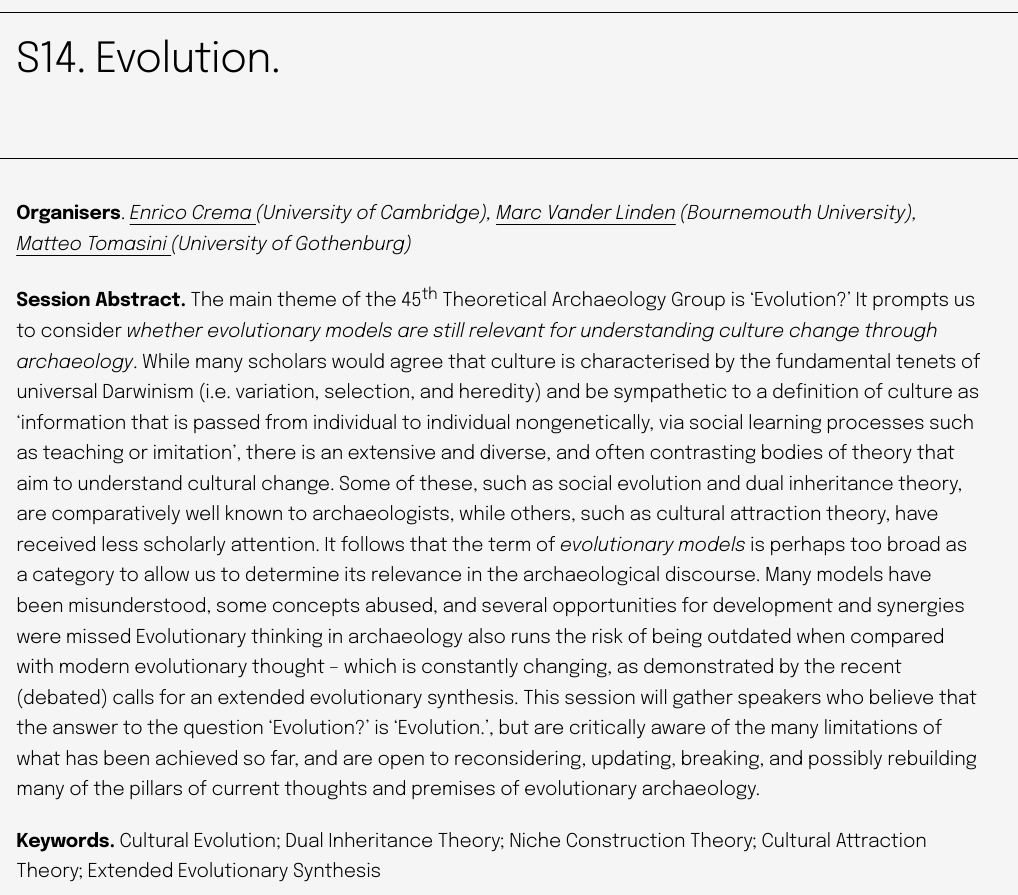
This year's main theme for @TAG45BU is 'Evolution?' - so Marc Vander Linden, Matteo Tomasini, and I decided we needed to have a session called 'Evolution.' The deadline for paper submission is the 1st of October https://t.co/aJ13NXWma1
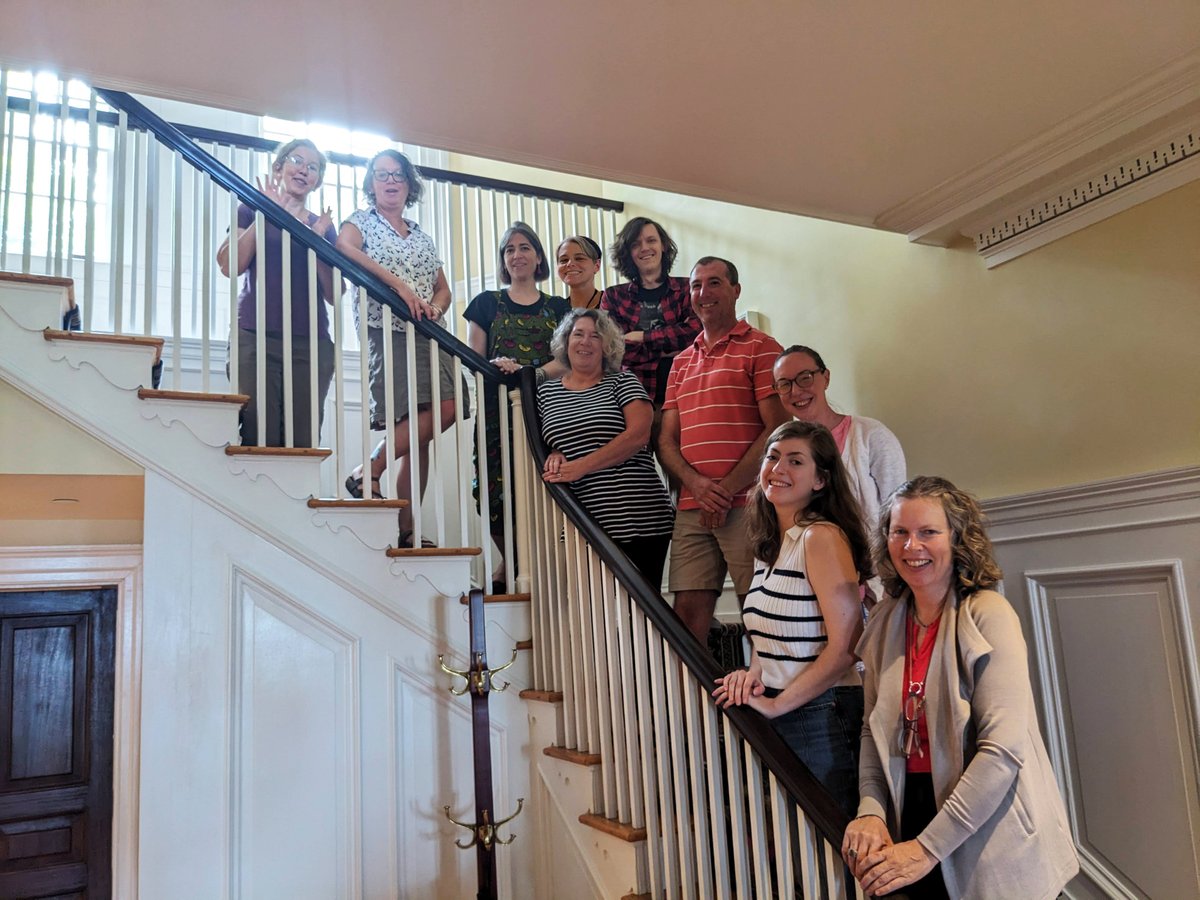
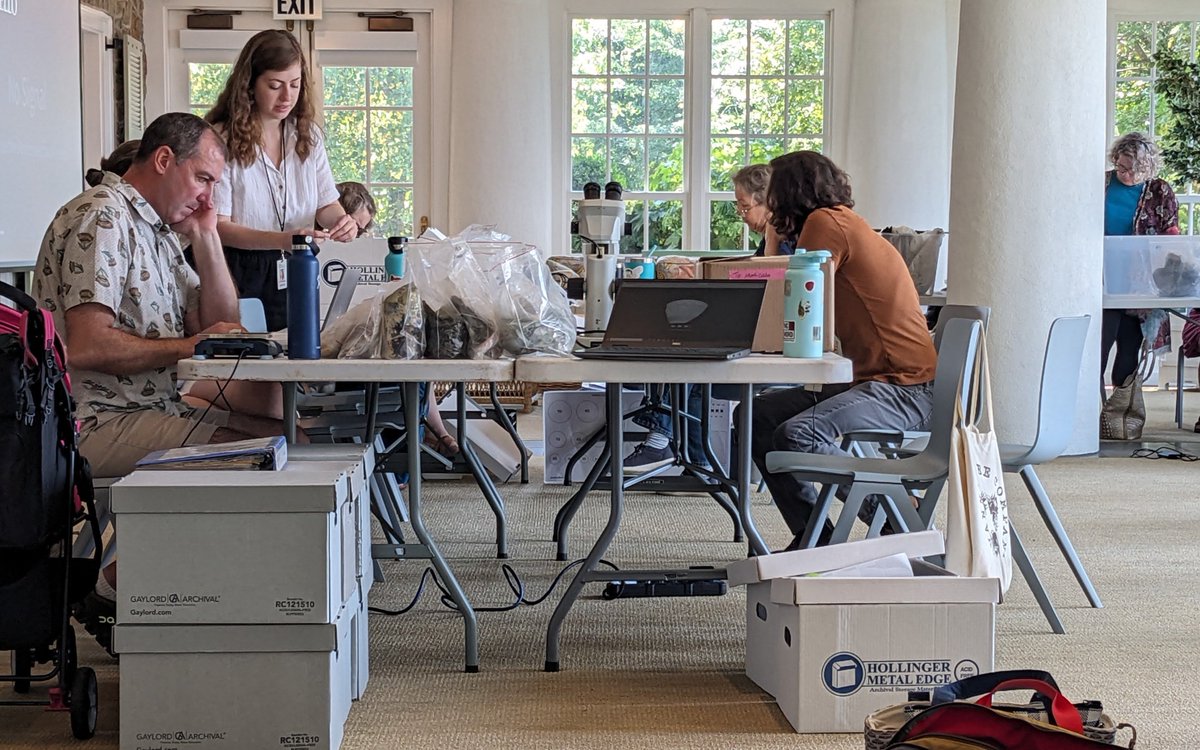
July was a busy month at DAACS! We hosted an excellent group of scholars and friends for a month-long DAACS Summer Institute at Monticello. DAACS staff conducted training for field record digitization and material culture analysis.
#daacs#monticello#daacssummerinstitute
Rob Boyd and Pete Richerson have made arguably the most significant augmentation to Darwinian evolution since Mendelian genetics.
They identified and modelled a second stream of inheritance that's shaped our species: culture.
I was surprised to learn they'd never done a joint interview before.
Was an honour to be able to bring them together in San Francisco last week.
Topics in the timestamps below.
Links in the tweet below.
Enjoy!
Timestamps:
(0:00:49) - How likely is it that cumulative cultural evolution actually began with australopithecines?
(0:20:26) - By when was cumulative cultural evolution achieved among Homo?
(0:23:31) - Rob and Pete explain (1) cultural evolution, (2) cumulative cultural evolution, and (3) gene-culture coevolution.
(0:31:57) - "Culture, not natural selection, has been the main force shaping human genetic evolution for the last 1-2 million years." How do we know this?
(0:37:00) - Examples of gene-culture coevolution.
(0:43:05) - The chaotic climate of the Pleistocene (2.6 million - 11,700 years ago).
(0:48:26) - How did Pete and Rob discover the climate was so variable in the Pleistocene?
(0:51:51) - Culture was an adaptation to Pleistocene climate variation.
(0:58:52) - How Pete and Rob came up with their explanation for how cultural brains evolved (an adaptation to climate variation).
(1:02:16) - Increasing climate variation may actually have been driving brain size increases on Earth since the time of the dinosaurs 65 million years ago.
(1:08:14) - Earth's climate variation was probably driven by its orbital perturbations, caused by Jupiter's gravitational pull.
(1:13:34) - How contingent was the evolution of cultural brains?
(1:22:46) - Has human brain size been shrinking over the last 10,000 years?
(1:27:50) - Will technologies that obviate natural birth mean that human brain size (relieved of the constraint of the birth canal) resume their trend of large increases, or has cumulative culture reduced the selection pressure on brain size?
(1:34:18) - How cultural evolution explains the fertility crisis.
(1:43:19) - Which specific force of cultural evolution is the biggest cause of declining fertility?
(2:02:13) - If global population peaks and then shrinks, say by mid century, how do we sustain a technologically advanced civilisation?
(2:09:10) - Does Rob and Pete's understanding of how human intelligence evolved give them any unique insights into how artificial intelligence might be grown?
(2:14:57) - How do Rob and Pete think about their partnership, and what makes scientific dyads so productive?
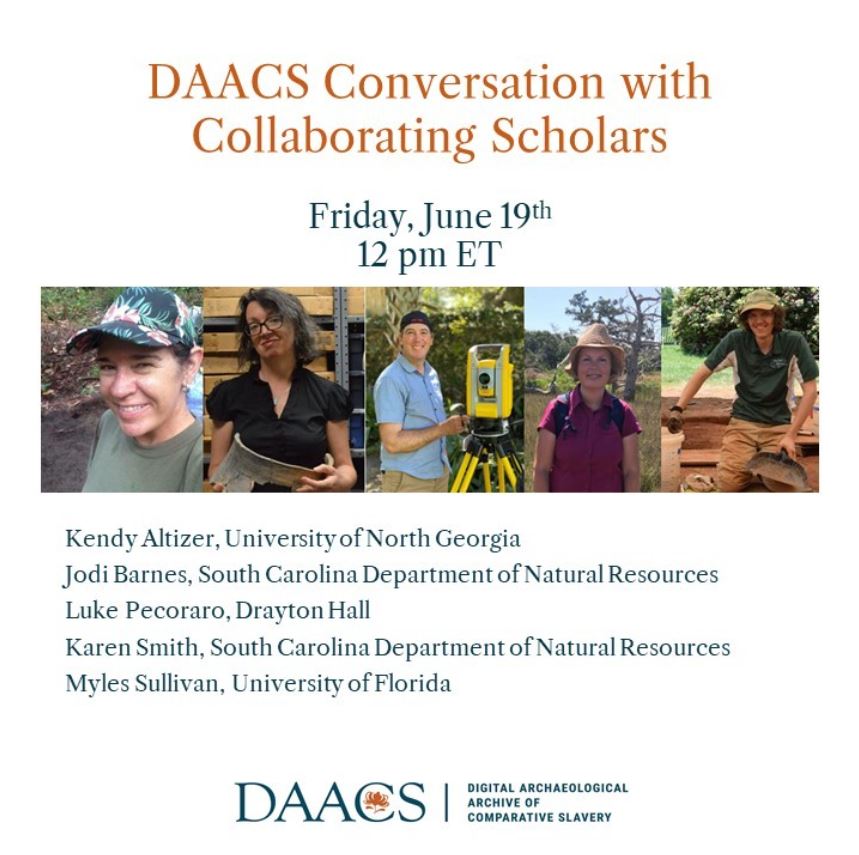
Today! Join us from 12:00 to 1:30pm ET for a DAACS Conversation with Kendy Altizer, Jodi Barnes, Luke Pecoraro, Karen Smith, and Myles Sullivan. Each will give a short lightning talk on their research and current work with DAACS, followed by Q&A. https://t.co/ng5ius4wCc
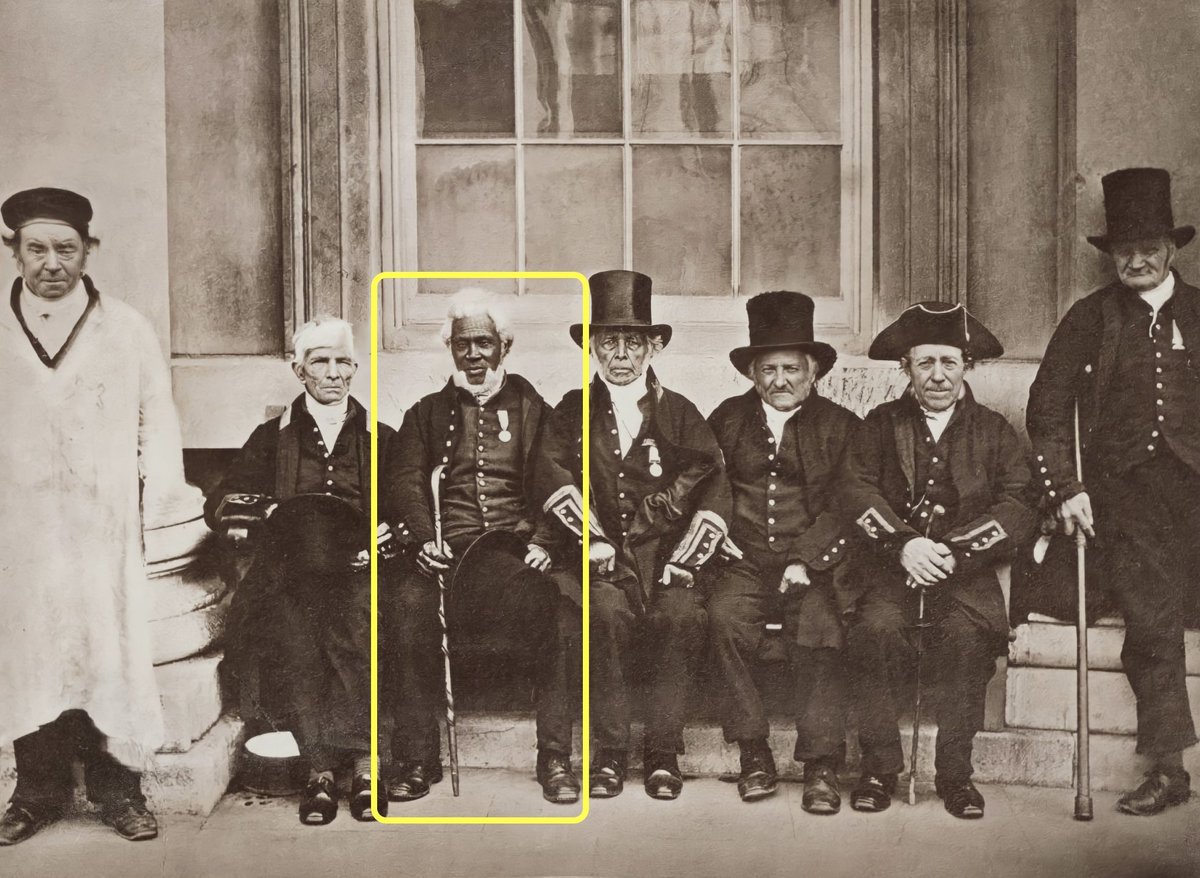
I've found a little more about the black Battle of Trafalgar veteran Richard Baker - photographed at Greenwich Hospital @orncgreenwich with his comrades nearly 50 years later - including perhaps why he joined the Navy when he did. We know he was born a slave in Baltimore in 1770