Happy to have this preprint online! This work builds on our 2019 Nature Neuroscience paper (https://t.co/ea27Crt9rG) showing that iPSC-derived SHANK2 neurons are hyperconnected. Here, we use MEAs to characterize how this hyperconnectivity impacts network-level firing properties.
SHANK2 mutations linked to ASD produce hyperconnected-hypersyncrhonous human iPSC derived networks. mGluR5 agonism rescues the phenotypes. Fraser's Kartik's preprint👇
Hypersynchronous iPSC-derived SHANK2 neuronal networks are rescued by mGluR5 agonism https://t.co/gxQFNMGvu7
🧠⚡ Bioelectronics is transforming healthcare by connecting two powerful systems: biology and technology.
From decoding neural activity to enabling next-generation therapeutics, this rapidly growing field is reshaping how we understand, diagnose, and treat disease.
We are excited to join the conversation at BioElectronic Therapeutics (BETx) 2026, with innovators across neuroscience, engineering, and medicine.
Discover how our HD-MEA technology is enabling deeper functional insights into neuronal networks and accelerating the development of bioelectronic therapies. 👇
🎤 Talk
“Next-Generation Electrophysiology for Functional Characterization of Neuronal Cells”
Presented by Dr. Mahdi Ghazal (@GhazalMahdi)
🗓 June 10, 2026 - ⏰ 12:15 PM
Stop by our booth and meet the MaxWell team:
🔬 Dr. Mahdi Ghazal (@GhazalMahdi) – R&D Application Engineer
🔬 Dr. Fraser McCready (@Fraser_mccready) – Field Application Scientist
A special thank you to Cristina Tringines (@cm_tringides) and the Rice Biotech Launch Pad team for the invitation.
See you at #BETx2026!
#Bioelectronics #Neuroscience #HDMEA #MxWConnect
Excited to say this work has now been accepted and published online at Stem Cell Reports! Many thanks again to my PhD advisor James Ellis, @JulioMTNeuro, @KartikPradeepan, and everyone else who helped work on this project and the revisions that followed!
https://t.co/0iA4n76EZy
Happy to have this preprint online! This work builds on our 2019 Nature Neuroscience paper (https://t.co/ea27Crt9rG) showing that iPSC-derived SHANK2 neurons are hyperconnected. Here, we use MEAs to characterize how this hyperconnectivity impacts network-level firing properties.
A team led by @UofT researchers is refuting a popular theory that any developed cell can be induced to switch its identity to an unrelated cell type.
They have found a rare #StemCell type that is unique in its ability to be reprogrammed.
Learn more 👉 https://t.co/LSBxnfeGZx
Very nice work from @Fraser_mccready and colleagues. I am very glad that correlated spectral entropy https://t.co/muvVb9aoMU was beneficial for the assessment of hyperconnectivity. The tool is also available https://t.co/TUsQUMK5Wa
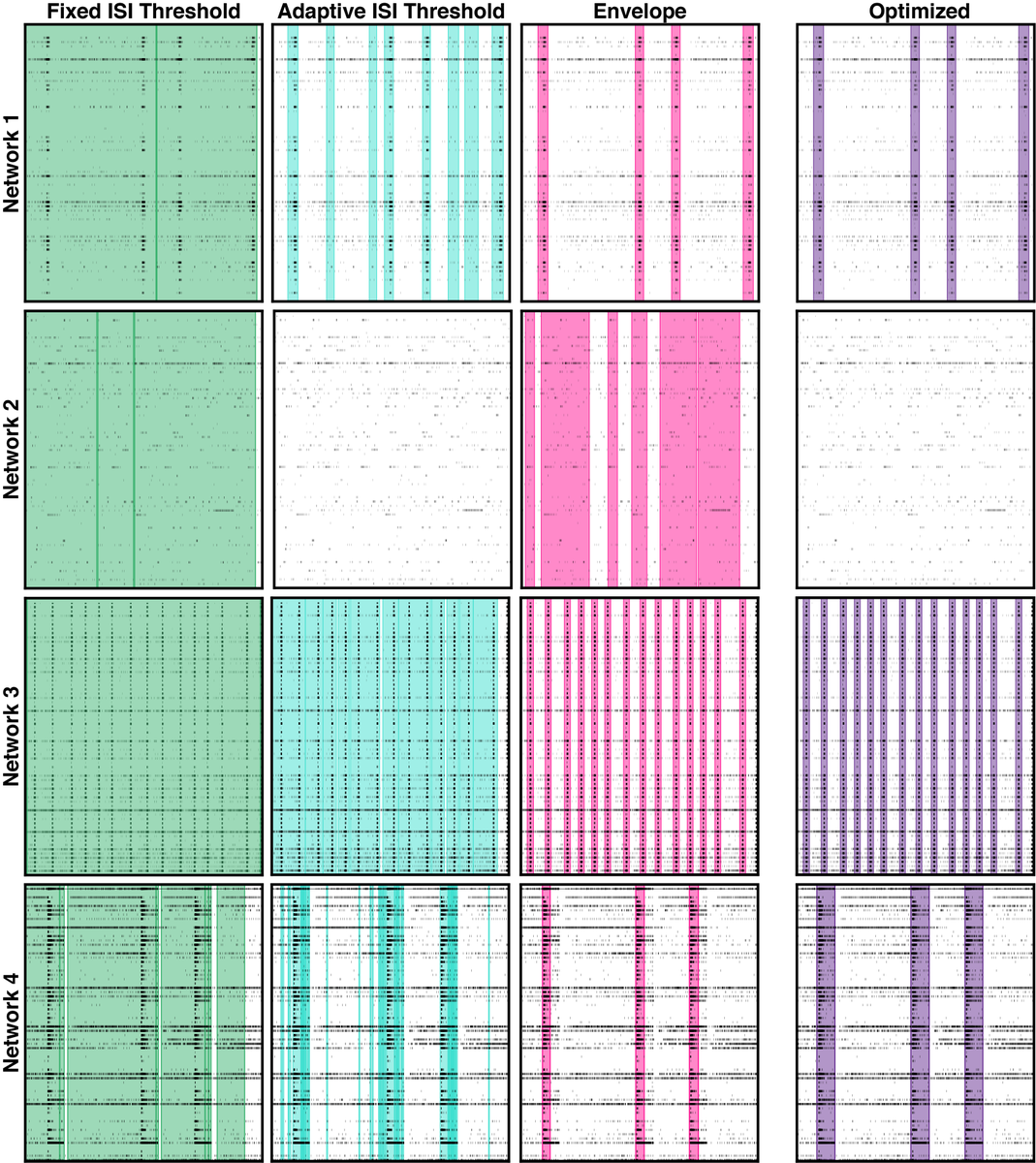
As a final cautionary aside, a considerable amount of time was spent optimizing network burst detection settings for this study. We found that parameters which performed very well on some patterns of activity often performed VERY poorly on others. Always inspect your raw data!
Happy to have this preprint online! This work builds on our 2019 Nature Neuroscience paper (https://t.co/ea27Crt9rG) showing that iPSC-derived SHANK2 neurons are hyperconnected. Here, we use MEAs to characterize how this hyperconnectivity impacts network-level firing properties.
SHANK2 mutations linked to ASD produce hyperconnected-hypersyncrhonous human iPSC derived networks. mGluR5 agonism rescues the phenotypes. Fraser's Kartik's preprint👇
Hypersynchronous iPSC-derived SHANK2 neuronal networks are rescued by mGluR5 agonism https://t.co/gxQFNMGvu7
DHPG treatment also increased the proportion of R841X networks displaying patterns of reverberating superburst activity. Given that DHPG also reduced functional connectivity strength in this study, future study into if/how these two phenomena are related could be interesting.