정말 잊지 못할 밤이었습니다! 현장과 온라인에서 많은 분들이 함께해 주신 덕분에 미국 독립 250주년을 기념하는 '#Freedom250 in the Sky — 불꽃놀이 & 드론쇼'가 더욱 특별하게 빛났습니다. 뜻깊은 저녁을 함께해 주셔서 감사합니다! 🎇
아쉽게 놓치셨다면, 아래 링크로 전체 영상을 확인해 보세요.
What an unforgettable night! Seeing so many of you come together, both in person and online, for our #Freedom250 in the Sky — Fireworks and Drone Show made this celebration of America’s 250th anniversary feel truly special. Thank you for sharing this memorable evening with us! 🎇
For those who missed it, watch the full celebration here: https://t.co/GUClLaK5Uq
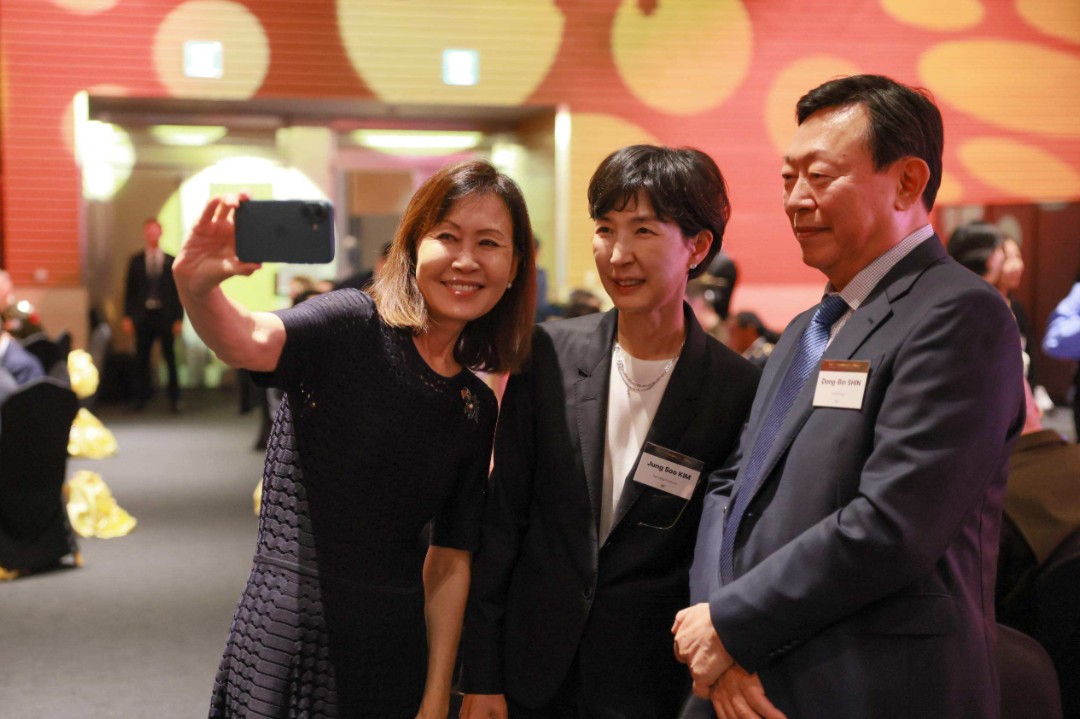
한국경제인협회 #Freedom250 행사에서 한국전 참전용사들과 🇺🇸🇰🇷 장병들, 그리고 한미동맹의 소중한 동반자들과 함께할 수 있어 특별한 시간이었습니다. 우리의 역사를 함께 만들어오고 지켜온 모든 분들께 깊이 감사드리며, 그동안 한미 파트너십이 이뤄낸 발전을 자랑스럽게 생각합니다. 앞으로 더욱 굳건한 미래를 함께 만들어가길 바랍니다!
It was a special evening at the Federation of Korean Industries (FKI) #Freedom250 event, with Korean War veterans, 🇺🇸🇰🇷 service members, and friends of our Alliance. I’m deeply grateful to those who built and continue to defend our shared history, and proud of how far our partnership has come. Here’s to building an even stronger future together!
Happy Constitution Day! 🇺🇸
Today we celebrate the principles and freedoms at the heart of our great Republic & the responsibility we have to preserve them for generations to come.
God bless America! 🙏 ❤️ 🇺🇸
@GorkaKatie
Here's a sample of my show, Rob Carson's "What in the World?" for this weekend on NEWSMAX. Donald Trump says this show makes me the funniest man on TV. My opening monologue is about my cancer diagnosis. Yes, you can make things like this funny. The show airs 3:00 p.m Saturday and Sunday night at 8:30. Download the Newsmax app or get a Newsmax+ membership. I would so appreciate if you'd watch and share. @NEWSMAX@NEWSMAXPodcasts@POTUS@realDonaldTrump@CPAC@TPUSA #blessed #godisgood #effcancer #pray #believe #blessedbeyondbelief
“In October of 2023, our family joined the growing circle of American families devastated by fentanyl.”
Listen to @Heritage’s @SteveYates share his personal story of how the fentanyl crisis, fueled by China, ended up costing his own daughter’s life:
I am very honored to have been named a Ben Franklin Fellow, an organization dedicated to improving American diplomacy and the US diplomatic corps. @BFranklinFellow@A1Policy
https://t.co/rnMn6i19gY
Ayaan Hirsi Ali in Tablet:
After 9/11, intellectuals and policymakers asked “what went wrong?” as though the source of Atta’s animus toward the West was shrouded in some deep mystery. In the Western experience, men had not killed other men over religious questions en masse since the end of the great religious wars of the 17th century. Culture, a term that was once understood to encompass a great many facets of human identity, experience, and belonging—religion included—had also been ruled out. Saying that cultural differences exist and should be respected was a foundation of the multicultural order; the idea that some cultures might lead people to murder each other, for reasons that do not appear in the Western rationalist list of sane causes, struck many Western liberals as too close to racism to bother arguing the point.
Since then, each time the West collided with Islam, much of the Western intellectual class reached for explanations that made sense within its own secular humanist categories: grievance, humiliation, underdevelopment, alienation, foreign policy frustration, or the failure of Western states to properly integrate men like Atta, who were, or must be, inherently no different than immigrants of similar age, class, and educational attainments from Vietnam or Poland, or anyplace else. Since all conflicts are material in origin, it was assumed that they could be settled though material means. And given the obvious superiority of Western values, as measured through the superior material attainments of the West, conflicts over land, jobs, dignity, sovereignty, or redistribution should be negotiated with the generosity appropriate to those who occupy positions of immense privilege and power, thanks to the inequities of European colonialism. If Muslim populations suffered from a democracy deficit, elections would reveal and moderate those demands. In every case, theology and culture were translated into psychology, economics, development policy, or diplomacy.
American leaders then added a second layer of denial. President George W. Bush stood at the Islamic Center of Washington to insist that “the face of terror is not the true faith of Islam.” Following Bush’s lead, after later atrocities in Paris, Brussels, Manchester, and elsewhere, Western leaders repeatedly said that the killers had “nothing to do with Islam.” At the same time, the notion of “Abrahamic faiths” was revived or normalized, as though Judaism, Christianity, and Islam were merely variations within one spiritual family, separated by temperament more than by theology or civilizational ambition.
After centuries of religious war, the West had concluded that privatizing faith was the price of stability and progress. Religion would become hobby, heritage, or private consolation; politics would be conducted in the cooler register of interests. Having made that bargain, Western societies forgot that secularism and pluralism were local settlements, not universal defaults, and so assumed that every rival civilization must ultimately favor the same compartmentalization. When confronted by an adversary for whom the public order was explicitly theological, and for whom the separation of sacred and political authority was itself an offense against God, the West did the only thing its own intellectual settlement allowed: It translated theology into categories it found more manageable. More on second tweet