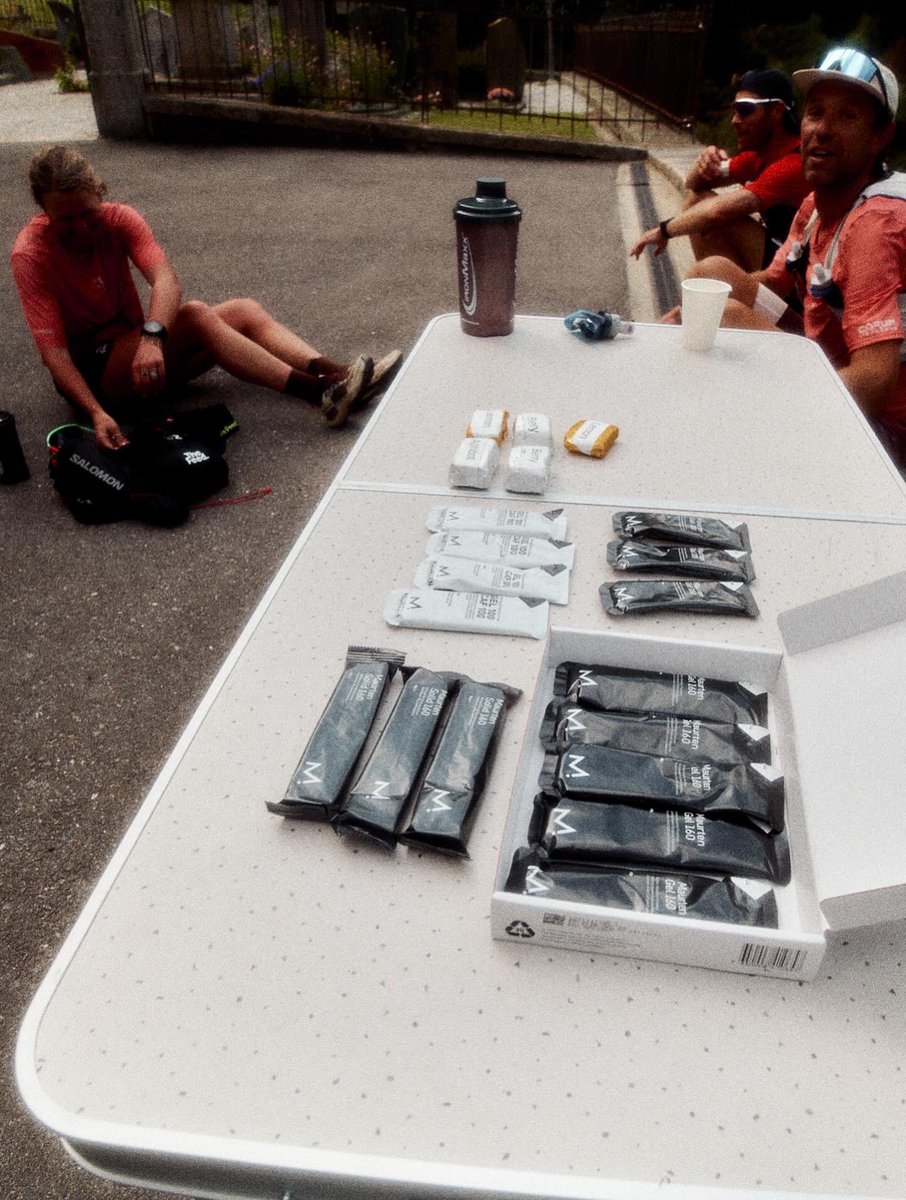
We made it to the rest day in our UTMB Salomon Team Camp!!
Specific work based on our “demands of the event model” in preparation for the most exciting week of the year in Trail Running world.
Thanks and great job to our athletes and staff. Ready for block 2 of training!
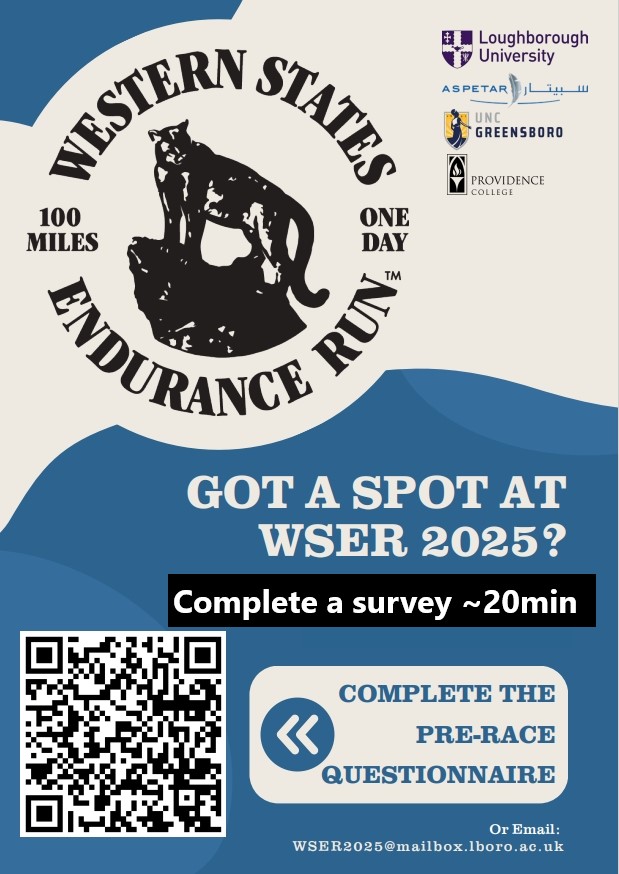
WSER runners! 🏃♂️🔥
Please fill out this 20-min anonymous survey on your training, nutrition & heat prep. No in-race testing involved!
🔗https://t.co/xybNFyWjeF
Please share! 🙌 #WSER#ultrarunning
𝗡𝗲𝘄 𝘀𝘁𝘂𝗱𝘆 𝗼𝗻 𝘂𝗹𝘁𝗿𝗮-𝗲𝗻𝗱𝘂𝗿𝗮𝗻𝗰𝗲 𝘀𝗹𝗲𝗲𝗽 𝗺𝗮𝗻𝗮𝗴𝗲𝗺𝗲𝗻𝘁!
Have you taken part in an ultra-trail or ultra-cycling event that required at least one sleep episode during the race in 2024 or 2025? This study is for you! 🧠💪
👉 https://t.co/yreQTMTSHm
I re-listen to almost every single episode of the Real Coaching Podcast every couple of years.
More are coming out (finally!), if you are a coach or sport scientist in the endurance space, I think this is worth your time and attention!
I’m back with a new season of the Real Coaching Podcast - starting with wisdom in coaching, avoiding common pitfalls, and focusing on sustainable long-term performance.
Re-subscribe wherever you find podcasts iTunes, Youtube, and Substack
@jem_arnold That's interesting. Have you looked at was the overlap between the 60% that improved VO2max and the 80% that improved TT? How many didn't improve any of them, how many improved both?
Running vs cycling fatigue:
"Running-based endurance exercise is associated with greater impairments in nervous system function, particularly at the spinal level, whereas cycling-based exercise elicits greater impairments in contractile function"
https://t.co/UDdSOFSn02
@feelthebyrn1 And this could be one of the factors that makes HR be much higher for the same VO2 during downhill running, making HR less useful to track metabolic intensity on dowhnills.
https://t.co/Qppw7LxoOA
Another great paper by Calaine Inglis: "Exercise training-induced speeding of VO2 kinetics is not intensity domain-specific or correlated with indices of exercise performance". Full text available here: https://t.co/ILw8tBNG2t
Thanks to the Qatar National Library for OA support!
New in @EJAP_official by Inglis, @MuriasLab and colleagues
Exercise training-induced speeding of kinetics is not intensity domain-specific or correlated with indices of exercise performance
https://t.co/Q45S3EwkJE
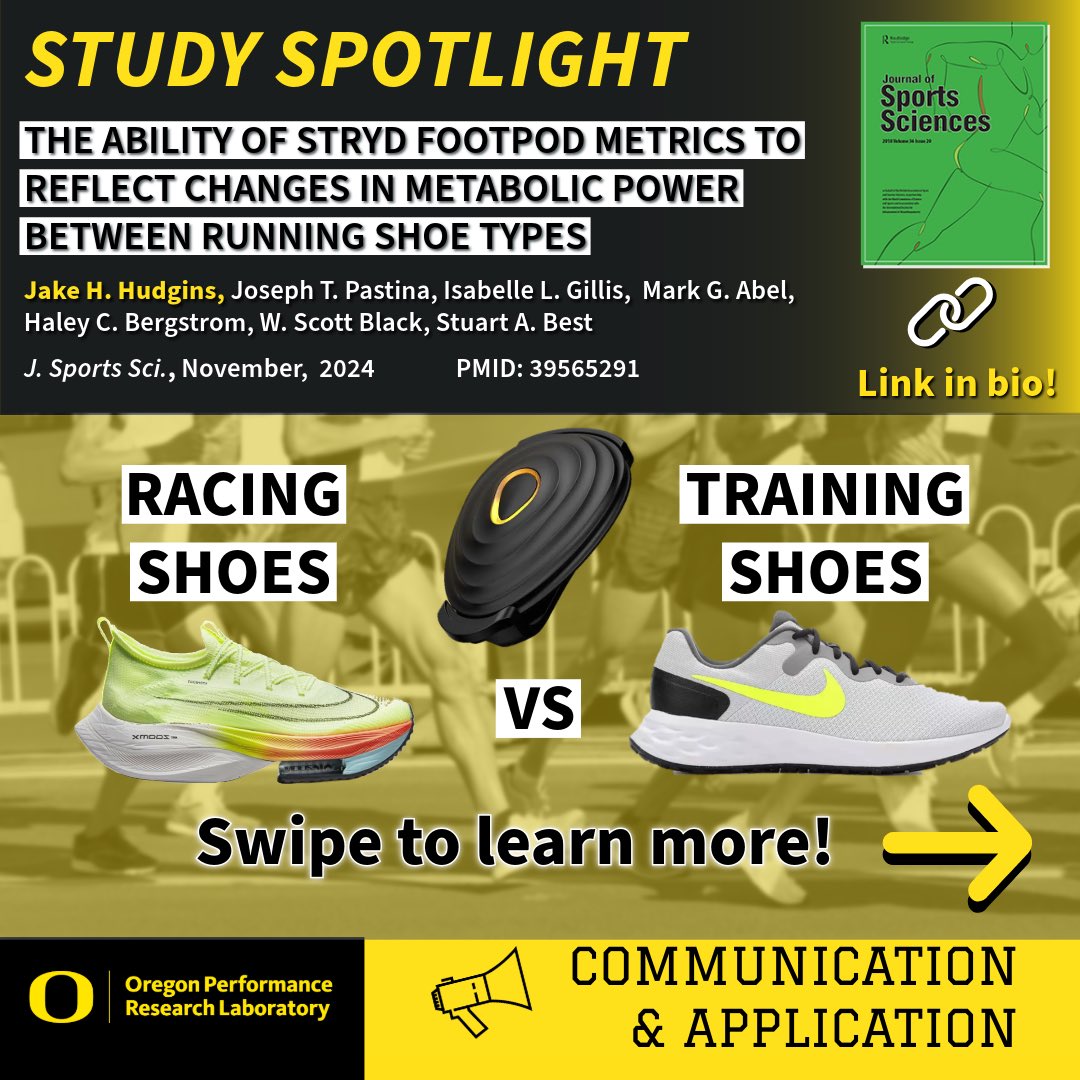
📗💡Study Spotlight on OPRL Research Assoc. Dr. Jake Hudgins’ @jakehudgins_phd recently published paper!
https://t.co/O9DRzaUeew
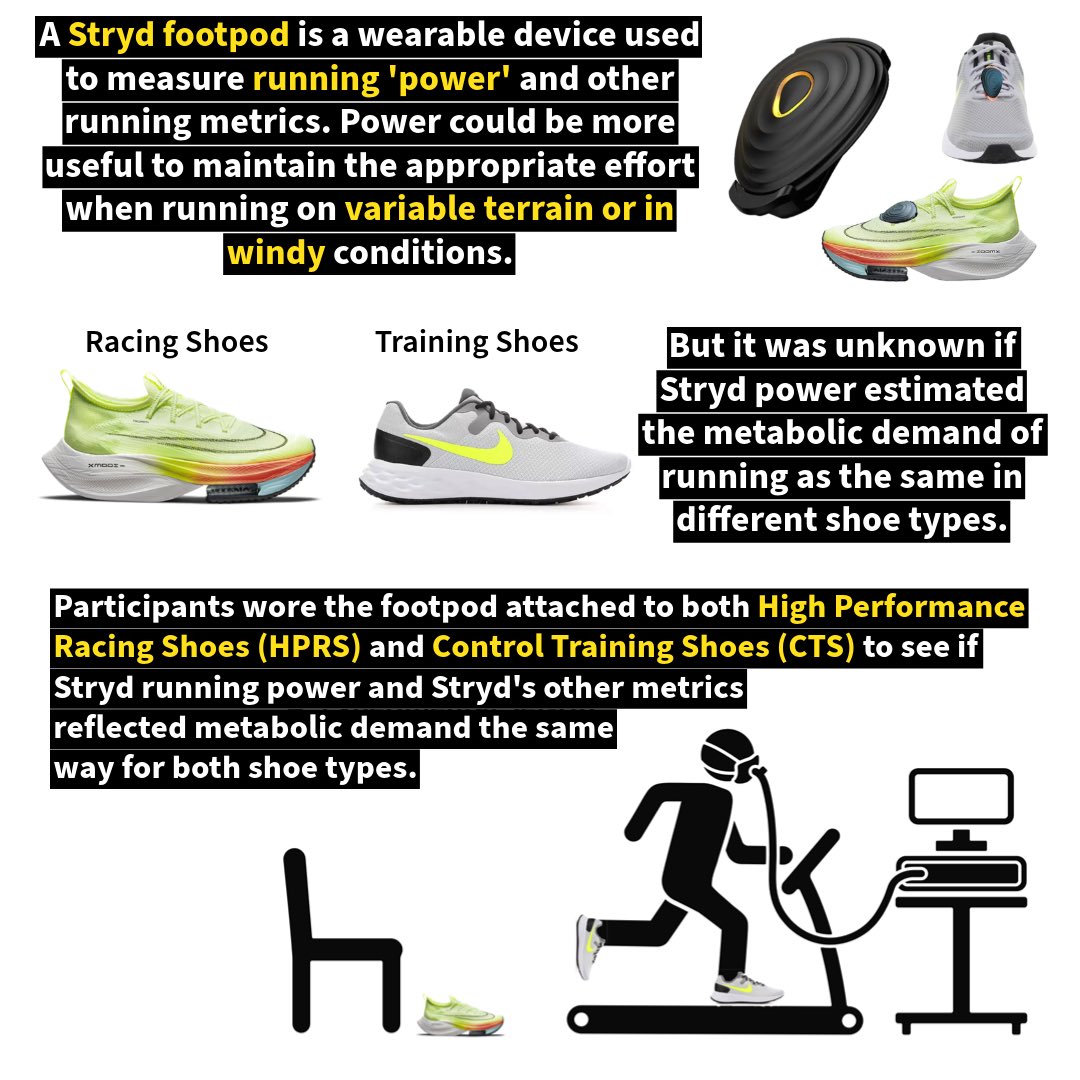
The @universityofky research team examined the popular wearable Stryd running power meter…(Part 1/2)
📈It's been said that training adaptations are predictable.
📚Yet practitioners are rarely asked about their thoughts or experiences.
📝However, @simplysportssci@KlattStefanie@LarsDonath & I do want to know YOUR thoughts & experiences.
🔗https://t.co/12ZG2cqYpY
🙏Please share!
What's (Not) in Your Supplement?
The formal lab analysis is here. Eight brands, detailed statistics, and one extreme outlier. We found a systematic bias toward less energy and carbohydrates in the gels compared to their labels.
Journal link: https://t.co/nVbkJm2d2W
➡️Message/email me for the PDF.
We are developing an study to research this (with @Iratiodeam @FredericSPast ), and we need data from some athletes.
If you want to collabore, you will only need to do two test (1200+3600) and give us data of past races.
More info:
https://t.co/U3FciIb8Cu
@arjona_manu In ultra, we sometimes use "all day pace". And trial and error, if after 4h ADP you are very tired, ADP should be slower.
An experienced athlete can also tell the difference between 50k/50mi-100k/100 mi effort when doing long runs, maybe not exactly right, but in the ballpark.
@arjona_manu Well you could try to model it with a power law 😉
But, really, you play with perception. Combining RPE, breathing/talk test as you suggest. So using TTE is not a perfect solution, for sure. 1/2
@arjona_manu Makes me think that perhaps time to exhaustion would be the most universal zone system. Do 4x10 min at 60 min power/pace/effort, would be the same for everyone.
The problem would still be agreeing on the time boundaries for each zone, though.
@arjona_manu One option that has been used in distance running is referring to "zones" as race paces, at least for the higher intensities. So you do intervals at 10k race pace, or a tempo run progressing from marathon to half M pace. An advantage of that system is that it is pretty clear.
During my run at UTMB in 2022 @Jesusah80 took and analyzed some physiological and cognitive data before, during and after the race. Here is an article on what we found:
https://t.co/Cl3WdxqH3h