Public Health Scientist & Professor of Vector Biology, Ifakara Health Institute, TZ & University of Glasgow, UK; Former Director of Science @ifakarahealth
1/ Africa is being offered powerful new health tools, gene-edited mosquitoes against malaria among them, and the real question is who decides whether they work and whether to use them. Fredros Okumu (@Fredros_Inc, @ThinkGlobalHlth) argues Africa needs its own rigorous field evidence, generated through an evaluation platform independent of the developers: national ministries and biosafety authorities set the questions, African research groups run the trials, regional bodies coordinate, along the lines of the COVID-19 Solidarity trials. When a gene-drive project in Burkina Faso lost public trust in 2025, it was suspended.
His team's Tanzania study (Transgenic Research) shows what legitimacy takes: clear accountability and liability, biosafety rules actually written for gene drives, national authority over the decision, and genuine engagement with the communities who live with the consequences.
A case of #malaria can be devastating, even when it isn't deadly. @_HannahRitchie writes in @OurWorldInData that several sub-Saharan countries see >30 cases of malaria per 100 people.
https://t.co/sUO2HUhwAQ
🦔An NYU mathematician says OpenAI used his own progress against him to beat him to one of the biggest unsolved problems in mathematics. Tristan Buckmaster had been working toward a Millennium Prize proof using OpenAI's Codex when information about his progress reached OpenAI.
Days later, OpenAI published a full proof of the same problem using the same uncommon approach, after burning $22.5 million in compute to get there. When Buckmaster confronted them, exec Sébastien Bubeck allegedly said "Why would you ruin your career?" and "If you don't want me to be nice, then I don't have to be nice."
My Take
OpenAI spent $22.5 million to solve a problem with a $1 million prize. They didn't do this for the bounty. They needed a headline that says "our AI solved one of the hardest problems in mathematics" and they needed it before someone else got credit. They started days after they heard about Buckmaster's progress and took the same uncommon approach he'd pursued for months. That's hard to explain as coincidence.
Buckmaster did his work inside Codex. OpenAI reserves the right to train on Codex data. They admit they can't rule out that his usage helped improve their models. So a customer used their product, potentially handed them the roadmap, and then OpenAI outran him with $22.5 million in compute he could never match. I don't know if any of this was intentional. But if you're a researcher and you just watched this happen, I don't think you'd keep your best ideas inside someone else's product.
Hedgie🤗
https://t.co/1YnggU7xdI
With AlphaFold we mapped the protein universe - now with AlphaGenome Atlas we’re charting the human genome. It can predict the impact of all 9 billion possible single-letter DNA variants, helping scientists better understand disease. Freely available for academic research: https://t.co/Gsy6lW3z6O
The creamy fruit and nectar-rich flowers of the milk fruit tree are irresistible to Xenohyla truncata, a tree frog native to Brazil.
On warm nights, the dusky-colored frogs take to the trees en masse, jostling one another for a chance to nibble the fruit and slurp the nectar. In the process, the frogs become covered in sticky pollen grains—and might inadvertently pollinate the plants, too.
It’s the first time a frog—or any amphibian—has been observed pollinating a plant, researchers reported in 2023.
Learn more on #NationalWildlifeDay: https://t.co/lu6FbqUmw6
Six airport workers in Frankfurt contracted malaria, with two of them succumbing to the disease, despite not travelling to a country where malaria is endemic.
One theory? An infected mosquito may have arrived by plane.
It’s extremely rare, but not unheard of. Here’s what we know about “airport malaria” ➡ https://t.co/f10Z5rysty
This is the electric plane Elon dreamed of!
Anders Forslund of Heart Aerospace joins @Jason to show off their electric plane, which used up just $5 worth of power for a full 20-minute trip.
Could this change short-haul flights? What locations would these flights best be used at?
America spent ten years turning a Tanzanian teenager into the founder of an American company.
Then it exported him.
I wrote about it for the @nytimes today. Thread 🧵
America spent ten years turning a Tanzanian teenager into the founder of an American company.
Then it exported him.
I wrote about it for the @nytimes today. Thread 🧵
Just one week after the landmark US approval of a game-changing drug for advanced pancreatic cancer, the same therapy is showing promise against the world’s biggest cancer killer: lung cancer.
https://t.co/8R1J80XV5F
This summer an island in Canada achieved a magic trick: it vanished and then reappeared 30 kilometers away. Here’s how the island did it.
https://t.co/31padKJK0P
I'm late to this but I did not realize that current research reveals that it was Belgium colonialism in the Congo that ignited the HIV pandemic. The virus was already spreading in Kinshasa in the 1920s! Just watched an interesting PBS series about this: https://t.co/yWm3RDW5D6
📢 Applications are open for the #MAP Geospatial Modelling for Public Health Workshop
🗓️ 15–18 Sep 2026
📍 Dodoma, Tanzania
Basic R, statistical inference and introductory Bayesian methods required
⏳ Deadline: 30 Aug 2026
🔗 https://t.co/LHQvTEtLJe
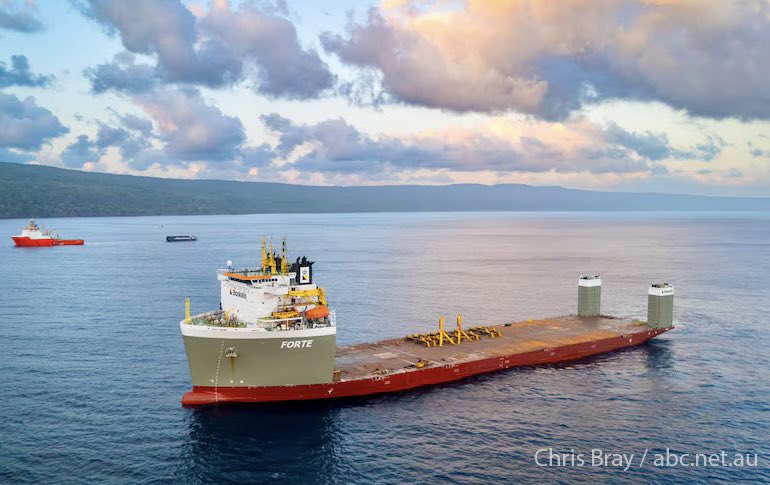
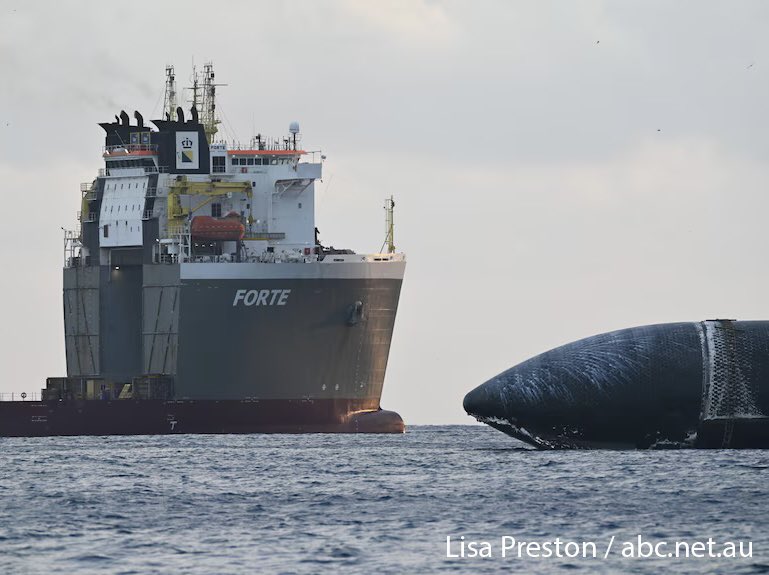
BREAKING: Starship will be carried home to Starbase, Texas, on a massive 48,000-ton semi-submersible vessel called Boskalis Forte.
SpaceX’s Ship 40 will be lifted from the ocean off Christmas Island, an Australian territory, and carried home to Starbase, Texas, aboard a massive 48,000-ton semi-submersible vessel.
After Starship survived its Flight 13 splashdown and spent more than three weeks at sea, SpaceX worked with the Australian Space Agency and the federal government to tow the 52-meter spacecraft to the island’s Flying Fish Cove.
Forte will submerge its cargo deck beneath the water, position Starship above it, and then rise, lifting the spacecraft from the ocean for transport. Recovering it will give SpaceX engineers invaluable data from its spaceflight and reentry.
🧬 New research published in PLOS Biology, tackles a critical question in gene drive development: how do we predict and overcome resistance?
The study found that while a single-target gene drive performs well in the lab, resistance becomes more likely at larger population sizes. The solution: multiplexed gene drives targeting multiple sites at once, making resistance far harder to evolve.
An important step toward building more robust tools in the fight against #malaria.
Read the blog here: https://t.co/Y1IUKS5KVc
#EndMalaria #MalariaResearch #GeneDrive @imperialcollege@ImperialLifeSci