2 weeks until you can see the PQ1 in person :)
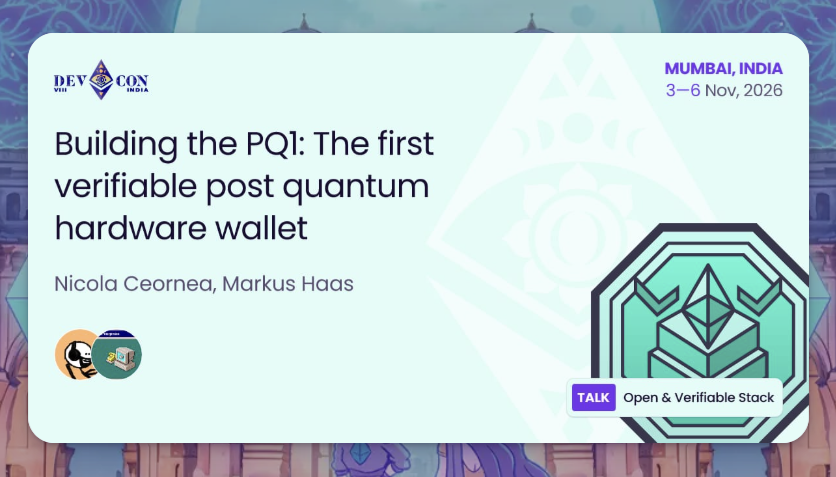
@mhaas_eth and @nceornea_eth will be in Mumbai from the 2nd to the 6th and talking about the PQ1 on and off stage at Devcon.
DM us if you'll be there!
Less than 2 weeks until Devcon 8!
✈️ Devcon welcome booth at Mumbai airport
🚇 Metro access to Jio World Centre
🪔 Diwali lands right after, so book your stay asap to experience the magic
Travel guide → https://t.co/WEE0pVLmaa
Devcon 8 Tickets → https://t.co/raXGuDIMCe
I keep saying this and people keep pushing back. So once more:
An EVM upgrade won't save your ETH from quantum computers.
Even if Ethereum ships post-quantum signatures at protocol level tomorrow, your coins still sit behind an ECDSA key.
Everyone, individually, has to move.
"Open source hardware wallet" has a gap most people never think about.
You can read the code on GitHub.
But how do you know that's the code running on your device?
On the PQ1, the device tells you. In 8 words 👇
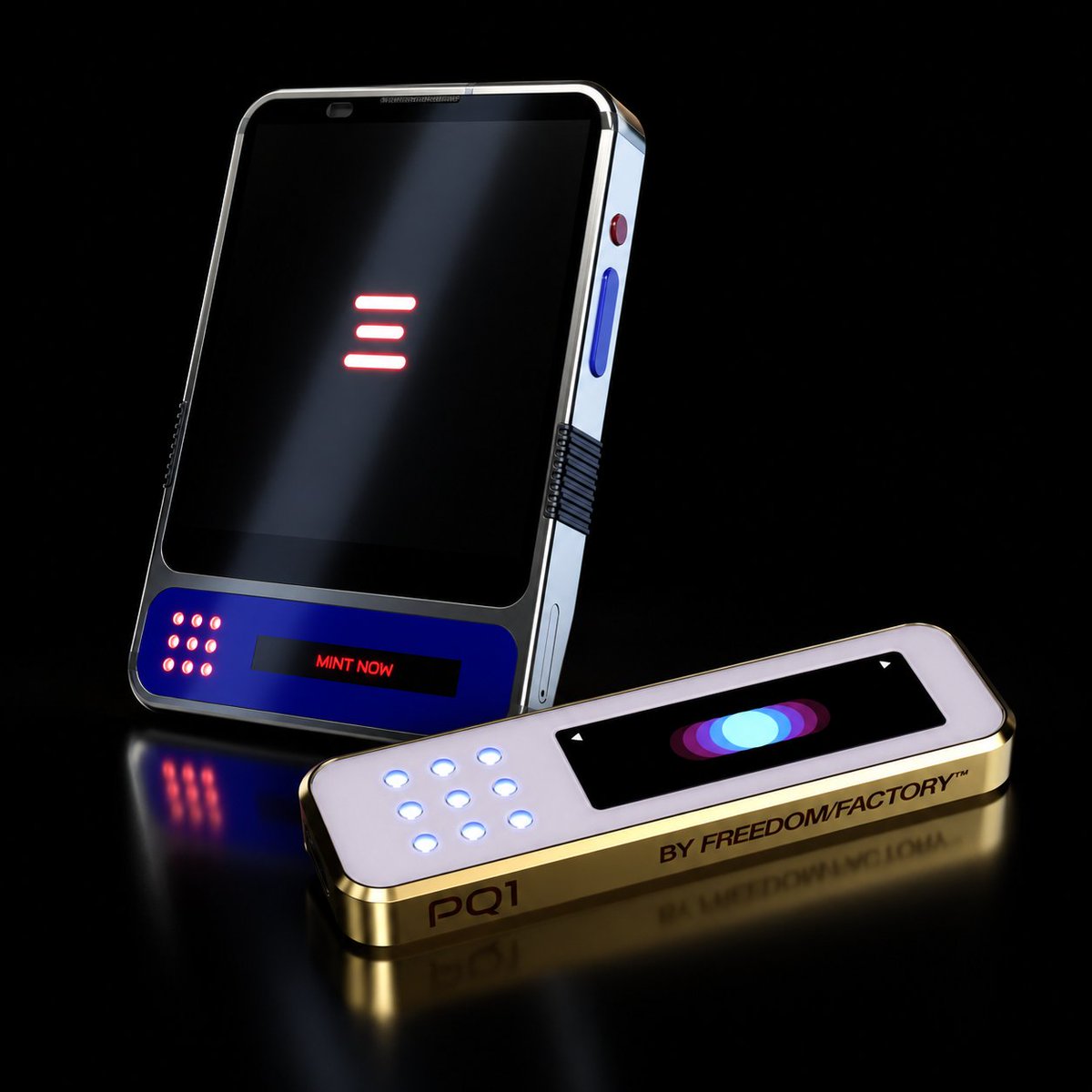
if you're going to buy a hardware wallet you should probably buy a PQ1 from https://t.co/N2AdhBQzW2
(shout out @nceornea_eth and @mhaas_eth)
if you're going to build one, build a @wedgiedev
(and technically i will ship you one from https://t.co/CQvexUUFQK)
Same Safe transaction. Two hardware wallets.
Ledger: "Domain hash. Message hash." That's it.
PQ1: @base, the Safe, the recipient, exactly 900 USDC.
One of them makes you sign blind. Watch 👇
I think thats one of the two secrets why we built PQ1:
- Its not enough that blockchains upgrade to PQ, every wallet will need to upgrade to PQ.
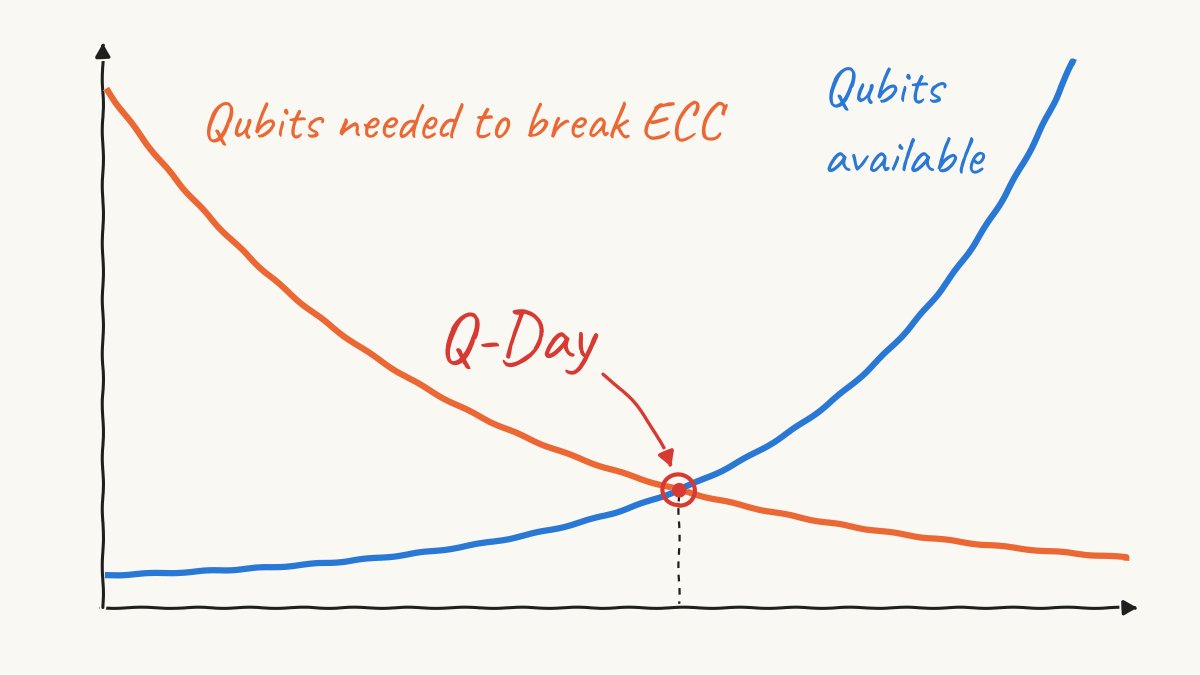
- Quantum is coming faster, AI is accelerating quantum-computer development, and also quantum-algo efficiency. Two exponential graphs that, when they meet, mean Q-day.
oh btw ethereum already has a quantum proof hardware wallet, and the upcoming Hegotá upgrade has “Frames” which makes EVERY account cryptographically agile so they can all become post-quantum.
this bunker is cozy.
Today I call upon the blockchain industry to calmly begin planning for "bunker mode". My personal recommendation is to set in motion a controlled mass migration of assets to fresh addresses, i.e. addresses whose pubkeys remain hidden behind a hash.
Holders, starting with large and sophisticated ones, should consider moving the bulk of their funds to addresses that have never signed a transaction. And when they do sign one, they should also move remaining funds to a new address (possibly generated from the same seed phrase).
Don't rush. While I believe there is cause for action a rushed migration would do more harm than good. Don't panic either. Moving assets to protected addresses is a simple, preventative step which does not require new cryptography or new wallets.
IMO it is now reasonable to brace for the possibility that ECDSA breaks before qday, in the worst case in months not years. By "break" I mean fast private key recovery (e.g. in one week) on available hardware (e.g. a large GPU cluster).
Recent days have been humbling for human mathematical intuition. Long-held, unquestioned hypotheses have fallen. This includes the n log(n) bound for integer multiplication and the 3SUM conjecture. In hindsight, May's unexpected disproof of the Erdős unit distance conjecture was our warning shot.
Yesterday's OpenAI drop made it clear that mathematical superintelligence is upon us. They say there are weeks where decades happen. We are about to live through weeks where centuries of mathematical progress happen. Could our magic 64-byte ECDSA signatures be too good to be true? Was it just security through obscurity all this time?
Elliptic curves feel especially vulnerable to superintelligence. Curves carry rich structure, with room for fancy tricks like Schoof, Frobenius, pairings. (By contrast, hashes are designed to minimise algebraic structure.)
Separately, as Ewin Tang can attest, an efficient quantum algorithm sometimes foreshadows an efficient classical one. We should be open to the possibility of a classical counterpart to Shor that breaks elliptic curves and RSA at once.
Also noteworthy is the striking under-representation of cryptographic breakthroughs among the 722 mathematical results OpenAI published. I've witnessed first-hand the US government censoring academic quantum cryptanalysis results. Backroom interventionism is my base case.
I urge large, sophisticated actors to lead by example. Project11's "risq list" (bitcoin-risq-list.projecteleven[.]com) is a great tracker of exposed BTC pubkeys. Binance, Bitbank, Robinhood, Bitfinex, and Tether have an opportunity to harden their cold storage. Next month I'll address institutions in London in a live Q&A (forum.ethereuminstitutional[.]org/london-2026).
Again, please do not rush. Wallets holding under 50 BTC enjoy partial cover from "Satoshi's shield", i.e. his 20K exposed addresses that hold 50 BTC each. Load-bearing signers like oracles and L2 security councils should consider rotating ECDSA pubkeys with every signed message and/or multi-signing with a hash-based schemes like SPHINCS.
Exiting bunker mode safely will require post-AI cryptography. My inclination is to go all-in on hash-based cryptography and avoid structured mathematical assumptions entirely, whether from curves, lattices, or isogenies. A single battle-tested hash (e.g. from the SHA or BLAKE families) yields plausible post-AI security.
The Ethereum roadmap on strawmap[.]org fully embraces hash-based cryptography with end-to-end formal verification as a response to the quantum threat. Those timelines must now be revisited and accelerated in light of mathematical superintelligence. I'll be pushing for maximum defensive acceleration.
@drakefjustin Migrating to post-quantum accounts is highly important, that's why we built PQ1!
- Fully open source, and verifiable
- Local Safe and CowSwap tx decoding
- Clear Signing using 7730
https://t.co/FTaCxuvqCq
Justin's plan has two phases: hide behind hashes now, move to hash-based crypto later.
PQ1 collapses them into one. Your account's only key is a SPHINCS+ key, so there's nothing for a curve-breaking AI or quantum computer to attack, whether you sign once or a thousand times.
Today I call upon the blockchain industry to calmly begin planning for "bunker mode". My personal recommendation is to set in motion a controlled mass migration of assets to fresh addresses, i.e. addresses whose pubkeys remain hidden behind a hash.
Holders, starting with large and sophisticated ones, should consider moving the bulk of their funds to addresses that have never signed a transaction. And when they do sign one, they should also move remaining funds to a new address (possibly generated from the same seed phrase).
Don't rush. While I believe there is cause for action a rushed migration would do more harm than good. Don't panic either. Moving assets to protected addresses is a simple, preventative step which does not require new cryptography or new wallets.
IMO it is now reasonable to brace for the possibility that ECDSA breaks before qday, in the worst case in months not years. By "break" I mean fast private key recovery (e.g. in one week) on available hardware (e.g. a large GPU cluster).
Recent days have been humbling for human mathematical intuition. Long-held, unquestioned hypotheses have fallen. This includes the n log(n) bound for integer multiplication and the 3SUM conjecture. In hindsight, May's unexpected disproof of the Erdős unit distance conjecture was our warning shot.
Yesterday's OpenAI drop made it clear that mathematical superintelligence is upon us. They say there are weeks where decades happen. We are about to live through weeks where centuries of mathematical progress happen. Could our magic 64-byte ECDSA signatures be too good to be true? Was it just security through obscurity all this time?
Elliptic curves feel especially vulnerable to superintelligence. Curves carry rich structure, with room for fancy tricks like Schoof, Frobenius, pairings. (By contrast, hashes are designed to minimise algebraic structure.)
Separately, as Ewin Tang can attest, an efficient quantum algorithm sometimes foreshadows an efficient classical one. We should be open to the possibility of a classical counterpart to Shor that breaks elliptic curves and RSA at once.
Also noteworthy is the striking under-representation of cryptographic breakthroughs among the 722 mathematical results OpenAI published. I've witnessed first-hand the US government censoring academic quantum cryptanalysis results. Backroom interventionism is my base case.
I urge large, sophisticated actors to lead by example. Project11's "risq list" (bitcoin-risq-list.projecteleven[.]com) is a great tracker of exposed BTC pubkeys. Binance, Bitbank, Robinhood, Bitfinex, and Tether have an opportunity to harden their cold storage. Next month I'll address institutions in London in a live Q&A (forum.ethereuminstitutional[.]org/london-2026).
Again, please do not rush. Wallets holding under 50 BTC enjoy partial cover from "Satoshi's shield", i.e. his 20K exposed addresses that hold 50 BTC each. Load-bearing signers like oracles and L2 security councils should consider rotating ECDSA pubkeys with every signed message and/or multi-signing with a hash-based schemes like SPHINCS.
Exiting bunker mode safely will require post-AI cryptography. My inclination is to go all-in on hash-based cryptography and avoid structured mathematical assumptions entirely, whether from curves, lattices, or isogenies. A single battle-tested hash (e.g. from the SHA or BLAKE families) yields plausible post-AI security.
The Ethereum roadmap on strawmap[.]org fully embraces hash-based cryptography with end-to-end formal verification as a response to the quantum threat. Those timelines must now be revisited and accelerated in light of mathematical superintelligence. I'll be pushing for maximum defensive acceleration.
Bybit lost $1.5B in one transaction.
The signers approved it on hardware wallets that couldn't show them what it really did.
We replayed the exact same transaction on PQ1.
Watch what happens 👇
For those still needing a dGEN1 or want a PQ1, you can get BOTH in 1 bundle.
Introducing the Freedom Stack, both of our hardware devices for only $495.
The dGEN1 ships now, and the PQ1 early 2027.
Get it here: https://t.co/4u4Wec67hE
For those still needing a dGEN1 or want a PQ1, you can get BOTH in 1 bundle.
Introducing the Freedom Stack, both of our hardware devices for only $495.
The dGEN1 ships now, and the PQ1 early 2027.
Get it here: https://t.co/4u4Wec67hE
38+ new dGEN1 udpates now live, including:
- Trasaction Guardian
- Jev decisions in Andyclaw
- Import tokens to your wallet
- and more!
The highlights from @mhaas_eth:
ethOS v4.5 major changes include:
- A transaction guardian that spots scams
- More human readable transactions and updated wallet UI
- Recovery address confirmation in setup
- Import your own tokens to the wallet
- Andclaw adds Jev and local fast models
- Waku and Railgun privacy added
- and much more!
Find the full list of updates on the changelog here: https://t.co/ubnqhaT5LQ
📊 Best Digital Asset Management Project - ⛩️ UnSui
Built by @EthVitally
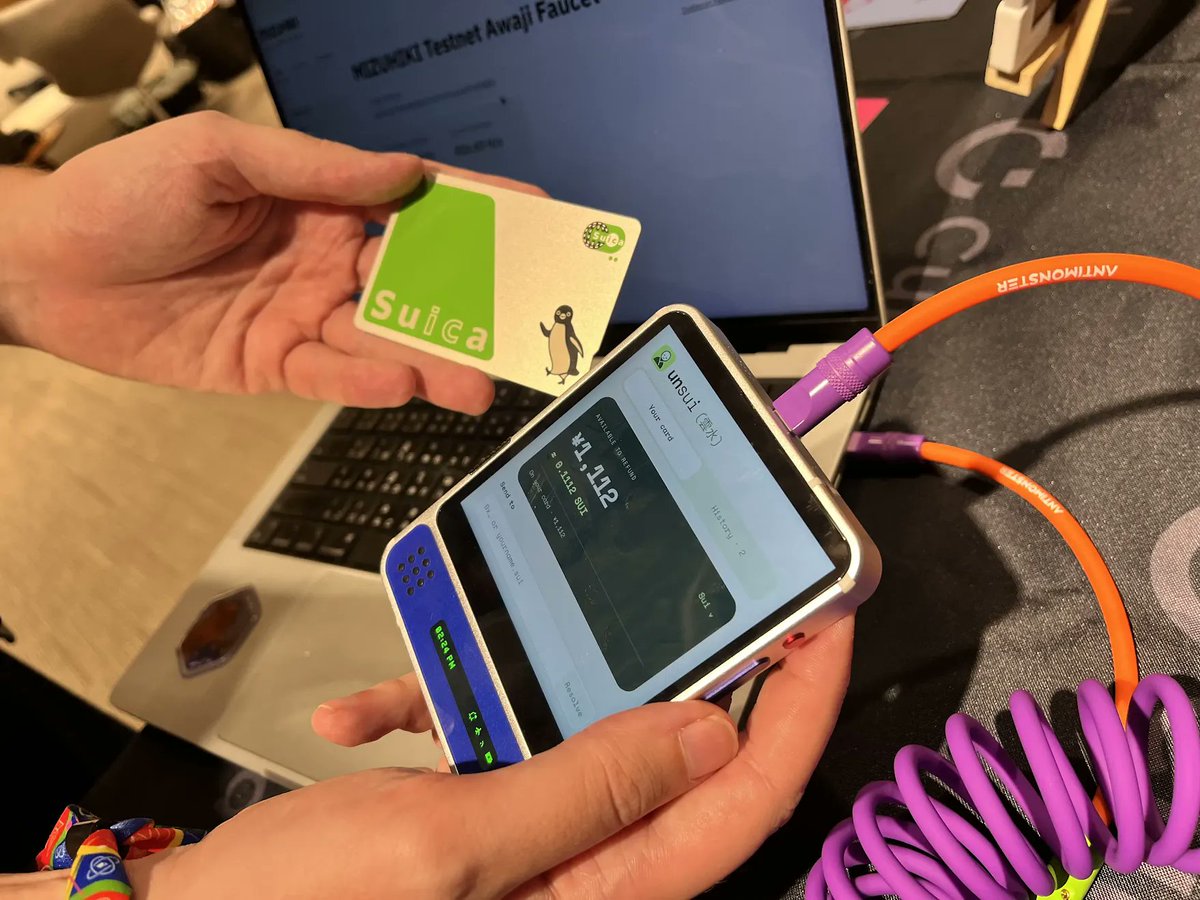
Ever left Japan with unused balance on your Suica? 🇯🇵
UnSui turns a familiar traveler problem into a digital asset use case, connecting physical Suica cards to a crypto refund workflow through NFC.
Users can scan their Suica, view their remaining balance and request conversion to digital assets on @SuiNetwork or @Mizuhiki_Chain.
https://t.co/WJZ7V2f0cJ
Congrats, UnSui! 🎉