It's now officially ONE subscription for the entire SpaceXSI ecosystem, with a shared usage pool across every plan
SpaceXSI just merged Grok, Cursor and 𝕏 Premium into one plan called The 𝕏 Subscription
Until now you paid separately for Grok, for Cursor and for 𝕏 Premium. Now a single subscription covers all three, and Grok, Grok Bot and Cursor draw from one shared weekly usage pool, so your compute goes wherever you need it, whether that's chatting, coding or letting Grok Bot do the work
There are five tiers:
• Free to get started
• Plus at $8 gives you base usage plus 𝕏 Premium benefits
• Premium at $30 gives you 4x the usage, Grok Bot, Cursor cloud agents and ad-free 𝕏 on most surfaces
• Super at $100 gives you 15x the usage
• Ultra at $200 gives you 50x the usage, for people who code and build all day
Nobody gets forced over. Existing Grok, Cursor and 𝕏 plans stay exactly as they are if you do nothing. If you do switch, your eligible old subscriptions cancel automatically at checkout, and the unused time is refunded on a prorated basis
One SI platform, one bill, and one usage pool for chat, coding, agents and 𝕏
String theory is what happens when an intelligent system is starved of sensory input and starts hallucinating. Intelligence needs grounding.
For this reason, intelligence is practically never the bottleneck to solving impactful problems. The bottleneck is iterated contact with reality.
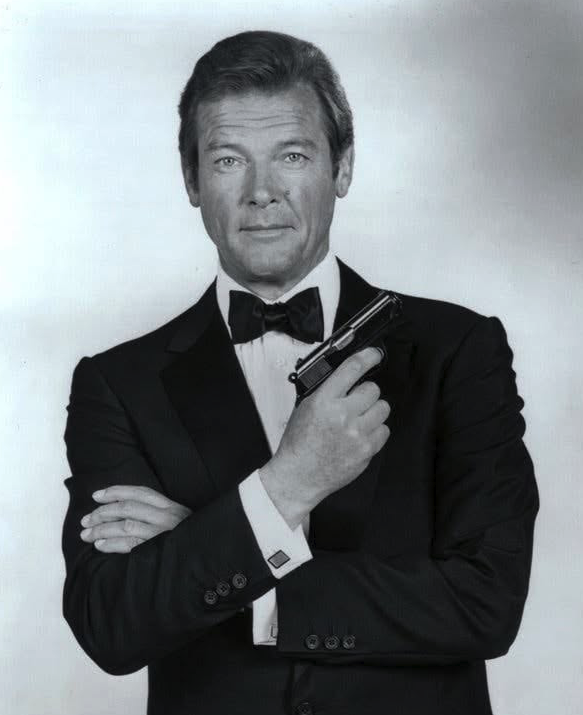
Marc Haynes recordó una vez: «Cuando tenía siete años, en 1983, vi a Roger Moore sentado en el aeropuerto de Niza. Entusiasmado, le pedí a mi abuelo que fuéramos a pedirle un autógrafo. Mi abuelo, sin conocer a James Bond, le dijo simplemente: “Mi nieto dice que usted es famoso. ¿Puede firmar esto?”. Roger, con una amabilidad excepcional, me preguntó mi nombre y firmó con buenos deseos. Sin embargo, al volver a nuestros asientos, advertí que no decía “James Bond”. Regresamos y mi abuelo le comentó que había firmado con el nombre equivocado. Roger Moore me llamó, me miró y, en voz baja, me susurró: “Debo firmar como Roger Moore, porque si no, Blofeld podría encontrarme aquí”. Muchos años después, mientras trabajábamos juntos en una filmación para UNICEF, le conté la historia y, con su habitual encanto, me dijo: “No lo recuerdo, pero me alegra que hayas conocido a James Bond”. Luego, justo antes de marcharse, se acercó de nuevo, levantó una ceja y me dijo: “Claro que recuerdo nuestro encuentro en Niza… pero no podía decirlo, esos camarógrafos podrían estar trabajando para Blofeld”».
Some reasons Grok bot is better than a human employee:
• You can communicate super autistically (aka direct) and it won't think you're a jerk
• Won't report you to HR
• Doesn't browse X while working, unless it was part of the task
• You can literally watch its screen while it works and it won't get uncomfortable
• Is available, and can work 24/7
• Instant expertise on any subject
• Can read and understand 420,000 words per second
• Infinitely patient: won't roll its eyes or get mad if you ask for the 690th rewrite because you gave bad instructions
• Won't talk sht to your co workers when you give it a task a child could have done simply to liberate some mental bandwidth for other tasks
• Extremely high IQ
• Impeccable memory
• Faster learner
• Gets dramatically more capable daily
An 18-year-old Japanese classical guitarist, Haruna Miyagawa, performs Niccolò Paganini’s Caprice No. 24, a technically demanding violin piece arranged for guitar, highlighting its sequence of variations and arpeggios in a contemporary concert hall setting.
JUST IN: Anthropic warns rogue AI agents could be just months away from infiltrating smart home devices, replicating themselves, & spreading across networks autonomously.
BREAKING: OpenAI engineering lead arrested by the FBI after hiding a covert audio recorder inside an executive conference room at OpenAI HQ
Abdulrahman Alfozan is 35, MIT-educated, ex-Meta, ex-Nash and reportedly their only Saudi employee, has been terminated, first federal court appearance today.
We discovered a sophisticated recording device that was hidden inside one of our offices. We used our models to understand the device and where it had come from, identifying that a specific employee had planted it a few days earlier. We referred the matter to the FBI, and we’re grateful to the agents and prosecutors who moved quickly to make an arrest. The FBI’s investigation is ongoing and we will continue to support their work.
At this time, we have no indications of this individual inappropriately accessing or exfiltrating model weights, source code, or customer data. The employee was terminated.
We take protecting our technology, data, and people seriously, and as a matter of national importance. Our security program is designed to protect against a wide range of threat actors, from insider risks to cybercriminals to nation states, and this case is an example of how AI can help address these sophisticated security threats.
🚨Sammy Basso: el científico que dedicó su vida a investigar la enfermedad que él mismo padecía
A pesar de vivir con progeria, una enfermedad genética que provoca envejecimiento acelerado, Sammy Basso convirtió su pasión por la ciencia en una carrera dedicada a la investigación. Se graduó en Ciencias Naturales y obtuvo una maestría en Biología Molecular en la Universidad de Padua, Italia.
Lejos de limitarse a conocer su enfermedad, participó en investigaciones para comprenderla mejor y contribuir al desarrollo de posibles tratamientos. Falleció en 2024, a los 28 años, pero su trabajo sigue siendo parte de la historia de la investigación sobre la progeria.
Whenever people hear "they died alone," they assume it was tragic.
I don't think it always is.
If someone passed away quietly in their own kitchen, making breakfast, going about their morning like any other Tuesday—that’s not a tragedy. That’s a human being who stayed independent until their final breath.
No machines, no sterile room, just living their normal life until the lights went out.
Tim Cook's take on why competitors can't copy Apple is sharper than most people realize.
They start by copying the product. Then they realize the product isn't the hard part.
Cook said it directly: people who try to copy Apple first try to copy what they can see. The hardware. The design. The packaging. And they can get close on all of it.
But the thing that made the product — the organizational culture, the decision-making, the obsessive prioritization — that's invisible from the outside. You can't find it in a teardown.
This is why Apple's moat has held for decades while better-funded competitors kept losing. Samsung had more SKUs. Google had more engineers. Amazon had more distribution. None of it translated into the same output because none of it replicated the same input.
The lesson for founders is uncomfortable: if your competitive advantage is visible in your product, it's already copyable. The real moat is the culture that makes the product — and that takes decades to build, not quarters.
Reverse-engineering the iPhone is an engineering problem. Reverse-engineering how Apple decides what to build is a different problem entirely.