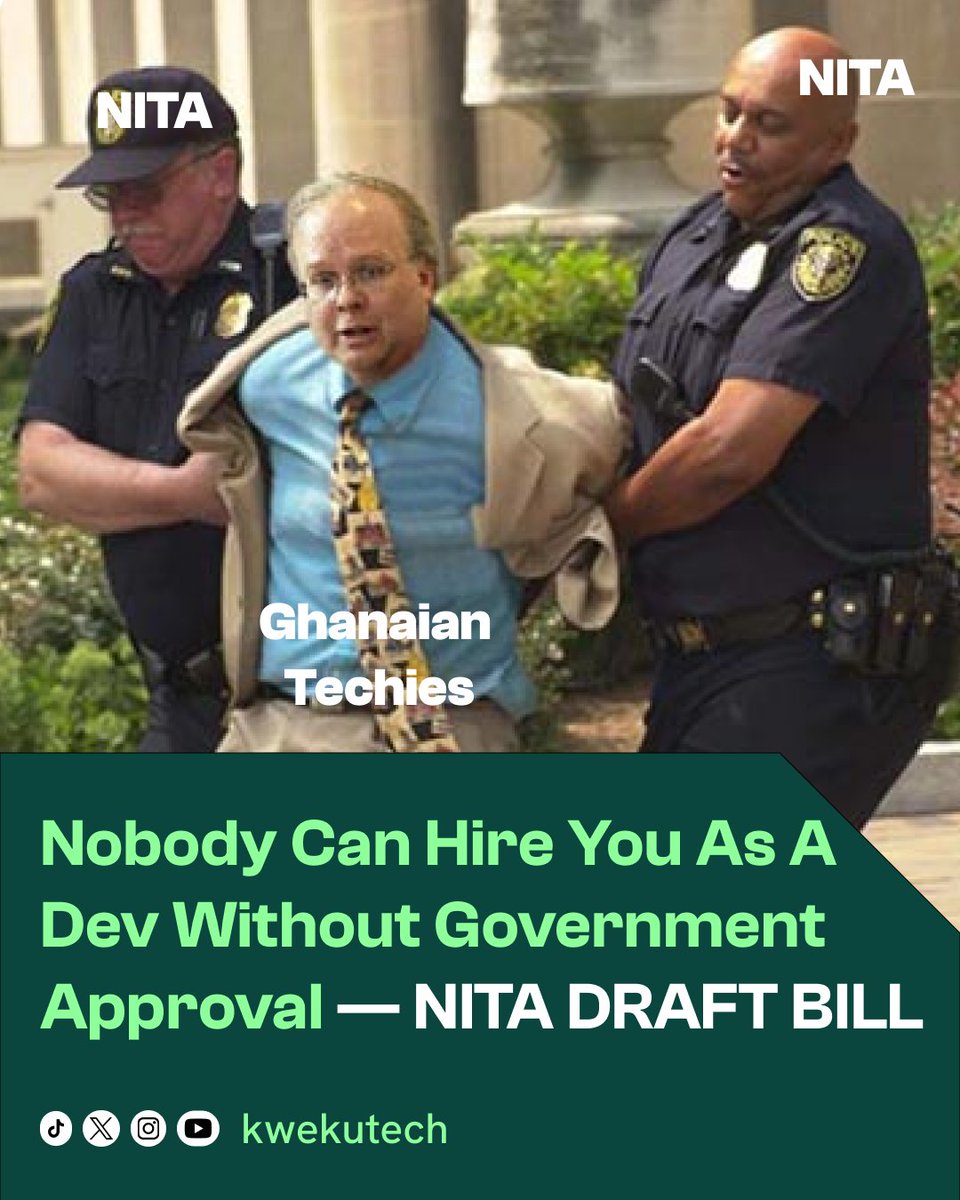
In the last 24 hours, a group of Ghanaians came together to draft a letter to @MoCDTI & @NITAGhana — asking them to publish the latest digital bills and every public comment received.
We need 100 names to send it. Add your name👇🏿 https://t.co/c1pO4X54wN
Here's the thing.
Guys being an employee is even more difficult than being an entrepreneur, because even if you have fewer responsibilities, you can't manage the work your way, and that's where many fail in their careers.
Understand only two things: who your boss is and how she/he wants things done.
Your career will accelerate….and if you really see it's not for you, find your worth elsewhere; don't waste your time where you have no future.
Good luck
@NITAGhana What does he mean by the tech sector is "digital wild west"?
Tech is an ever evolving space that changes more rapidly than any other sector. I doubt these guys understand this space from a global trend perspective.
This seems more of a power trip than a progressive initiative.
The signal that the NITA bill is sending to the very people who are building the tech ecosystem might end up damaging the very ecosystem it intends to regulate.
If you’re a cybersecurity practitioner, I beg don’t rush to pay any 30,000 or 20,000 application fee or license fee to @NITAGhana.
NITA regulates laws and standards within the broader IT space, particularly for IT governance and organizations providing general IT services.
However, cybersecurity services in Ghana are regulated solely by the Cyber Security Authority (@CSAGhana ).
When it comes to CSA licensing and accreditation, first of all is FREE. There are different tiers and categories. Applicants are not compelled to pay a fixed amount upfront. Before any invoice is issued, CSA Ghana conducts a vetting process to assess the qualifications, competence, and eligibility of the applicant or organization. The licensing structure is tier-based, with each tier having its own requirements, fees, and renewal periods.
The accreditation framework published by NITA primarily applies to professionals and organizations operating in IT governance and general IT service delivery, not specifically cybersecurity service providers.
Therefore, if an individual or company provides both IT services and cybersecurity services, they may be required to comply with both regulators respectively: NITA for the IT service component and CSA Ghana for the cybersecurity component.
Also, know this: CYBERSECURITY AUTHORITY is not under @NITAGhana.
@CSAGhana is a full body on its own when it comes to everything cybersecurity in Ghana.
NITA needs to come clear what it means by cybersecurity service providers⚡️
the nita bill, 2025 says no one can be appointed as an ICT professional in a public or private institution without government certification.
that is every developer. every engineer. every sysadmin. public and private.
here is what the bill actually says🧵.
Scientists have discovered AI data centers are even worse for the environment than we thought.
Big data centers create "heat islands" that raise local surface temperatures an average of 3.6°F, enough to potentially devastate local wildlife and water supply.