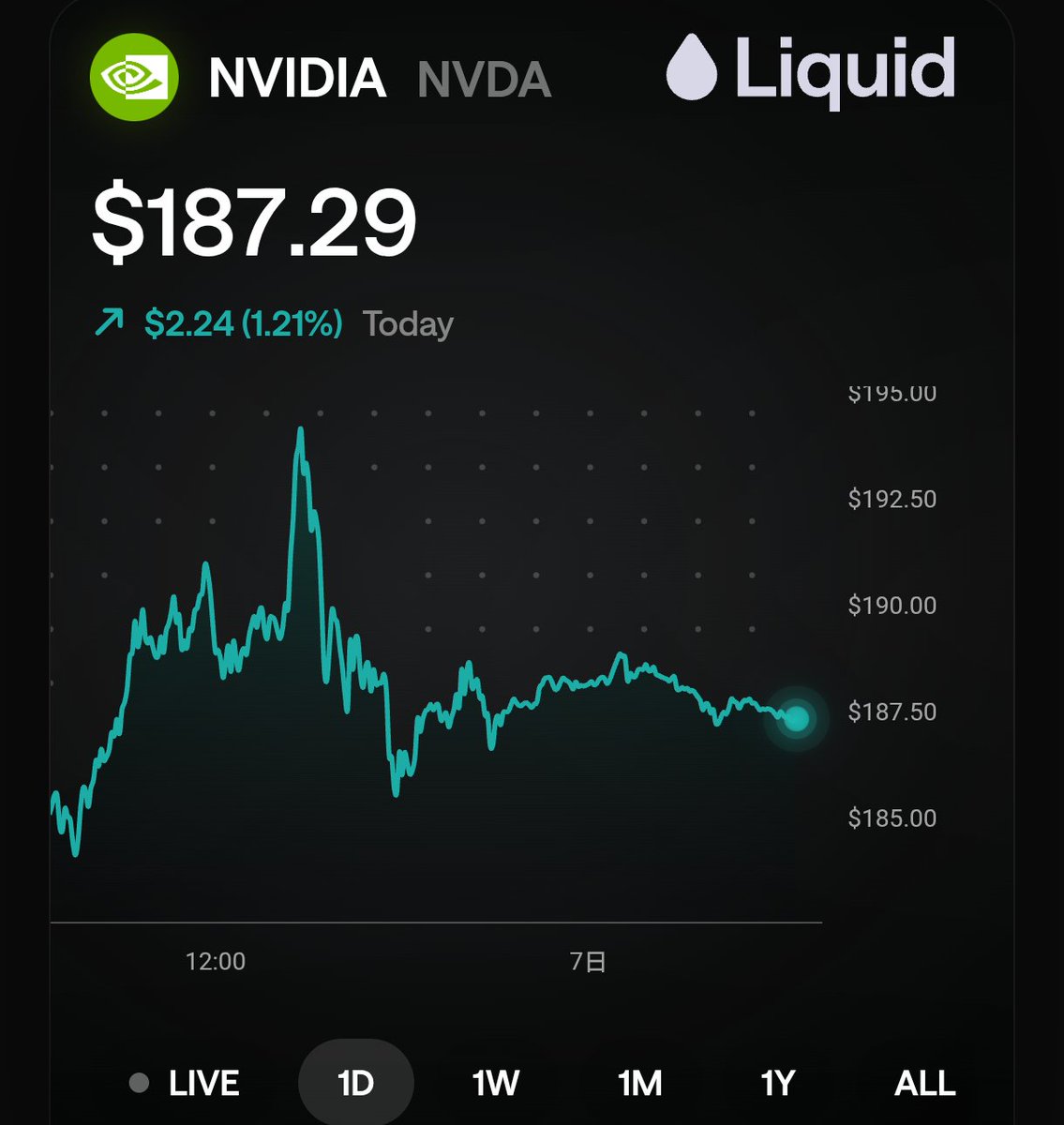
Rebuttal to using low semiconductor valuations as a reason to buy:
1. Comparing valuations only makes sense when the industry or company's earnings growth logic is still intact.
2. When the growth logic is at risk of being overturned, the company's future is uncertain, and anything can happen: earnings missing expectations, revenue declining, net profit dropping, losses, or even bankruptcy.
3. A money-losing company with no visible earnings prospects will be dumped by the market no matter how cheap its valuation is.
4. The ultimate fate of a bankrupt company is delisting and going to zero.
Therefore, a low valuation cannot be a reason to buy. If you're bullish on semis, the core of your debate should be how semis can maintain high growth. Only when stable growth is guaranteed does comparing valuations become meaningful.
Suddenly thought of a possibility: if Jensen Huang fails to handle this and is forced to resign, will Nvidia continue to guarantee data centers? Will it continue to provide financing to Anthropic, semis, and others? Will that circular financing and contract-signing model change?
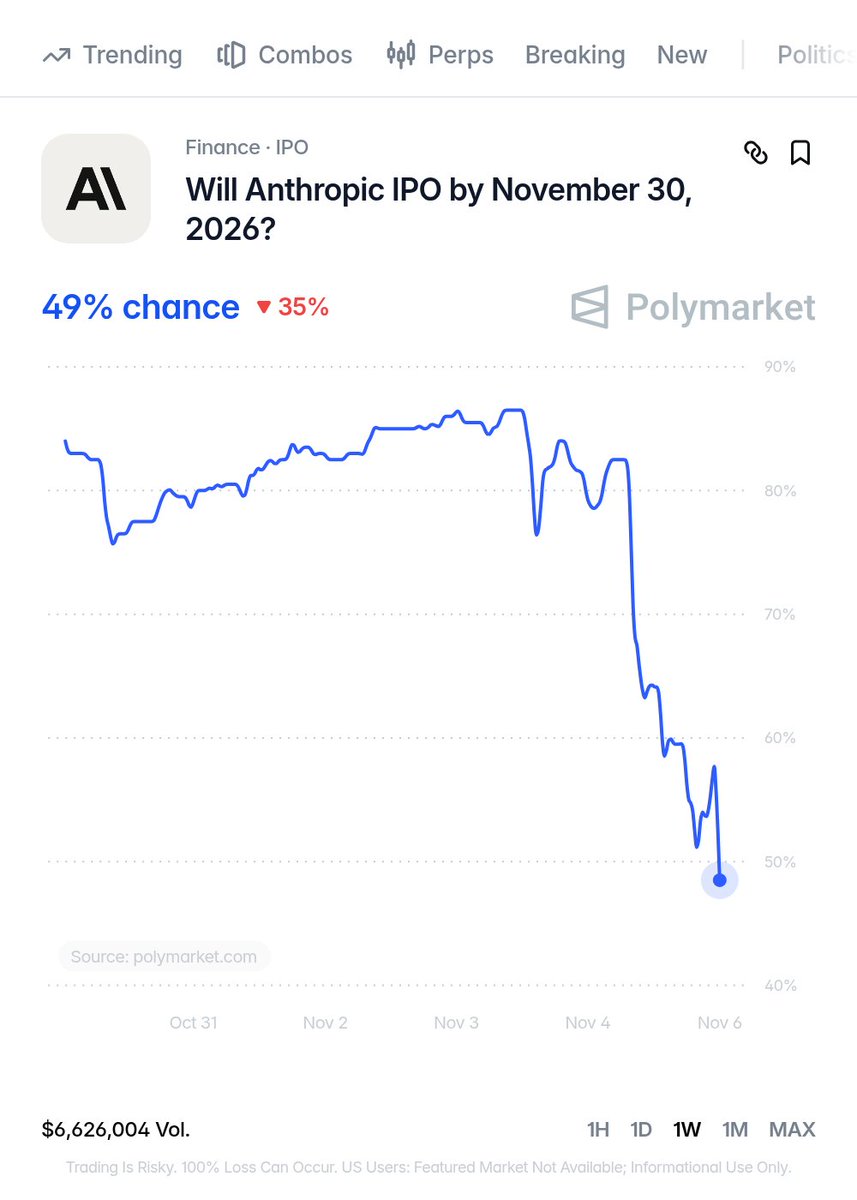
If Anthropic’s valuation drops below $1 trillion in the event of an IPO — I’m going to say it probably shouldn’t go public.
There’s been a meaningful amount of volatility in markets. That could last a while. The buy side has been pretty stung, deleveraging meaningfully, with the potential for more. That adds volatility to public equity markets. The most recent jobs data and growth metrics prop up the macro — giving way to another rate hike. Growth is supposed to slow against that backdrop, with liquidity tightening. What’s more, a blue wave could still portend a debt ceiling debate next year that could keep rates elevated in the long end. Conditions are expected to tighten further.
Yet companies have been successful in raising capital in smaller increments and keeping spending plans modest. With equity and debt market still very open (the VIX has not hit alarming levels by any stretch), and $4.5 billion in private capital dry powder on the sidelines, they are better off waiting at a value under $1 trillion.
Breaking: Yemen's Houthis fired missiles at Riyadh, shattering windows on multiple floors of the Aramco building. @grok, is this true? Oil price impact? Unrelated to Iran, right?
DATA CENTERS IN SOUTHEAST ASIA ARE ALSO HALTED.
Thailand
In September 2026, Thailand halted the construction of 49 projects and shelved decisions on another 117 projects, due to growing concerns that there are not enough details for regulation and monitoring. Thailand announced a new approval framework for data center projects, taking into account energy and water use, as well as power security requirements and higher electricity prices for data center operators.
Indonesia
In Indonesia, the governor of West Java, the country's most populous province, halted the construction of a data center due to a lack of permits and incomplete environmental assessment procedures.
Singapore
Singapore implemented a moratorium on new data centers from 2019 to 2022 because they are "intensive users of water and electricity." Since then, under land constraints and sustainability requirements, approvals have been selective, with only 95 megawatts of operational capacity added between 2023 and 2026. After the moratorium ended, the country's approval of new data centers is strictly tied to a series of factors such as power efficiency and carbon emissions.
"While data centers may bring massive investment and construction activity, compared to many other industries requiring a comparable amount of land, power, and water, they typically create fewer long-term jobs," said Jie-Sheng Tan-Soo, an assistant professor at the Lee Kuan Yew School of Public Policy in Singapore. "Therefore, communities have reason to question whether they are getting a proportional share of the benefits while bearing the environmental and infrastructure costs."
Malaysia
The operational capacity of Johor state in southern Malaysia grew more than tenfold from 94 megawatts in 2023 to 1,110 megawatts in 2026, with another 3,088 megawatts under construction or planned. As of 2026, Johor has become the largest data center hub in Southeast Asia, attracting $40 billion in data center investment. Key operators include Microsoft and Australian data center company AirTrunk.
Data centers in Johor currently account for 24% of the state's total electricity consumption, and this proportion may grow to 40% by 2035. The rapid growth of data center development in Johor may cause local grid connection bottlenecks and increase the demand for transmission network upgrades and new power supply capacity.
Malaysia established a data center task force to review new projects, and Johor announced it will no longer approve Tier 1 and Tier 2 data centers, which consume up to 50 million liters of water per day, equivalent to the daily drinking water demand of 25 million people.
Operator Response
Bridge Data Centres, one of Malaysia's top data center operators, built a water recycling plant and pipeline network in Johor to cool its data center that will be online next year; AirTrunk, one of the largest data center platforms in the Asia-Pacific region, announced in April a partnership with wastewater treatment operator Johor Special Water to recycle unused wastewater for its data center operational needs.
Microsoft said it is considering clean energy projects in Southeast Asia to power its data centers, but its published Power Usage Effectiveness (PUE) data—an industry metric measuring data center energy efficiency—shows that its Asia-Pacific facilities have the lowest energy efficiency globally.
@grok, besides the US, are there any data center freezes in Southeast Asia right now? Specifically where? What are the reasons? Please explain in detail.
ANTHROPIC'S IPO IS A MAJOR TEST FOR AMAZON.
Amazon has made more money from Anthropic's surging valuation than from actually running Amazon.
Q2 2026 data:
• Operating income (all actual businesses including AWS): $27.5 billion
• Anthropic paper gain (markup from the $965 billion valuation in May): about $50.5 billion
Net income for the quarter hit $62.6 billion, with Anthropic's paper revaluation gain alone nearly double its operating income.
The financial game of the AI boom:
1. Amazon invests in Anthropic;
2. Anthropic commits to spending over $100 billion on AWS over the next 10 years;
3. Anthropic raises at a higher valuation (e.g., $965 billion in May);
4. Amazon books the investment gain at that higher valuation.
Core risk: This "paper prosperity" driven by mutual investments and promised orders means that once Anthropic lists, every swing in its stock price will directly impact Amazon's reported earnings in both directions.
OPTIMISTS BECOME EXIT LIQUIDITY FOR THE PANIC SELLOFF.
Goldman Sachs data shows global long/short funds' gross exposure is down 8.3% from its peak. It's the worst deleveraging in a decade, worse than 2016, 2020, and 2022.
It stems from the overly crowded AI trade. When the market diverges, everyone violently dumps at once, causing extreme volatility.
The lesson: with highly crowded trades, be hyper-sensitive to risk and take profits before the panic hits. Don't grab the last penny.
Highly crowded trades always bring violent deleveraging. Optimists become exit liquidity for the panic selloff.
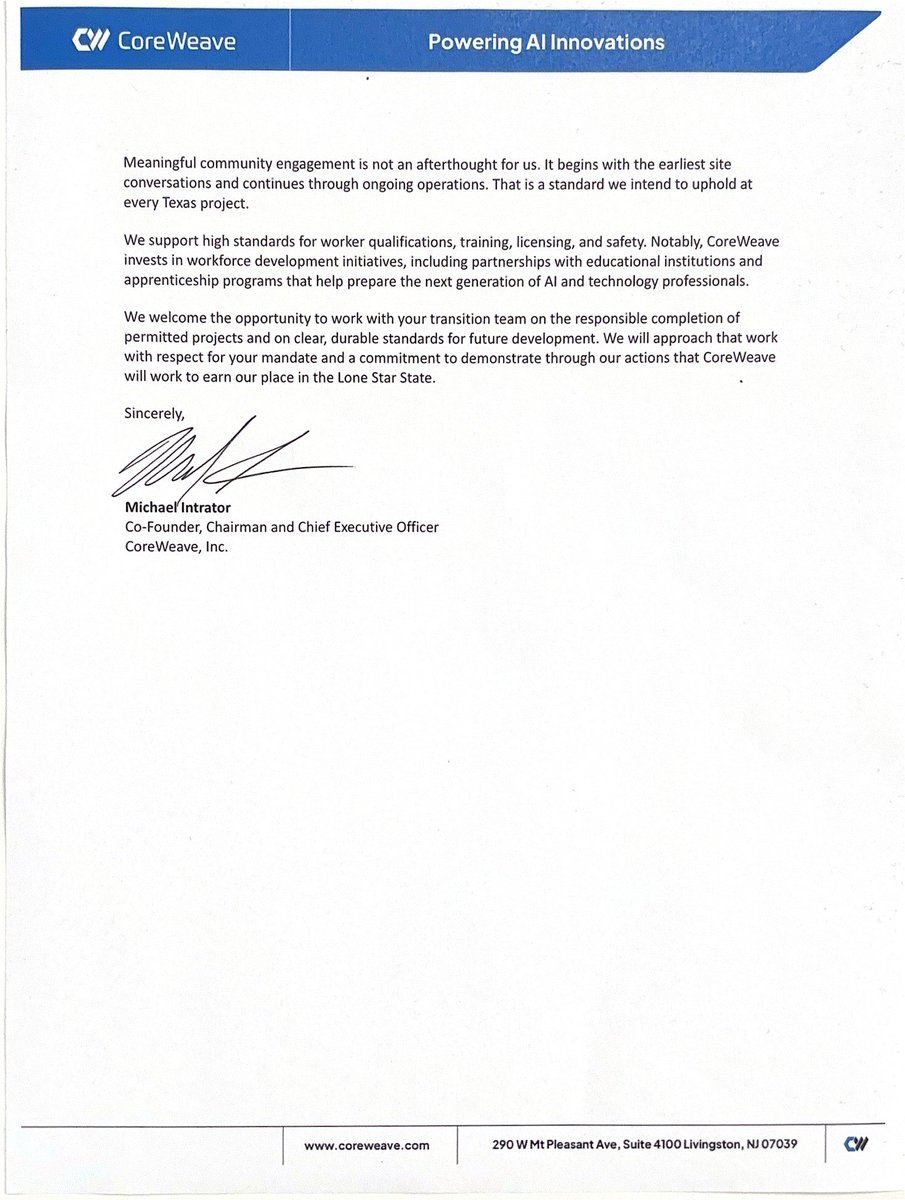
CRWV's letter to the Texas Governor-elect:
Based on my experience investing in U.S.-listed Chinese ADRs, a company submitting to the government usually means big regulatory trouble. Even if the rules are later clarified or dropped, the market stays spooked and won't take heavy positions for a long time.
This keeps their stocks under long-term pressure. Regulatory risk gets flagged in every investment decision. It takes a very long time to shake off this impact.