🎆Our #November issue is out now!🎆
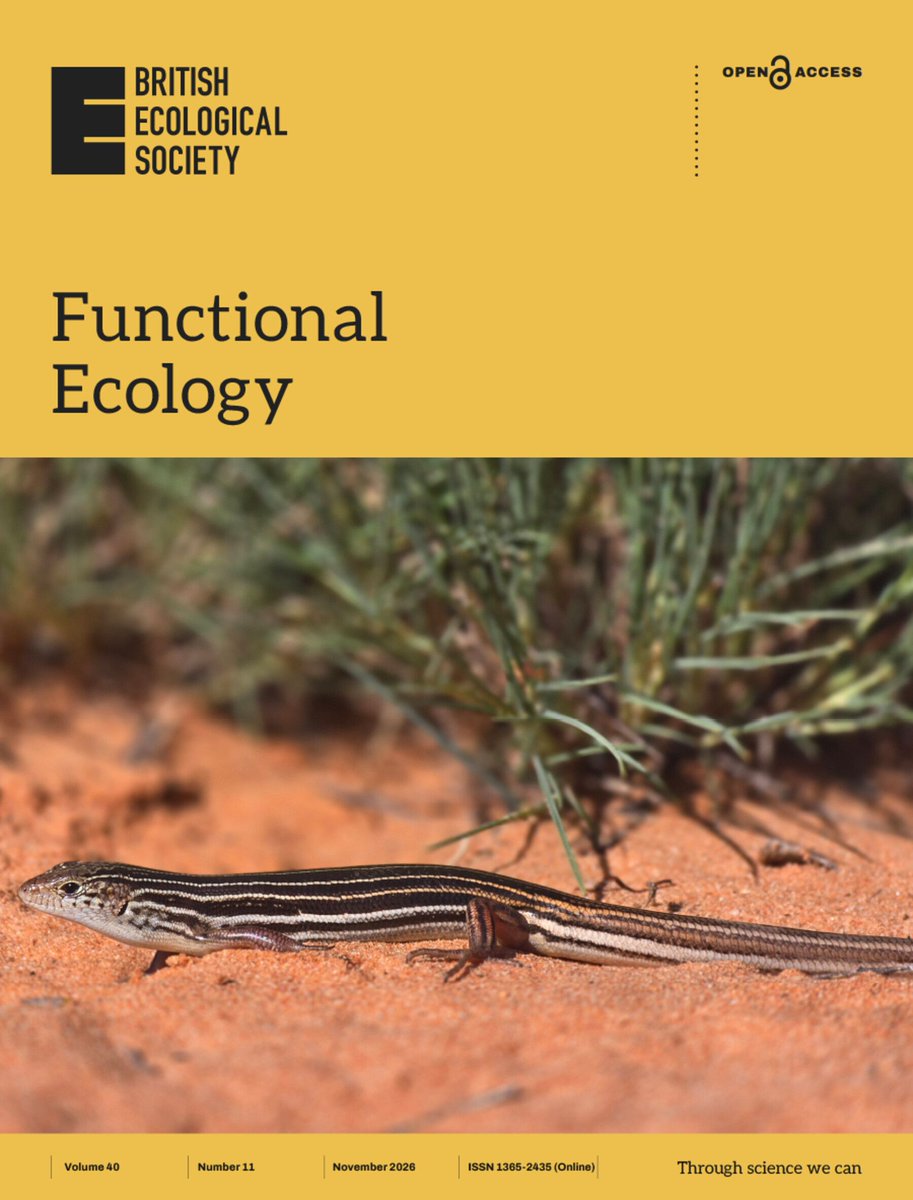
📙On the #cover: The southern mallee #Ctenotus, in front of the spinifex #tussocks upon which it is entirely reliant (Credit: Max Tibby)
Read the full issue here👇️
https://t.co/p5lQY1Hsiw
📰Published📰 By looking at how #species functions are connected, we can understand what drives #functional complexity from a single site to whole #landscapes 🏞️
https://t.co/9oOHw4HjfH
🏆Prize winner!🏆
🏅We hear from the second-place winner of our presentation prize at ICOM, Liu. Pei-Chu!
💡She discusses how different bacterial strains affect mycelial growth and interact with fungus, and her tips for first-time conference attendees
https://t.co/bmtscKqlkz
We're launching an exciting new cross-Society Special Feature with @ESAApplications!
If your research looks to address how applied ecology can be a tool for an uncertain future, we'd love to receive your article proposal 🌏
Find out more below 👇
https://t.co/qnwsTUds9o
📰Published📰 #Water amount, rather than watering frequency, structures root-associated microbial #communities and their links to #plant performance🦠
https://t.co/8xo72211nW
🚨 new podcast!
🏙️ listen to our latest podcast episode on the story behind the paper, "paler within the city: carotenoid-based colouration covaries negatively with the proportion of impervious surface in great tit territories across Europe"
🎧️ https://t.co/G6W1iadTLa
Final version published
Saiz et al. @FunEcology
Land use intensification results in abrupt transitions between extensively and intensively managed grasslands
@HugoSaizB
https://t.co/IzJUSpOH8i
📰Published📰Increasing susceptibility to priming of #soil N mineralisation across a #Subarctic tundra-forest ecotone under N fertilisation🌳
https://t.co/GkYRukKx4B
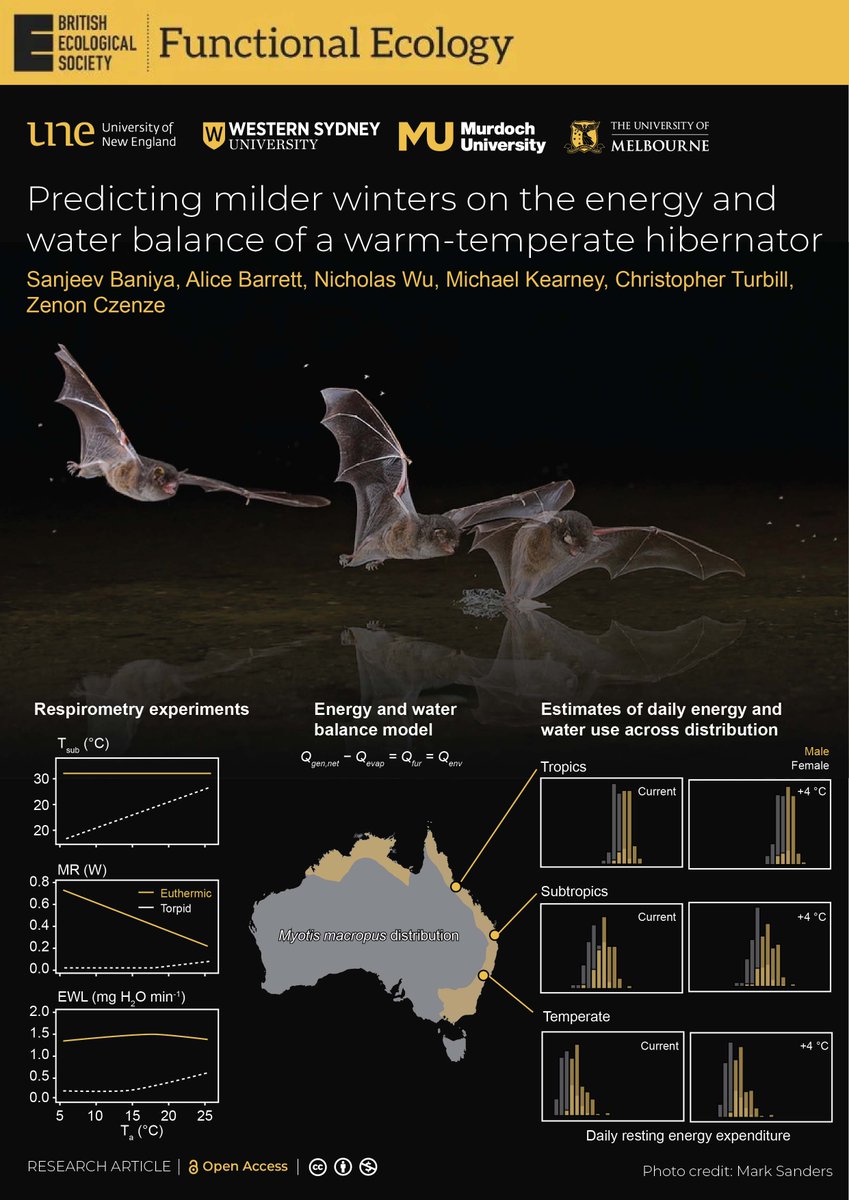
New paper in @FunEcology led by Sanjeev. We show that milder winters could make #hibernation costlier for Australia's fishing #bat, Myotis macropus. Warmer nights mean more waking up, and more insects needed to stay in balance | https://t.co/n9QE4IV6JE