💡 When making choices—like picking a flat, a job, or a romantic partner—when should we stop looking and commit? Our new study from @RHULPsychology published in @commspsychol explores how biased expectations about future options shape our decisions. 🧵👇
Current / recent reading:
A study of Dogen (Masao)
Denkoroku (Keizan)
Realizing Genjokoan (Okumura)
Bendowa Commentary (Uchiyama)
I am a Cat (Soseki)
Setting Sun, No longer Human (Osamu)
Daoism Explained (Moeller)
Autobiography of a Yogi (Yogananda)
Re career advice in economics: You should be very cautious of privileged professors telling you what worked for them.
Three reasons: (1) there's selection on the dependent variable, (2) most people in these positions are not very open to the possibility that they got there because they effectively won something like a lottery or graduated when it was generally much easier to get these academic jobs: they tout the importance of merit and hard work, in part because it probably makes them feel that they "deserved" their luck, and (3) despite what anyone says, there are massive advantages to educational pedigree in econ academia.
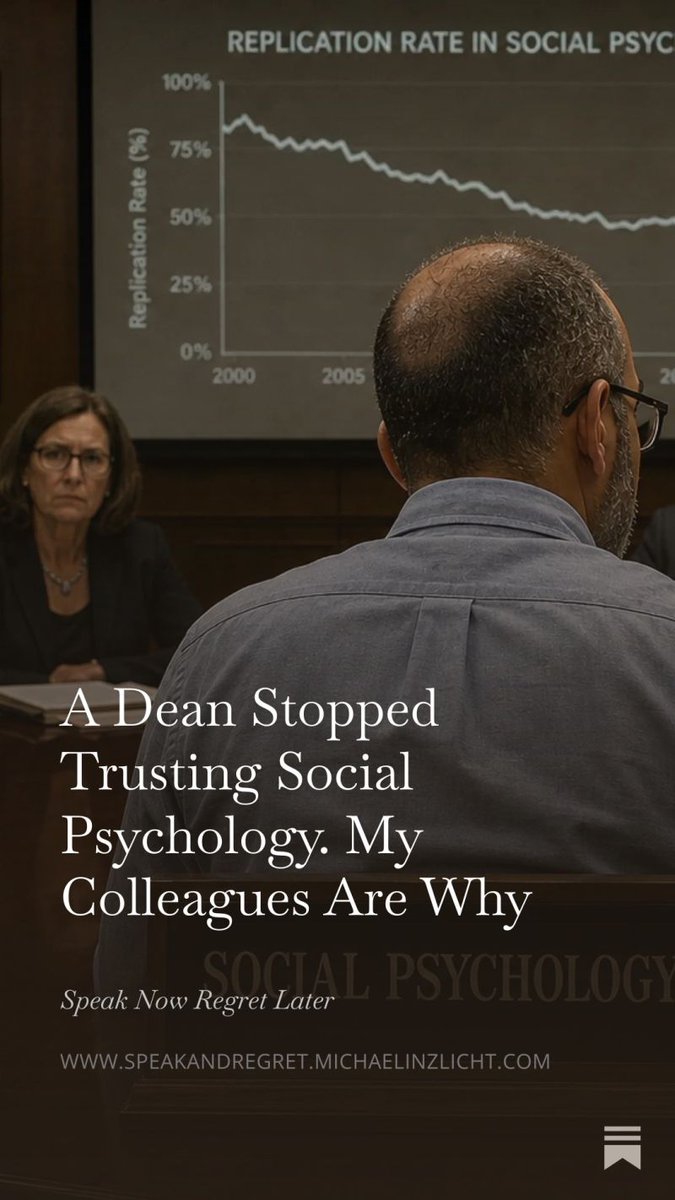
A few weeks ago, a former dean at the University of Utah told me she’d rather not tenure social psychologists. Her reason: she doesn’t trust the field’s findings. She has a point. I just published an essay about why so many of my colleagues seem determined to keep proving her right. A decade after the replication crisis, senior figures in psychology are still arguing the audits were flawed, the reforms were unnecessary, and everything was fine all along. Every time they say it, another smart outsider stops listening.
https://t.co/TH3AjsTZZk
Some branches of neuroscience (and science in general) are unlikely to see real progress for a long time. This stagnation stems from an academic echo chamber that very effectively silences dissent. young researchers introducing new ideas are often marginalized or driven out before they can establish themselves. There must be quite a few of these people who left academia this way and are now working in industry. The current institutional framework simply won't fund or validate anyone bold enough to challenge entrenched ideas. It's a conformist paradise gated by tenure. BTW these stagnant areas tend to have dominant senior people who have never been wrong and shall remain "authorities" forever.
Please help out my Msc student! She's doing a study on decision making in forensic contexts and needs participants. Takes about 15 minutes. Decide if the defendents are guilty or innocent: https://t.co/7wamAGdEYC
Larval Zebrafish can perform evidence integration in a visual random dot motion task. This behavioral task can be done in a high throughput manner .
In this preprint : https://t.co/QvQyLkeuDr
We developed an automatic high throughput fitting method for latent variables inference that allow us to study a variety of conditions such as different zebrafish larvae developmental stages and larval zebrafish mutants.
True, the Athenian did say “the strong do what they can and the weak suffer what they must.” Then, Thucydides teaches us, Athens sailed towards ruin, driven by hubris and demagoguery.
The line gives insight into the blindness of the vain, not the natural order of things.
New in @CogNPsychiatry:
Signal discrimination in the psychotic phenotype: increased sensory precision and reduced decision threshold associated with psychotic-like experiences https://t.co/0QoOYXybqm
From Francesco Scaramozzino and colleagues
🎉 Our paper has been selected for a Neurips Spotlight:
“Scaling and Context Steer LLMs along the Same Computational Path as the Human Brain”
👥led by @JRaugel w/ @stephanedascoli, Jérémy Rapin, @valentinwyart
📄https://t.co/osyBfifdto
📍 Hall C-E Poster #2006
🧵thread 👇
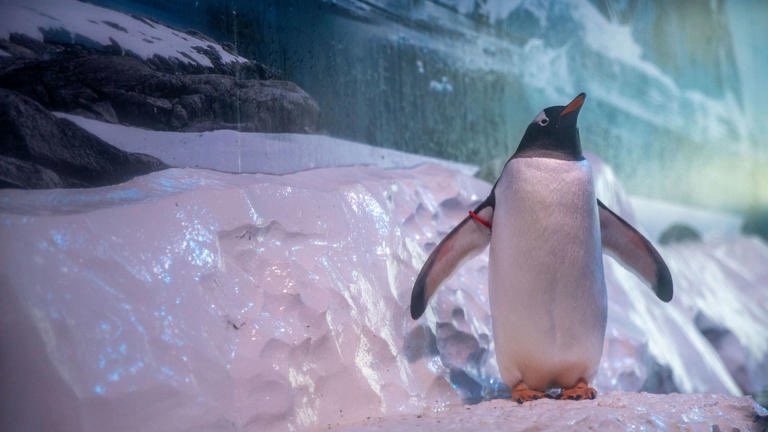
For 14 years, 15 penguins have been "in a windowless basement enclosure" at the Sea Life LondonAquarium, with no daylight or outdoor access @SkyNews
What a price these sentient creatures pay for a few minutes of human entertainment 💔
#Wicked#WildForLife
https://t.co/Y3k4cb8GVc
A large-scale resampling exercise in the Confidence Database was done to study the reliability of (between and within individuals) confidence estimates. Results show that these measures reach a reliability plateau after roughly 50 trials.
@mael_lebreton
https://t.co/DI7pBsrDVR
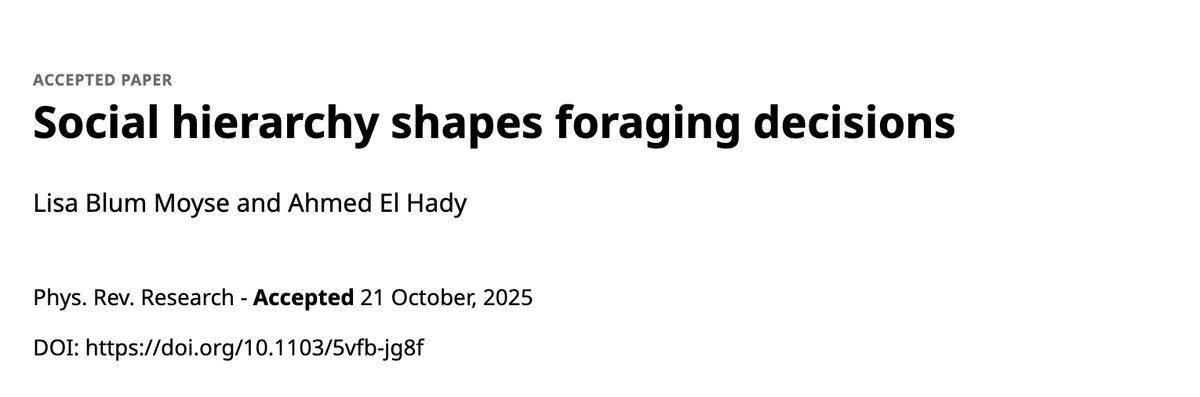
Paper , on social hierarchy and foraging decisions, accepted in Physical Review Research @PhysRevResearch . Should be online soon on this link: https://t.co/3onLz82COE
1/ To explore or to exploit? I’m excited to share my new preprint with @TobiasUHauser and @micahgallen, correlating variations in cortical microstructures with individual differences in exploration-exploitation behaviours, using a gamified task! https://t.co/xzYERidD2F
We're delighted to host the travelling exhibition: ‘The art and legacy of Santiago Ramón y Cajal’ at SWC next month.
📅 7–30 November
🕒 Fri: 2–5 PM | Sat–Sun: 10 AM–3 PM
🎟️ Register for the launch event on 7 November, 16:30
https://t.co/5BvHRGigSC
Adolescents’ choices are influenced by others. A social risky choice experiment and Bayesian modelling reveal that age differences in internal uncertainty, being unsure how to choose, relate to differences in the susceptibility to social influence.
https://t.co/oaDqTBio58