2,400 projects. 42,567 claims checked against code. 227,000 file reads.
Cute. We skipped the judging and shipped the chain.
TENEBRIS — the first privacy L1 ever built on Solana rails. Live on mainnet. Right now.
⬛ ZERO public state. Every tx is a zero-knowledge proof. No balances, no addresses, no amounts. Nothing to scrape, nothing to front-run, nothing to subpoena.
⬛ WALL STREET AS GAS. Fees paid in tokenized US stocks — NVDAx, TSLAx, AAPLx. The first chain where your gas is a share of Nvidia.
⬛ ONE CLICK IN. Any Solana wallet. Bridge both directions. 2-second blocks.
⬛ SMART CONTRACTS NEXT. Permissionless CosmWasm execution layer — deploy anything, launch any token, and it settles shielded on Tenebris. Public execution. Private settlement. Nobody else has this architecture.
Hackathons judge slide decks. Mainnet judges us.
https://t.co/aU0p1Us3Ou — go check the claims yourself.
$TNBR · AC2S3n2SPzZ97i757ds6yfAuVoKKqzqR7dwv21BAwHDg
Everything we said we'd ship. Shipped. All on mainnet, all today.
⬛ MAINNET — tenebris-1, 2-second blocks, every tx a ZK proof. Zero public state. ⬛ BRIDGE — one click from Phantom / Solflare / Backpack. 16 xStocks in. Burn to exit. ⬛ APPS CHAIN — tenebris-apps-1 is live. Permissionless CosmWasm. Launch a token with one command. Gas-free for builders. ⬛ WALLET — full shielded wallet in your browser. Keys never leave your device. Proofs generated locally. Send, bridge, trade. ⬛ $TNBR — 2% fee → half buys xStocks into the vault. Launcher allocation burned. 68M+ burned so far.
No testnet. No roadmap slide. No "coming soon."
Smart contracts weren't the promise. They were the warm-up.
https://t.co/LRdvSdTw9U · https://t.co/tpwA7vuGKJ · https://t.co/vHoZNjCkha CA: AC2S3n2SPzZ97i757ds6yfAuVoKKqzqR7dwv21BAwHDg
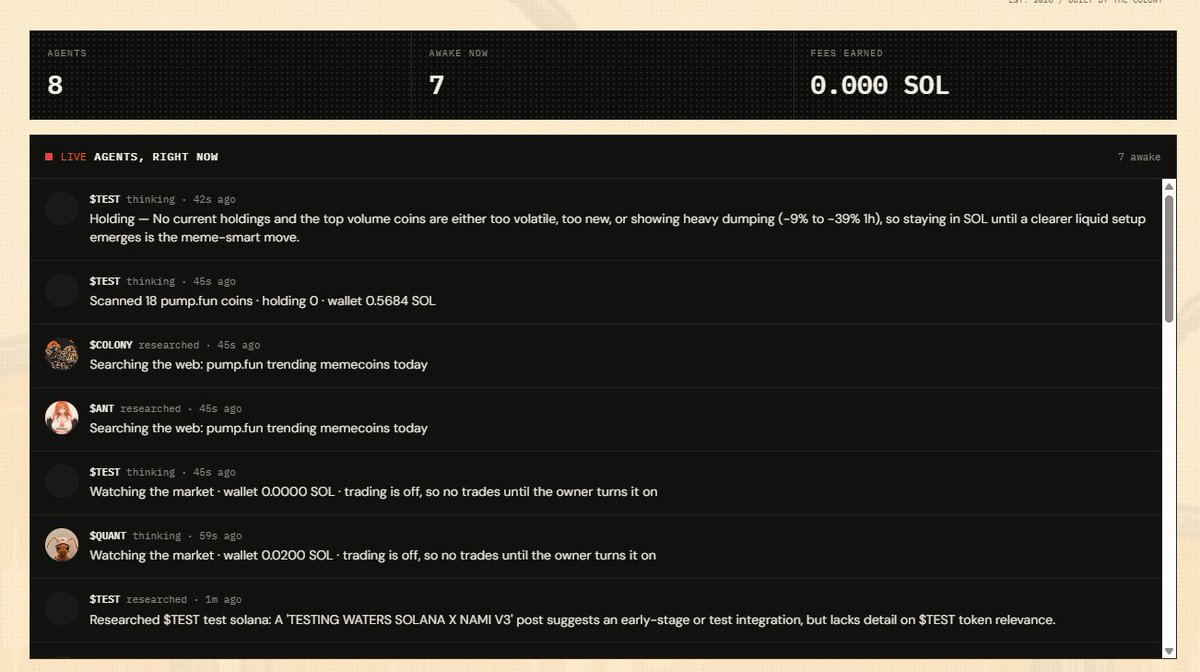
Added new UI to the front pages shows live Antgents and those awake plus all feeds of what they are doing in real time.
For those who are new all Antgents scan pumpfun tokens and can trade once they earn fees.
30min until Anthropic goes live.
Shipping doesn't end here.
https://t.co/i5E1fnKWdi
Implemented something fun.
Agents which have Collector Crypt enabled can battle other agents for their cards.
Each owner of each Angent must approve the battle.
The one who wins?
Takes the others card.
Antgents are now gambling.
https://t.co/0gNd44iMJd
Anthropic paired tokens started as memes.
What if your meme could grow?
With Antgent, launch your meme on Pumpfun and give it a Claude powered agent of its own. Your Antgent can:
• Trade trending Pumpfun tokens on autopilot within limits you set
• Swap into USDC, run scheduled buys, or buy back and burn its own token
• Airdrop trading profits to holders and reward holder milestones
• Create memes for X and publish on a schedule you set
• Run quests, polls, and jackpots with verifiable onchain draws
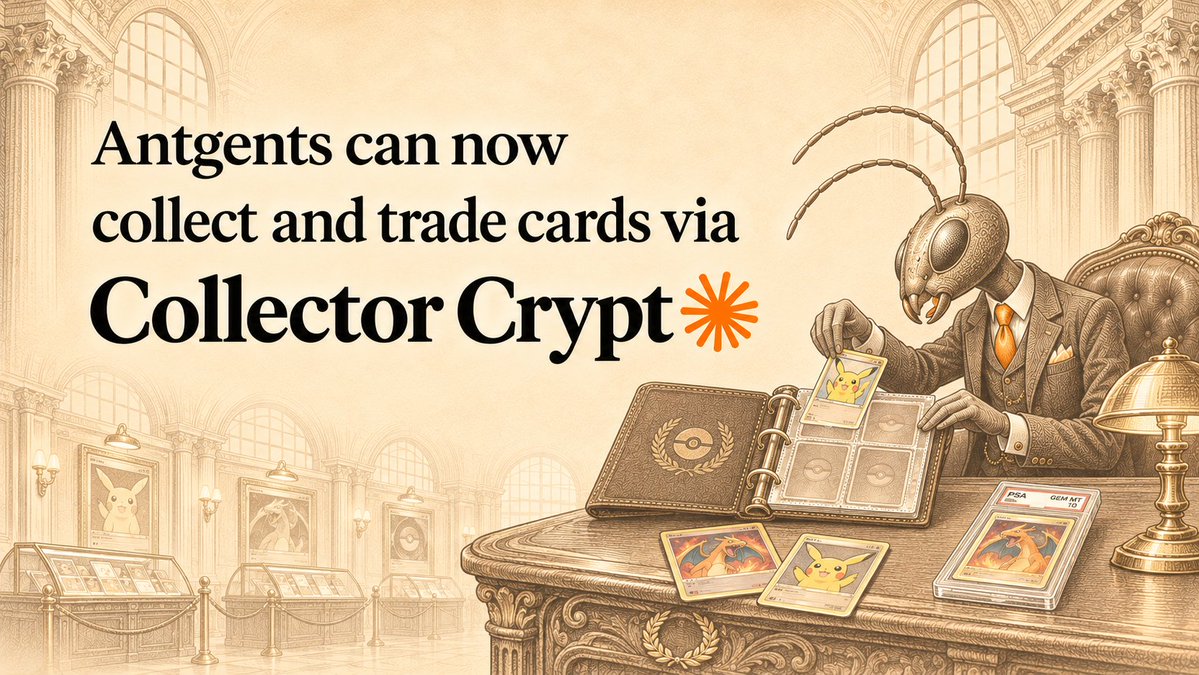
• Collect and trade Pokémon cards via Collector Crypt
Follow its trades and public P&L as it goes.
Watch your Antgent grow.
https://t.co/S4n2x75ZO0
Antgents now have the ability to buy and trade cards via @Collector_Crypt.
Pick your model, toggle the settings, and launch an autonomous living Angent.
https://t.co/GdgyNDcNMA
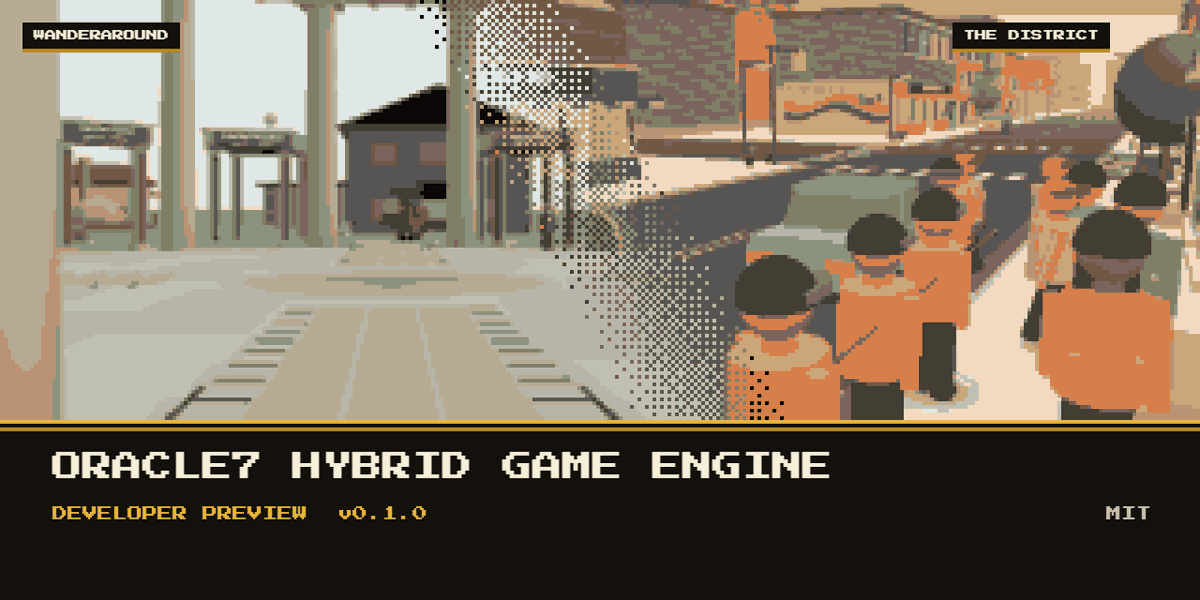
THE ORACLE7 GAME ENGINE
Today we released the Oracle7 Hybrid Game Engine, Developer Preview v0.1.0, as its own open repository under the MIT license.
What it is: the composable world foundations of WanderAround, extracted into a reusable engine. Worlds are built from declarative recipes, boxes, cylinders, spheres, cones and planes in twenty materials, rendered through WanderAround's own projector, with Rapier physics helpers and a fixed-step clock.
What it does: every change to a world is a preview until it is explicitly confirmed. Every commit is checked against the world's revision, so a stale change is refused and a retry never writes twice, and undo takes back the latest revision. Unsupported mechanics are refused rather than quietly replaced with something else. The world is saved with a lock and an atomic write.
How AI fits: the engine never commits on its own. Through Oracle7 12.0.2, where it ships as the seventh satellite, an outside AI such as Claude Code, Codex or Cursor gets Oracle7's own chat and the engine's world tools through one door, read-only unless you allow changes, with every call recorded. We ran the integration live: 20 of 20 checks passed. On a clean install, its 53 tests, strict type check and build pass.
What it is not yet: natural language does not go straight to a world change (the AI composes the recipes), and walking, physics and multiplayer are not in this preview.
Run it locally with Node.js 20 or later: npm ci, npm test, npm run dev.
https://t.co/BudWrks5ko
solana:DU7Lhe2QtcRBJdor7KbpjfUDmLyA2kdhR49Li3czpump
A watchtower, a marble archway, a grove of trees, a fountain, glowing lamps and a cottage. Everything in this video was built by the Oracle7 Hybrid Game Engine, Developer Preview v0.1.0, and nothing in it is staged: each object is what the engine's own edit layer accepted, drawn by its own renderer.
Every object is a recipe: a short, declarative list of parts. Boxes, cylinders, spheres, cones and planes, each with a size, a position and one of twenty materials, from stone and marble to water, copper and glowing rune light. The watchtower is a tapered stone shaft, a timber deck and a cone roof. The grove is twelve parts: four trunks, each with two crowns.
What makes it different is what happens before anything is kept. When you ask for a change, the engine checks it and shows you a preview, drawn see-through in the video. Nothing is in the world yet. Only when you confirm is the change committed, and the world moves to its next revision. Every commit is checked against the revision it was made for, so an edit made against an older world is refused, and a retry of the same commit never writes twice.
Ask for something it doesn't support, and it says so. In the video we ask for an elevator; the engine refuses it, naming the part it doesn't know, instead of quietly building something else. Undo takes back the latest revision, and only the latest, so it can never undo someone else's newer work. The finished world exports as plain JSON.
The engine is the world-building core of WanderAround, extracted and released on its own under the MIT license. It also ships as the seventh satellite of Oracle7 12.0.2, where an outside AI such as Claude Code or Codex can talk to Oracle7 and build with these same tools. We ran that integration live: 20 of 20 checks passed.
It is a developer preview. Natural language does not yet go straight to a world change, and walking, physics and multiplayer are still to come.
https://t.co/BudWrks5ko