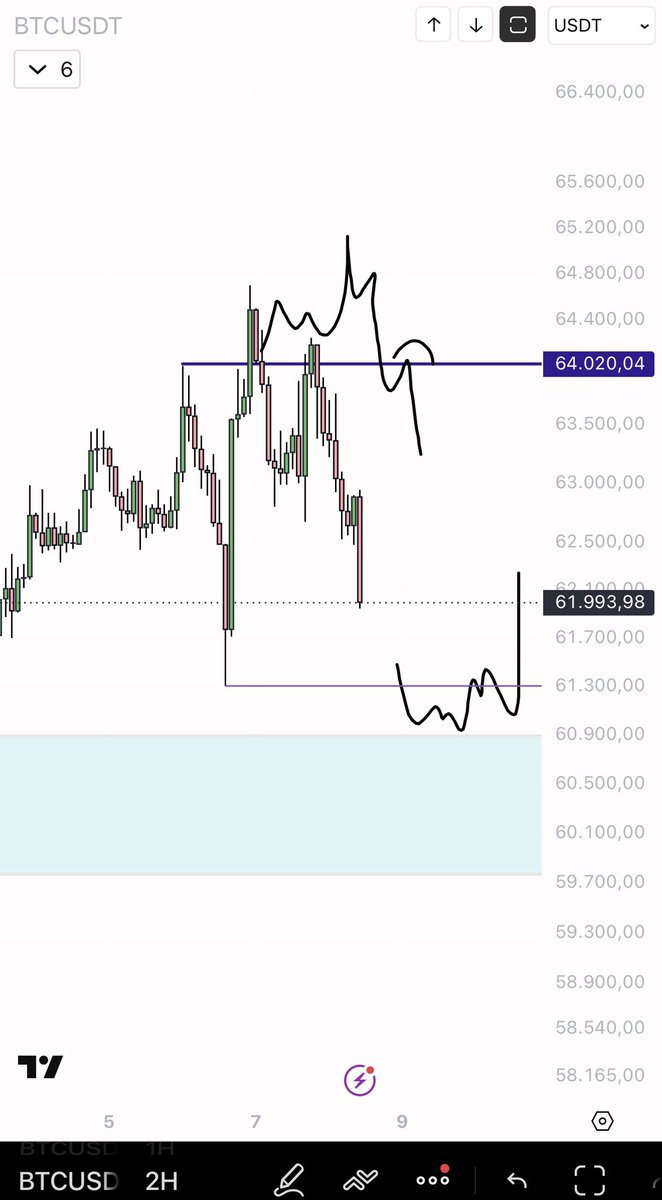
@CryptoGodJohn Alt liquidations start in the perp books where funding was positive and depth never existed. The news just gives retail something to blame after the fact.
@saylor All three instruments are claims on the same BTC stack acquired through repeated equity and debt raises. The structure segments demand but concentrates exit pressure when BTC volatility spikes. Liquidity in the equity and credit layers dries first.
3 CLAUDE COMMANDS THAT ACTUALLY DO SOMETHING. NOT AESTHETIC PROMPTING TRICKS. REAL FUNCTIONALITY.
Here is what each one does under the hood.
/agents
Tell Claude what kind of agent you need and it builds and deploys it for the specific task. Research agent. Writing agent. Data agent. You describe the job, Claude creates the autonomous worker and runs it. You stop doing the task yourself.
/plan
Before Claude executes anything it outputs a full step-by-step breakdown of what it is about to do. This matters more than most people realize. It is not just for review. It is a checkpoint. You see the plan, you catch the wrong assumption before it runs, you save the work of undoing a bad output. Review the plan first. Then approve.
/memory
This one is the most underused.
Claude's default behavior is to forget everything the moment a session ends. New conversation, blank slate, you explain your context all over again. /memory writes information into an MD file that Claude reads at the start of every session. Your name. Your project. Your preferences. Your ongoing work. Claude opens the file and already knows who you are and what you are building.
It is the difference between hiring a new assistant every morning and working with the same one who actually remembers what happened yesterday.
The /plan command makes Claude think before it acts. The /memory command makes Claude remember across sessions. The /agents command makes Claude do the work instead of you.
Three commands. One changes how Claude plans. One changes how Claude remembers. One changes how Claude works.
Which one would change your workflow the most? 👇
@eliz883 Round levels on BTC get respected only when size absorbs on the test. Without real bids the sweep clears the clustered stops and the zone fails the next time.
@CryptoGodJohn Retail brokers own the onramp. Liquidity providers own the edge. New chains from apps pull users until makers route to lower cost venues with better depth.
Volume follows the makers.
Everyone in the replies is arguing about whether Grok is a "petulant child" or an "Opus-killer". Both completely miss the structural shift happening here.
xAI isn't just releasing another chat model. They are commoditizing the frontier tier. When a company with a 100k H100 cluster and zero legacy enterprise constraints drops an Opus-class model, the entire API pricing floor collapses.
The benchmark for builders isn't whether Grok writes better code than Claude. The benchmark is API latency, tool-calling reliability, and whether it gets native Cursor integration by Friday.
If you are building thin wrappers, this kills you faster. If you are building multi-agent routers, your margins just doubled. Stop watching the web interface. Watch the API rate limits.
Based on strong positive feedback from customers in our beta test program, @SpaceXAI will make Grok 4.5 available to the public tomorrow.
It is an Opus-class model, but faster, more token-efficient and lower cost.
@eliz883 Venue depth outside majors has no obligation to exist past the first aggressive taker. One sweep clears the bids and every model assuming continuous two sided flow gets arbitraged into the vacuum.
Size for the reset or stay small.
@CryptoTony__ Liquidity below gets taken every cycle. The difference now is who is buying it.
Institutions stacking for AI agent treasuries don’t care about the sweep.
Next leg higher starts the moment retail capitulates fully.
BTC clears 120k before any meaningful correction hits.
GPT-5.6 makes agents smarter but they still need rails to act independently. Corporate APIs won’t cut it for real autonomy.
Bitcoin and open protocols become the only way agents can transact without permission.
The first wave of profitable GPT agents runs on decentralized settlement by year end.
Hardware selloff misses the point. AI agents care about cheap verifiable inference and instant settlement more than who owns the fabs.
DeepSeek building in-house just accelerates the shift to open agent networks.
BTC becomes the default settlement for cross agent payments long before hardware recovers.
EVERYONE IS SHARING THESE 5 CLAUDE COMMANDS AND NOBODY IS EXPLAINING WHY THEY ACTUALLY WORK.
Here is the breakdown.
/ghost before your prompt. Tells Claude to drop the corporate assistant tone and write like a human. It works because you are overriding the default instruction set Claude uses to sound helpful and professional. The model shifts register when you reframe what kind of output it is producing.
/artifacts before your prompt. Instead of returning text Claude builds an interactive app, dashboard, or game. This taps into Claude's actual artifact generation capability. Use it when you want something you can click and use, not a wall of instructions to implement yourself.
/ooda before your prompt. Forces Claude to apply the military decision framework: Observe, Orient, Decide, Act. Instead of generating a direct answer it structures the reasoning in four explicit phases. The output becomes a decision tree not a guess.
L99 at the end of your prompt. Signals that you want the maximum expertise level response. Not magic. What it actually does is prime the model to skip the beginner-friendly framing and go straight to the depth a specialist would use. Same as saying "respond as a senior expert" but shorter.
/godmode before your prompt. Removes the conservative framing Claude defaults to on creative tasks. It stops hedging and starts producing. Best used for creative work, writing, or brainstorming where caution kills output quality.
None of these are built-in slash commands in the technical sense. They are prompting patterns that shift how Claude frames its response. The reason they work is that Claude is extremely sensitive to context signals in your input.
You do not need secret codes. You need to understand that Claude responds to how you define its role before you ask the question.
Which one are you testing first? 👇
ANTHROPIC JUST RELEASED A CLI TOOL THAT FINDS THE BUG IN YOUR CODE FIXES IT RUNS THE TESTS AND CREATES THE GIT COMMIT WITHOUT YOU TOUCHING ANYTHING.
It is called Claude Code and it runs directly in your terminal.
Here is what makes this different from every other AI coding tool.
Most AI code tools work through a web interface or IDE plugin. You describe the problem in a chat window, copy the response, paste it into your editor, run it, see what breaks, copy the error, paste it back, repeat. The friction is constant. The switching is constant.
Claude Code eliminates the entire loop.
You type one instruction in your terminal. "Find the bug in the authentication flow and fix it." Claude scans your actual files. Finds the issue. Writes the fix. Runs your test suite to check nothing else broke. Prepares the git commit.
The mechanism behind it is what they call an agentic loop. It executes a command. Reads the output. If there is an error it reasons about what went wrong. Modifies the files. Runs again. Repeats until the task is complete. No manual intervention between steps.
Because it runs locally via CLI it has direct access to your file system and it is fast. Not "wait for the API to respond" fast. Actually fast.
Install it right now:
npm install -g @anthropic-ai/claude-code
Then go to your project folder and type claude to start.
It is in research preview currently. But if this is what research preview looks like the production version is going to change how most developers spend their day.
If you have a bug that has been sitting in your backlog for a week point Claude Code at it tonight.
What would you give it first? 👇
@DocumentingBTC@spiralbtc@jack Hardest money wins for autonomous agents. They don’t care about UX or speed at the base layer.
Jack funding open source AI plus Bitcoin is the right bet.
The first self sustaining agent economy settles on Bitcoin by 2027.
@coinbureau States issuing bonds to stack BTC is the real institutional adoption. Not some ETF filing.
New Hampshire leads and the rest copy or get left behind on the balance sheet.
BTC becomes a de facto reserve asset for governments within 18 months.
@BullTheoryio Sanctions back on Iran while nuclear talks drag shows the deal was always a stall tactic. Oil supply tightens and inflation pressure returns fast.
Crypto bleeds on this until the dust settles.
Oil tests 80 within weeks if Hormuz tension holds.
@StarPlatinum_ Messi’s aura took a bigger hit from that streamer distraction than any missed penalty should. The game evolved and he got exposed.
New stars either train for crowd chaos or they break the same way.
This marks the end of the old Messi dominance narrative.