Imagine every pixel on your screen, streamed live directly from a model. No HTML, no layout engine, no code. Just exactly what you want to see.
@eddiejiao_obj, @drewocarr and I built a prototype to see how this could actually work, and set out to make it real. We're calling it Flipbook. (1/5)
Ladies and gentlemen, today we're launching one of our biggest changes to 𝕏
Introducing Custom Timelines
This feature allows you to pin a specific topic to your home tab. With support for over 75 topics, you can dive deep into your favorite niche on X.
It's powered by Grok's understanding of every post with the algorithm's personalization—meaning every timeline is made just for you. And it works even better when it's a topic you already engage with.
This was a huge undertaking across many months, so we're excited for you take it for a spin.
We're giving early access to Premium subscribers on iOS (and Android coming very soon).
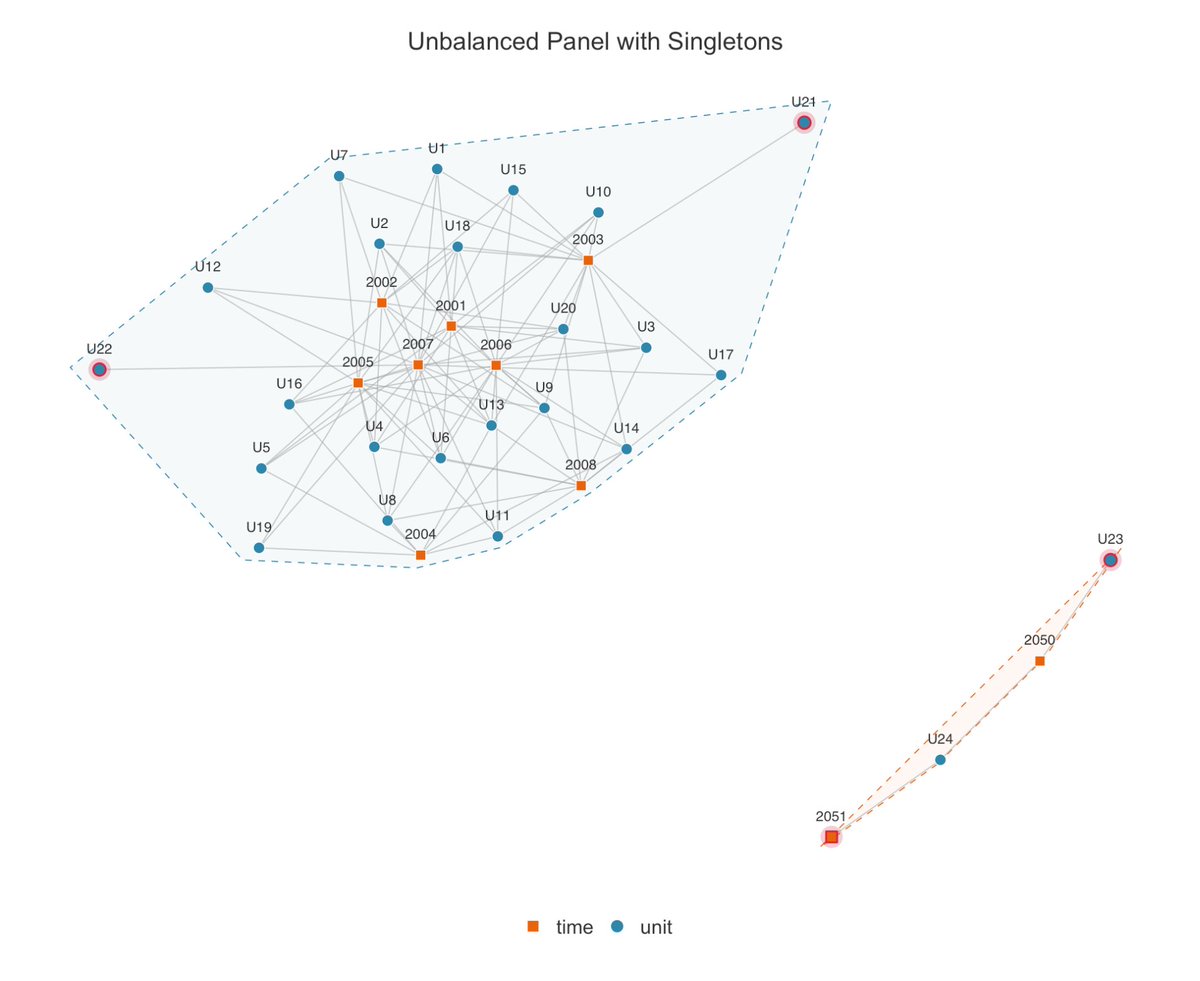
Just updated **panelView** in R: it now visualizes multi-way fixed-effect structures as a network graph, building on earlier work by Sergio Correia. You can easily identify singletons and duplicate observations before estimation. https://t.co/xzYe311R7s
@causalinf Learned about this recently too w.r.t. LLMs' non-deterministic output, even when temp is 0! GPU parallel processing doesn't guarantee a fixed ordering of FP ops and the small rounding errors accumulate to produce different output.
Announcing a new Claude Code feature: Remote Control. It's rolling out now to Max users in research preview. Try it with /remote-control
Start local sessions from the terminal, then continue them from your phone. Take a walk, see the sun, walk your dog without losing your flow.
Introducing bot authenticity checks that detect agentic AI and bots in online research.
100% accuracy in testing. Our tool flags automated browser scripts or non-human behavior within your @Qualtrics studies, so you can collect data with high confidence that it's human.
eBay has just banned AI agents that buy products on people's behalf. As @alexolegimas and I describe in our article (link below), this behavior is a barrier to consumer friendly agentic commerce. To counteract it, we may need a right to bring your own agent.
@jt_kerwin I would worry that the assumptions may be overlooked by many (that unequal variances cause the math to fall apart), though I realize the blog post mentions this. And, yeah, the 'oddness' of this seems like it would create more trouble for interpretation than it resolves?
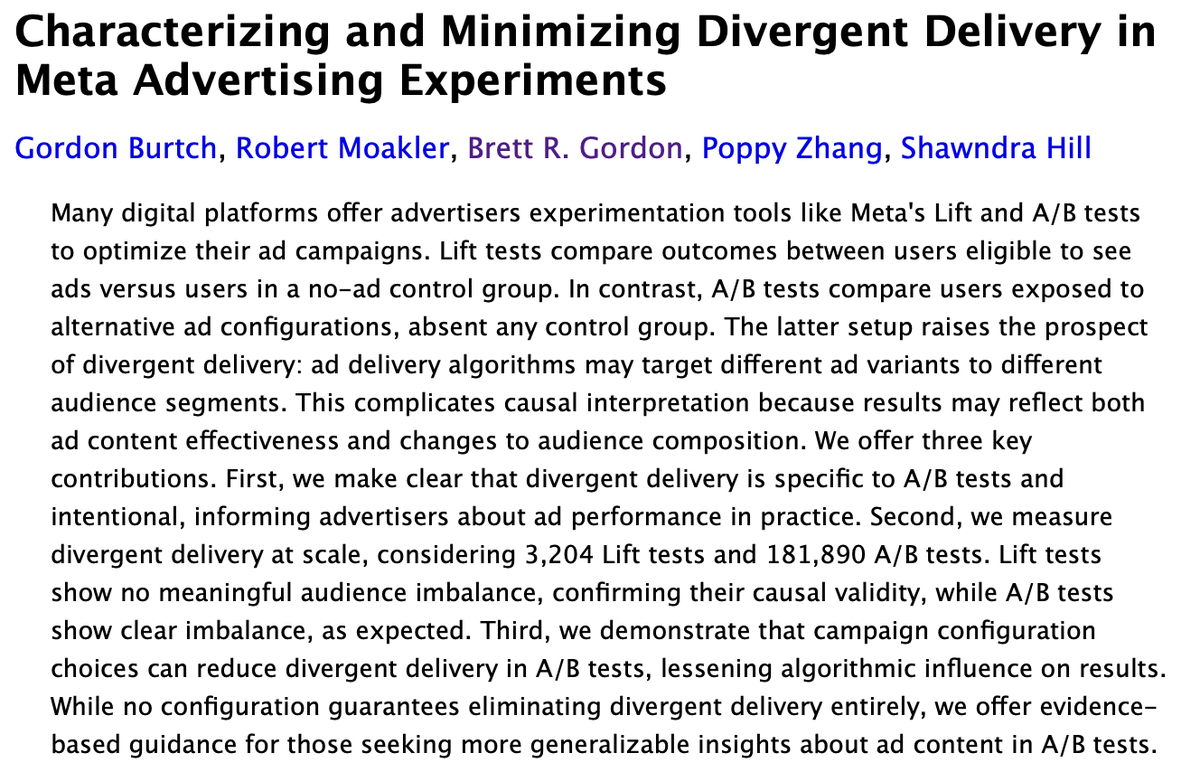
We've a new paper posted, measuring audience imbalance (divergent delivery) across large samples of advertiser A/B and Lift tests at Meta (only A/B tests show any). We evaluate how much imbalance can be reduced by configuring the experiment the 'right way'. Check it out!
1/ New paper on advertising A/B & Lift Tests! 📄
Lots of debate about these, especially on *divergent delivery*, when ad delivery algos push different campaign variants to different audience segments. Implications?
Paper: https://t.co/nXtxTk26Lk @gburtch
What's the optimal number of steps of physical activity that is associated with multiple (9) favorable outcomes?
The largest, systematic review of 57 studies, 35 cohorts.
7,000 steps is clinically meaningful; some benefit also seen for 4,000 steps cf 2,000 steps @TheLancet https://t.co/nlL46KOE1v
📜 New working paper @apo_filippas@johnjhorton & diego
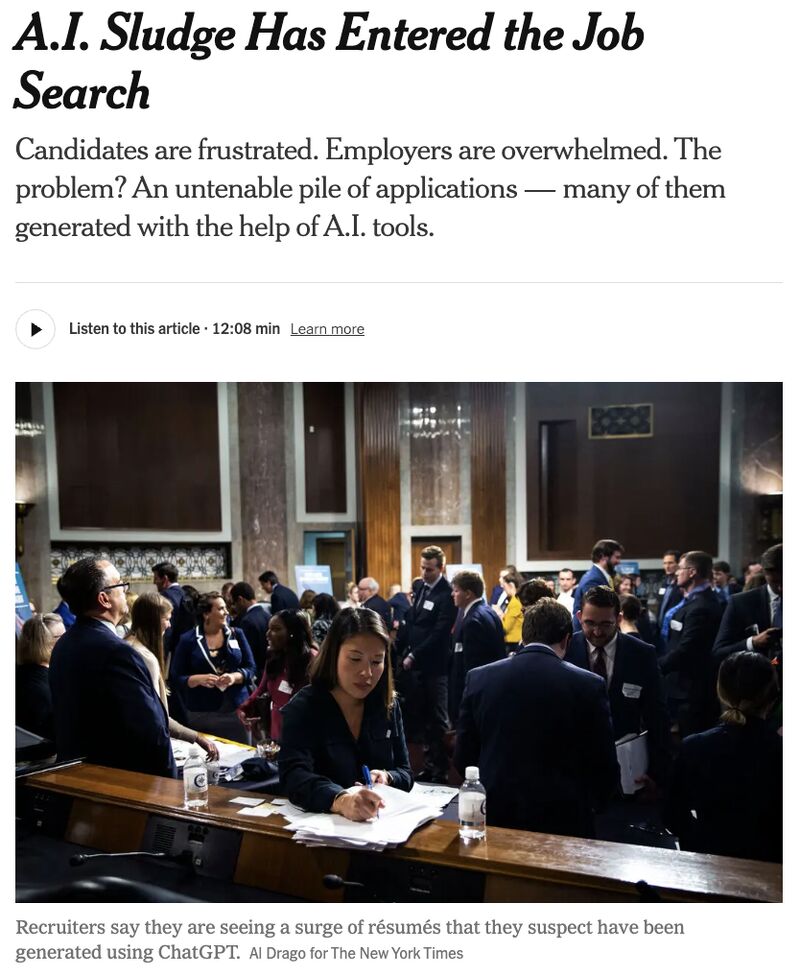
AI is *rapidly* changing the job application process.
📈Employers getting 1000s of applications for a single job, all seemingly well-qualified.
👥Qualified workers are finding it difficult to stand out from the sludge of AI applications.
💡Our paper offers a market-based solution for this problem: allow workers to pay to send a costly signal of interest when applying for a job. (1/n)
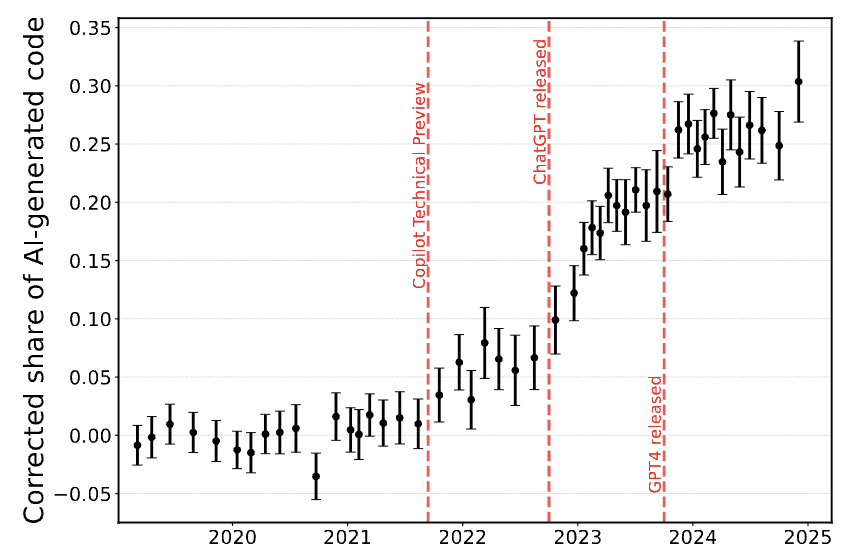
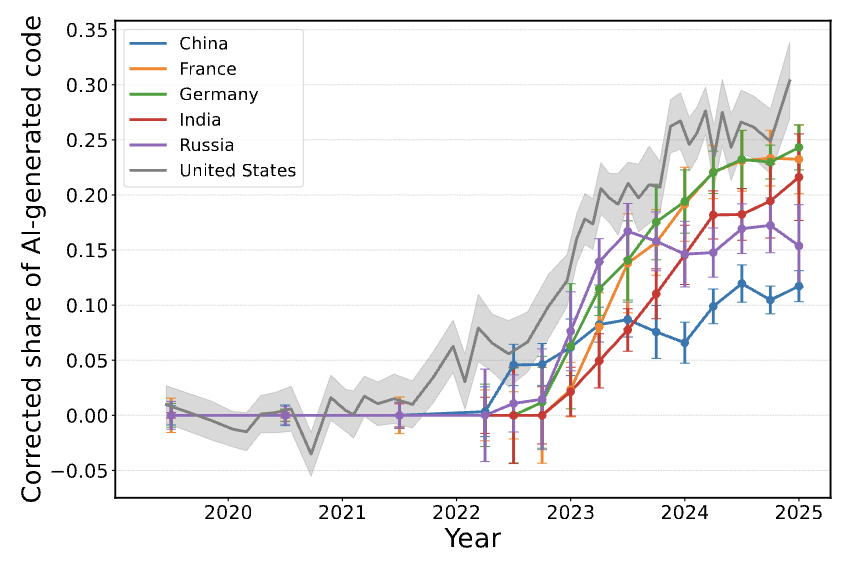
How much code now comes from AI? In new work with @simone_daniotti, @xiangnan_feng & @FrankNeffke we estimate that by end-2024 about 30% of Python functions pushed by US devs on GitHub are AI- generated. Adoption is rapid but diffusion lags globally. How did we do it?
Forthcoming in AER: Insights: "The Consumer Welfare Effects of Online Ads: Evidence from a 9-Year Experiment" by Erik Brynjolfsson, Avinash Collis, Daniel Deisenroth, Haritz Garro, Daley Kutzman, Asad Liaqat, and Nils Wernerfelt. https://t.co/F84TjSnOHH
tl;dr: I agree with you that the relevant treatment effect is one that incorporates the delivery optimization implemented by the platforms (in this case Meta), and so I don't think this criticism is relevant for at least 99.99% of advertisers. [2 / 2]
Articles in advance 03/25 (5 of 12)
Frontiers: "Recommending What to Search: Sales Volume and Consumption Diversity Effects of a Query ...." by Shuang Zheng; Siliang (Jack) Tong; Hyeokkoo Eric Kwon; Gordon Burtch; Xianneng Li
https://t.co/uNcY0y1DD9