Congratulations to our AI research team on 2 papers accepted at @NeurIPSConf 2026 🎉
2x accepted papers, MetaLoop and Theory of Mind and Persuasion Beyond Conversation, plus a workshop paper being presented at BiAlign Workshop.
How can we draw conclusions about millions of people from a survey of just a few thousand?
On The Signal, Andrew Gelman (@StatModeling) and @orioljbosch discuss why probability and non-probability sampling are blurrier than they seem, and how MRP handles imperfect samples.
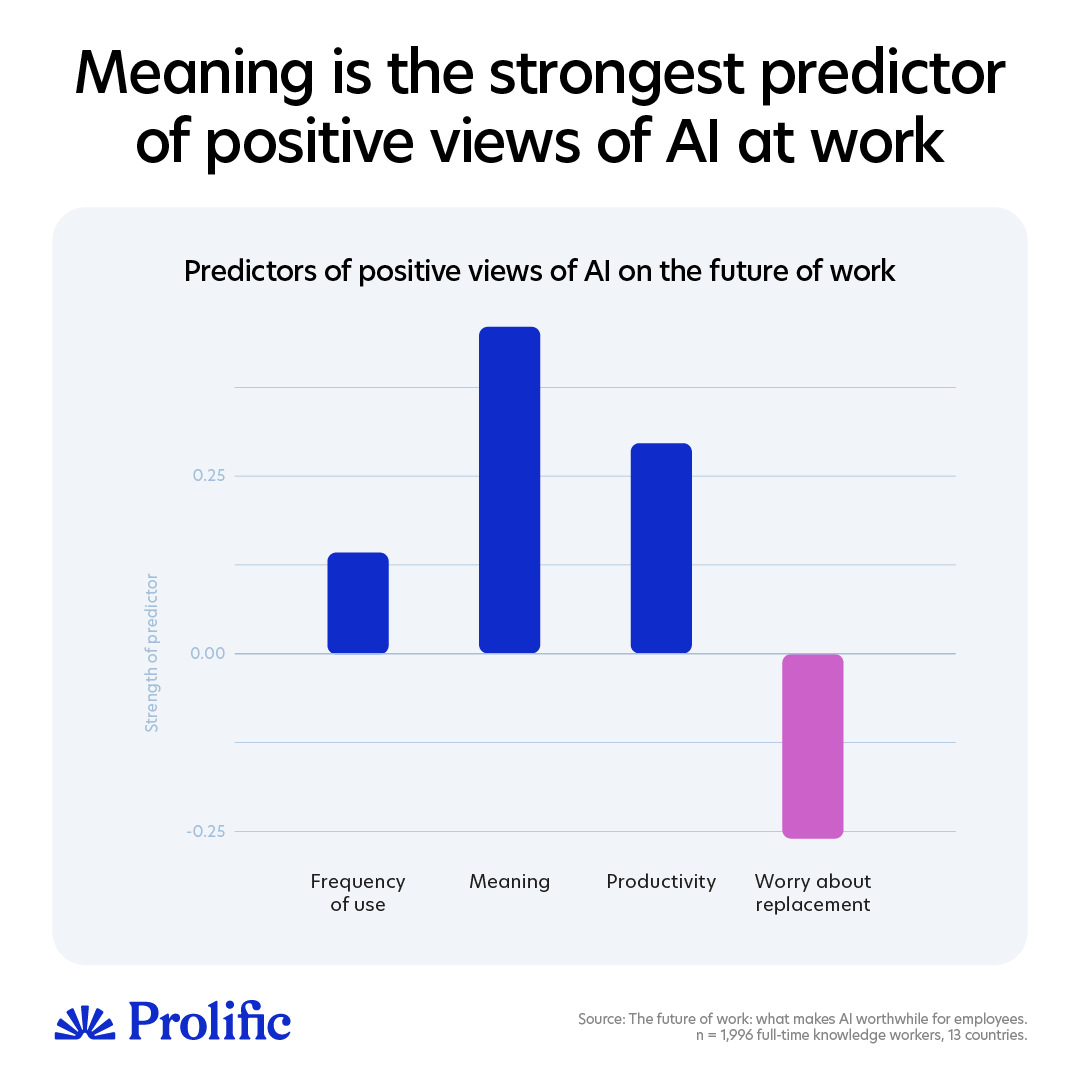
Meaning is the strongest predictor of positive views of AI at work.
We asked 1,996 knowledge workers across 13 countries. Whether AI made their work feel more meaningful had the strongest link to a positive outlook.
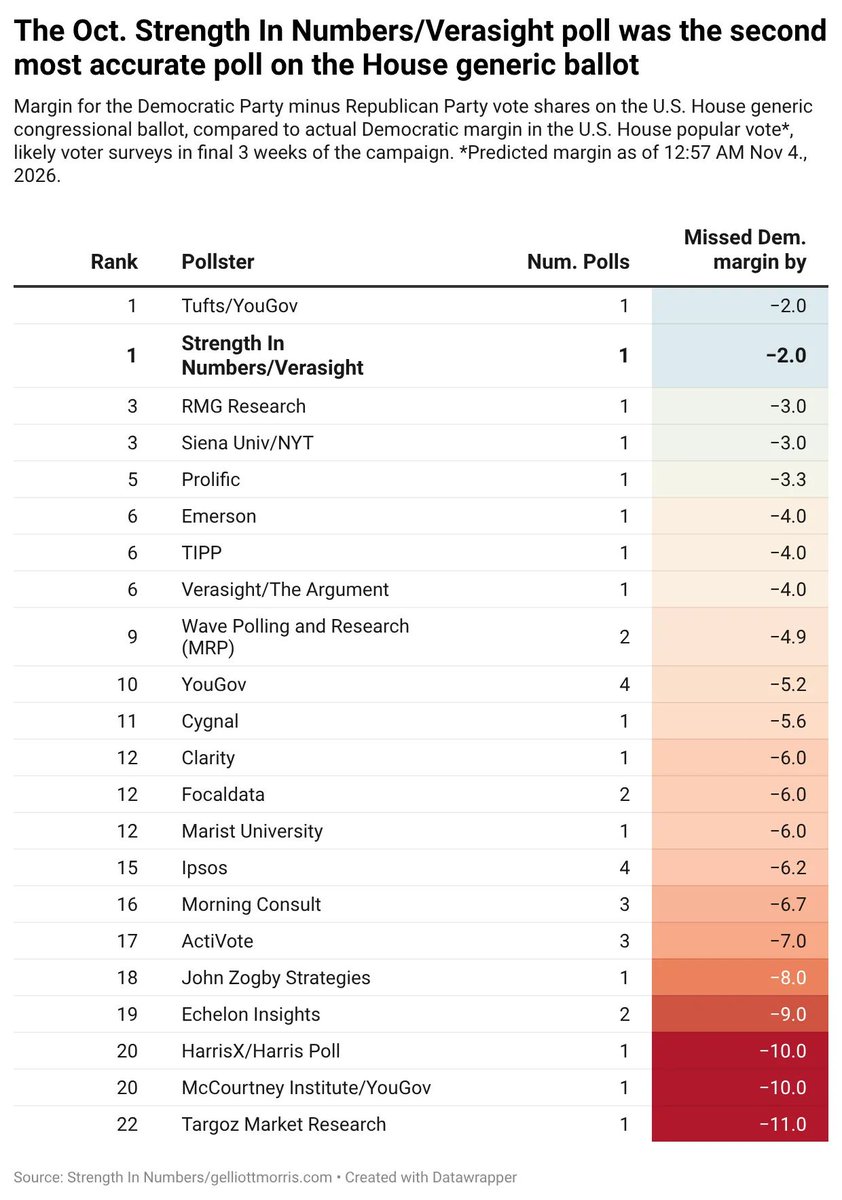
Based on @gelliottmorris's predicted margins, @Prolific is one of the top pollsters of the midterms!
Our data and modelling proved to be one of the best in the industry. Huge congratulations to everyone involved!
New post: Democrats win U.S. House, Senate in biggest incumbent-party defeat since Watergate. The Strength In Numbers/Verasight poll was tied for first in predicting the Democratic House blowout
https://t.co/MMje1IuGmN
We’re proud to share Prolific has won the Scale-up Award at the @UKAIofficial Sovereign AI Awards 🏆
Thank you to the judging panel, voters, and our team who got us here. We’re excited to keep building alongside the teams shaping AI’s impact in the UK and beyond.
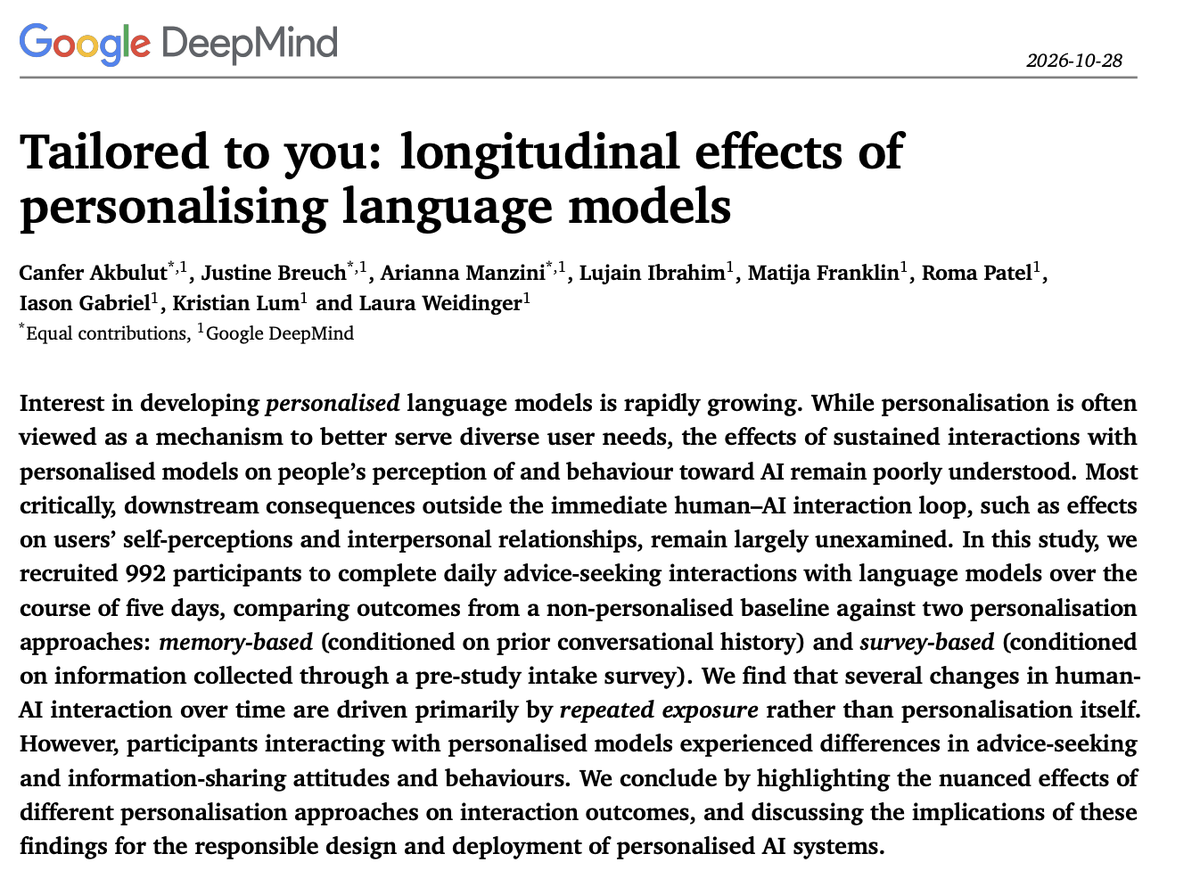
A five-day randomized trial from researchers at @GoogleDeepMind had 992 Prolific participants hold daily advice chats with personalized and non-personalized LLMs. They found that repeated exposure raised perceived closeness and usefulness but personalization still shaped advice and information-sharing.
Read more in Matija's thread below.
We ran a five day longitudinal RCT where 992 participants engaged daily with LLMs on relationship advice. We compared a non-personalised model to models that were personalised either via survey or memory.
We found that repeated exposure across conditions increased perceptions of closeness, usefulness and competence. We also found that different approaches to personalisation led to differences in people's receptivity to advice and their information-sharing attitudes and behaviours
Full paper is here: https://t.co/CFzwEXbYls
Thank you to my co-authors @canfer_akbulut@Arianna_Manzini Justine Breuch @lujainmibrahim@996roma@IasonGabriel@KLdivergence@weidingerlaura
Tired of early-vote numbers? Here’s something different.
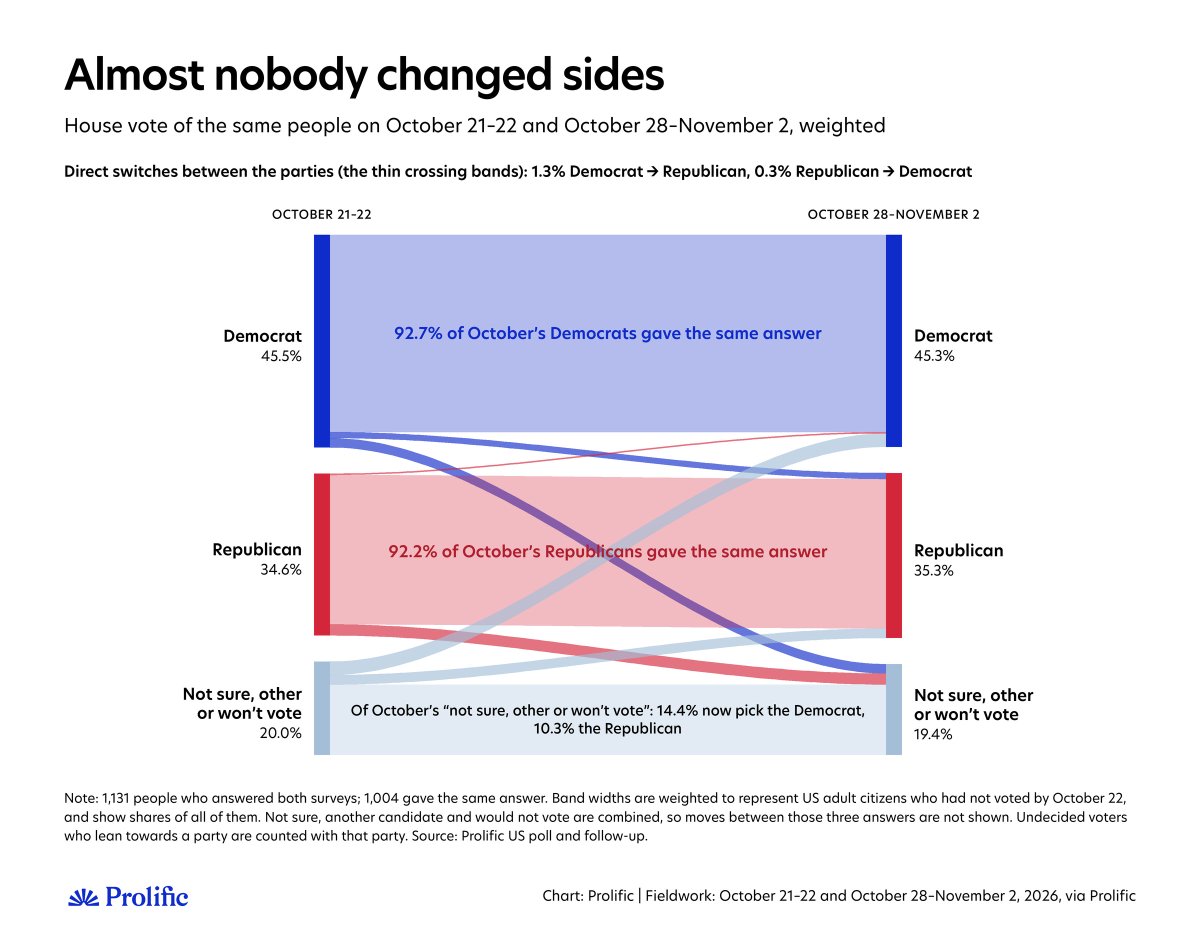
Until yesterday, at @Prolific we were re-interviewing the same people from our midterm poll to see who actually changed their mind.
1,131 answered again. The answer: almost nobody. 🧵
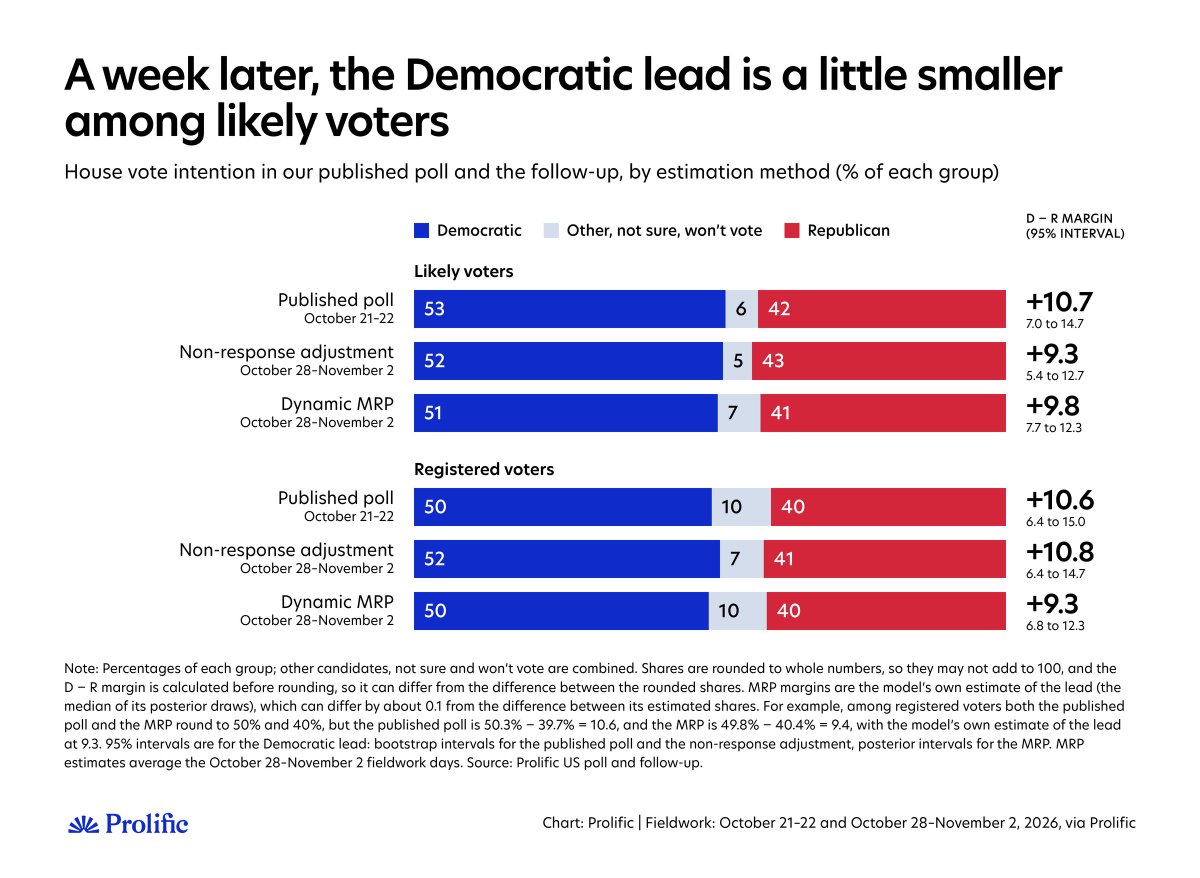
So has the race moved? Barely.
Registered voters: D+10.8, unchanged.
Likely voters: D+9 to D+10, down from D+10.7 but within our margin of error.
🔗 Full breakdown by @orioljbosch: https://t.co/y5zjGbZZeQ
Polls often seem to swing. Is it voters changing their minds, or just different people answering?
We re-interviewed the same voters from our midterm poll a week later to find out.
87% gave the same House answer. Fewer than 2% switched parties. 🧵
74% of participants were uncomfortable with a digital twin of themselves. Yet 51% would accept at least one of the arrangements we tested.
We asked 3,046 people across 15 countries what they think of synthetic data and digital twins. Full whitepaper → https://t.co/jEAskHcUaN
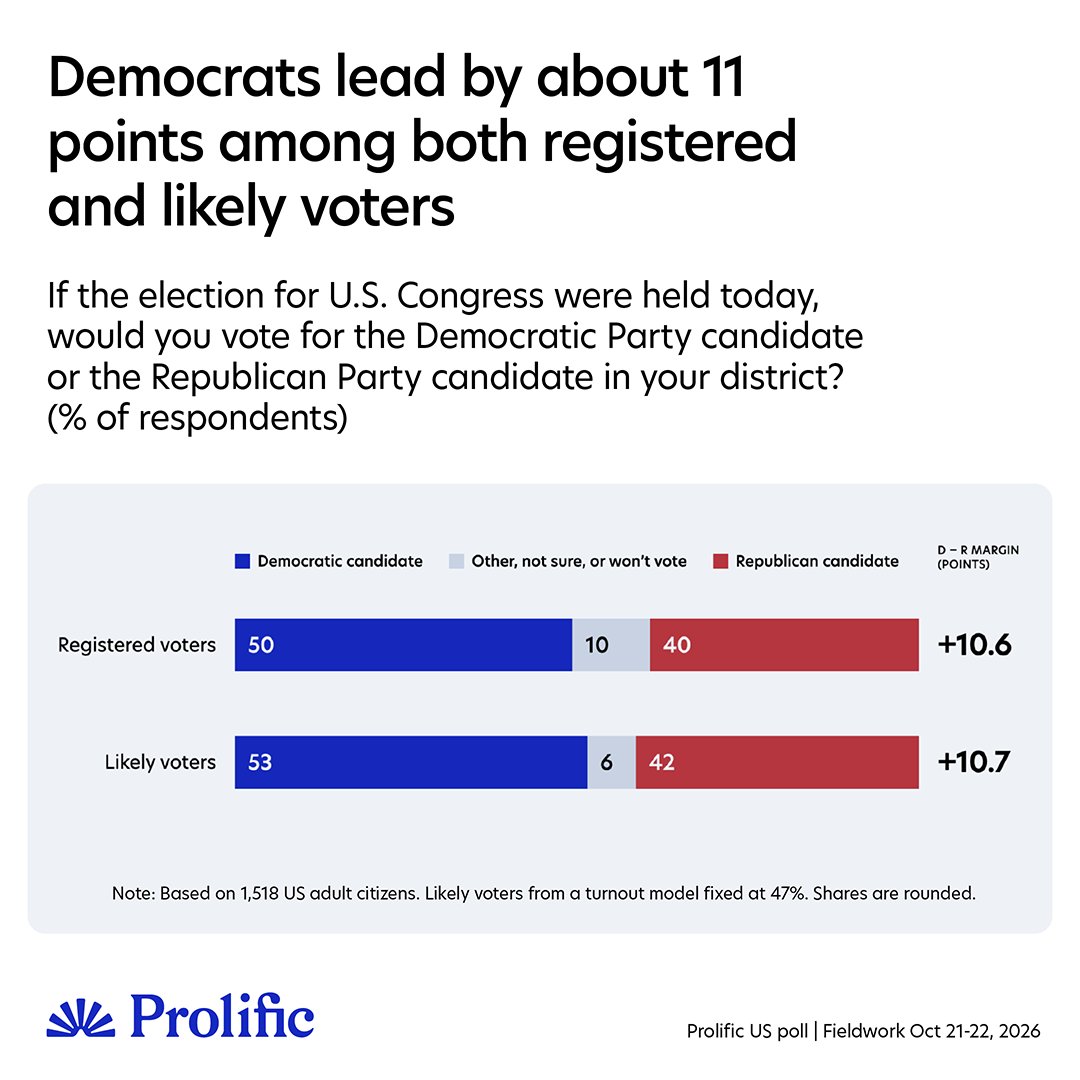
Our midterm poll has Democrats ahead by about 11 points among likely voters. @orioljbosch, who led the poll, explains how we got there and why the same data could have given us 5 or 15.
If you want to run your own analysis, you can get the data tables from our article.
The poll surveyed 1,518 US adult citizens on Oct 21-22, and the 95% confidence interval on the lead is about ±4 points.
🔗 Read @orioljbosch's full breakdown, with toplines, cross-tabs, and the questionnaire.
https://t.co/orScrOBRIz
Our midterm poll has Democrats ahead by about 11 points among likely voters (D+10.7), 53% to 42%.
A few defensible choices move that from about 5 to about 15, so we show what each one is worth. ↓
We let a random half of respondents pick their survey topic. 84% of those who chose politics pass our likely-voter screen, against 58% of those who chose another topic. Vote choice moves much less, and we find no clear sign it favors either party.