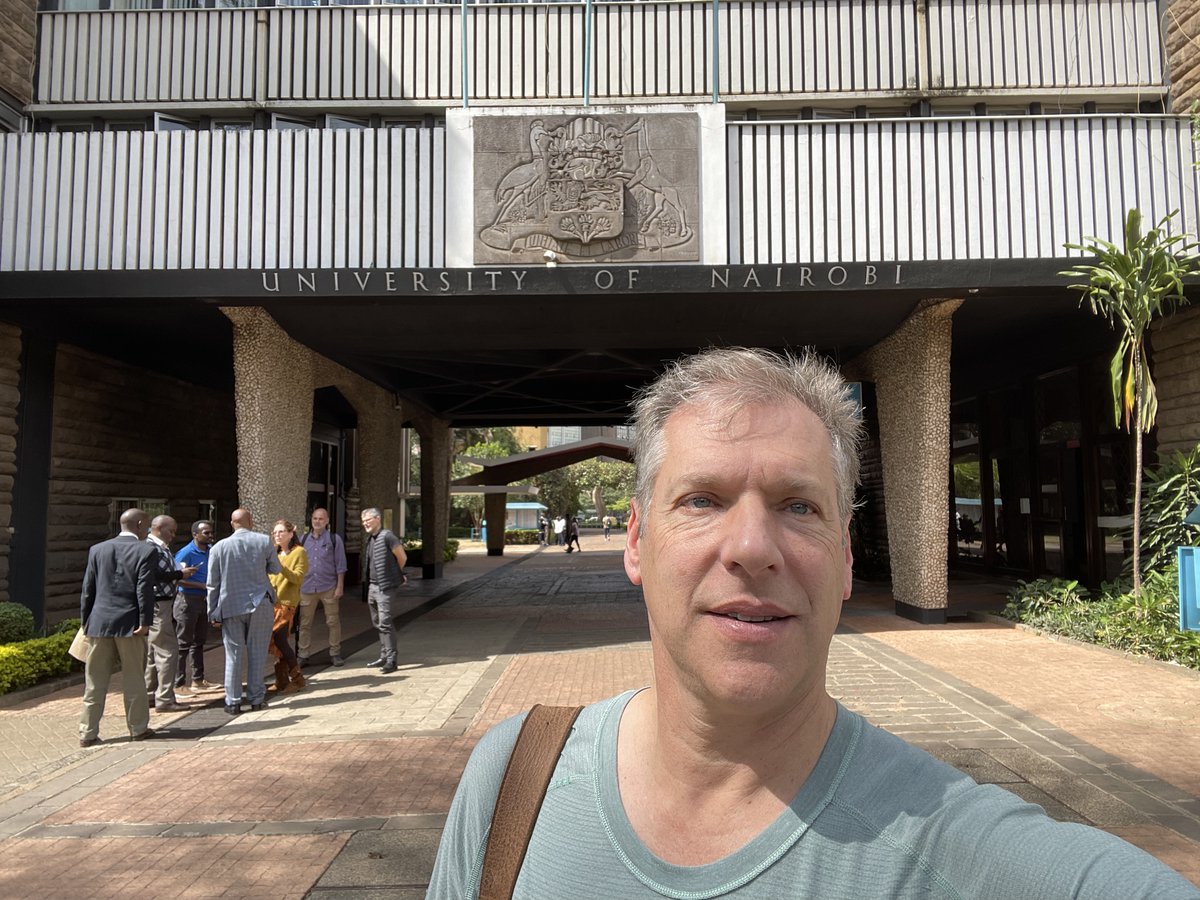
Excited to be part of this effort: operationally explainable adaptive bias correction for subseasonal weather and climate forecasting 🌍🌎
Improves upon the global standard models by 40-90% in CONUS, using a completely open source model and dataset https://t.co/i8wWg11hg8
Doing my best @samuelbmiles & @JessKersey1
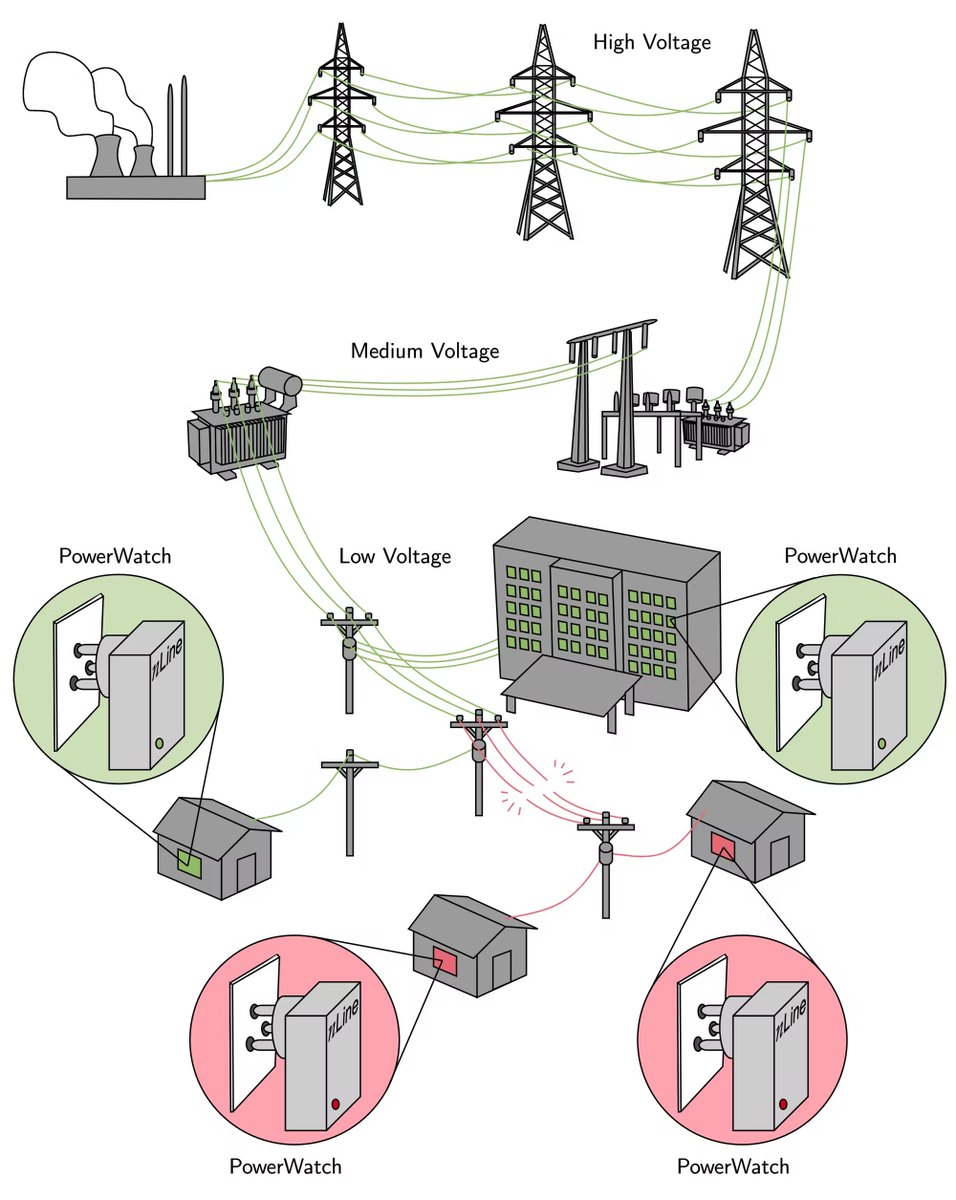
impersonation: prepping to deliver https://t.co/uqpKLowNXy sensors via @UCBerkeley & @uonbito health facilities & minigrids in @SouthSudanToday
Exciting to see this @USAID Powering Health work by Gina Cady & team in @SouthSudanGov
I’m recruiting a postdoc to join my (new) group at MIT in Fall 2023!
My group's research will focus on topics at the intersection of machine learning, optimization, control, and power systems, motivated by addressing critical problems of relevance to climate action.
Spent a truly inspiring week at our nLine retreat in Dakar🇸🇳. We've got big plans this year, from rolling out new sensor hardware 🎉, to advocating for global energy reliability KPIs, to evaluating the power quality of grid access projects in Senegal. More to come!
Electrical utilities often don't have access to complete maps🗺️of their distribution grids - crazy but true.
Check out nLine's initial work in Ghana showing that grid topology can be learned from sparse voltage data collected at the network's edge.
https://t.co/k7A5AmCyVv
The world's electric grids⚡️are fundamentally under-sensed. How can we estimate grid reliability from sub-sampled measurements in homes and businesses?
An introduction to the estimator that underlies nLine's work in Ghana, Kenya, and 7 other countries:
https://t.co/zzkChG6XBu
The startup I work for is #hiring! We’re looking for a Partnership Engagement and Project Manager (fully remote) to join our small, mission-driven team at nLine, supporting reliable and quality electricity delivery for all.
https://t.co/A0S7ysQo21
Birds give up the complexity of song for volume in noisy places - so they sing louder but less interesting (to both humans & mates) songs in cities. When traffic noise in San Francisco fell due to COVID, birds began to sing more complex, quieter songs like they did 50 years ago!
🚨 Seminar alert💡🔌 How does the quality of grid voltage affect economic development? And how can we measure it?
A story about voltage sensing in urban Ghana and rural Kenya. Check out the Energy for Growth Hub's coffee break tomorrow!
https://t.co/VCPa3f1OMy
Excited to have joined a great panel this morning to talk sensors, climate change, grid resilience, and energy equity! I believe that nLine is uniquely suited to collect a lot of the data needed to better tackle poor grid reliability... Come work with us! https://t.co/wAopBZhzDV
💼 Job Alert! nLine https://t.co/eUwqAojMI0, a start-up that's near and dear to my heart, is hiring a full-time software engineer.
Join a mission-driven team that has 1000+ sensors deployed around the world to quantify electricity reliability and inform policy.
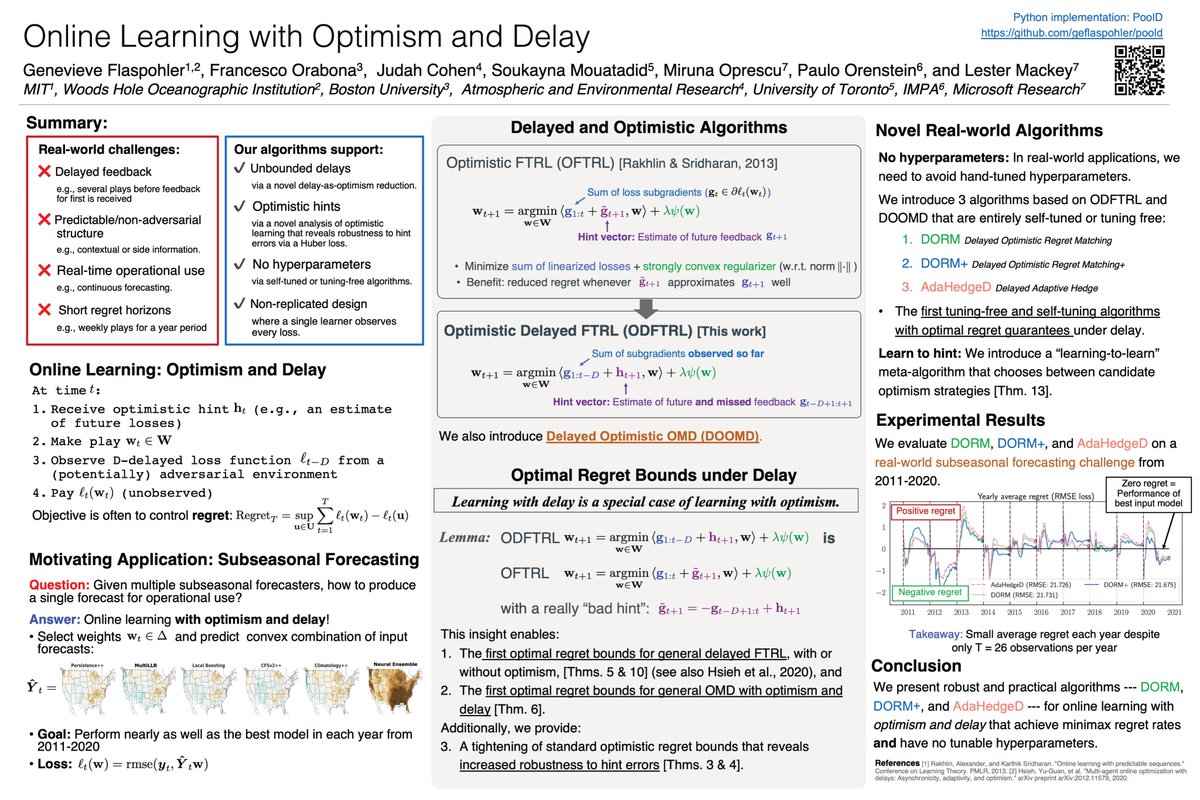
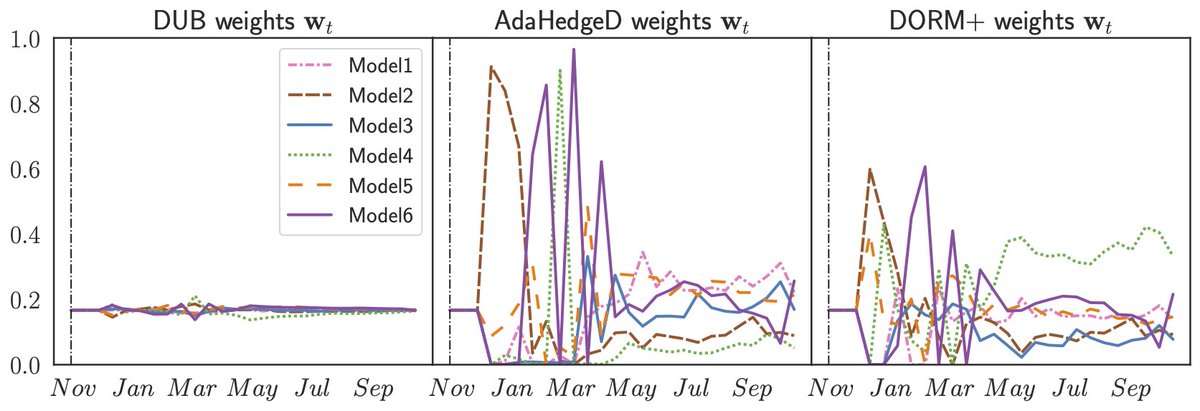
@gautamcgoel In the paper, we also introduce a "learning-to-hint" algorithm that seeds a learner with several optimism strategies (in practice, often a mix of standard and climate-specific hints) and learns to choose a good optimism strategy in real-time.
@gautamcgoel We implement two styles of optimistic hints in PoolD:
1) Standard OL hints: a recent loss gradient or the mean gradient is used to hint at unobserved gradients, and
2) Climate-specific hints: short-term numerical weather forecasters, climatology, etc. provide pseudo-observations.
Very proud of the work interviewing grad students & faculty to distill some common themes into mentorship advice. Nominally geared towards mentors of EECS undergrad researchers, but applicable broadly for:
1) onboarding
2) mentee motivation
3) offboarding
https://t.co/1a5F4cg81i
How can you use online learning to develop no-regret ensembles for applications including climate forecasting?
Check out our poster at #ICML2021 (12-2am tonight!) on online learning with optimism and delay.
Paper: https://t.co/s86Qq28gp8
Code: https://t.co/2oiDG4Ost1
For more details, see our full paper; see our PoolD library for a Python implementation of the algorithms:
https://t.co/GxfmcgvTN4
https://t.co/2oiDG4Ost1
6/6
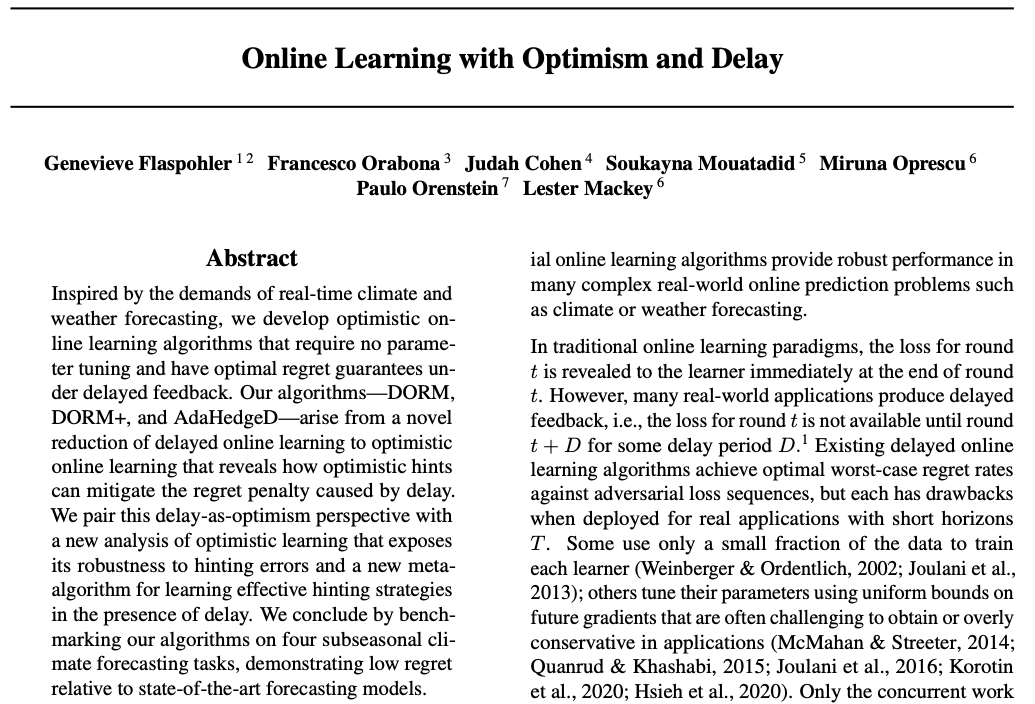
Our #ICML2021 paper unifies optimistic and delayed online learning to develop optimal algorithms with no hyperparameters to tune (w/ applications in subseasonal forecasting)
https://t.co/GxfmcgvTN4
w/ @bremen79@judah47 S Mouatadid @MirunaOprescu P Orenstein @LesterMackey
🧵