Since 1992 some politicians, the UN and climate activists have pushed the energy transition and never bothered to calculate the overall cost. Two recent studies have done the work.
NET ZERO EMISSIONS OF GREENHOUSE GASES BY 2050: ACHIEVABLE AND AT WHAT COST?
https://t.co/HHLvUVAa33
Costs and Benefits of the Paris Climate Targets
Richard S Tol
https://t.co/ArksWTTnIi
It is embarrassing that many of the so-called “leaders” in this country, including current and former elected officials, academics, and legacy media figures, have resorted to childish fearmongering and name-calling instead of engaging in serious discussions about serious issues.
What it really exposes is the remarkably unsophisticated level of public discourse coming from people who present themselves as informed, sophisticated, knowledgeable, or worthy of leadership.
I have said this many times before: I am tired of listening to those voices.
They are not sophisticated.
They are not knowledgeable.
And they are not leaders.
Just look at them. What have many of them actually built or accomplished outside of politics, public institutions, or media circles? Many obtained their positions through timing, connections, luck, political machinery, and with the public purse, only to turn around and disparage the very public that funded and elevated them. And now they expect ordinary citizens to treat them as intellectual or moral authorities while simultaneously being disrespected and disregarded.
No more.
I want to hear from people who actually matter.
From people who create.
From people who build.
From people who work hard in their communities without demanding attention or titles.
From people who solve problems instead of manufacturing fear.
From people grounded in reality, not ideology or self-preservation.
Because it is becoming increasingly obvious that the wisest and most thoughtful people are not the ones sitting behind podiums or television panels.
If they were, we would not be living through collapsing public trust, failing institutions, and levels of division between friends, families, and neighbours that many of us have never seen before.
There is a lot of discussion right now about Alberta independence, but many of the loudest voices are still the ones with the biggest platforms, media access, or political influence. It is high time we actually heard from ordinary Albertans.
If you want your voice and opinion heard, get outside of your bubble and speak up publicly.
Write letters to the editors of newspapers and magazines in your area. Call into radio shows. Attend town halls. Ask questions at public events. Post respectfully online. Talk to your neighbours, coworkers, friends, and family. Reach out to your elected officials directly and tell them where you stand and why.
Democracy is not supposed to be something that only happens between politicians, media personalities, and commentators. Public opinion matters, but only if the public is willing to participate.
And importantly, do not just repeat slogans or react emotionally. Take the time to understand the issues, the legal realities, the economic implications, the opportunities, and the risks. Ask better questions. Listen to different perspectives. Challenge your own assumptions.
Whether you support independence, oppose it, or remain undecided, Alberta’s future should not be shaped only by the people with a platform. It should be shaped by informed citizens who are willing to engage thoughtfully and make their voices heard.
The more citizens participate, the harder it becomes for decision-makers and establishment to ignore the public.
Comment below with how you are going to make your voice heard!
I think they do, and I would say Alberta’s identity is defined by entrepreneurship, independence, resourcefulness, personal responsibility, and strong values and principles rooted in self-determination and limited government involvement, along with a spirit of building, grit, and risk-taking.
In other words, my kind of people!
Of every barrel of oil refined & consumed in Canada, approx 88–92% goes to transportation (moving people, goods, aviation) and essential industrial products (plastics, chemicals, road paving, fertilizers, etc.).
Consider the people who push hard to do away with fossil fuels as if there are no consequences.
About CUSMA and dairy...
Canada protects dairy mainly through supply management: quotas, controlled pricing, and very high tariffs on imports.
But what is often overlooked is that the U.S. dairy sector is also heavily protected, but through subsidies, federal pricing systems, insurance programs, and trade rules instead of quotas.
So the U.S. market is not a true free market either, but Canada’s dairy import barriers are generally considered more restrictive.
It’s true the U.S. wants greater access to Canada’s dairy market under Canada–United States–Mexico Agreement, while Canadian producers argue access should go both ways.
The idea of gradually lowering barriers over time is realistic, but both countries would need to agree on fair reciprocal access.
With details of the MOU (aka. The Grand Ransom) between Alberta and the Federal Government seemingly imminent, I would like to offer the following:
🛢️a 1MM Bbl/d pipeline to the West Coast is a "pipe dream" if not funded by taxpayers, and the likelihood of getting firm volume commitments for that scale is highly unlikely
🛢️Pathways, a ~$30BN project, was conceived in a different world than now and should be scrapped immediately
🛢️Carbon taxes make the industry at the margin less competitive and encourages investment elsewhere - the oilsands are 0.1% of global emissions - we are irrelevant
🛢️The industry does not need to be "future proofed" nor need a "social license" - the world is desperate for more energy and not a single purchaser of oil in the world asks nor cares about a barrel's carbon profile
🛢️With expansion on existing pipelines plus the Prairie Connector/Bridger project (which I'm now incrementally more confident will proceed) Canada will add ~1.6MM Bbl/d of incremental capacity, enough to get us through to the mid 2030's
Marc Miller has some questions to answer.
Here’s the story: CBC is using your tax dollars to smear the very country it was built to serve, running deceptive sting operations. Fake documentaries. Hidden agendas. Entrapping ordinary Canadians and spending your tax dollars lavishly doing it.
History-erasing ideologies who spare no expense.
No one is immune, not even fertilizer producers.
Mosaic said prices for key ingredients such as sulfur, ammonia and urea are continuing to climb as demand increasingly outstrips supply.
“Many producers are struggling to secure raw materials, resulting in an already tight market becoming even tighter… To put it simply, there is not going to be enough phosphate to meet global demand.”
https://t.co/zfL2Ne9MVJ
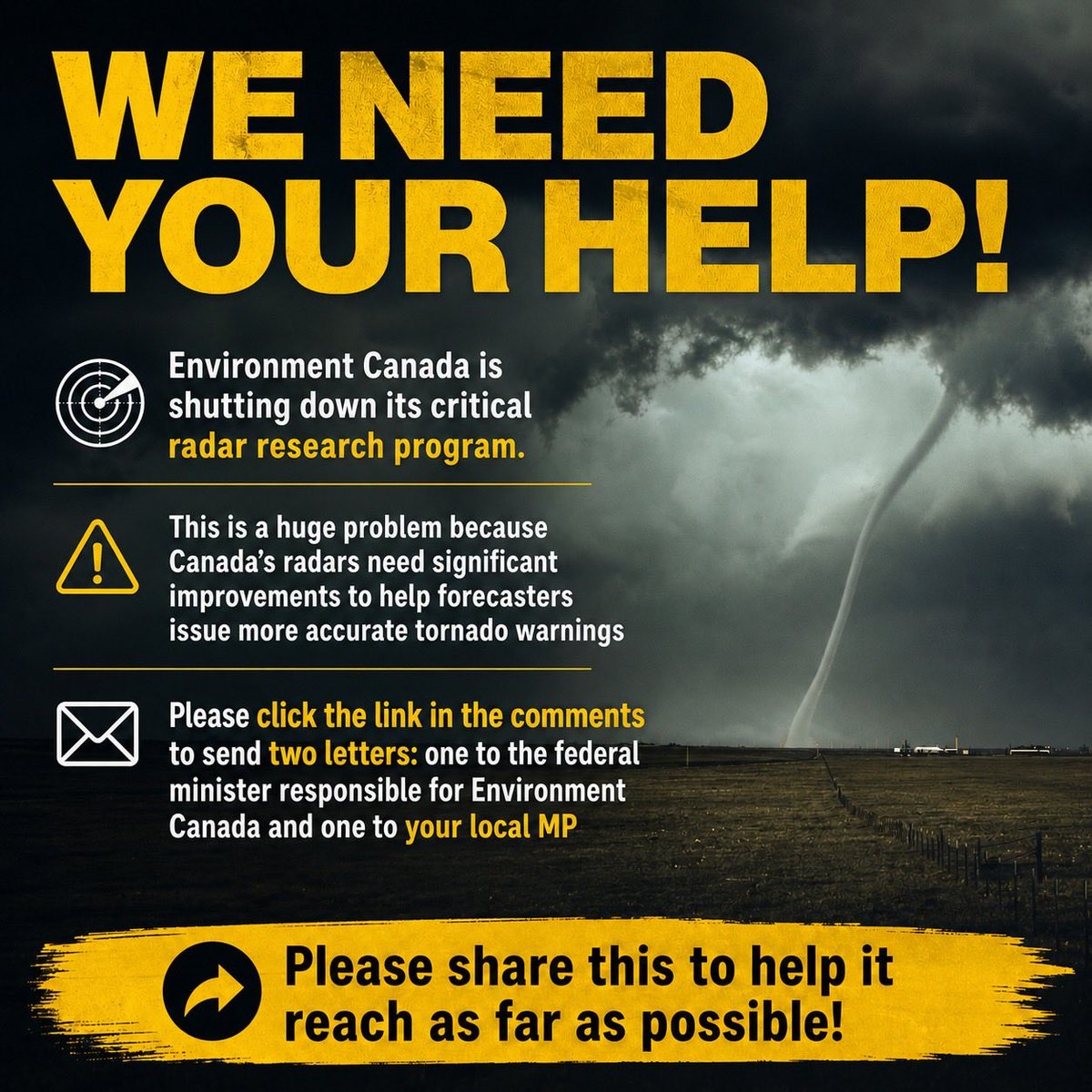
🚨 WE NEED YOUR HELP, #ALBERTA! 🚨 #abstorm
Environment Canada is shutting down its critical radar research program. 🤦♂️
This is a huge problem because Canada’s radars still need significant improvements to help forecasters issue more accurate tornado warnings, and without the radar research team, those improvements may never happen.
Please click the link in the comments below and follow the easy steps to send two letters: one to the federal minister responsible for Environment Canada and one to your local MP, urging Environment Canada to reconsider.
Thank you so much for your help!
Sincerely,
- Adam & the IW team
P.S. Please share this to help it reach as far as possible!
For years, climate campaigners have claimed that our food supply is under grave threat from climate change caused by excessive fossil fuel use. Ironically, the war in the Middle East is highlighting the much bigger food challenge for the world: Not having enough access to fossil fuels to make fertilizer.
From my latest newsletter: https://t.co/ExCzkXsAtK
Sign up: https://t.co/PIif2dDeWJ
SHOCKING
Liberal Energy Minister will NOT rule out majority Beijing ownership of strategic Canadian resources.
Last year, Mark Carney called Communist Beijing, Canada’s top security threat. Now he opens the door to Beijing EVs, ships out rare earths, and allows foreign control of Canada's resources.
I guess the PM doesn't seem to think Beijing, that spies on Canadians, is Canada's "biggest security threat" anymore. What a bait and switch.
I can’t even anymore… How many embarrassing Canadian moments have gone viral this week alone?
An NDP convention consumed by ideological posturing, where purity tests matter more than practical solutions for Canadians.
An awards show, the Junos, that felt less like a celebration of music and more like a publicly funded service announcement, pushing messaging instead of showcasing artists.
And now, in the middle of a fatal aviation tragedy, the national conversation shifts from pilot deaths to language politics.
At some point, you have to ask:
What are we actually prioritizing?
Because this is not a distraction anymore. It’s a pattern.
We are choosing optics over reality. Narratives over facts. Performative debates over serious issues that actually affect people’s lives.
And if we can’t even focus on loss of life without turning it into a political talking point, then something is deeply off.
Not just with our institutions, but with us.
Because if we can’t tell what matters anymore, we shouldn’t be surprised when nothing does.
Some facts about Alberta’s pathway to independence in 2026.
1. The Supreme Court of Canada confirmed in 1998 that all provinces including Alberta have the right to independence and set out the legal pathway.
2. Nothing in the First Nations Treaties in Alberta preclude Alberta separating nor does independence require First Nations to change their Treaties.
3. The 1930 Natural Resources Transfer agreement and subsequent court rulings confirm that the land, minerals (oil and gas), resources, and water are all owned by the Alberta Government. That agreement did not transfer management—it transferred ownership. The 1982 sec. 92A amendment to the Constitution confirmed Alberta’s resource management authority.
4. Section 109 of the Constitution does not apply to independence and especially to Alberta.
5. Albertans send roughly $15–25 billion more to Ottawa than they receive back but it can be as high as $47 billion.
6. Only Alberta’s 48 First Nations need to be consulted and each one of those First Nations will either decide to keep the status quo re Canada administering their Treaties, or ask Alberta to administer them, or ask to negotiate a new treaty.
7. The Federal Government and all provinces will need to sign off on the terms of separation (not just the amending formula). The Constitutional amendments would simply remove all references to Alberta from the Constitutional documents. The Federal Government and the provinces are obligated to conduct good faith negotiations, failure of which Alberta can unilaterally declare its independence.
@bugs5132 - Last full week coming up.
Good memories from 45 summers involved in agricultural field research going from a summer student in Dr. Bob Baker’s wheat breeding program at the Univ. of Saskatchewan in 1981 through to 2025 with our pathology program at AAFC Lacombe.
Let's talk about the fat.
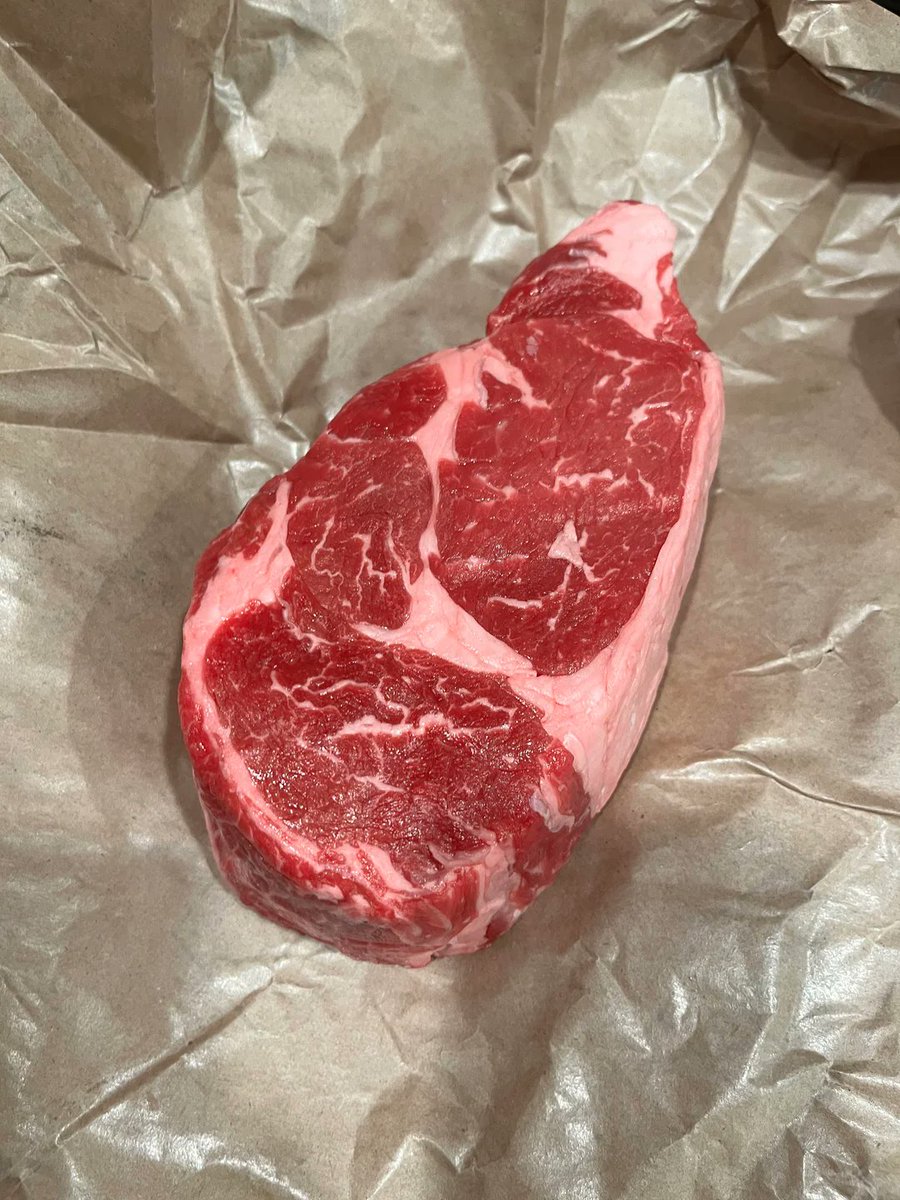
Not the lean bit. The fat. The white seam running through a rib-eye that you've been told to cut off, trim away, render out, discard. The fat that gets removed before the nutrition label is calculated so the numbers look better. The fat that every chef from Escoffier to your nan's Sunday roast knew was the point.
That fat is oleic acid: the same fat in olive oil, which has a Mediterranean diet named after it and a documentary about it and a very successful PR campaign that has been running since approximately 1990.
That fat is stearic acid: which is neutral on LDL cholesterol, raises HDL, and is so non-threatening that even the most nervous cardiologist struggles to find fault with it.
That fat is the carrier for vitamins A, D, E, and K: the fat-soluble vitamins, which are called fat-soluble because they require fat to be absorbed, which means eating the lean version of the meat and wondering why you feel nothing is a metabolic irony of the highest order.
The fat is not the problem.
The fat was never the problem.
The fat is, in fact, quite significantly the point.
Stop cutting it off.
“No one disputes the need for fiscal discipline. But cutting front-line science that consistently delivers some of the highest returns of any public investment is not fiscal responsibility; it’s short-term thinking.”
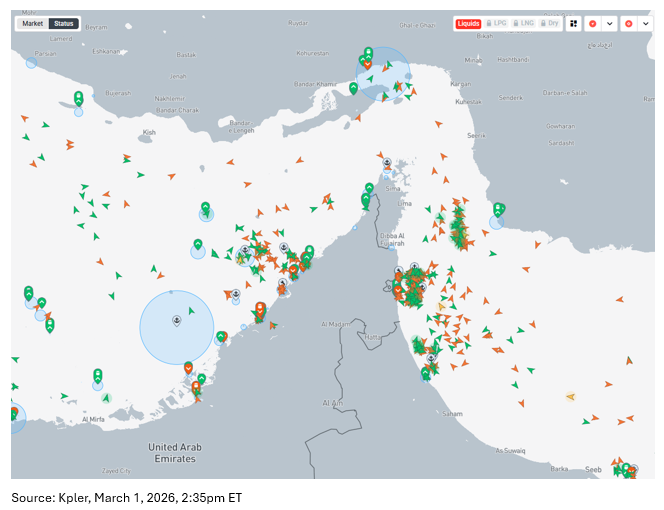
My typical playbook is to sell geopolitical spikes. This time feels different. Iran striking its regional neighbours was unexpected and massively escalatory, putting oil infrastructure at risk and making insurance on vessels through the Strait for now uneconomic. Without decisive regime change it’s reasonable to expect an enduring risk premium in the oil price, greater than what we've historically seen, and especially with the “twilight of shale” and rapid OPEC spare capacity exhaustion happening in real-time. For equities this is coinciding with a massive rotation out of tech/software into hard assets like energy (32% of the S&P500 now chasing <6%), with the energy sector still out-of-favour and under-owned. What to own? Long-life, high margin, low growth, high free cashflow assets in politically safe jurisdictions 🇨🇦🇨🇦🇨🇦.