@opinion@andymukherjee70 C’mon @andymukherjee70 the government has to try some “risky” initiatives like this. Downside is some taxpayer money is not optimally spent. Upside is we create a massive electronics industry. So much better than yet another Agri subsidy or welfare scheme to buy votes.
@opinion@andymukherjee70 The government subsidised Maruti through protection when it first started. First few years it was a simple assembly operation. But that was the seed to creating a massive, globally competitive auto component industry in India. Must encourage govt to take more risks like this.
The business outlook for software is uncertain and AI has raised costs dramatically with a) massive 4-fold increase in server prices which we need for data centers b) AI usage increasing rapidly, leading to much higher expenses, which we are trying to control.
On top of that is the challenging geopolitical backdrop.
We have cut down on our marketing budget. We have also told our employees that we cannot have our usual pay increase this year. I have apolgized for not being able to avoid this.
We will work hard to avoid mass layoffs but the outlook for software jobs in general is grim. We have not been growing our employee count for 18 months now.
Most of our employees understand the situation. I am thankful to them.
We are in the middle of reinventing ourselves. The next 3-5 years will decide how our reinvention has worked. Please pray for us 🙏
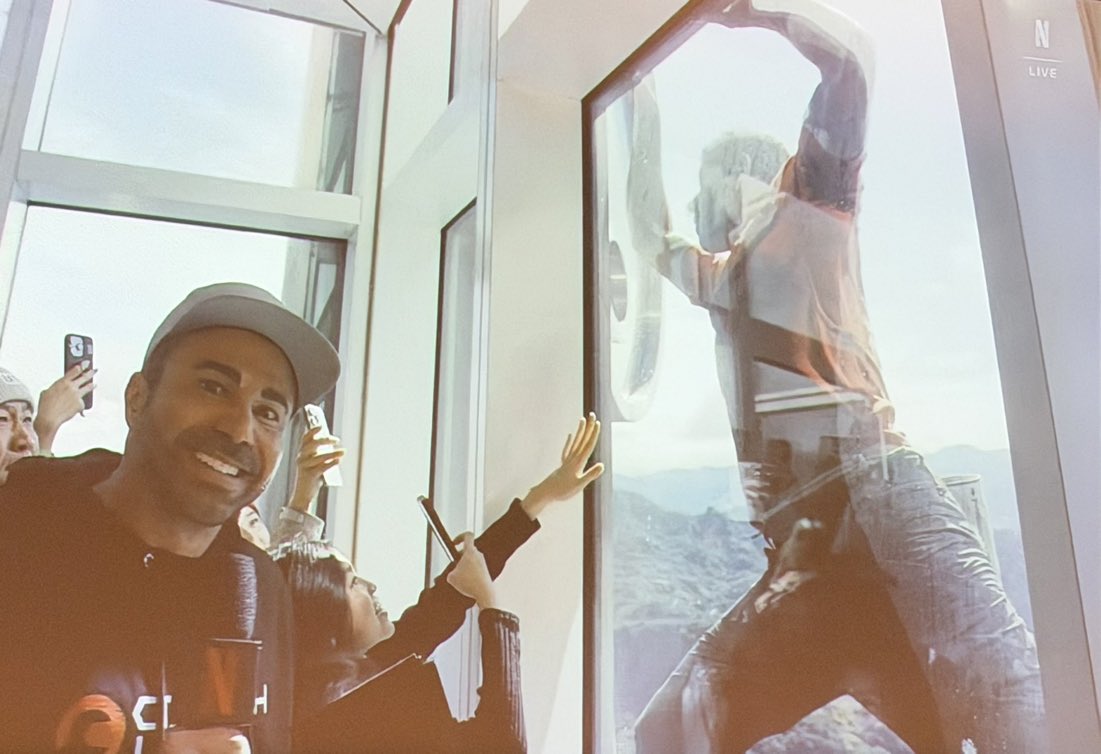
Everyone is posting the exact same launch photo today, so I'll talk about what’s actually cool about Vikram-1 that geeks me out.
First, the entire rocket is carbon composite, even the motor casings. Most launch vehicles still rely on aluminum and steel. Carbon fiber is incredibly light and strong, but it’s a total nightmare to engineer, which is why almost nobody builds a fully composite rocket. Skyroot nailed it on their very first try.
Second, the upper stage engine is entirely 3D printed; it completely changes the game for production. Instead of waiting months for hundreds of machined parts, they can print a finished engine in days at half the weight. That is the reason a monthly launch cadence is even on the table.
Plus, that upper stage can restart mid-flight. That means a single launch can drop different satellites into totally different orbits, which is exactly what small-sat companies pay a premium for.
But the biggest deal is the strategic angle. Because it uses solid fuel, you can keep the rocket ready to go and launch on short notice without needing a massive launchpad. Right now, that’s just a great commercial selling point. In a few years, it becomes a massive national asset - the ability to replace a satellite in days if you need to.
This is a huge moment for Indian engineering. Massive congrats to Pawan, Bharath, and the entire Skyroot team.
@akm1410 strange story. It’s like expecting a hotel to explain what part of the room rate is labour vs capital cost. Can you guys stop trying so hard to be negative? Impartial, in-depth analysis is great.
https://t.co/kPeDZd2JiI
@akm1410 Th RBI had stopped them accepting fresh deposits 4 years ago and pretty much said they wanted the payments bank to stop doing business. Isn’t this just a follow through of an earlier action? Nothing new..
@dugalira These CBDC use cases look more like food stamp programs. Something that can be solved much more easily with the equivalent of digital vouchers/ gift cards. One more situation of blockchain technology being the hammer looking for a nail.
@virsanghvi@BLRAirport@BLRAirport T1 moving all private pickups to a shuttle service seems like a shameful quest to push their own cabs. @FairfaxIndia@PremWatsa there are times when you have to stop your portfolio companies from making egregious mistakes.
I’m spending the weekend sifting through Q3 2025 investor letters.
Cut the macro fluff, kept the good stuff. Ended up with 10 high conviction ideas.
A few of these look like multibaggers.
Let’s dive in 🧵
All the analysts forever writing about OpenAI vs Anthropic vs Google are missing the real story that already happened.
80% of startups pitching Andreessen Horowitz are running on Chinese open-source models. Not OpenAI. Not Anthropic. Chinese models like DeepSeek that cost 214x less per token.
The math here breaks everything. DeepSeek trained its model for $5 million. OpenAI spent $500 million per six-month training cycle for GPT-5. That gap translates directly to API pricing where startups pay $0.14 per million tokens versus $30 for GPT-4.
For a startup burning through 100 million tokens monthly, that’s $1,400 versus $300,000. The difference between 18 months of runway and 3 months.
This tells you the real constraint in AI was never capability. Chinese models are matching GPT-4 on coding benchmarks while costing 2% as much. The constraint was always burn rate, and China solved it first by optimizing for efficiency instead of chasing AGI.
The second-order effect gets interesting. When your infrastructure costs drop 98%, you can actually afford to fine-tune models for your specific use case. American startups paying OpenAI’s API rates are stuck with generic models. Chinese open-source users are building specialized variants.
Silicon Valley thought the moat was model quality. Turns out the moat was cost structure, and they built it backwards. When a16z partner Anjney Midha says “it’s really China’s game right now” in open-source, he’s not talking about benchmarks. He’s talking about who controls the default foundation layer.
Now look at where this goes. American AI labs are optimizing for AGI and superintelligence. Raising billions to chase the theoretical ceiling. China optimized for distribution and adoption. Making AI cheap enough to become infrastructure.
All 16 top-ranked open-source models are Chinese. DeepSeek, Qwen, Yi. The models actually being deployed at scale. While OpenAI charges premium rates for exclusive access, Chinese labs are flooding the zone with free alternatives that work.
The third-order cascade is what changes everything. Every startup that survives the next funding winter will have optimized around Chinese open-source as default infrastructure. Not as a China strategy. As a survival strategy.
That 80% number at a16z only goes one direction. When you’re a seed-stage founder choosing between 18 months of runway or 3 months, economics beats nationalism every time.
America is still competing to build the best model. China already won the race to build the one everyone uses.
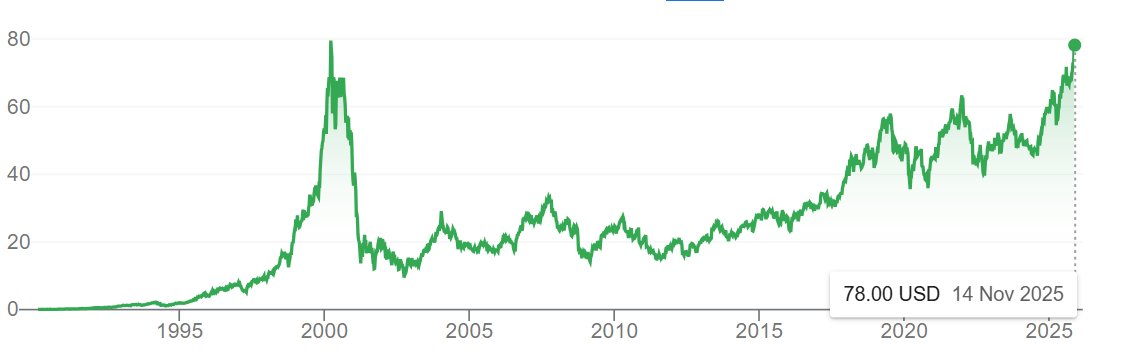
Cisco was to the dotcom boom (bubble😅) what Nvidia is to the AI boom..
Picks and shovels for surging internet traffic. Cisco ATH - $80 on 27 March 2000....p/e of 200. Now, same price but a p/e of 30x. What's your view on Nvidia?
Piyush Goel: I am a semiconductor startup founder. Here is my rant in response to your rant during startup Mahakumbh! : r/StartUpIndia. @PiyushGoyal https://t.co/FRGDrieFqP
@ETMarkets every time one scrolls the ET website, your ET Live show automatically starts with audio on. Even if one mutes the video it unmutes when you scroll past it. VERY IRRITATING. Can the default please be to have the audio off. Whoever is interested can turn it on.