New land-based measures in the US-Iran war mark a significant evolution in U.S. strategy amid mounting economic pressures at the Strait of Hormuz and the apparent backlash in the U.S. midterm elections.
Kamran Bokhari has this analysis: https://t.co/lcW0YlIcxj
Negotiations on the Next Israeli Government
Israeli President Isaac Herzog over the weekend gave opposition leader Gadi Eisenkot the first opportunity to form a new government following national elections last month. Eisenkot now has 28 days, with a possible additional 14.
Though neither Eisenkot’s coalition nor Prime Minister Benjamin Netanyahu’s coalition won enough seats to take power, Netanyahu has called for a unity government involving both candidates. Eisenkot responded by saying Netanyahu’s party would be welcome to join a government under Eisenkot as prime minister.
GPF Chairman @George_Friedman discusses the latest developments at #Nvidia after CEO Jensen Huang admitted to an affair with a suspected Chinese spy. He speaks with @BloombergAsia Haidi Stroud-Watts on the sidelines of the #UBS Australasia Conference in Sydney. https://t.co/lS10Qn4apz
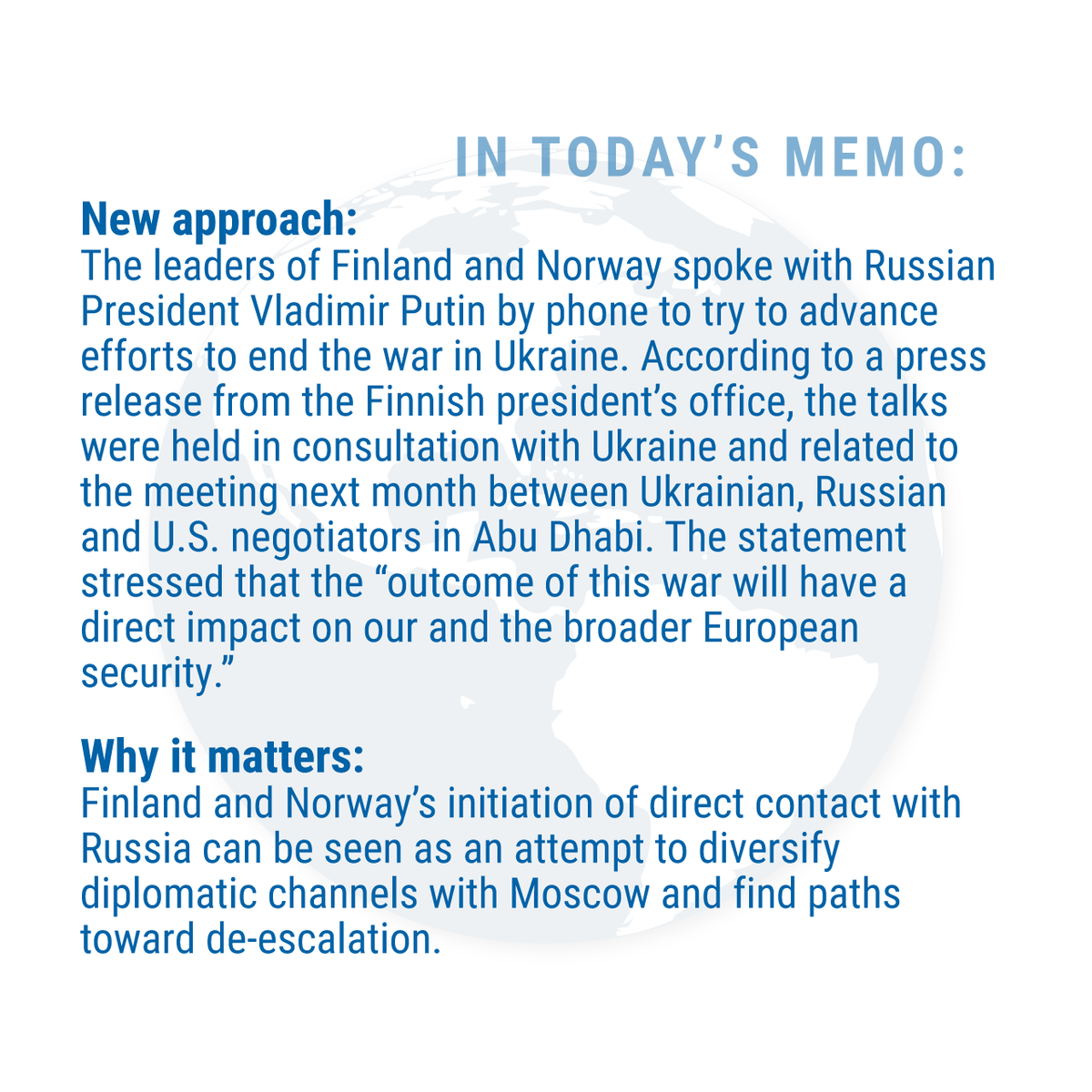
On Nov. 10, Russia and Ukraine are slated to meet in Abu Dhabi to discuss de-escalation, ending the war and, ultimately, establishing post-war security arrangements. The United States will mediate, and it seems as though Washington is actively pushing an initiative to bring the conflict to a close.
The fighting, meanwhile, remains tense as attacks on critical infrastructure by both sides continue. GPF's Ekaterina Zolotova has this analysis of what the talks are really about: https://t.co/uxgAPdpPaj
Making Sense of Hormuz Traffic Data
Ships are returning to the Strait of Hormuz, but oil is not. Details in our new Weekly Graphic: https://t.co/MTHH12d3Ji
🌐 Iran preparations: U.S. President Donald Trump met with his national security team to discuss the possibility of resuming military operations against Iran, senior officials told Fox News. U.S. Central Command is reportedly close to finalizing preparations for the possible operation.
Why it matters: Despite the election results in the U.S. and in Israel, there is still a good chance that strikes resume. The fact that Russian and Chinese officials recently met to discuss Iran suggests that other countries feel the same way.
🌐 Two tankers loaded with Russian diesel and bound for the United States as part of the “diesel deal” have already changed course, the Financial Times reported. One of them is reportedly now headed for Brazil, while the other has entered the Mediterranean Sea and is anchored off the coast of Algeria, awaiting alternative buyers. Two more tankers are moving toward the U.S., but at least one has not confirmed the buyer of the cargo. Kremlin spokesperson Dmitry Peskov urged observers not to draw connections between the tankers turning back and the results of the midterm elections.
Why it matters: American companies are hesitant to purchase Russian diesel in light of legal threats from state and federal officials. If the deal proves successful, however, Washington will likely continue to try to improve relations with Moscow.
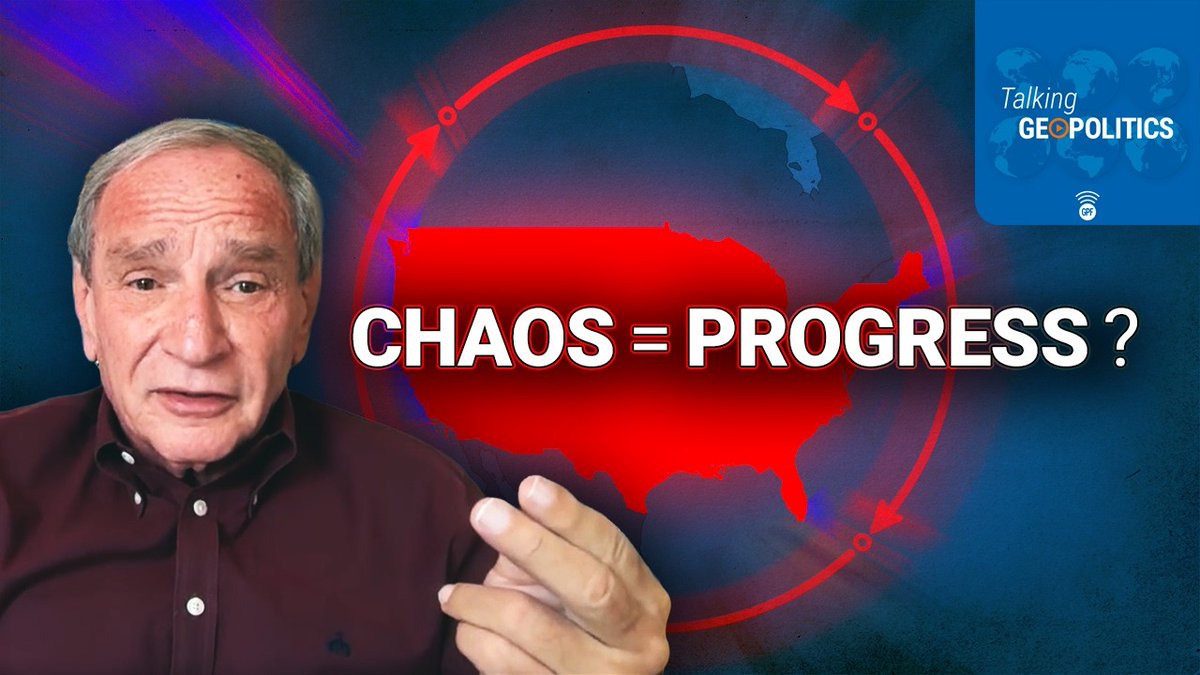
Is chaos in America a sign of decline or just the normal process of progress? From the archives, George Friedman breaks down the myth of American decline, and how historical cycles can predict the process of US reinvention.
https://t.co/MRM3AtVojy
Across the Red Sea, renewed fighting in Yemen has brought Houthi rebels and government forces into battle around the western coast and Bab el-Mandeb. Saudi Arabia is again exchanging strikes with the Houthis, who have seized the strategic island of Perim, bringing the conflict close to the shores of Djibouti. Although the risk of indiscriminate attacks has eased, commercial vessels still face danger when passing through Bab el-Mandeb.
There is concern about the potential for the waterway becoming as dangerous as the Strait of Hormuz. For countries whose development depends on reliable access to overseas markets, the threat of disruption is itself a serious problem. - Ronan Wordsworth
https://t.co/IGzInZdPbo
Before the midterm elections, I had several GPF subscribers asking if the Republicans lose control of the House or Senate, whether it will make much difference to the U.S.’s geopolitical actions globally.
My field is geopolitics, and this is in a way a political question. However, in my work I have encountered an oddity in the United States, a demonstrable, consistent set of cycles. One is socio-economic, with a crisis occurring every 50 years, with the last one taking place in the 1970s. I also found a consistent cycle of institutional crises every 80 years, with the last one climaxing about 80 years ago, in 1945.
I wrote a book on this, “The Next 100 Years,” forecasting that the 2020s would be the first time both cycles shifted at roughly the same time. It would therefore be a more disrupted cycle, with the disruption and restructuring of American society, economy and institutions creating massive tension. That was published in 2009. In a later book, “The Storm Before the Calm,” I forecast that the election of 2028 would signal the beginning of the end of both cycles and a radically new, increasingly stable and significantly different socio-economic and institutional system. Since then I have developed some thoughts on why the United States reinvents itself with such regularity, but I have not fully thought them out yet.
In my view politics is the outcome of these cycles and not the cause of them. I think we are nearing the end of the instability that emerged during the first part of the decade, and will stabilize toward the end of the decade, beginning after 2028. So I do not look at the political tension we are experiencing as the cause of the current crisis, but as an outcome of the cyclical crisis. The U.S. has spent this decade reinventing itself, a disruptive and at times unpleasant experience, but one that is nearing its end, that will not be fully in place until nearer the end of the decade.
As I have said, I am still working through the foundations of these cycles, but the political unrest is in my mind the product of the cycle and in that sense a clearing of the table in preparation for the beginning of a new and significantly different cycle. The political instability, along with the social, economic and institutional instability, is the effect, not the driver of this cyclical process.
How are the internal forces driving national elections overshadowing Trump's global spotlight? GPF Chairman @George_Friedman joined Talking Geopolitics host Christian Smith to discuss this and more on a recent episode: https://t.co/CiRPydqaGB
Introducing the Leadership in Geopolitics with George Friedman Executive Education Program
The program blends a methodological framework for understanding real-life geopolitical situations with practical leadership tools. Its focus is to enable senior executives to embed a geopolitical mindset into the DNA of their organizations, to design actionable plans and make more informed decisions.
Applications now open for February 2027 in Austin, Texas. For more info: https://t.co/U6DNhALB7f
Advanced manufacturing and strong exports in China continue to support growth, placing third-quarter gross domestic product growth at 4.5 percent and growth during the first three quarters at 4.6 percent year on year. Nevertheless, these figures obscure persistent weaknesses, including the continuing contraction of the real estate sector, industrial overcapacity and fragility in the labor market. The growth of the gig economy, in particular, reflects a labor market in which flexible and precarious employment can offer income opportunities without necessarily providing long-term security.
These pressures affect ordinary citizens in ways that official measures of economic performance may not fully capture. Xi Jinping’s willingness to acknowledge headwinds and future hardship during the recent Fifth Plenary Session of the 20th Central Committee of the Chinese Communist Party thus represents a potentially important change in tone. But without concrete measures to support consumption, improve employment security, address structural imbalances and restore confidence, the language of struggle risks becoming a justification for enduring hardship instead of a prelude to effective reform. - Victoria Herczegh
https://t.co/I8KmUgwW6z
Weekly Graphic: Deadlock Likely After Israel's Election
To avoid another vote, one of the principal blocs would need to move its red lines.
Although Netanyahu’s Likud remains the largest party with 27 seats, his coalition prospects are constrained by his partners’ opposition to cooperating with Arab parties and the refusal of opposition leaders Gadi Eisenkot, Naftali Bennett, Avigdor Liberman and Yair Golan to serve under him.
https://t.co/NrvPEaCCuk
GeoEconomic Lens is a deep application of our geopolitical model on economic issues. We created GeoEconomic Lens because of the requests from business and government leaders to apply our forecasting model to the forces that are shaping the global and regional economies.
For a limited time, take advantage of our new special offer.
You'll have access to each new issue and monthly brief, and full access to our issue archive. You can also use our exclusive Analyst Access feature to ask a question about your industry or region of interest.
https://t.co/hpQghEmE9w
The Western Mediterranean was long one of Europe’s most stable external frontiers. There was a time when the region produced powerful centers that projected power into Europe, from Carthage to the Umayyad and Almohad states. In more recent centuries, however, regional states were oriented toward Europe, and no local power could seriously challenge European dominance.
That balance is changing.
GPF's Ridvan Bari Urcosta has this analysis of Europe's frontiers, Part 2 breaks down why Europe is worried about a new global order. https://t.co/n018quOHGQ
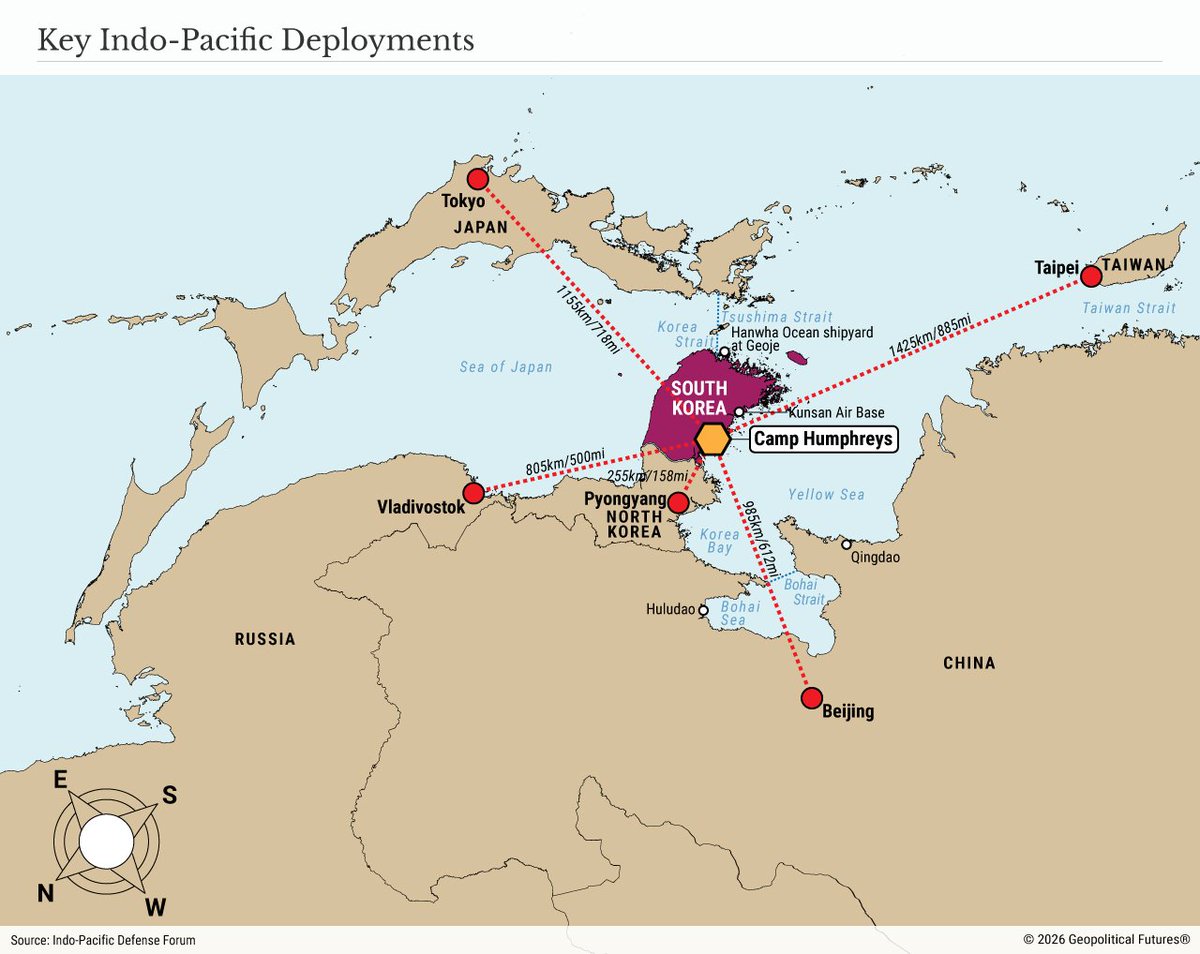
There are roughly 28,500 U.S. military personnel stationed in South Korea. For the U.S., the appeal of a military presence on the Korean Peninsula is obvious. Preventing China from dominating the Indo-Pacific and restricting U.S. military and commercial access is a major U.S. imperative.
U.S. Forces Korea commander Gen. Xavier Brunson has used an “East-Up Map” to emphasize Korea’s value to U.S. regional operations. U.S. bases in South Korea provide a position across the Yellow Sea from China’s northern naval infrastructure. Qingdao, on the Shandong coast, hosts the headquarters of China’s Northern Theater Command Navy. Farther north, the Bohai Strait connects the Yellow Sea to the Bohai Sea, where China’s Huludao shipyard builds nuclear-powered submarines. And to the northeast of Korea lies Vladivostok, which hosts Russia’s Pacific Fleet headquarters and nearby naval facilities, placing the peninsula close to both Chinese and Russian maritime forces.
Faced with a variety of challenges, the U.S.-South Korea alliance is likely to make faster progress on maintenance and logistics cooperation than on shifting additional responsibility for peninsula defense to Seoul. Over the next 12 to 24 months, South Korea is likely to expand maintenance and logistics cooperation with the United States through additional repair agreements and support arrangements for regional operations. - Andrew Davidson
https://t.co/FIvdZEbx8V
The United States and Israel are set to resume airstrikes on Iran after their respective domestic elections, leaving Mecca accord signatories Turkey, Saudi Arabia and Pakistan to manage the outcome. It was the very thing they wanted to avoid.
Full analysis by Kamran Bokhari:
https://t.co/NDVg5QQahS