A Chinese straight-A teen secretly bought multiple medications online for a year. Misdiagnosed with #depression, his case highlighting the issue of substance #abuse among young people and calling for direct screening and comprehensive treatment measures.🧐
@GPsych_Office@WileyBrainPsych
https://t.co/8GVyEF8Qzi
China's 4 million grad students face #burnout and #anxiety from academic pressure. #AI tools, campus care, and stable #career paths can shield young minds, protecting both wellbeing and national 🧐innovation.
@GPsych_Office@WileyBrainPsych
https://t.co/cpoB7S5Mkb
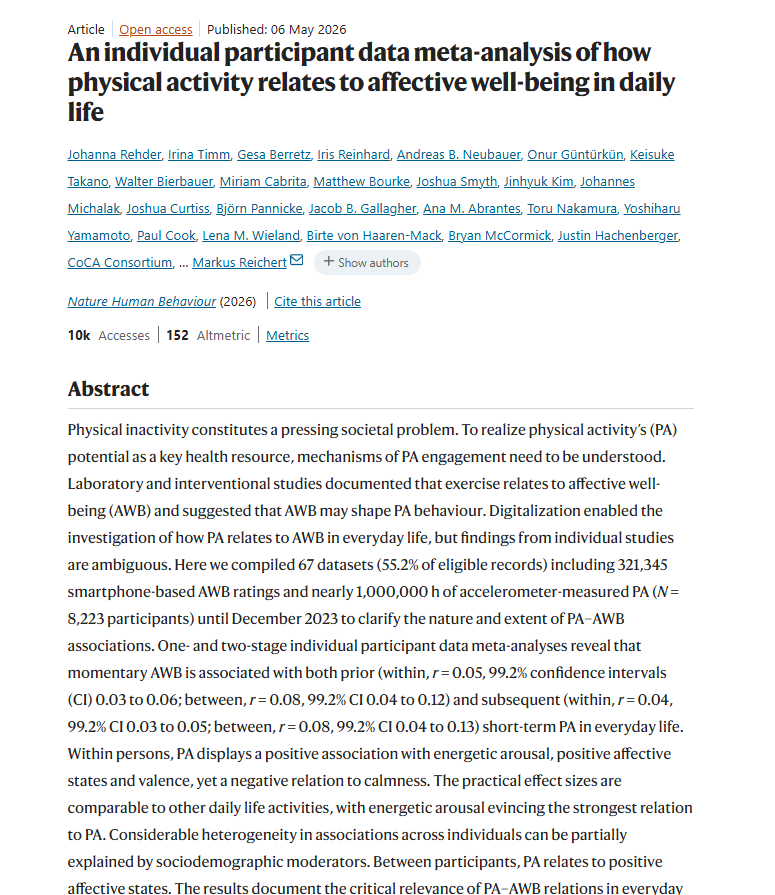
Your Brain Performs Better When You Move
A 2026 Nature Human Behaviour meta analysis tracking nearly 1 million hours of real world activity found that physical movement consistently improved energy, mood, and mental sharpness in daily life. The strongest effect was increased cognitive energy.
Your brain does not separate physical performance from mental performance. Neither should you.
China now counts #PTSD in police, firefighters, and medics as a workplace injury with full compensation. Shaped by earthquakes and the pandemic, this landmark rule puts #mental#trauma on par with #physical harm.👇
@GPsych_Office@WileyBrainPsych
https://t.co/NgWq9b2Xfk
People who experience high levels of everyday anxiety are more prone to intense feelings of guilt and shame. New brain imaging research suggests the neural networks that trap anxious individuals in unhelpful cycles of self-blame. https://t.co/XZXYl0HwBx
This #NationalWomensHealthWeek, BMJ Connections Mental Health invites submissions to “Women’s Mental Health Across the Life Course”. We welcome research on sex- and gender-related mechanisms, outcomes, and care. https://t.co/driHoCgoUM
#Autism alters #brain wiring in teen males. A frontal hub tied to calming #chemicals is disrupted. Mapping this hub and its links to key brain chemical systems provides a concrete target for precision drug and behavioral therapies.👍
@GPsych_Office@WileyBrainPsych
https://t.co/omZIxlSk9v
A recent study reveals that adults can boost their cognitive and emotional well-being using brief, daily mental exercises. This research suggests mental decline is not inevitable, offering a proactive approach to extending brain vitality. https://t.co/d9naVro1Vk
📢 New study in #BMJMentalHealth reports that combined #tDCS + #rTMS improved sleep quality more than rTMS alone in adults with chronic #Insomnia.
Brain imaging also showed stronger fronto-temporal connectivity after treatment.
#SleepHealth#Neuroscience
Post-surgery brain fog affects many seniors. New study shows daily scent exposure around #surgery time significantly reduces postoperative #cognitive decline risk in older adults. This simple, low-cost, drug-free strategy could protect #brain function during recovery.😀
@GPsych_Office@WileyBrainPsych
https://t.co/r9fk5hvUgd
Researchers analyzed globally self-harm deaths in adults 65+ over 31 years. Older men are 2.5× more likely to die by suicide than women; rates are highest in sub-Saharan Africa and lowest in wealthier Middle East.🧐
@GPsych_Office@WileyBrainPsych
https://t.co/C4LndbLH01
Worsening neuropsychiatric symptoms predict Alzheimer's years before diagnosis, with rising symptoms doubling dementia risk. Tracking these mental health changes could enable early screening and lifestyle interventions before irreversible brain damage occurs.👇
#Alzheimer #dementia
@GPsych_Office@WileyBrainPsych
https://t.co/ICDT5bEQFt
Experiencing stress during early childhood physically alters the nerves in the digestive system. Recent studies reveal how this biological remodeling causes chronic gut pain and movement issues, paving the way for highly targeted new therapies. https://t.co/3miQDk57qC
Healthy lifestyles cut dementia risk by up to 78%, but benefits vary widely. AI analysis shows younger people with better memory, lower blood pressure, and good physical health gain the most, enabling personalized prevention strategies.👇
@GPsych_Office@WileyBrainPsych
https://t.co/dsq1jyjlkA
A new large-scale genetic analysis reveals that common gene variants associated with autism are also linked to lower neurite density among the general public, suggesting a shared biological architecture between neurodevelopment and microscopic brain… https://t.co/YsOIJ49erd
Alcohol, cannabis, and opioid addictions share brain-based genetic roots but differ in complexity. Pinpointing these shared and unique genes expands understanding of addiction biology and could guide targeted prevention strategies across substance types.🧐
@GPsych_Office
https://t.co/toOWJU2dmf
Did you know ADHD symptoms and intense gaming are often connected in teens? A new 2-year study with over 20,000 adolescents reveals why — and points to how we can help.😀
@GPsych_Office
https://t.co/iIBVlUS2Q6
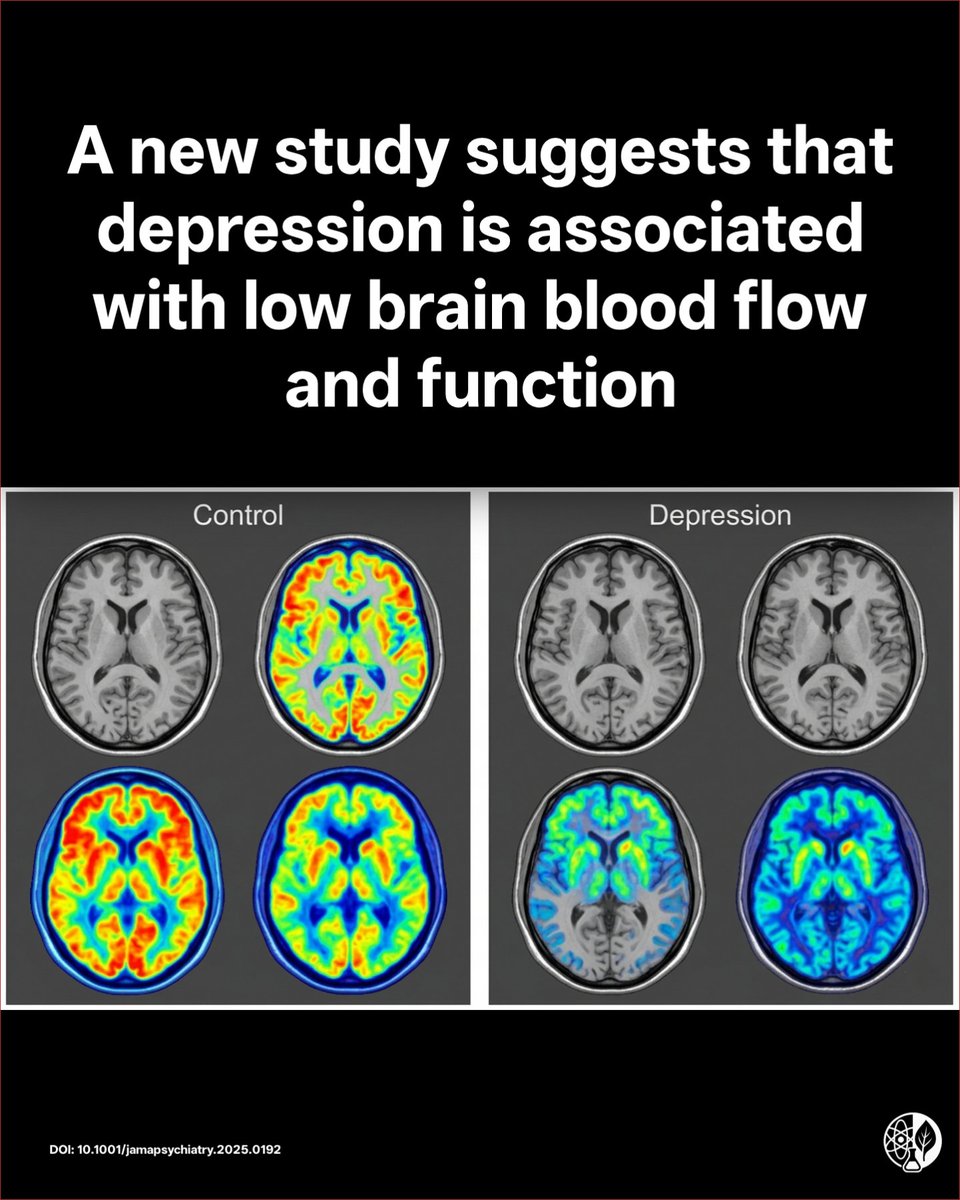
For decades, the search for the biological roots of severe depression has largely focused on looking for physical changes in the brain's shape or size.
However, major new research is fundamentally changing how we view the condition, revealing that the true key lies in how the brain operates in real-time.
Scientists utilizing advanced imaging techniques have discovered that depression is strongly characterized by localized drops in cerebral blood flow. This reduced blood flow creates a domino effect, preventing neighboring clusters of brain cells from communicating and synchronizing properly. Essentially, these specific regions are not receiving the optimal energy and oxygen required to maintain healthy neural connections.
This discovery is a significant leap forward for mental health science. By focusing on active blood flow and neural synchronization rather than physical structural scans, researchers have found a highly precise biological indicator that directly mirrors the intensity of a person's symptoms.
This deeper understanding paves the way for a new era of targeted, objective measurements and treatments focused on restoring healthy brain activity.
Journal Cite: Kochunov P, Adhikari BM, Keator D, et al. Functional vs Structural Cortical Deficit Pattern Biomarkers for Major Depressive Disorder. JAMA Psychiatry. 2025;82(6):582–590. DOI: 10.1001/jamapsychiatry.2025.0192
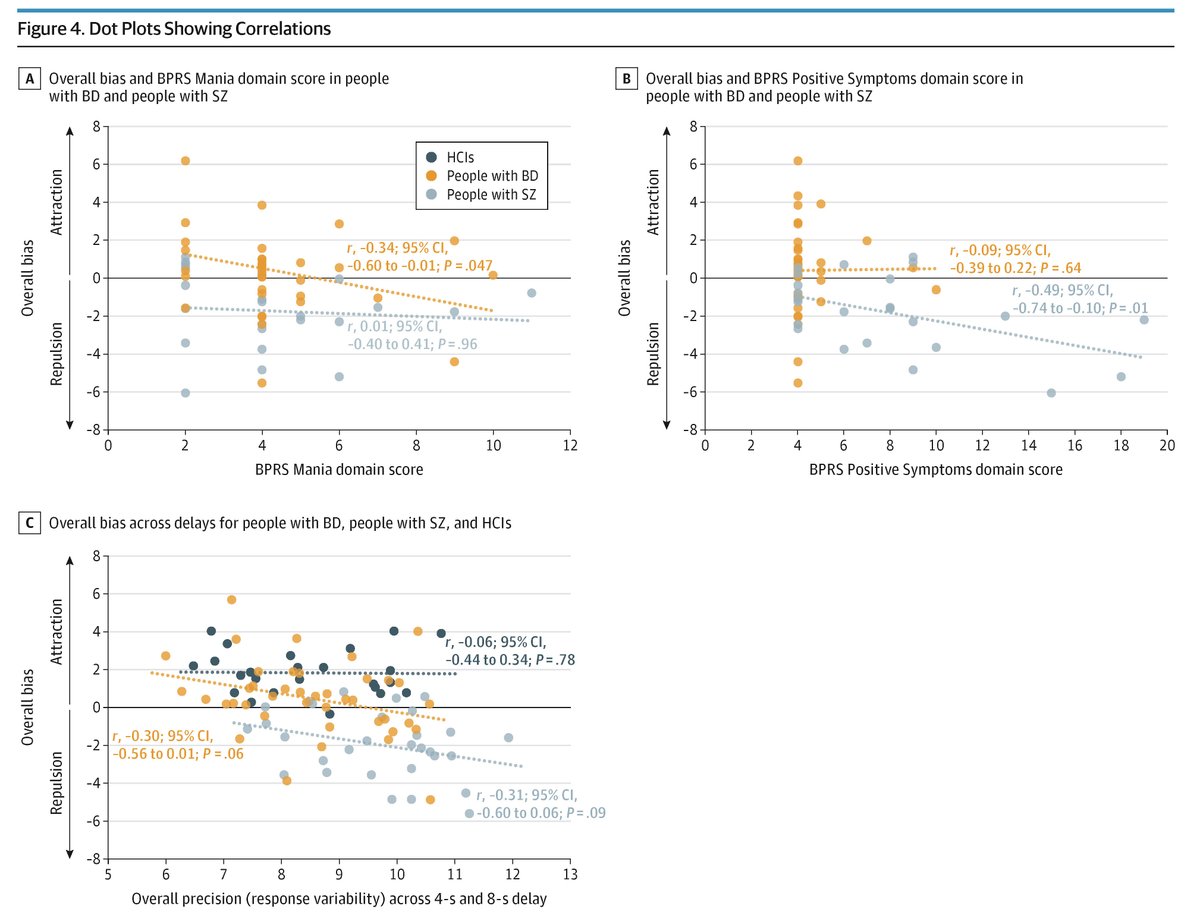
Serial bias in spatial working memory differed by group, with patients with schizophrenia showing repulsive bias, most healthy controls showing attractive bias, and individuals with bipolar disorder demonstrating mixed patterns.
https://t.co/T7vR5dcq66