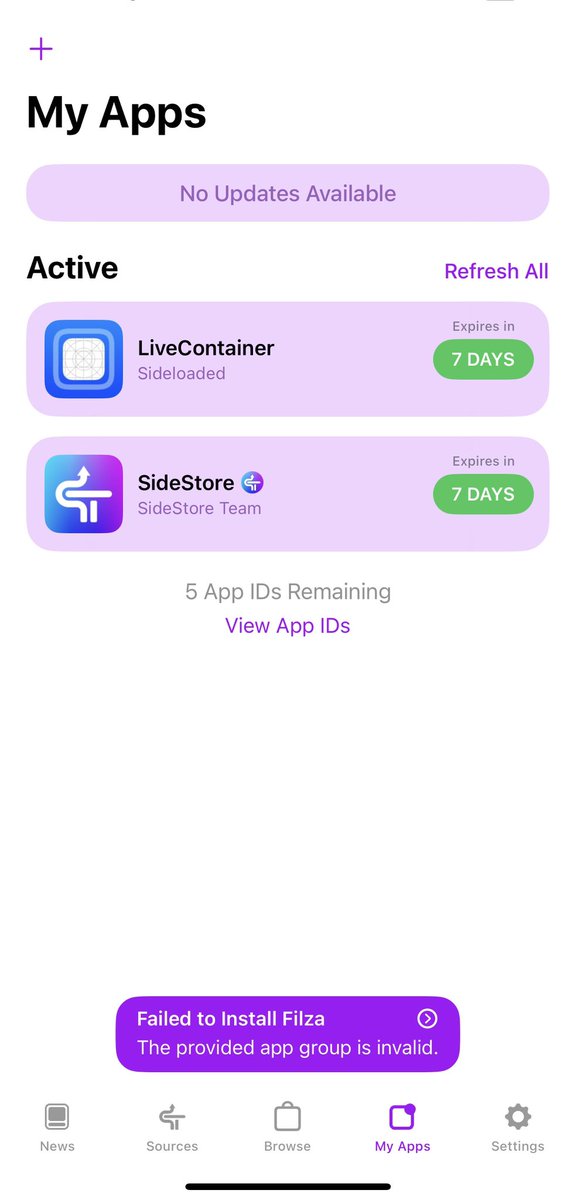
Sadly your fork seems Battery Hog , it drains
lot while in the background , so had to uninstall it. And battery 🔋 went back to normal @chenhonzhou
iPhone 16PM iOS 18.5
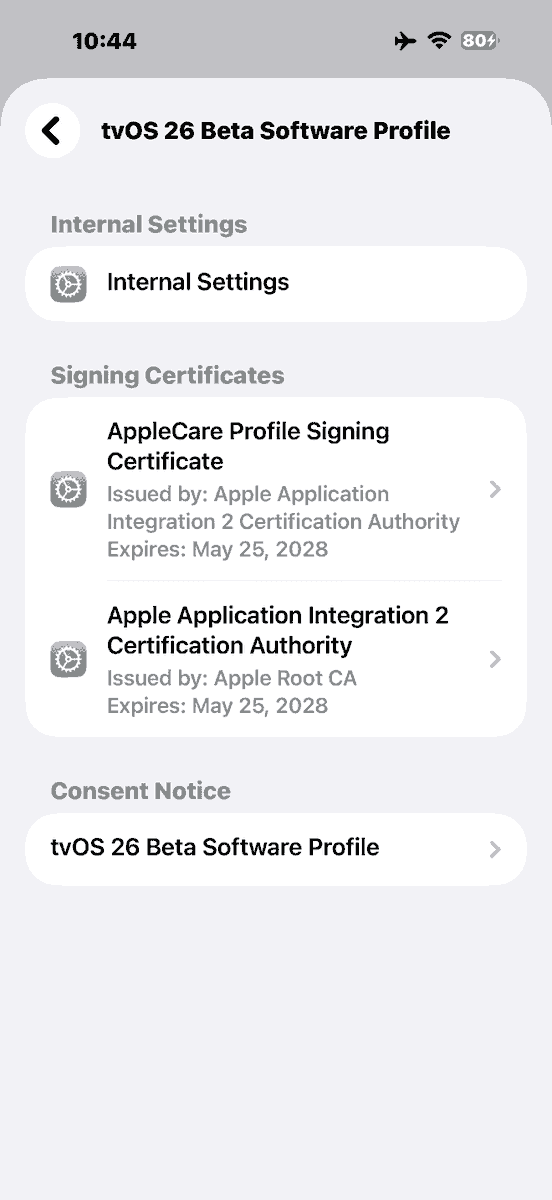
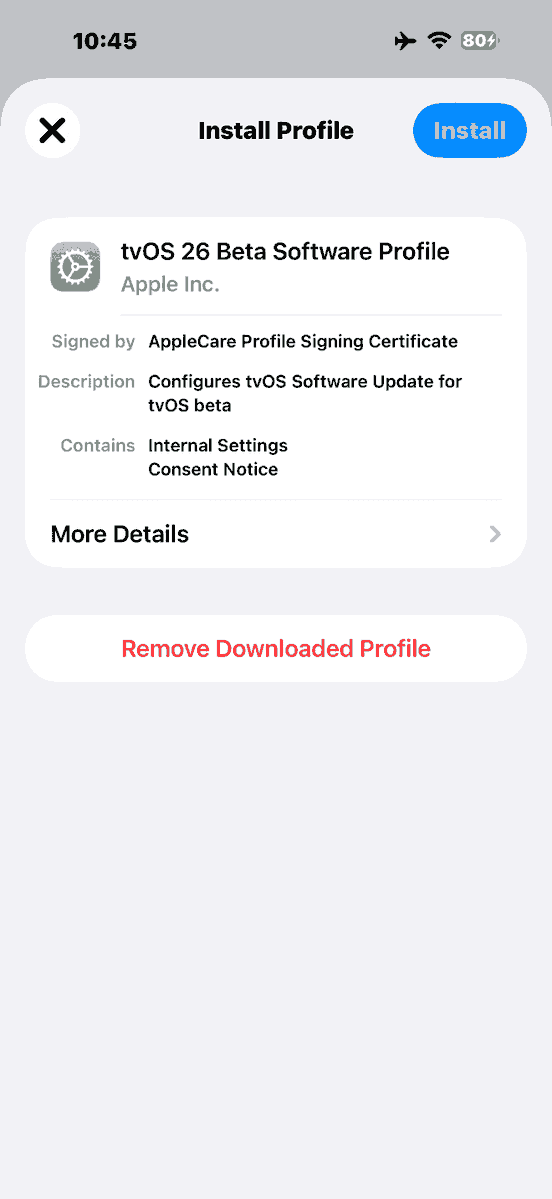
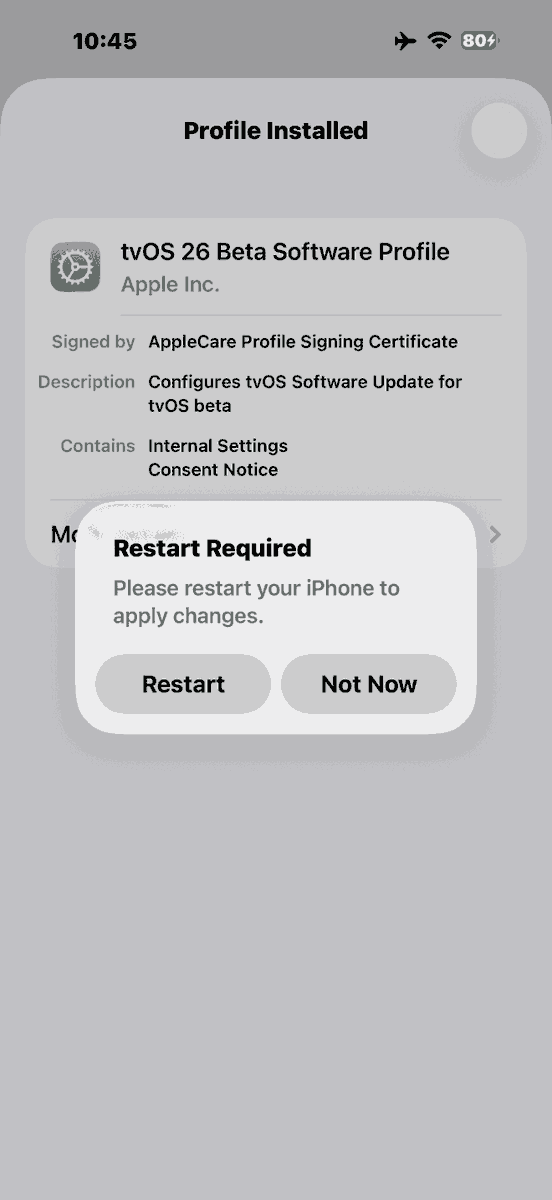
I've uploaded Apple's new signed tvOS 26 beta profile. You can install it from the top page of my repository:
https://t.co/jcz8BxAQFY
No restart is required after installation
Thanks @MasterMike88 sharering
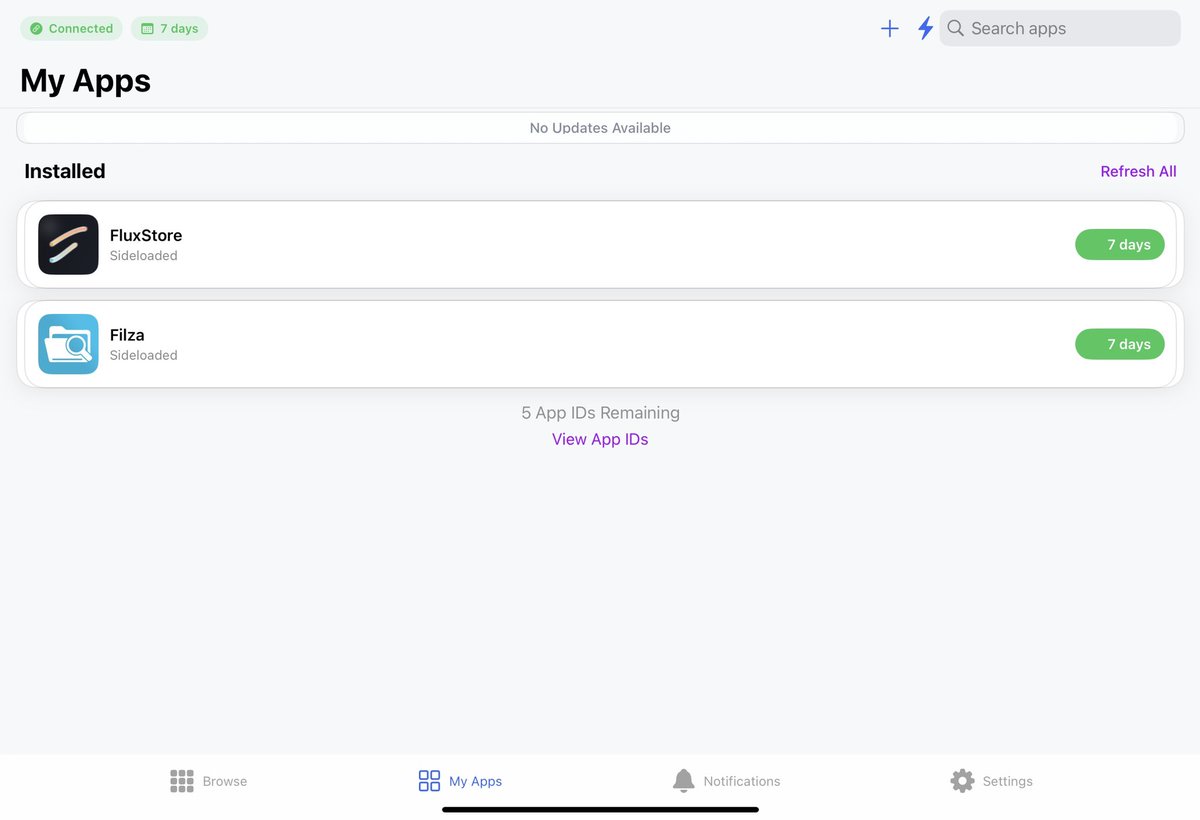
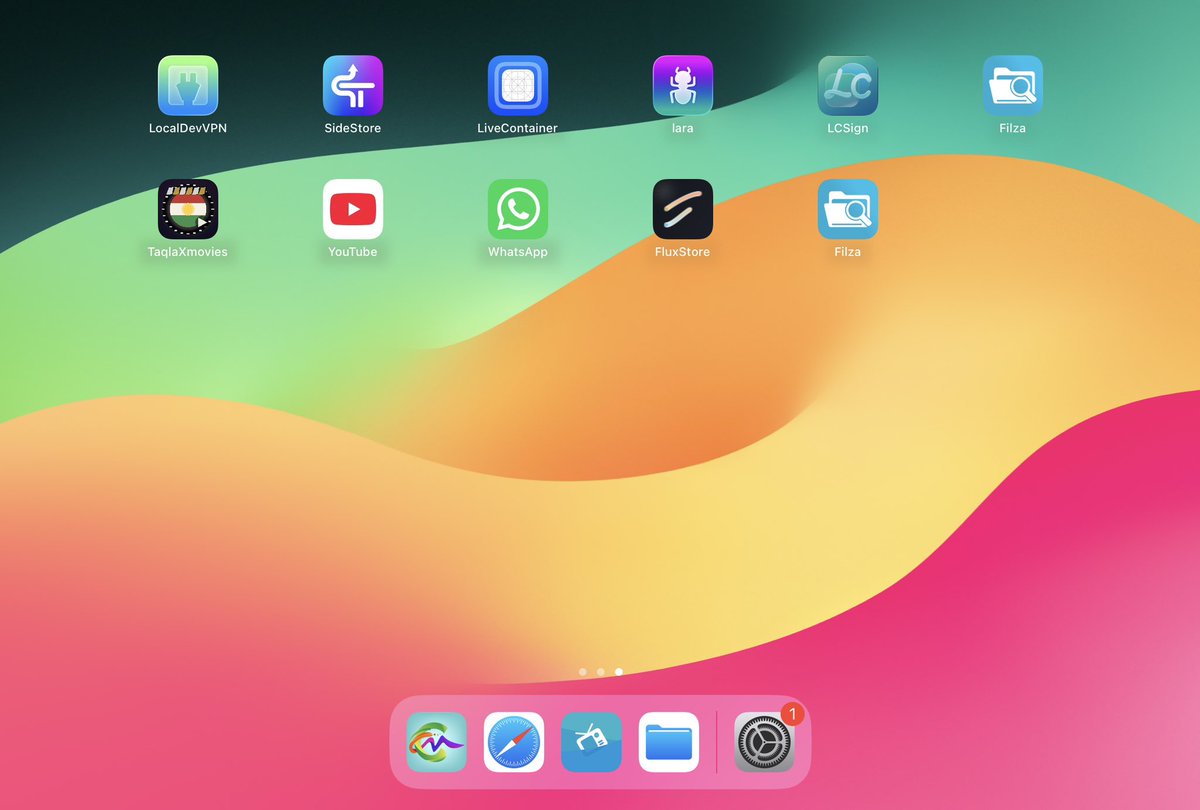
Wonderful work indeed. FluxStore v1.0.6 nightly
All on-Device
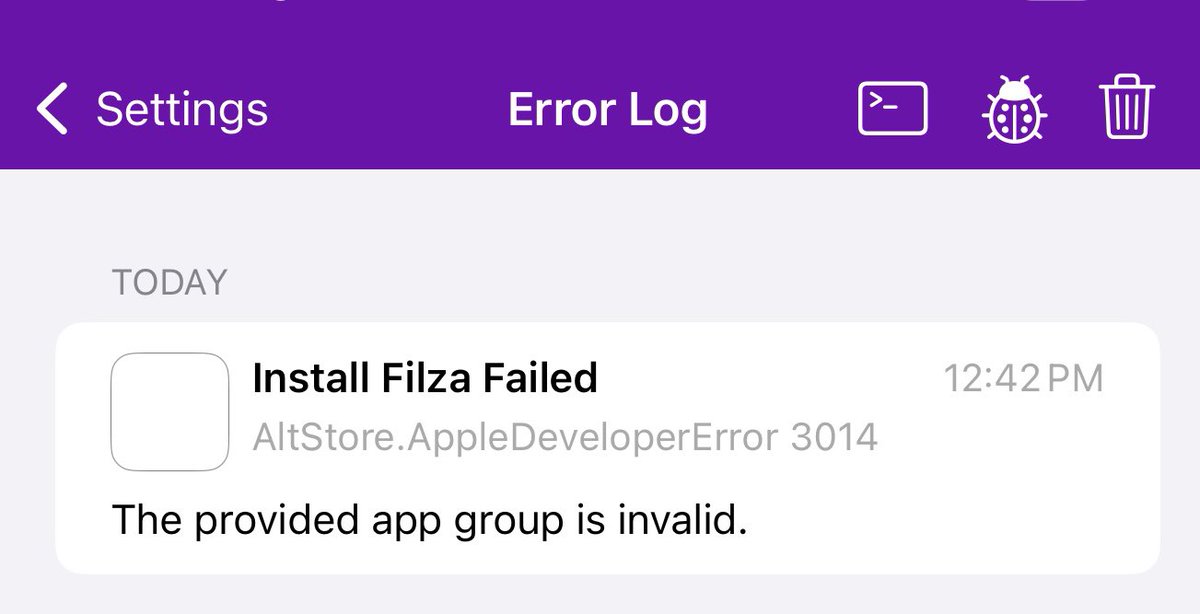
Installed FluxStore with SideStore & used the SideStore pairing file and it worked perfectly. And more importantly with FluxStore sideloadef FilzaDS successfully too.
👇
https://t.co/5jUww72YpZ
[Paid Release] PhoneHub v1.0.0
Your iPhone’s call experience — reimagined.
Advanced Caller ID — Truecaller, GetContact & more
Smart SIM picker
WhatsApp quick actions
Auto redial & smart speaker
Beautiful customizable UI
Built for power users.
soon on
@HavocRepo#jailbreak
Apple and Google are gradually expanding their use of hardware-based attestation. They're convincing a growing number of services to adopt it. Google's Play Integrity API and Apple's App Attest API are very similar. Apple brought it to the web via Privacy Pass, which Google intends on doing too.
Google's Play Integrity API requires hardware attestation for the strong integrity level and is gradually phasing in requiring it for the more commonly used device integrity level. Apple already has it as a requirement. Over the long term, this will increasingly lock out hardware and OS competition.
The purpose of these systems is disallowing people from using hardware and software not approved by Apple or Google. This is wrongly presented as being a security feature. Banks and government services are the main ones adopting it but Apple and Google are encouraging every service to use it.
Apple's Privacy Pass brought hardware attestation to the web to help with passing captchas on their own hardware. Many people saw that as harmless since few sites would be willing to lock out non-Apple-hardware users. Apple and Google are both likely to bring broader hardware attestation to the web.
Google's reCAPTCHA is planning an approach where they use Privacy Pass on Apple hardware, their own approach on Google Mobile Services Android devices and a QR code scanning system to require an iOS or Google certified Android device for Windows and other systems:
https://t.co/7rQnioRa8A
Banking and government services increasingly require using a mobile app where they can use attestation to force using an Apple or Google approved device and OS. Apple's privacy pass, Google's 'cancelled' Web Environment Integrity and now reCAPTCHA Mobile Verification are bringing this to the web.
Current media coverage for reCAPTCHA Mobile Verification misunderstands it and the impact of it. They're bringing a hardware attestation requirement to Windows, desktop Linux, OpenBSD, etc. by requiring a QR scan from a certified smartphone to pass reCAPTCHA in some cases. They could expand it more.
Control over reCAPTCHA puts Google in a position where they can require having either iOS or a certified Android device to use an enormous amount of the web. Google defines certification requirements for Android which includes forcing bundling Google Chrome, etc. It's enormously anti-competitive.
Google's Play Integrity API bans using GrapheneOS despite it being far more secure than anything they permit. It also bans using any other alternative. This isn't somehow specific to an AOSP-based OS. You can't avoid this by using a mobile OS based on FreeBSD instead. You'll just be more locked out.
Google's Play Integrity API permits devices with no security patches for 10 years. The device integrity level can be bypassed via spoofing but they can detect it quite well and block it once it starts being done at scale. The strong integrity level requires leaked keys from TEEs/SEs to bypass it.
It doesn't provide a useful security feature, but it does lock out competition very well. Services requiring Apple App Attest or Google Play Integrity are primarily helping to lock in Apple and Google having a duopoly for mobile devices. Play Integrity is more relevant due to AOSP being open source.
Governments are increasingly mandating using Apple's App Attest and Google's Play Integrity for not only their own services but also commercial services. The EU is leading the charge of making these requirements for digital payments, ID, age verification, etc. Many EU government apps require them.
Instead of governments stopping Apple and Google from engaging in egregiously anti-competitive behavior, they're directly participating in locking out competition via their own services. Requiring people to have an Apple device or Google-certified Android device is anti-competition, not security.
reCAPTCHA Mobile Verification will currently work with sandboxed Google Play on GrapheneOS but it clearly exists to provide a way for them to start using hardware attestation on systems without it. People without an iOS or Android device will be locked out when this is required even without that.
This isn't about security or any missing functionality. GrapheneOS can be verified via hardware attestation. Google bans using GrapheneOS for Play Integrity because we don't license Google Mobile Services and conform to anti-competitive rules already found to be illegal in South Korea and elsewhere.
Services shouldn't ban people from using arbitrary hardware and operating systems in the first place. Google's security excuse is clearly bogus when they permit devices with no patches for 10 years but not a much more secure OS. It's for enforcing their monopolies via GMS licensing, that's all.
This $10,000 payment went through on a locked iPhone. No Face ID. No passcode.
Marques Brownlee(MKBHD) still looked doubtful after seeing his locked phone get charged $5 through Apple Pay.
So the team at Veritasium asked a wild question:
“Can we try $10,000?”
They placed his iPhone on a device while it was still locked.
Then, using a separate device, they tapped a payment terminal.
Instantly, $10,000 was charged.
No unlock.
No Face ID.
No passcode.
Just tap, and the money was gone.
If you are using tvOS beta profiles, take notice of this post.
As people know, the generally recommended method for blocking updates has been the tvOS beta profiles, which has had the benefits of being easily removable, not being persistent with a backup, among other benefits.
However, this era of tvOS beta profiles for blocking update ends next month.
The current tvOS beta profile actually expires on May 1st, 2026, and not on January 31st, 2027 like initially thought.
There is luckily a new non-expiring DNS profile (thanks to @mineekdev) at https://t.co/8oHHSskLoI.
However, while this new solution shares many of the same benefits as the tvOS profile (as well as some of the same primary benefits such as not being persistent across backups/updates and being easily removable), there are differences and downsides to this approach:
- As this profile is a DNS profile, it only works on iOS/iPadOS 14 or later - if you're on iOS/iPadOS 13.x or lower, you'll need to settle with an option like OTADisabler (which can persist between certain types of updates, can be made difficult to remove if you can't jailbreak, etc.)
- Additionally, it also applies this updating blocking to your paired Apple Watch(es), which depending on your circumstances can be a good thing or a bad thing
- This profile cannot be directly installed to an Apple Watch, so as it stands it will become impossible to block updates on only the Apple Watch once the tvOS profiles expire
- The way the DNS profile works is by being a sinkhole for the OTA-related URL's
If you are using tvOS beta profiles, take notice of this post.
As people know, the generally recommended method for blocking updates has been the tvOS beta profiles, which has had the benefits of being easily removable, not being persistent with a backup, among other benefits.
However, this era of tvOS beta profiles for blocking update ends next month.
The current tvOS beta profile actually expires on May 1st, 2026, and not on January 31st, 2027 like initially thought.
There is luckily a new non-expiring DNS profile (thanks to @mineekdev) at https://t.co/8oHHSskLoI.
However, while this new solution shares many of the same benefits as the tvOS profile (as well as some of the same primary benefits such as not being persistent across backups/updates and being easily removable), there are differences and downsides to this approach:
- As this profile is a DNS profile, it only works on iOS/iPadOS 14 or later - if you're on iOS/iPadOS 13.x or lower, you'll need to settle with an option like OTADisabler (which can persist between certain types of updates, can be made difficult to remove if you can't jailbreak, etc.)
- Additionally, it also applies this updating blocking to your paired Apple Watch(es), which depending on your circumstances can be a good thing or a bad thing
- This profile cannot be directly installed to an Apple Watch, so as it stands it will become impossible to block updates on only the Apple Watch once the tvOS profiles expire
- The way the DNS profile works is by being a sinkhole for the OTA-related URL's
We built a Bootstrap beta version for ios16.5~17.0 and added DarkSword kernel exploit to hide more jailbreak traces. credits: @wh1te4ever@opa334dev download it at: https://t.co/wAutL1aqP7
🛠️ macUSB v2.1
أداة مفتوحة المصدر لإنشاء USB بوتابل لنظام macOS، بما في ذلك الإصدارات القديمة كـ Catalina، مع دعم كامل لأجهزة Apple Silicon وتحميل مباشر من سيرفرات Apple
Any websites to watch Football?
Like beIN supports or others for free.
If it contains ads. It is okey.
Send links in comments…👇 #ipa#jailbreak#footballlive








![AnubisTweaks's tweet photo. [Paid Release] PhoneHub v1.0.0
Your iPhone’s call experience — reimagined.
Advanced Caller ID — Truecaller, GetContact & more
Smart SIM picker
WhatsApp quick actions
Auto redial & smart speaker
Beautiful customizable UI
Built for power users.
soon on
@HavocRepo
#jailbreak https://t.co/QnxGUyVBWy](https://pbs.twimg.com/media/HIAoicdWsAAksAa.jpg)









![AnubisTweaks's tweet photo. [Paid Release] PhoneHub v1.0.0
Your iPhone’s call experience — reimagined.
Advanced Caller ID — Truecaller, GetContact & more
Smart SIM picker
WhatsApp quick actions
Auto redial & smart speaker
Beautiful customizable UI
Built for power users.
soon on
@HavocRepo
#jailbreak https://t.co/QnxGUyVBWy](https://pbs.twimg.com/media/HIAoicfXMAAtB6t.jpg)