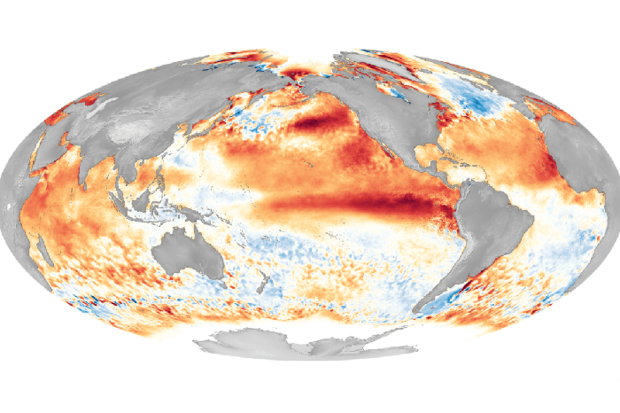
Just a reminder that our article on Explained predictions of strong eastern Pacific El Niño events using deep learning, with @ktakahashig and @drXtinaKar, is already out!
📣 #ENFEN mantiene el estado de alerta de El Niño Costero. ☝️ El evento se extendería hasta diciembre del presente año, con una magnitud débil por lo pronto. Sin embargo, no se descarta que podría alcanzar la magnitud moderada en otoño.
Comunicado ➡️ https://t.co/SO1VqS2Vm3
Open Postdoctoral Researcher position in our research group at the University of Hawaiʻi (Honolulu). The position focuses on ML/AI model development and analysis for tropical-extratropical weather and climate research. Deadline: March 20. Apply here: https://t.co/ehYY5Bp1Kl
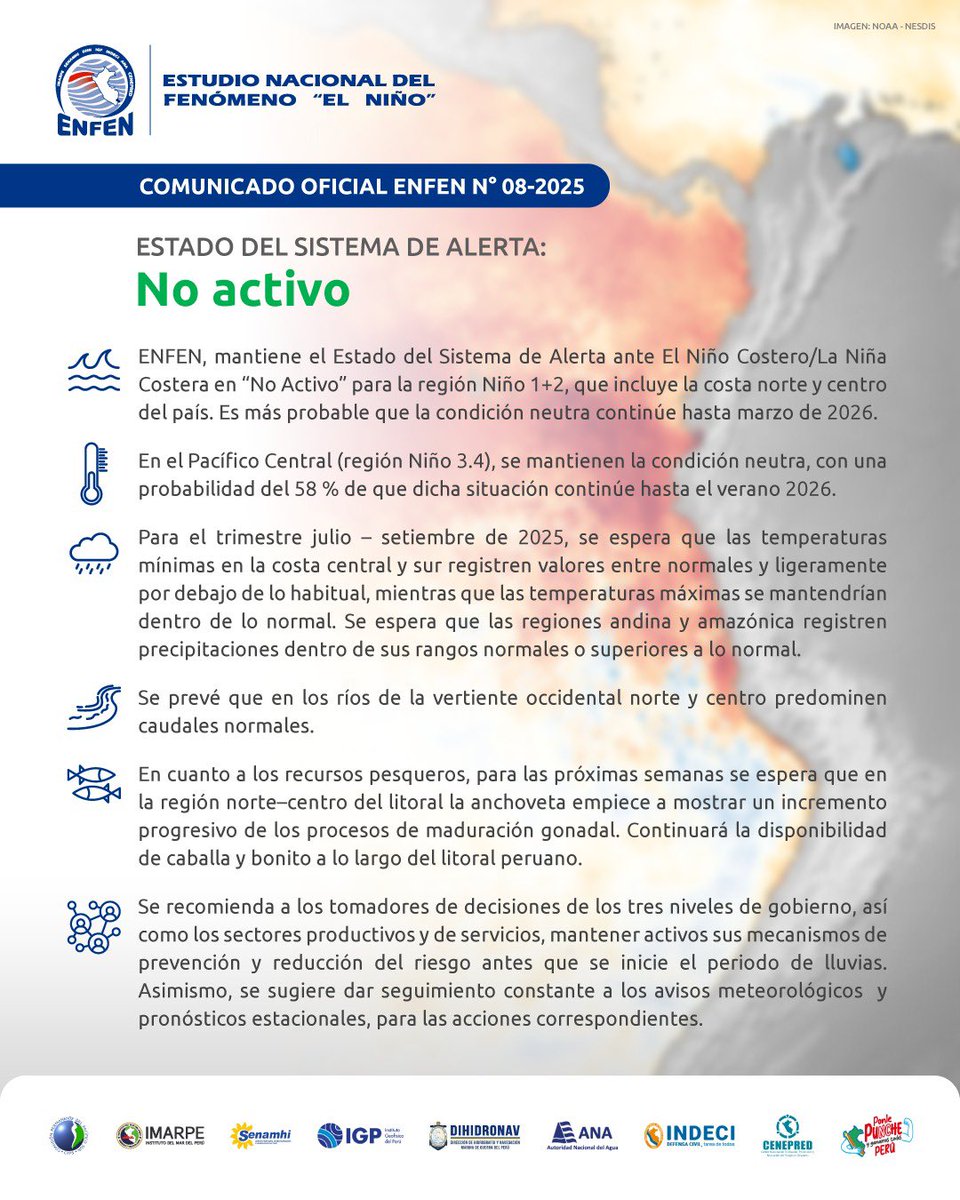
📣 #ENFEN mantiene el estado del sistema de alerta ante El Niño costero / La Niña Costera en “no activo” en la costa norte y centro del país. La condición neutra continuaría hasta marzo de 2026.
Comunicado ➡️ https://t.co/LMkGKZa1ut
📣 #ENFEN ha activado la Vigilancia de El Niño Costero en la región Niño 1+2, que abarca la zona norte y centro del mar peruano, ante la eventualidad de un evento cálido débil y de corta duración.
Comunicado extraordinario ➡️ https://t.co/x6RSJdEFPb
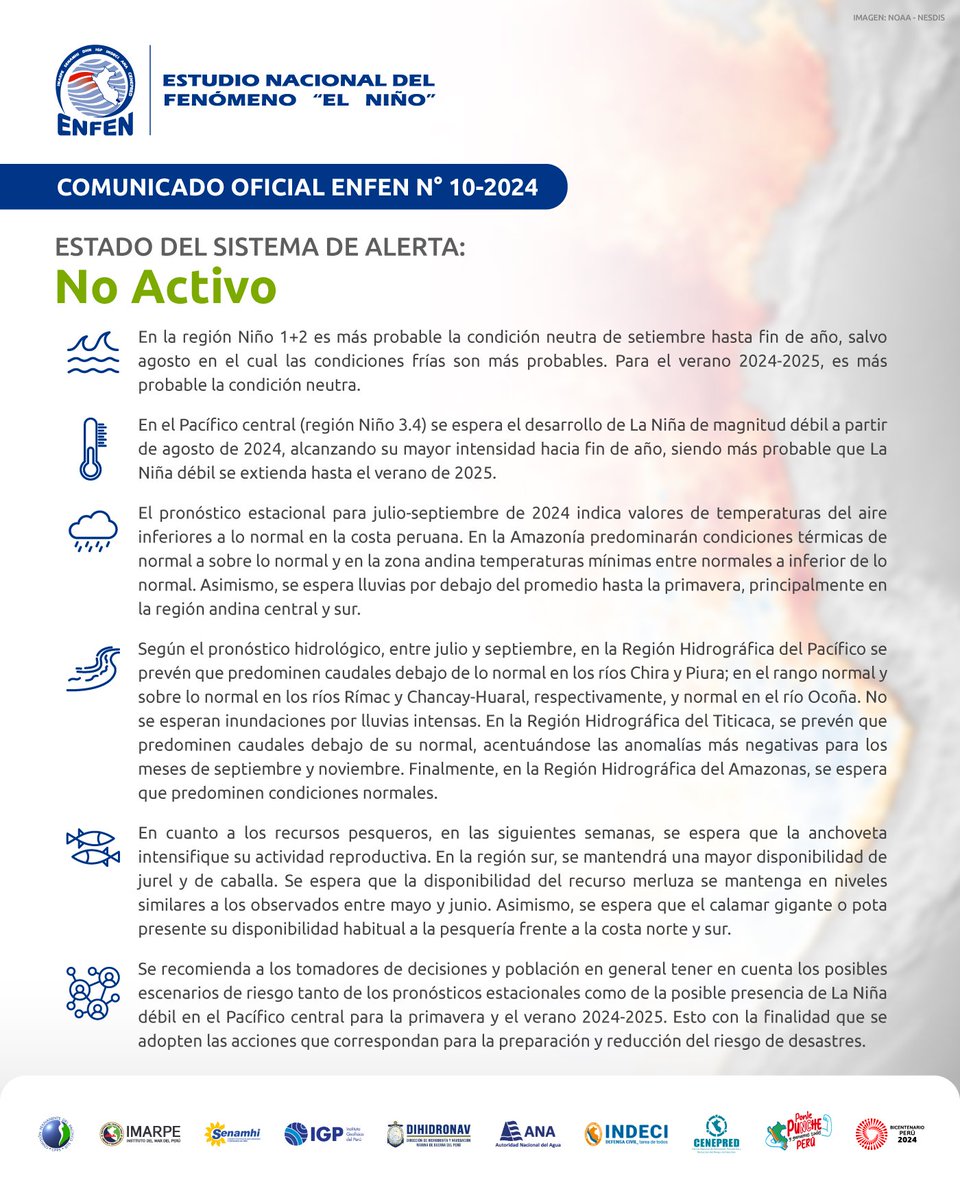
🚨 La Comisión Multisectorial ENFEN se pronuncia sobre el fenómeno el Niño costero y La Niña costera, y mantiene el estado de alerta “No activo”.
Más información: https://t.co/DXuhUeFNfz
Read about the latest improvement to https://t.co/sNVU1DIXuJ with Dask: https://t.co/EAkjYHQxZe
Thanks to Patrick Hoefler of @CoiledHQ for the great work here!
I am excited to see this study published @CommsEarth! It uses a deep learning model to infer summertime atmospheric blocking frequencies from seasonally averaged surface temperature reconstructions over the Last Millennium. 1/n https://t.co/2nTwDmpmsD
World weather: Check out the #wildfire smoke backing up to the Andes Mountains in South America this morning. Millions of acres have burned in 2024 between Brazil, Bolivia, Peru, and Paraguay. #WorldWeather
Excited for our faculty and students in Atmospheric Sciences, Chemistry, and History at @uhmanoa who participate in a new NSF Gen-4 Engineering Research Center, focused on sustainable cooling and heating! 1/3 https://t.co/3uFKrNah5R 1/3
If you’re a regular reader of our ENSO blog, then you know that scientists have been carefully observing how the Pacific is changing from El Niño to La Niña conditions by late summer. But as it happens, something similar might be cooking in the Atlantic.
https://t.co/gWSBKWPb2V
Building on decades of progress in El Niño–Southern Oscillation (ENSO) modeling, researchers have developed a new model that provides accurate ENSO forecasts as much as 16–18 months in advance. https://t.co/F1SiXIe6u3
Check out research briefings for our Nature Article.
A minimalistic model achieves long-range explainable El Niño forecasts with high accuracy https://t.co/26EMqRczuM
📣 #ENFEN cambia el estado del sistema de alerta de “vigilancia” a “no activo”. Las anomalías negativas de la temperatura superficial del mar en la costa norte y centro del Perú se mantendrían dentro del rango neutral en los próximos meses.
Comunicado ➡️ https://t.co/rKpYom8e5n
¡Se aprobó nuestro proyecto! Estudiaremos el "Cambio climático, deforestación y posible colapso del bosque amazónico del Perú mediante modelado numérico del Sistema Tierra” @igp_peru@intepucp@untrm@ird_fr@LSCE_IPSL https://t.co/00zf3yMiSv @MinamPeru@ProcienciaPeru
Asumiendo un nuevo desafío, desde el IGP, como uno de los editores, el único del hemisferio sur, del journal científico "Climate Dynamics", uno de los top en ciencia del clima. https://t.co/0BPh0eccop
Levels of CO2 measured at NOAA’s Mauna Loa Atmospheric Baseline Observatory surged to a seasonal peak of just under 427 parts per million (426.90 ppm) in May, when CO2 reaches its highest level in the Northern Hemisphere.
Check out our interactive graph: https://t.co/4zBhXmiU5f
hvPlot 0.10 has just been released! Check the release blog post that also goes over the main features released in version 0.9! #Python#dataviz#DataScience
https://t.co/36wy1C7Bsi
A new study demonstrates an innovative approach combining two artificial intelligence methods to predict a key ENSO indicator up to a year and a half in advance. The method proved capable of predicting extreme ENSO events at about 85 percent accuracy. https://t.co/Rs0EHMw2tJ