@APompliano@jvisserlabs You don’t even know why token costs are falling. Your argument dies on that assertion.
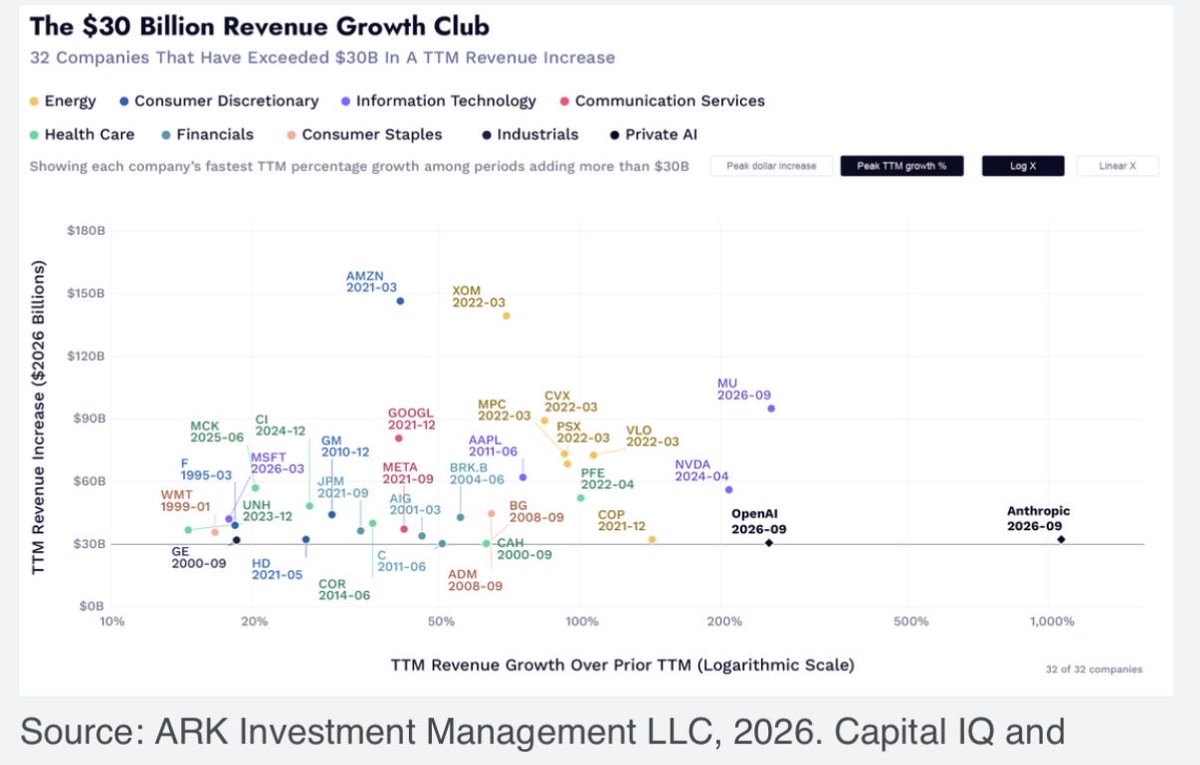
Meanwhile we have seen the two leading labs add $60B in ARR in two quarters.
People need to take a step back and realize how rare it is to add $30 billion in revenue while growing >200% yoy. People are citing a slowdown in growth (barely) yet are missing the bigger picture.
This might be the most important chart in Semis over the next 5-7 years. If. Wafer throughput is increased 40% then we could see capital intensity become much more moderate than expectations over the next decade. Additionally, $ASML is working on a more intense light source which could improve this further as multiple passes are lessened or no longer required. $TSM $NVDA $SMH
I don’t agree with this. Rental $/GPU hr are independent of the cost of equipment and financing of that equipment. Higher cost of capital just moves break evens and IRR.
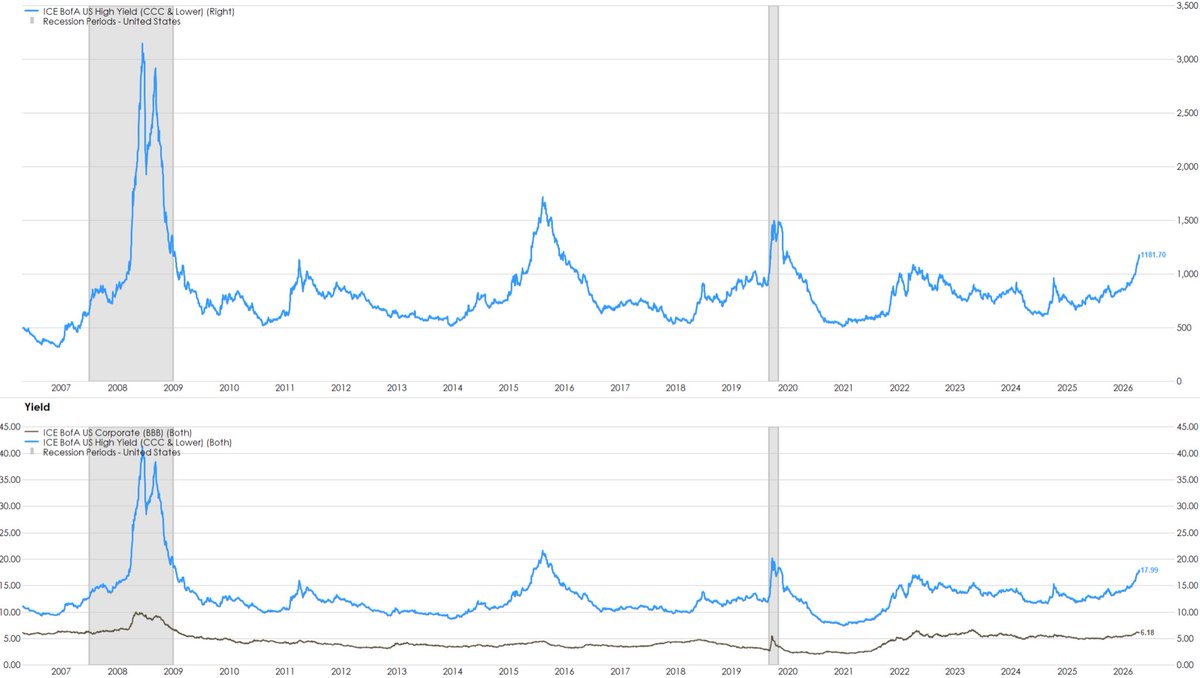
But I will state the view the commodity like companies in the AI value chain are not the Frontier labs as many have suggested, but the neoclouds providing raw compute. It’s why their bonds are priced like shale oil companies circa 2013-2019 at 9-25% yields. $NCLD $SMH
I've been critical in the past of AI compute indexes and the willingness to price compute based on the spot rental price, but now that the AI reset is sinking into the repricing of AI buildout debt its time to realize that the cost of capital is what determines the price of compute.
The most important number in GPU pricing right now isn't $/GPU-hour. It's the gap between what a hyperscaler pays to borrow (~90bp over Treasuries) and what a neocloud pays (~1,100bp).
The cost of compute is now set by the cost of capital, and the spot rental rate no longer tells you much.
The price of an H100 isn't one number. The same chip in the same rack costs a different amount depending on whose balance sheet it sits on. A ~1,000bp funding gap is a structural cost advantage that no amount of operating skill closes.
For example, take one GPU-hour apart. Most of it isn't power or space. It's paying back the chip, the interest on the loan that bought it, and the return the equity expects. A $40–55k all-in GPU, 75% debt-funded, at ~7,000 utilized hours a year is a financing instrument that happens to do matrix multiplication.
As the +500bp on neocloud debt (10%→15%) adds $0.20–0.30 to the break-even cost of every GPU-hour, which is then added on to the rental price.
That's 8–10% of the H100 index, from a credit spread alone, driven almost entirely by the cost of capital.
That means that the compute spot index is a derivative of the AI infra debt credit curve and the squeeze on neocloud margins.
This might be the most important chart in Semis over the next 5-7 years. If. Wafer throughput is increased 40% then we could see capital intensity become much more moderate than expectations over the next decade. Additionally, $ASML is working on a more intense light source which could improve this further as multiple passes are lessened or no longer required. $TSM $NVDA $SMH
@choffstein While I will always applaud innovation, a lot of these projects are likely misallocated capital/pet projects. Already had a massive failure with the cyber truck. They really need model refreshes that will sell on a mass scale.
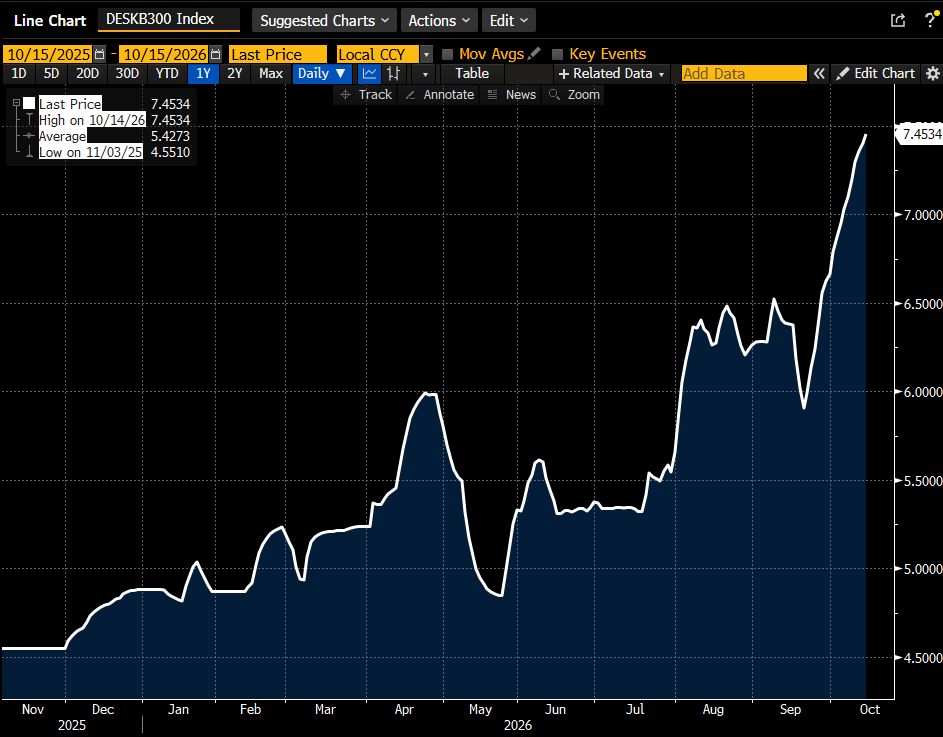
Blackwell Ultra (B300) GPU rental prices up 17 consecutive days to a new all-time high, according to Compute Desk's index of verified transactions from U.S. neoclouds.
"Anthropic Q3 revenue was a big miss - $16.8bn for the quarter vs $5.4bn implied monthly run-rate for July (which was reported in Aug), implying close to 0 growth in August and September. This has weighed heavily on sentiment, as a key pillar of the AI investment thesis is the ARR growth trajectory of frontier models. The funding stress facing Coreweave and the neocloud ecosystem are further exacerbating concerns." - Goldman Asia S&T