@BruvvaRynChhung@NightGod333 Sure, you simply never knowing about a story Before ppl became story tellers online and AI.. means it didn’t exist huh? lol
@NightGod333 Got damn it feels like a Mandela effect with the ending here because I distinctively remember both stories of the results now I at the time knew which one came first
@reesetheone1 Folk yall online are taking such a wild stance on this and I ‘get it’, doing it as a reaction to racists but doesn’t make this shxt right. Yall talmbout kids. I seen someone make a meme about the kid who passed. This is so ugly from all yall that don’t know either side personally
@Maveapproach@RealCandaceO Gang all that coonin she did in the past never still made me think she hates her ppl but yeah weird shxt nonetheless because only hackers use solana and no celeb would really make a coin at this point unless they Need to scam their audience
THIS IS INSANE 🚨 @olivertree (Alienboy records) made a full length Antarctica Documentary (screened TWO WEEKS before the crash), Not publicly released. He spent "300" days in Antarctica investigating the UAP and Alien BASES there. A recording of the screening was just posted.
🚨 BREAKING - Antarctica Egg UFO 4chan leak (part 2)
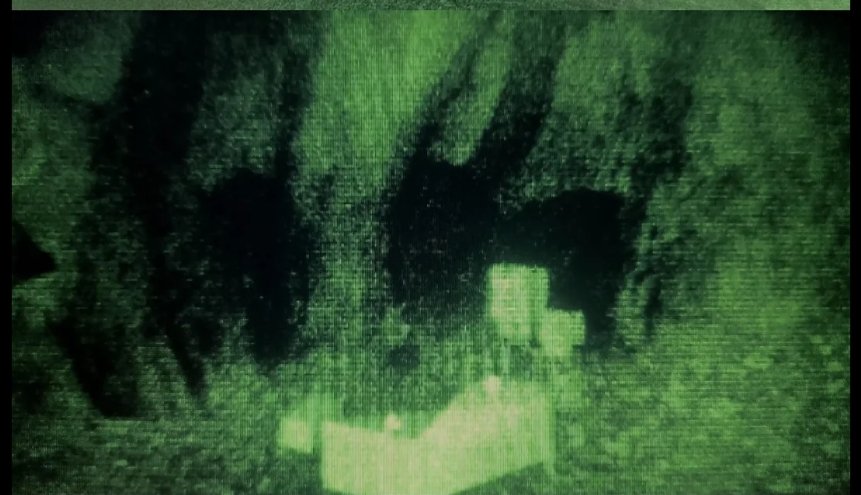
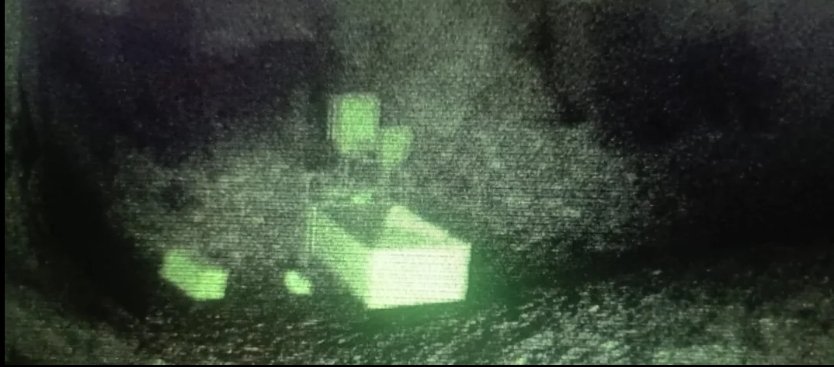
> Egg shaped UAP and “Pod” in Antartica photos
These images were provided by the same anonymous whistleblower who posted another EGG UFO video yesterday , here are some of the photos of the Antarctica retrieval mission, in Queen Elizabeth’s Range.
- Photo 1- Egg UAP.
- Photo 2- Egg UAP (another angle).
- Photo 3-“Pod” where the entity was sleeping.
- Photo 4-“Pod” where the entity was sleeping (another angle)
#Ufotwitter #Ufos #Uap #Ufox #LueElizondo #Ovni #RossCoulthart #NewsNation #JakeBarber #EggUFO
Palaeontologists have resolved a 150-year-old mystery by officially confirming that Praearcturus gigas, a giant scorpion that lived 415 million years ago, is the largest scorpion species known to science.
This formidable predator reached lengths of nearly one metre (over three feet), comparable to the size of a large dog, and possessed powerful pincers measuring up to 16 centimetres long. Fossils of the creature were first discovered in the 1870s along the Welsh Borders, but the fragmented remains puzzled scientists for decades. Early researchers even misidentified them as belonging to a giant woodlouse-like crustacean.
A new study by researchers from the University of Manchester and the Natural History Museum in London used advanced CT scanning and 3D modelling to definitively classify P. gigas as a scorpion. The analysis indicates it lived a semi-aquatic or amphibious lifestyle on ancient mudflats and floodplains during the Early Devonian period, long before trees or large land vertebrates appeared.
With few competitors present, the absence of rival predators likely enabled this terrifying arthropod to reach such impressive proportions. The discovery offers a striking glimpse into Earth’s earliest terrestrial ecosystems, revealing that giant apex predators dominated the land far earlier than previously thought.
[Howard RJ, Garwood RJ, Edgecombe GD, Legg DA. A revision of Praearcturus gigas: a giant scorpion from the Lower Devonian (Lochkovian) of Britain. Palaeontology. 2026;69(3):e70064. DOI: 10.1111/pala.70064]





![Rainmaker1973's tweet photo. Palaeontologists have resolved a 150-year-old mystery by officially confirming that Praearcturus gigas, a giant scorpion that lived 415 million years ago, is the largest scorpion species known to science.
This formidable predator reached lengths of nearly one metre (over three feet), comparable to the size of a large dog, and possessed powerful pincers measuring up to 16 centimetres long. Fossils of the creature were first discovered in the 1870s along the Welsh Borders, but the fragmented remains puzzled scientists for decades. Early researchers even misidentified them as belonging to a giant woodlouse-like crustacean.
A new study by researchers from the University of Manchester and the Natural History Museum in London used advanced CT scanning and 3D modelling to definitively classify P. gigas as a scorpion. The analysis indicates it lived a semi-aquatic or amphibious lifestyle on ancient mudflats and floodplains during the Early Devonian period, long before trees or large land vertebrates appeared.
With few competitors present, the absence of rival predators likely enabled this terrifying arthropod to reach such impressive proportions. The discovery offers a striking glimpse into Earth’s earliest terrestrial ecosystems, revealing that giant apex predators dominated the land far earlier than previously thought.
[Howard RJ, Garwood RJ, Edgecombe GD, Legg DA. A revision of Praearcturus gigas: a giant scorpion from the Lower Devonian (Lochkovian) of Britain. Palaeontology. 2026;69(3):e70064. DOI: 10.1111/pala.70064]](https://pbs.twimg.com/media/HLQWdonWUAAqmQZ.jpg)