At 6:00 AM sharp, my neighbor Harold steps onto his lawn to raise the American flag.
He is seventy-four. He wears a pressed shirt, moves with the precision of a clockwork automaton, and treats the wind as a personal enemy.
If the flag twists against the pole, he stands there for twenty minutes, staring at the rope, calculating aerodynamic resistance until the breeze surrenders.
I began adjusting my morning tea schedule to observe this daily battle. A warrior respects proper protocol.
On a windy Tuesday, the flag caught on a high bracket. Harold reached up, but he was three inches short.
I crossed the grass without a word. I am six feet tall. I extended my arm, cleared the fabric, and stepped back into a formal stance.
Harold did not say thank you. He looked at the flag, looked at my shoulder angle, and said, "Your posture is acceptable. Tomorrow, six o'clock. You hold the rope tension."
I had not applied for a military position. I had simply reached for a piece of cloth. Yet by sunrise the next morning, I was standing at attention in my bathrobe, managing rope drag for a retired artillery officer.
We performed this silent ceremony for three months. We spoke a total of fourteen words. I learned that a three-degree tilt in the hoist is considered a national tragedy in Harold’s domain.
In October, the flag remained at half-mast for four days.
I walked to his porch. The house was quiet. Harold was sitting in a chair by the window, looking out at the empty yard.
He pointed to the second-floor window across the street.
"My wife had dementia," he said softly. "For five years, she couldn't remember my name. But every morning at six, she would look out that window, see me raising the flag, and know she was safe at home."
She had passed away on Monday.
Harold looked at his hands. "I don't know who I'm raising it for tomorrow."
I went back to my house. I did not sleep.
At 5:55 AM, I stood on his lawn in a dark suit. Behind me stood Kevin, Tony, and four other men from the street, all dressed in their finest jackets, standing in a straight line in the morning mist.
Harold walked out to the porch. He stopped.
Kevin stepped forward and said, "Sir. The wind is coming from the east. We require your orders."
Harold looked at the seven men standing at attention on his grass. His chest expanded. His shoulders straightened.
He walked down the steps, took the rope, and gave the command.
The flag went up. It has never flown higher.
A man on my street decided to remove a wasp nest himself, at night, and four neighbors came outside to watch.
Nobody was invited. They arrived because the ladder came out. The ladder is the signal.
I asked what the plan was.
He said, "Spray it and run."
I asked what the second part of the plan was.
He said, "Running."
I want to record the assembled force. One man on a ladder holding a can. One man at the base of the ladder holding nothing and contributing nothing. Two men in the driveway at a distance of perhaps fifteen meters, both holding beverages, neither of them prepared to move. One woman on a porch who told me she had asked him to hire somebody eleven days ago.
I offered to assist. I said that no man should stand alone beneath an enemy position at night, that I had no fear of the creatures, and that I would hold the base of the ladder so that he might commit fully to the assault.
He said, "Yeah, you're gonna wanna be over there."
He pointed at the driveway. At the men with the beverages.
I went over there.
He sprayed. The nest responded. He came down the ladder in a manner that cannot accurately be described as climbing, and the ladder went one way and he went the other, and both of them arrived on the grass.
Then he ran. He ran past all four of us. He did not warn us, and I understand now that warning us was never part of it, because the plan was running, and the plan was for him.
The two men with beverages ran. The woman on the porch went inside and closed the door with a firmness I noted at the time.
I did not run.
I want to be clear that this was not courage. I did not run because I had not yet understood the situation. I understood it approximately two seconds later, and by then the matter had been decided on my behalf.
I was stung twice. He was stung eleven times.
We drank a beer in his garage afterward with the door down, which is apparently what one does, and he told me his father had once used gasoline for this and his uncle had used a firework, and that both men were fine.
The nest is still there.
He says he got it.
He did not get it.
Our review of 32 primary care guidelines for low back pain has been published today in @TheLancetRheum
We compared current recommendations for low back pain and explored how they have changed over the last 30 years
https://t.co/clQG53Nq24
A few key findings 🧵👇1/8
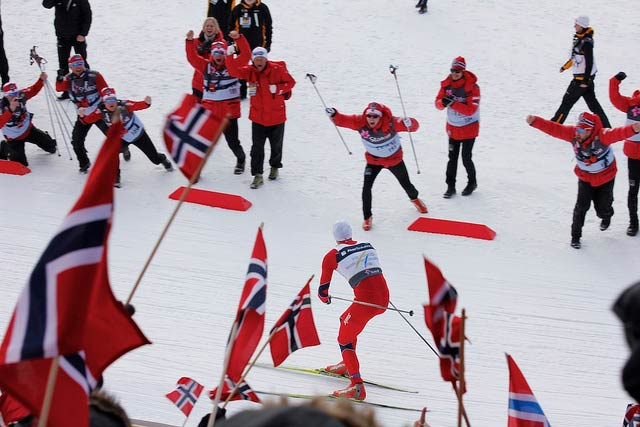
Norway consistently wins the most medals at the Winter Olympic Games, with a population of just 5.6 million people.
A big part of their success is how they treat youth sports—and it’s the opposite of what we do in the US. Here’s what we can learn from Norway:
1. Scorekeeping:
In the US: Youth sports tend to be hyper competitive even at early ages. Leagues almost always keep score.
In Norway: Scorekeeping isn’t even allowed until age 13.
Removing winners and losers keeps the focus on the process not outcomes. It keeps kids engaged longer because it minimizes pressure (and tears) and maximizes fun, learning, and growth. The goal isn’t to win a third grade championship. It’s to love sport and keep playing.
2. Trophies:
In the US: If you give everyone a trophy, you’re creating snowflakes who will never gain a competitive edge.
In Norway: Whenever trophies are awarded, they are handed out to everyone.
If getting a trophy makes young kids feel good, we should give them trophies. Maybe they’ll come back and play again next year!!
As for the creation of snowflakes with no competitive edge—Norway’s athletes are tough as nails and all they do is win.
3. Prioritizing Fun:
In the US: Far too often, the goal is to win.
In Norway: The national philosophy is “joy of sport.”
Youth sports in the US are driven by adults, ego, and money. Youth sports in Norway are driven by fun.
Only half of kids in the US participate in sports. The number one reason they drop out: because they aren’t having fun anymore. In Norway, 93% of kids participate in youth sports. Fun is the foremost goal.
4. Playing Multiple Sports:
In the US: There’s pressure to specialize early and play your best sport year round.
In Norway: Try as many sports as you can before specializing as late as college.
Norway encourages kids to try all types of sport. This reduces injury and burnout and increases all-around athleticism. It also helps promotes match quality, or finding the sport you are best suited for as your body develops, which is impossible if you commit to a single sport too early.
5. Affordability
In the US: There is increasingly a pay-to-play model with high fees for leagues, equipment, and travel. This excludes many kids from playing.
In Norway: It’s a national priority to keep youth sports affordable and therefore accessible for all.
Kids aren’t priced out, which creates opportunities for everyone to participate (and develop into athletes), regardless of their parents’ income level.
We could learn a lot from Norway:
In the US, 70% of kids drop out of youth sports by age 13. This not only diminishes an elite-athlete pipeline, but it also destroys an opportunity for healthy habits and all the character lessons kids can learn from sport.
In Norway, lifelong participation in sport is the norm. The goal isn’t to have the best 9U team. It’s to develop the best athletes. Those are two very different things. And Norway has the gold medals to prove it.
X-torial: Cleaning up the misinformation about @JoeBiden and #ProstateCancer that I am reading everywhere.
The purpose of this is to provide education from someone who treats and studies PCa for a living, lead the USA @NCCN PCa guidelines, hold leadership in @NRGonc@theNCI@US_FDA and dedicated my career to help men and their families suffering from PCa
@nytimes@WSJ@FoxNews@CNN@NBCNews@Reuters@ASCO@PCFnews @DeptofDefense
“Mutual benefit comes from not just leaving the community members to sit … within their difficulties — that’s not a community,”
https://t.co/cWmYlcElJI
Our Warm Winter Wishes Food Drive campaign is going strong at Wellington Heights this week! All donations will go to support our local community Food Banks.
For #WorldSuicidePreventionDay, I can give you 15 ("very expert", or common sense) suicidologist tips for preventing suicide:
1) Dedicate some of your time to making things better for people around you.
2) Use some of what you have to improve things for those with less.
Relax, pull up a seat up to your big planter, stretch out and then take in this video.
Ronda shows us how to minimize our back pain when planting her mum!
https://t.co/jSKS0XZLq6
Time for the newest "Help Me Ronda!" video!
This time Ronda demonstrates another way to harvest (tomatoes!!) while reducing the impact on your back.
https://t.co/KLUd153sG6
Believe it or not, your back pain is unique to you.
Why you have it, & what will make you feel better depends on so many things. Recovery can be complicated.
Family, friends, neighbors & co-workers are well meaning; but their solutions won't necessarily be yours.
What makes a good warmup?
Man's best friend, of course! (other family is great too)
Seriously though; have fun. And when you're a good role model, others will join in.
Is working from home making you sore? It might be time for a change... body positions, that is!
Get up and move. Rediscover your exercise routine.
Your back will thank you.