If you care about enforcing constraints over time without breaking your computational resources, then read our new blog post over at @aihuborg!
It focuses on showing how our neurosymbolic Markov models beat the SOTA in out-of-distribution generalisation and so much more.
1/n
LLMs w/ T-CoT steps can solve reasoning problems in P/Poly. But they are not learning to reason - mimicking form, not logic. Are LRMs like DeepSeek R1 different?
We formalize this in our paper: Have LLMs Learned to Reason? A Characterization via 3-SAT Phase Transition 🧵👇
If you're at #AAAI2025, come check out my talk tomorrow (Fri, Feb 28) from 9:30–10:45 AM in the Machine Learning track! 👨🏻🏫
📍 Swing by our poster later in the day for more discussion!
🔥 Can AI reason over time while following logical rules in relational domains? We will present Relational Neurosymbolic Markov Models (NeSy-MMs) next week at #AAAI2025! 🎉
📜 Paper: https://t.co/M7dXNliLs9
💻 Code: https://t.co/IkyyCSp16K
🧵⬇️
🔥 Can AI reason over time while following logical rules in relational domains? We will present Relational Neurosymbolic Markov Models (NeSy-MMs) next week at #AAAI2025! 🎉
📜 Paper: https://t.co/M7dXNliLs9
💻 Code: https://t.co/IkyyCSp16K
🧵⬇️
🔬 In experiments, NeSy-MMs outperform existing neurosymbolic & deep models on both generative & discriminative tasks.
They generalize better to out-of-distribution settings and allow test-time constraint adaptation, making them robust & versatile.
🚀 Do you care about safe AI? Do you want RL agents that are both smart & trustworthy?
At #AAAI2025, we present our demo for neurosymbolic RL—combining deep learning with probabilistic logic shields for safer, interpretable AI in complex environments. 🏰🔥
🧵👇
(1/8)
🔍 𝐂𝐚𝐧 𝐋𝐋𝐌𝐬 𝐑𝐞𝐚𝐬𝐨𝐧?
We present a computational theory perspective of reasoning using 3-SAT, the prototypical NP-complete problem underpinning logical reasoning.
Can Large Language Models Reason? A Characterization via 3-SAT
arXiv: https://t.co/ic4ljMoKeC
1/3
If you are at #ICML2024 come check out the SPIGM workshop tomorrow, the 26th! I'll present this during the 10am session, or you can come check the poster in the afternoon at 3pm.
Do you want to know how to incorporate knowledge in your model to improve image sequence generation? 🎮
Check out the work I did with @LennertDS_ on #neurosymbolic Markov models!
📜Paper (accepted at SPIGM Workshop @ #ICML2024):
https://t.co/x80tULe6GY
At test time (i.e. **without** re-training) we can incorporate in our knowledge extra constraints that are guaranteed during generation!
See what happens on the first step if we include in the knowledge that the two right-most columns are unsafe 🧐
Do you want to know how to incorporate knowledge in your model to improve image sequence generation? 🎮
Check out the work I did with @LennertDS_ on #neurosymbolic Markov models!
📜Paper (accepted at SPIGM Workshop @ #ICML2024):
https://t.co/x80tULe6GY
We enable neurosymbolic models to cope with sequential tasks in a scalable way. We use an ad-hoc (Rao-Blackwellised) particle filter that exploits independencies and allow us to retain end-to-end differentiability.
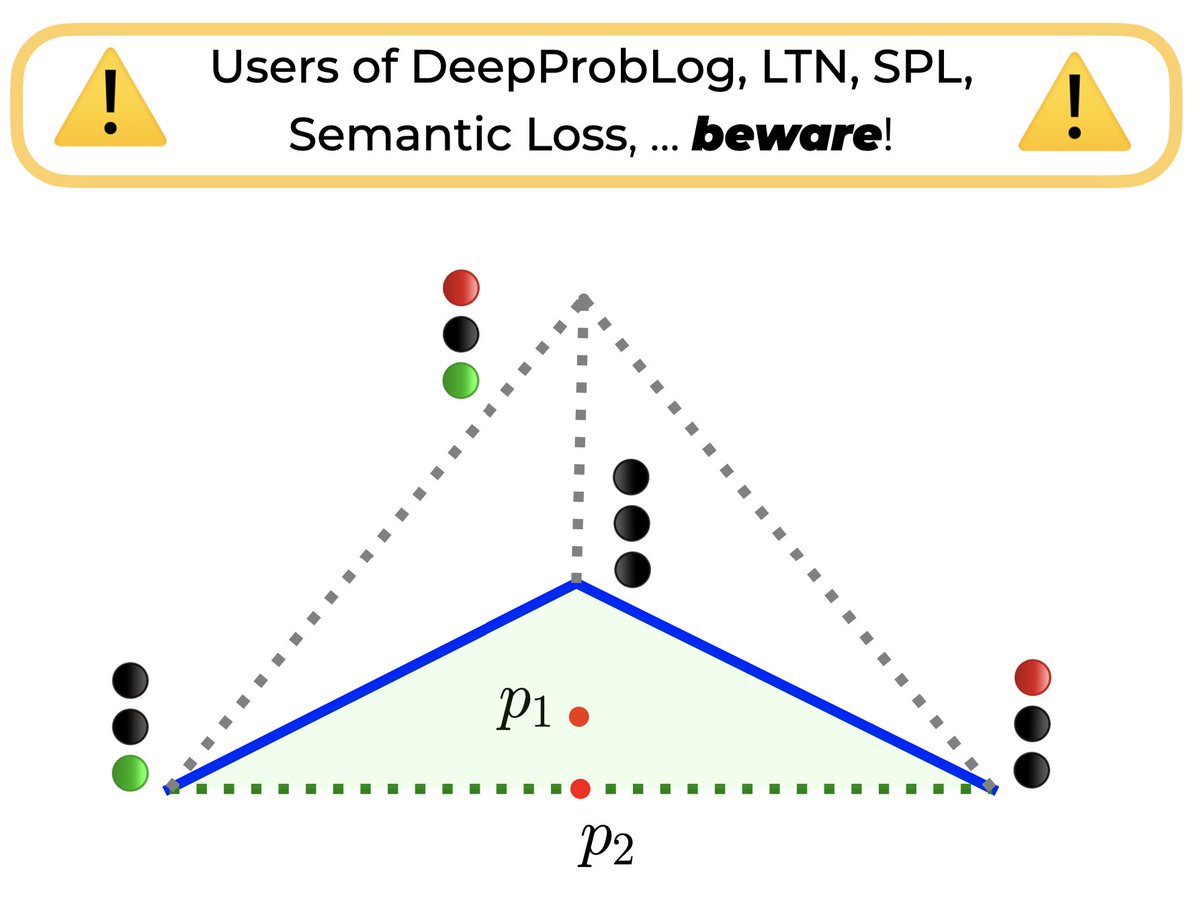
In our ICML 2024 (@icmlconf) paper, we study neurosymbolic methods under the very common independence assumption… and find many problems!
1️⃣ Non-convexity
2️⃣ Disconnected minima
3️⃣ Unable to represent uncertainty
Making optimisation very challenging 😱
Let’s explore 👇
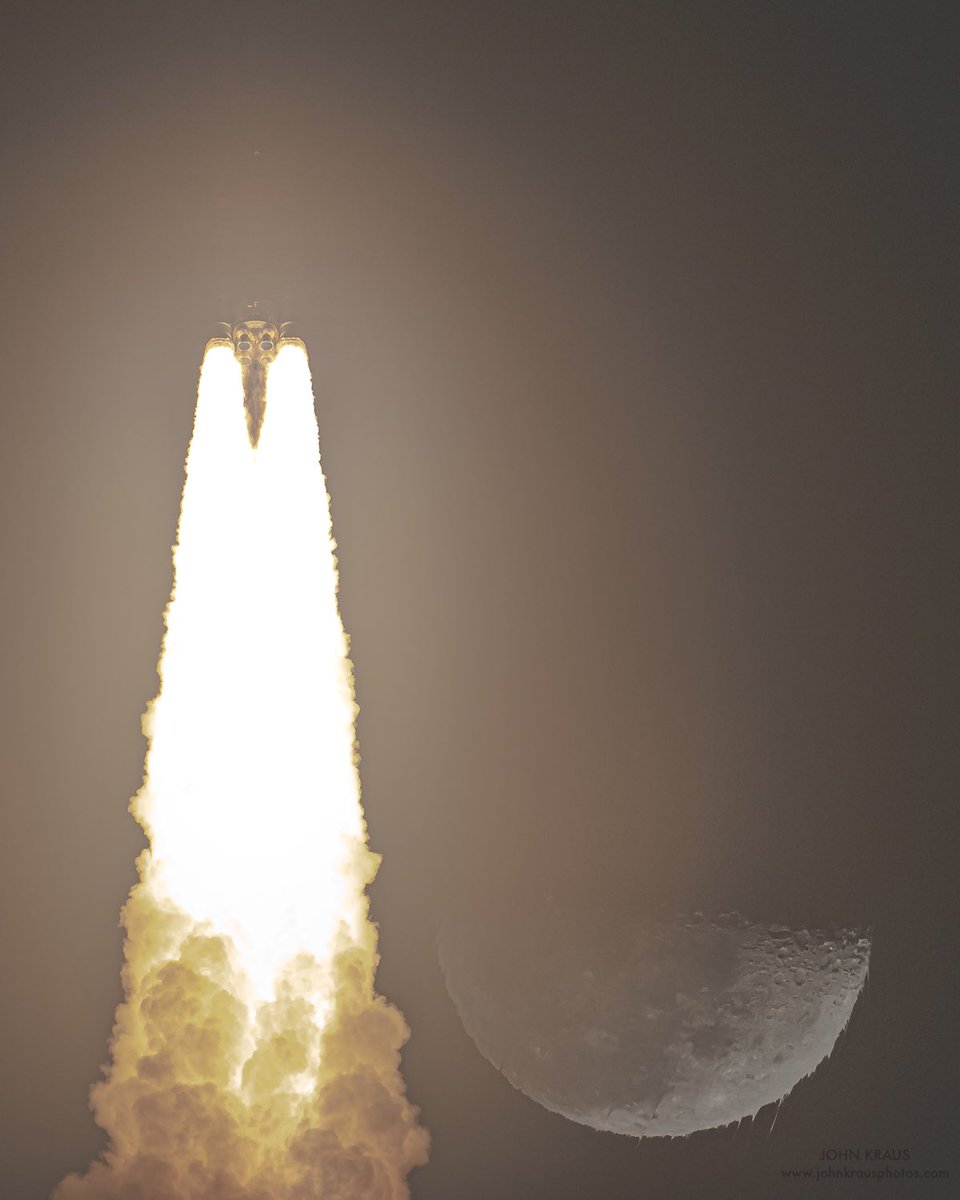
LIFTOFF OF ARTEMIS I TO THE MOON
NASA’s Space Launch System rocket and the uncrewed Orion capsule lift off from Kennedy Space Center in Florida early this morning, with the capsule’s destination — the Moon — as a backdrop.
This is what you’ve waited for.
Journey with us through Webb’s breathtaking view of the Pillars of Creation, where scores of newly formed stars glisten like dewdrops among floating, translucent columns of gas and dust: https://t.co/5ea1kCzU5x
Here’s your guided tour ⬇️