Hay padres que jamás terminan de dar a luz a sus hijos. Los traen al mundo, pero no terminan de entregárselos a la vida.
Los educan para que se sientan culpables cuando son independientes, ingratos cuando establecen límites y egoístas cuando contradicen las expectativas familiares. Así, un hijo puede llegar a los cincuenta años sin conquistar el derecho a gobernar su propia existencia.
La sobreprotección puede ser una silenciosa forma de mutilación psicológica, revestida de ternura, sacrificio y buenas intenciones. Cuando le ahorras a un hijo toda dificultad, le arrebatas la oportunidad de descubrir sus capacidades. Cuando decides todo por él, le enseñas a desconfiar de su propio criterio.
Hay padres que necesitan sentirse necesitados porque nunca aprendieron a sentirse valiosos de otra manera. Han depositado tanto de su identidad en la crianza que experimentan la autonomía de sus hijos como un abandono. Así, los hijos contraen una deuda emocional que jamás solicitaron: renunciar a parte de su felicidad para preservar la estabilidad emocional de sus padres.
La madurez de un padre se mide por su capacidad de aceptar que sus hijos se equivoquen, piensen distinto y construyan una vida en la que él ya no sea el protagonista.
Habrá que soportar el silencio de una casa vacía, recuperar los sueños postergados y aceptar que los hijos tienen derecho a una felicidad distinta de la que imaginamos para ellos.
Los hijos deben comprender que honrar a sus padres no significa obedecerlos eternamente y que pueden amarlos profundamente sin entregarles la soberanía de su existencia.
Dios nos concede incluso la libertad de alejarnos de Él. ¡Cuánto deberíamos aprender de esa expresión de amor!
Quizá uno de los actos más elevados de la paternidad sea tener la entereza de volverse prescindible sin dejar de ser entrañable.
Algún día, tus hijos tendrán que vivir en un mundo en el que tú ya no estés. Qué triste sería que, después de tanto cuidarlos, descubrieran que nunca les enseñaste a vivir sin ti.
El video es de Anna Glinskaya, creado con IA y titulado Пуповина длиною в жизнь (Un cordón umbilical que dura toda la vida), y no pude dejar de escribirles una reflexión.
#danielhabif
74 coups de fouet pour avoir chanté sans voile. Comment accepter une telle barbarie ? Toute ma solidarité à Parastoo Ahmadi et aux quatre membres de son équipe.
Aux Iraniennes qui continuent de chanter, de résister, de vivre libres : nous sommes plus que jamais à vos côtés ! Femme, Vie, Liberté.
Si je n'ai pas plus de passion pour la fanfare que pour le romantisme béat des plateaux pour le Bakounine du trombone à coulisse, c'est parce que je considère que la violence et l'apologie de la violence, c'est de la merde.
#OrchestreDuNouveauMonde@franceinter#EtienneJarrier
Le 19 novembre 2003, Sébastien Sellam, jeune DJ juif de 23 ans, était sauvagement assassiné à Paris par son voisin.
Son meurtrier aurait revendiqué son crime en criant : « J’ai tué un Juif, j’irai au paradis ! »
23 ans plus tard, son visage et son histoire doivent rester dans nos mémoires.
Sébastien n’a pas été tué pour ce qu’il avait fait, mais pour ce qu’il était : Juif.
Ne jamais oublier son nom. Ne jamais banaliser la haine antisémite.
Que sa mémoire soit bénie. 🕯️
“Hardly anyone questions the presence of Palestinian flags anymore. They have become the all-purpose accessory of Western protest, as much at home at a climate march as at a rally against overcrowded classrooms. A war on the far side of the Mediterranean has become the lingua franca of nearly every domestic grievance. You don’t see the flag of Sudan, where the slaughter is vaster, at French school protests. You don’t see Ukraine’s, even though Russia’s war is on Europe’s own soil.
The polite understanding of this phenomenon is solidarity, and for many protesters it’s the honest one. Palestinians have suffered terribly. Their desire for dignity and a state of their own is legitimate, and some protesters carry their flag with this in mind.
But solidarity doesn’t explain why Palestine has become an identity rather than a cause. Nor does it explain why, in certain circles, your view of Israel has become the singular test of your views on everything else.
There is also something less ideological at work: fashion. The keffiyeh and the Palestinian flag have become what Che Guevara’s face on a T-shirt was to earlier generations. Few who wore Che knew much about Cuba. They didn’t need to. The image announced a tribe, a temperament, a pose of rebellion. Palestine now does the same work. It tells others where you belong, which side you’re on, and who you are not. The irony is that rebellion turns into conformity, and, in some circles, it’s the absence of the flag that raises eyebrows.
Start with the guilt.
In the script Palestine supplies, the Palestinian plays the colonized subject par excellence, and the Israeli plays the colonizer. Europeans born long after the empires fell get to star as agents of historical correction. Solidarity becomes a certificate of innocence, a pass for those living under what the French philosopher Pascal Bruckner called “the tyranny of guilt.”
For the redemption drama to work, the Palestine script has to be edited. The Jewish people’s ancient roots in the Land of Israel? Cut. The European anti-Semitism that made Zionism necessary? Cut. The roughly 850,000 Jews driven out of Arab and Muslim countries? Also cut.
In the editing process, the Palestinians are flattened as well. They could not play their designated role and remain real people, so they’re turned into a fantasy…
There’s a subgenre of this drama that’s particular to France. The Algerian War never really ended in the French mind, and, since the 1970s, multiple generations have learned to see Palestine as the sequel to their own struggle. In 2024, Rima Hassan, one of the most prominent faces of Jean-Luc Mélenchon’s far-left party, La France Insoumise (France Unbowed), has explicitly compared Israel’s treatment of Palestinians to French colonial rule in Algeria.
Israel is not French Algeria, and there is no metropole for Jews to sail home to. But the analogy is useful precisely because it isn’t really about Israel. It turns a Middle Eastern war into a French argument about the French past.”…
https://t.co/gDs1Zf7dv8
Mes P’tits loulous antisémites, il y a maldonne ! D’abord si vous êtes antisémites, racistes, vous ne pouvez faire partie de mes loulous ! Après avoir écrit des chansons telles que « Ferdinand » « Lily » ou « La bête est revenue », j’ai eu l’honneur - moi qui me tamponne des honneurs - de me voir attribuer par deux fois le prix de la LICRA (ligue contre le racisme et l’antisémitisme).
Mes chansons sont apprises depuis longtemps dans des tas d’écoles qui portent mon nom. Non, on n’y apprend pas la haine. Non, on n’y glorifie pas non plus les bombardements de pauvres gens, pas plus que le carnage du sept octobre perpétré par de courageux barbares amis de la grande résistante @RimaHas désolé !
Adieu donc mes faux loulous et ne perdez plus votre temps à écouter des chansons que vous ne comprenez pas !
Amnesty's top award once went to Václav Havel. Now they honor a UN official who calls to stop arming Ukraine, who mocked Venezuela’s Nobel Peace laureate María Corina Machado as an “election loser,” and who shared Iran’s claim that the CIA carried out the Charlie Hebdo massacre.
जॉर्जिया की एक छोटी बच्ची का फिल्म 'दिलवाले दुल्हनिया ले जाएंगे' के गाने 'मेहंदी लगा के रखना' पर डांस किया
◆ वीडियो सोशल मीडिया पर तेजी से वायरल हो रहा है
◆ बच्ची के शानदार डांस स्टेप्स और प्यारे एक्सप्रेशंस ने भारतीय दर्शकों का दिल जीत लिया है
#Viralvideo | Viralvideo | #GeorgiaGirl | #BollywoodDance | #MehndiLagaKeRakhna
VC : @anamaria_eva_
Léa Salamé sur le talk-show de France 2 a rappelé hier le combat de longue date de Pierre Perret contre l’antisémitisme. «Quelle époque! » a choisi de ne pas faire entendre sa nouvelle chanson «Les antisémites», un brulôt caustique sur Mélenchon et LFI. Je le fais pour eux.
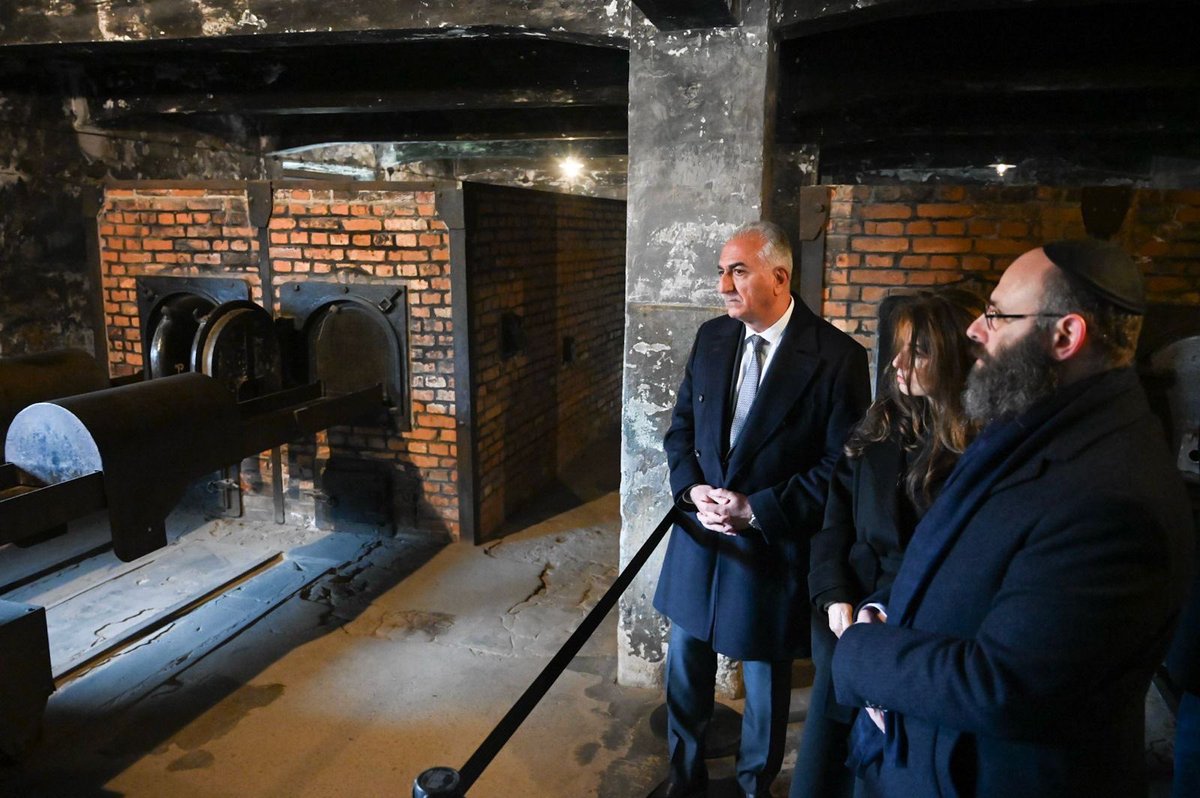
Visiting Auschwitz and Birkenau was a harrowing experience.
My wife Yasmine and I viewed the possessions left behind by the victims and visited the barracks, gas chambers, and crematoria. Every shoe and suitcase was a reminder of a human being who had a name, a family and a life.
The crimes of the Holocaust against the Jewish people are incomparable in the combination of its industrial scale of slaughter and the bureaucratic efficiency with which it was planned and organized. Auschwitz and Birkenau lay that plain.
My thoughts turned to the people of Iran, and to a regime that denies the Holocaust while attempting to erase the massacre of our compatriots from the world’s memory through internet blackouts, censorship and hidden executions.
But the Islamic Republic does not represent Iran. The heirs of Cyrus stand with the Jewish people. And while the regime seeks death and destruction, the Iranian nation is fighting for life and liberty.
We placed a wreath bearing the Lion and Sun on behalf of the Iranian people at the memorial to the victims. We will never forget and we will not allow the regime occupying Iran to turn our nation’s name and history into instruments of hatred.
A free Iran will once again stand for peace, life and human dignity.
Light will prevail over darkness.
@AuschwitzMuseum@EJAssociation
Merci à tous ceux qui m’apportent leur soutien. On n’arrête pas une parole qui dit la vérité par le harcèlement, les menaces
Sword of Salomon agit en toute illégalité.
L’impunité doit cesser, je continuerai à parler
Et ami, si tu tombes, un ami sort de l’ombre à ta place
❤️🐘✊
Matilda était la plus jeune victime du massacre antisémite perpétré à Bondi Beach, en Australie, lors d’une célébration de Hanoucca en décembre 2025.
Aujourd’hui, elle aurait dû fêter ses 11 ans. 🕯️
Au lieu de célébrer son anniversaire, nous rendons hommage à une petite fille dont la vie a été tragiquement fauchée par le terrorisme antisémite.
Que sa mémoire soit bénie. 🕯️
📸 Famille Britvan
“Jean-Luc Mélenchon ne peut pas être président de la République car il fait trop peur”, estime Raphaël Glucksmann, candidat PS-Place Publique à la présidentielle
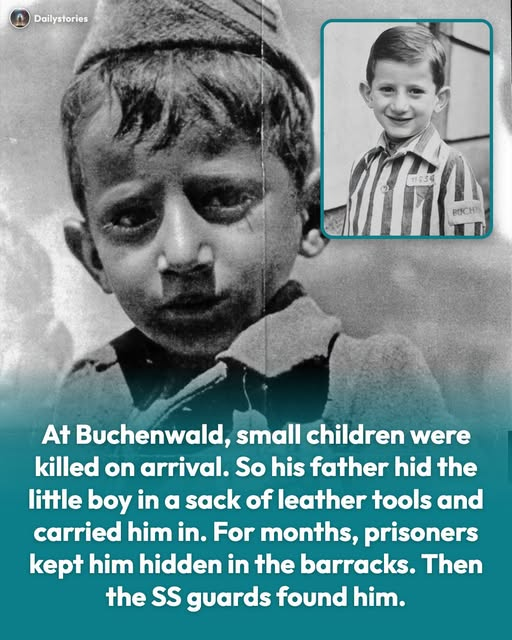
His father carried him into Buchenwald hidden in a sack.
He was 3 years old, and the SS were not supposed to know he existed.
Joseph Schleifstein was born in March 1941 in Sandomierz, Poland, while the town was under German occupation. His parents, Israel and Esther, kept him hidden in cellars and dark corners, because the Nazis took away small children who were too young to work.
Then the family was deported. His mother was sent to Bergen-Belsen. Joseph and his father were sent to Buchenwald, in Germany.
At the camp, small children and the old were sent away to be killed. So his father, a leather worker, put the little boy inside the big sack that held his tools, told him to keep absolutely quiet, and carried him in.
With the help of other prisoners, his father hid Joseph inside the camp. He spent his fourth birthday there.
According to his story, the guards did eventually find him. Instead of killing him, some of them made the little boy a kind of camp mascot. When senior Nazi officials came to inspect, he still had to disappear.
In April 1945, American soldiers liberated Buchenwald. Joseph remembered that day with joy: he no longer had to hide, there was more to eat, and the Americans gave him "lots and lots" of rides on their tanks and jeeps.
He and his father went looking for his mother. They found her alive in Dachau, and after the war the family started over in New York.
Joseph worked for AT&T for 25 years. He did not talk about Buchenwald for decades, not even to his own children. Then a film came out about a father who hides his little son in a concentration camp, Life Is Beautiful, and an archivist came across his old file. A search for the real boy began.
They found him living quietly in New York City.