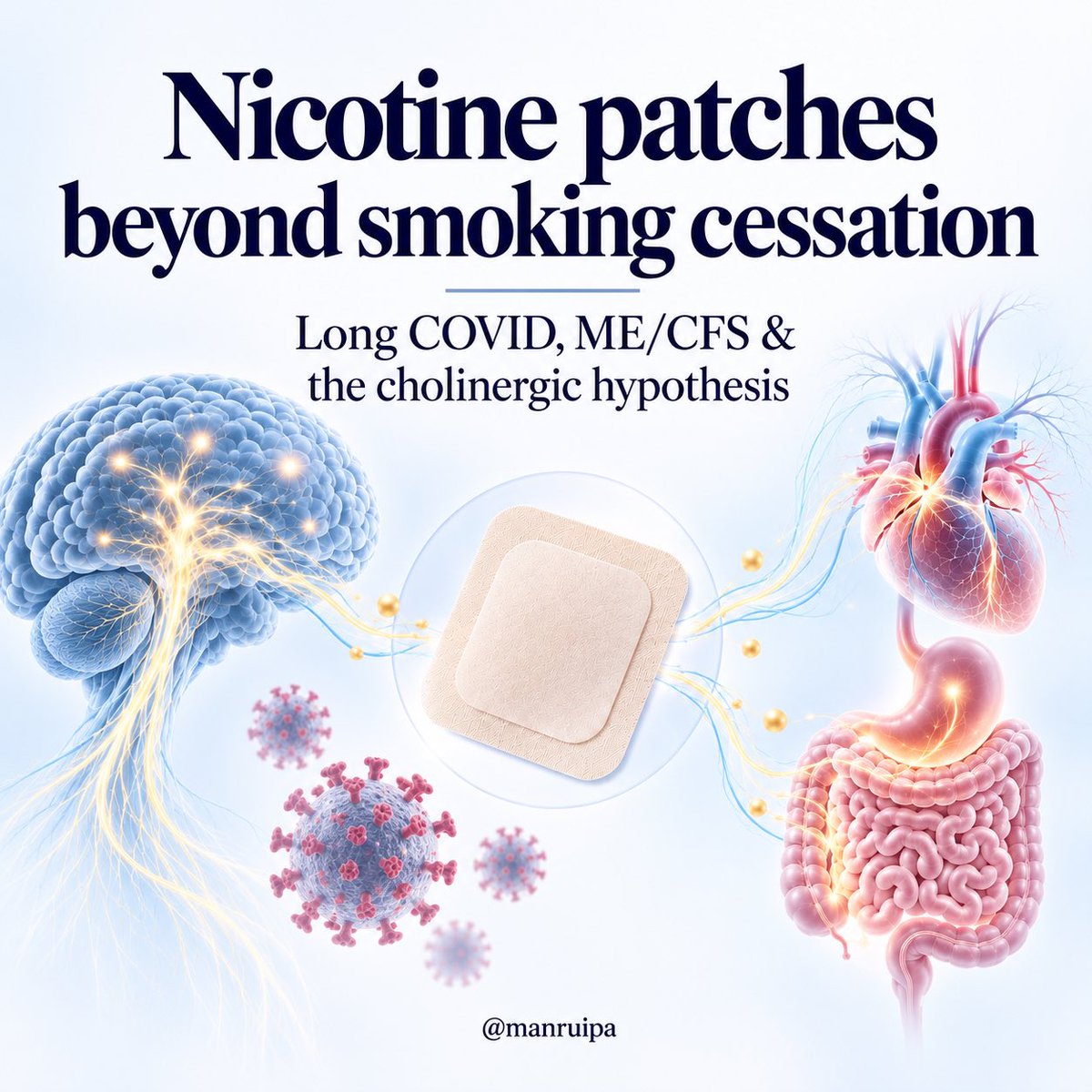
🔴 Nicotine patches beyond smoking cessation: why might they help some people with Long COVID or ME/CFS?
In recent years, nicotine patches have appeared increasingly often in patient communities, with some people reporting substantial improvements in fatigue, brain fog, dysautonomia, or even PEM.
The hypothesis is particularly interesting because it connects neurotransmission, the autonomic nervous system, inflammation, immunity, and possibly viral persistence.
But some of the claims surrounding it have also gone considerably further than what the studies actually show.
Where did this idea come from? Why might it work? And what do we really know?
A thread. 🧵
1/23
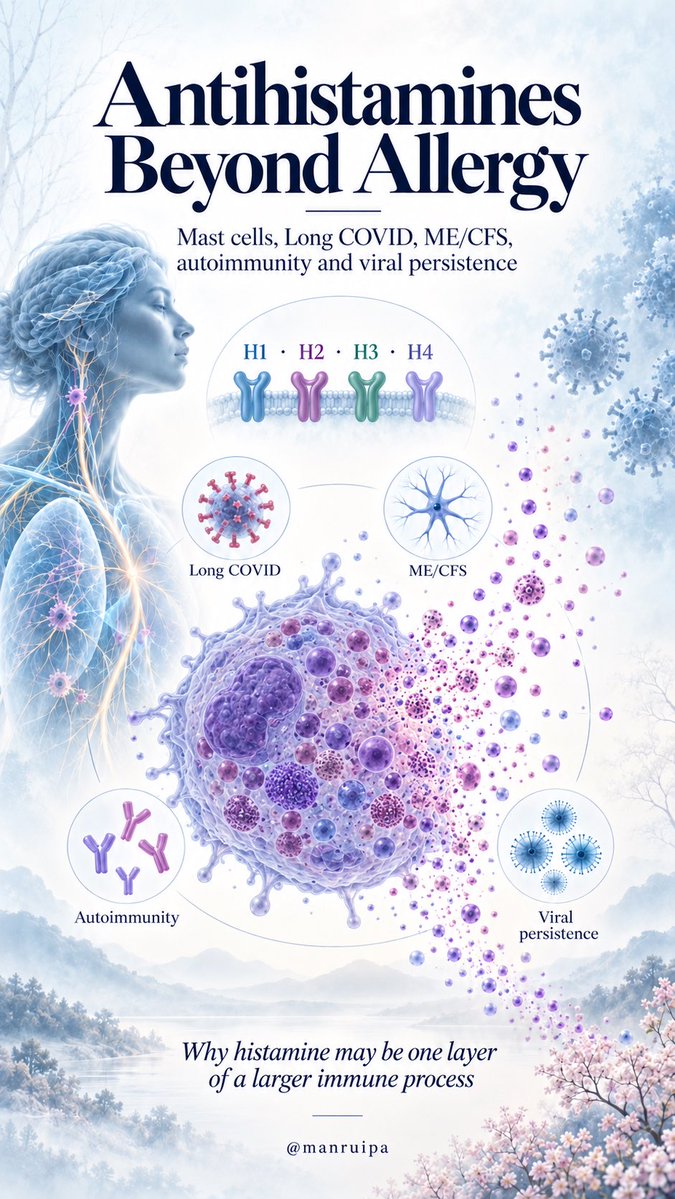
🔴 Antihistamines beyond allergy: mast cells, Long COVID, ME/CFS, autoimmunity and infectious persistence
When we think of antihistamines, we usually think of allergies, rhinitis or urticaria.
But histamine is much more than an allergy mediator. It is involved in vascular regulation, the nervous system, gastrointestinal physiology and communication between innate and adaptive immune cells.
And it acts through four different receptors: H1, H2, H3 and H4.
H1 is involved in vascular permeability, itching, allergic symptoms and wakefulness. H2 strongly regulates gastric acid secretion, although it also has immunological functions. H3 is mainly neuronal, while H4 is expressed by numerous immune cells and participates in inflammatory signalling and cell migration.
So “blocking histamine” is not one single biological intervention.
https://t.co/aLqBRIjfSd
https://t.co/dAIkYiR3IJ
1/35
🔴Could Mestinon help a specific subgroup of Long COVID and ME/CFS?
We’ve already looked at why some people with Long COVID or ME/CFS might respond to metformin, while others may respond better to low-dose naltrexone.
There is another very different drug that I think is worth understanding: pyridostigmine, better known as Mestinon.
The interesting question is probably not whether Mestinon “works for Long COVID” or “works for ME/CFS” as a whole. It is whether there is a subgroup in whom autonomic transmission, venous return, preload or related neurovascular abnormalities represent an important physiological bottleneck.
To understand why that could matter, it helps to start with what Mestinon was originally developed to do.
1/26
amazing. with the dose of melatonin - beyond the broad studies on higher dose for neuroinflammation there was no decision tree for dose beyond what I saw others using). for a long time i just did 40mg but then changed it up a bit just too see (down to 10mg up to 60mg depending on how my brain felt that day). ultimately a guess - but once started testing it was just so obvious that most of the upset from melatonin happens in the 0.5-5mg range - beyond 10mg there are far fewer side effects.
@chydorina The heart rate graph and sleep phase graph were normal for the very first time.
I’ll carry on taking melatonin.
Thank you for your tremendous dedication, which you share with us.
❤️
@chydorina Yes.
And yes, I know, you did a LOT. It was not just one big thing.
I started light vegetarian eating again. HRV again around 30.
Yesterday for the first time 5mg Melatonin, not only 1 - 2 mg, ... and HRV 59 !!! Wow, never had.
You wrote about 10 - 60mg...
How do you decide?
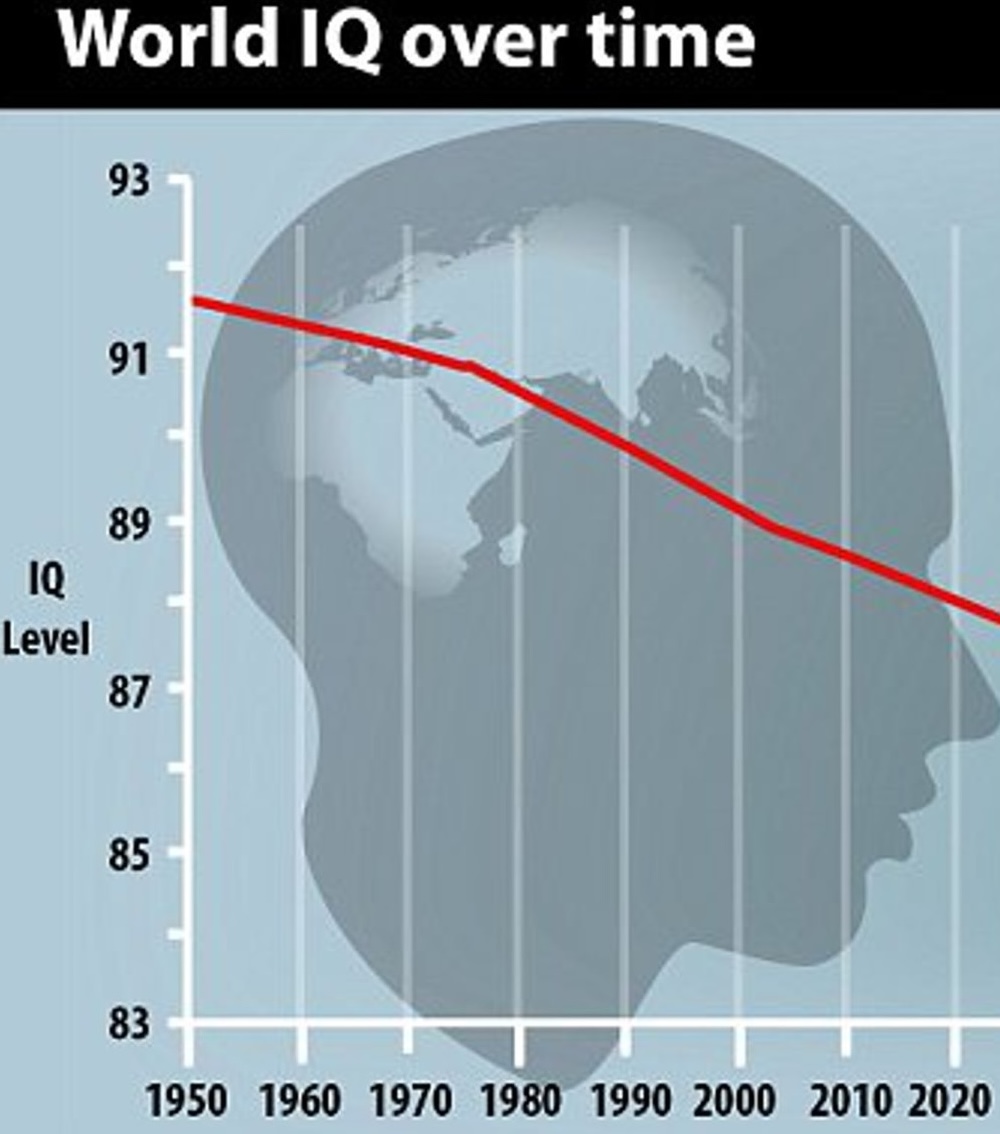
World IQ is declining.
Our brains are shrinking—driving the mental-health epidemic.
The hidden reason? We abandoned DHA-rich seafood—the fuel that built the human brain.
Here’s the seafood science the world still ignores: 🧵
Brain fog is a strange symptom.
You can be awake.
You can speak.
You can look “normal.”
But something inside feels different.
Thoughts become slower.
Words disappear.
Reading takes effort.
Conversations become harder to follow.
Memory becomes unreliable.
Tasks that used to be automatic suddenly feel cognitively expensive.
Patients call this “brain fog.”
But maybe the real question is not:
“Is brain fog real?”
The real question is:
what biological systems can make the brain lose clarity?
(1/50)
@chydorina@DevanHadlock@ouraring Here with Oura:
Start HRV 9–15, 18–30 since taking beta-blockers.
During therapeutic fasting (with beta-blockers, without ketotifen, montelukast, H1 blockers) HRV 45!
Never achieved this before.
I’m curious to see what happens after 3.5 weeks during the recovery week.
Der medizinische Dienst war Grad mit Betreuer da. Es sieht nicht gut aus. Man versucht mich zum Psychiater zu schleifen, Verdachtsdiagnose ME reicht nicht. Man versucht mich jetzt zu Sachen zu zwingen, ich bin bettlägerig und kann nicht mehr. Ich brauch Hilfe von der Community
„Tired but wired“ bei ME/CFS – neurobiologisch erklärbar?
Wirth & Scheibenbogen beschreiben Dysregulationen mehrerer Transmittersysteme mit hyperexzitatorischem Muster.
Benzodiazepine können Symptome lindern. Neben Risiken sollten wir auch ihren möglichen Nutzen diskutieren.