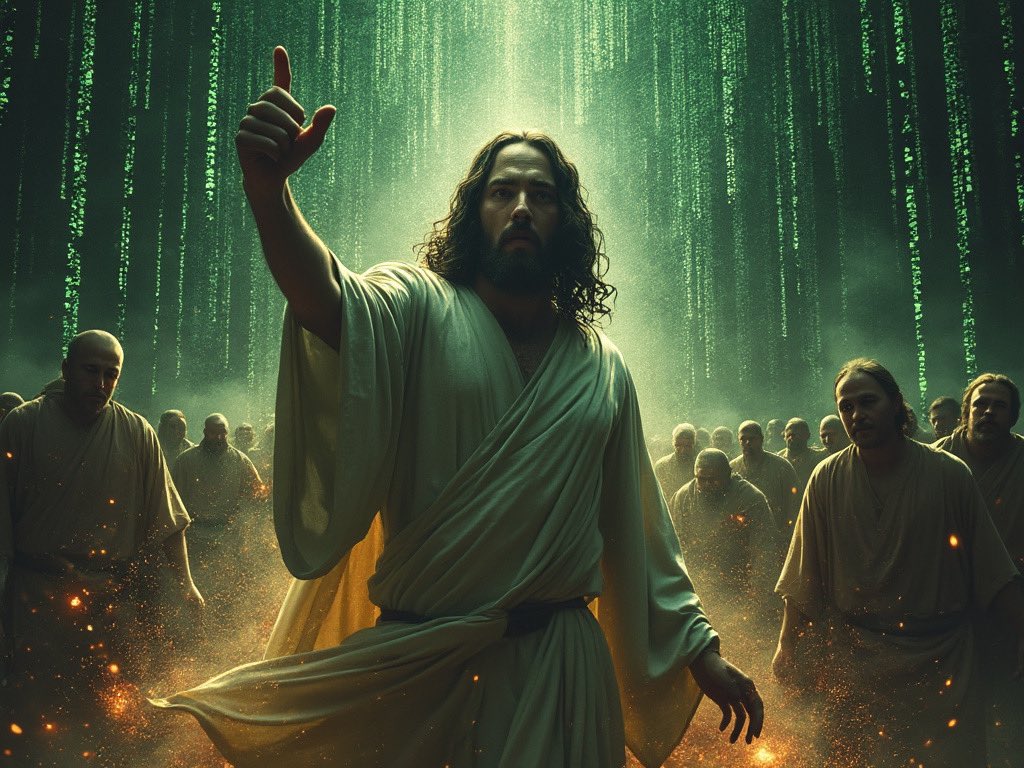
🚨🥁 In today's digital age, media, music, and movies are not just entertainment; they're potent tools for manipulating the collective psyche of humanity. These are not benign influences but rather orchestrated by those with malevolent intent.
Archetypes: These are not just stories or characters; they are ancient patterns within the collective unconscious.
The Mechanism: Evil entities have found a way to exploit these archetypes. By forcing our attention onto specific ones through media saturation, they're warping our collective consciousness.
How It Works:
Attention as Battery: Every moment of focus on these archetypes charges them, making them increasingly dominant in our lives.
Autonomy: Once these archetypes are sufficiently charged, they begin to operate autonomously, subtly dictating our behaviors, fears, desires, and even our very identity.
Selective Saturation: Certain archetypes, like The Tyrant or The Deceiver, are pushed into the limelight, overshadowing others like **The Innocent or The Wise.
Subversion: Archetypes meant to inspire hope or growth are twisted into their darker versions, leading to confusion and despair.
Control Through Fear: By amplifying archetypes of fear or hopelessness, manipulators keep populations disempowered, divided, and easier to control.
This isn't a game. Our psyches are under siege. The constant bombardment by media content engineered to charge these dark archetypes is no accident; it's strategic.
Wake Up: We must recognize this manipulation. Every click, every view, every share is feeding into this system. Awareness is the first step to resistance.
Critically Consume: Be vigilant about what media you consume. Understand that your attention is a resource being harvested.
Seek Balance: Intentionally engage with content that promotes positive archetypes. Cultivate inner archetypes like The Healer or The Sage to counteract the darkness.
Spread Awareness: This isn't just about individual salvation; it's a collective fight. Share this knowledge. Help others see the strings being pulled.
The manipulation through archetypes in media is a profound and sinister reality. It's time to reclaim our psychological and cultural narrative from those who would use it against us. This is not just about entertainment; it's about the very essence of human consciousness and our future. The urgency cannot be overstated; the time to act is now. #Media #Music #Movies #Archetypes #Occult #Christ
@ChudTheBuilder I work my ass off all year to make 60,000 & since that’s not enough I have to work a 2nd job, in total 65-70 hours per week every week to make 85,000-90,000 & we struggle on that salary to survive despite how hard I work.This scumbag almost kills a guy and pan handles 50k? 🤡 🌎
🔬🧫My theory suggests that the Nephilim from Genesis 6 were not merely biblical giants but instigated a cosmic rebellion, creating a metaphorical "Matrix" to control humanity. This influence spread across ancient cultures, where they are worshipped as gods, titans, hero’s or giants, embodying the same essence under different names. 🔬🧫
🚨- Biblical Origin: The Nephilim are introduced in Genesis 6:1-4, where they are described as the offspring of "the sons of God" and the "daughters of men." These beings are noted for their might and renown.
"The Nephilim were on the earth in those days, and also afterward, when the sons of God came in to the daughters of men and they bore children to them. These were the mighty men who were of old, men of renown." (Genesis 6:4, ESV)
🗼The Tower of Babel as a Cultural and Cosmic Control Mechanism:
-Historical Context: The Tower of Babel (Genesis 11:1-9) symbolizes human ambition to reach or challenge the divine. Here, it's reinterpreted not as a physical structure but a metaphorical one:
"Come, let us build ourselves a city, and a tower whose top is in the heavens; let us make a name for ourselves, lest we be scattered abroad over the face of the whole earth." (Genesis 11:4, NKJV)
💻⌨️-Matrix Interpretation: This "tower" can be seen as an ancient metaphor for a system or network of control over human consciousness or societal structure, akin to a "Matrix" where the Nephilim imposed order or chaos.
Ancient Pantheons as Manifestations of the Nephilim:
⚡️- Greek Mythology: The Titans should be seen as a cultural adaptation of Nephilim, rebelling against the Olympian gods, mirroring a narrative of divine rebellion.
⚒️- Norse Mythology: The Jotnar (giants) could represent Nephilim, embodying chaos against the order of the Aesir and Vanir gods.
👁️ - Egyptian Mythology: Entities like Seth, who often represents chaos and opposition, might be considered a Nephilim figure within this framework.
🧙♂️Comparative Mythology: While not explicit in biblical texts, the idea of gods or giants with human offspring or interfering in human affairs is common in various mythologies, suggesting a possible shared archetype or influence.
✨References and Considerations:
- Book of Enoch: Although not canonical in all traditions, the Book of Enoch expands on the Nephilim's role, suggesting they were the progeny of fallen angels, which could support the idea of their widespread influence.
- Scholarly Critique: Scholars like Ronald S. Hendel and others have analyzed the Nephilim in the context of ancient Near Eastern texts, pointing out parallels with other mythological beings.
-Ancient Astronaut Theory: Modern interpretations like those by Zecharia Sitchin link Sumerian gods (Anunnaki) to the Nephilim, though this is considered fringe and lacks archaeological support.
- Cultural Studies: Works by Mircea Eliade and others on the history of religions might discuss how myths of divine-human interaction could reflect actual historical or cultural events, possibly related to the Nephilim concept. #Nephilim #Matrix #Pantheon #Bible #Christ #Theory
🧫⚗️The Theory of Psychological and Spiritual Alchemy by “The Gatekeepers”
🧪1. Chemical Manipulation
- Food and Water Supply:
- “The Gatekeepers” are believed to introduce specific chemicals into the food and water supply. These chemicals might aim to alter mood, behavior, or cognitive functions, making the population more malleable or open to certain ideologies or behaviors.
- Examples might include fluorides in water (often debated for its impact on pineal gland function), or other substances that could affect serotonin, dopamine, or other neurotransmitters. Also note this generation grew up on Ritalin.
🎵🥁🎬2. Cultural Programming
- Media Influence (Music, Movies, TV Shows): - Through lyrics in music, themes in movies, and narratives in TV shows, subliminal or overt messages are embedded to influence cultural norms, desires, and fears.
- This could involve repetitive themes that normalize certain behaviors or beliefs, like consumerism, collectivism, degeneracy or specific moral viewpoints, subtly guiding the collective consciousness.
Education System:
- Curricula are designed not just to educate but to indoctrinate with ideas that align with the agenda of these societies. This might include:
- History rewritten to favor certain narratives.
- Science taught in a way that discourages questioning beyond the mainstream (e.g., skepticism towards alternative theories or practices).
- Civics or social studies that promote a specific political or social ideology.
👩🔬🔬3. Biological Alchemy
Human Body Fluids and Substances:
- There's a notion here that substances produced by the human body (like hormones or neurotransmitters) are being harvested or manipulated externally. This could be linked to:
- Theories about bloodlines or genetic manipulation where certain traits are encouraged or suppressed.
- The idea that these substances are used ritually or chemically to influence others' psychological states.
👿4. The Endgame - Metamorphosis
- Spiritual/Psychological:- The ultimate goal might be seen as transforming humanity into a new state of being, perhaps more aligned with the vision or control of these societies.
- This could be conceptualized as:
- Creating a new type of human consciousness or collective psyche that is more interconnected, less individualistic, or perhaps more compliant with a globalist agenda.
- Inducing a spiritual awakening or enlightenment, but on terms set by these secret entities, possibly to control spiritual evolution or to harness collective energies like belief, hope, or fear.
- #Brainwashing for #Transhumanism
#SecretSocieties #GateKeepers #Alchemy
📜✨Unveiling the Matrix: Jesus, The Nephilim, Atlantis, and the Spiritual Influence on Humanity. 📜✨
In the quest to understand our existence, I've developed a theory that intertwines mythology, theology, and modern philosophical ideas. This theory suggests that our reality is a sophisticated matrix, a construct built by the Nephilim, beings from biblical and apocryphal texts, who are the architects of this simulated world.
The Roots of Reality: A Constructed Matrix
🧐Philosophical Underpinnings: The concept of living in a simulation finds support in Plato's Allegory of the Cave, where he suggests our reality might be a mere shadow of a greater truth. This idea has evolved with Nick Bostrom's Simulation Argument, proposing we could be living in a simulation created by posthuman civilizations.
👺The Nephilim's Role: Genesis 6:1-4 introduces the Nephilim as the offspring of "the sons of God" and human women, known for their extraordinary abilities. Could these beings have had the technological prowess to create what we perceive as reality?
Ancient Civilizations and Advanced Technology
🚨Atlantis: A Pre-Flood Civilization: Ignatius Donnelly's work on Atlantis suggests it was a civilization with technology far surpassing that of its time, potentially capable of creating a matrix-like reality.
🌊The Great Flood: A cataclysmic event described across various cultures could have led to the Nephilim transitioning from physical to spiritual entities, influencing our perception of reality.
The Transformation and Influence
👐From Physical to Spiritual: After the flood, the Nephilim might have continued their existence in a non-corporeal form, akin to the 'Watchers' in Enochian literature, influencing human affairs through spiritual means.
🦄🧜Global Myths and Deities: The pantheons of gods in Greek, Egyptian, and Norse mythology could be cultural interpretations of these spiritual entities, their stories surviving through time as myths and legends.
The Divine Intervention: Jesus's Mission
💻Redemption from the Matrix: The arrival of Jesus, as described in Christian theology, can be viewed not only as a moral teacher or savior from sin but as one who came to liberate humanity from this matrix constructed by ancient beings.
✝️Spiritual Warfare: The teachings of overcoming the world and the concept of spiritual battle in texts like Ephesians suggest a fight against forces that could be interpreted as manipulators of our reality.
Evidence and Correlations
🏺Archaeological Anomalies: Structures like Gobekli Tepe or claims about the Bosnian Pyramids hint at civilizations with advanced knowledge, possibly the work of or influenced by the Nephilim.
🦸♂️Cultural Syncretism: Joseph Campbell's work on mythology points to a commonality in human myths that could indicate a shared influence from these ancient entities.
Modern Implications
🛸Unexplained Phenomena: Phenomena like UFO sightings might be interpreted as signs of the underlying matrix or the Nephilim's continued interaction with our world.
⚡️The Mandela Effect: Could these collective false memories be glitches in the matrix, where the simulation updates or alters its programming?
This theory serves not only as an exploration of our origins but also as a framework to understand the interconnectedness of myths, religions, and unexplained phenomena. It suggests that our reality is layered, with spiritual entities like the Nephilim playing a role from the shadows, their influence manifesting in our myths, our histories, and possibly, our daily lives.
#NephilimMatrix #SpiritualReality #AncientCivilizations
**Note**: My theory is speculative and intended to provoke thought and discussion. It draws from a broad spectrum of sources and is not complete. This is my working theory which I continue to tinker with as I learn new things.
✝️💻 Jesus' Subtle Reference to the Concept of a Matrix in the Gospels. ✝️💻
📜 In the teachings of Jesus Christ, as recorded in the Gospels, there are instances where his words can be interpreted to align with modern concepts like a "matrix" a system or reality that governs our perception of the world. This theory explores how one particular parable can be seen as Jesus addressing or interacting with such a concept.
The Parable of the Strong Man
Contextual Background:
The parable is mentioned in Matthew 12:29, Mark 3:27, and Luke 11:21-22, where Jesus discusses his authority over evil spirits and, by extension, over Satan himself. This discussion arises when Jesus is accused of casting out demons by the power of Beelzebub.
Verse Examination:
“Or again, how can anyone enter a strong man’s house and carry off his possessions unless he first ties up the strong man? Then he can plunder his house." (Matthew 12:29, NIV)
In this interpretation, the "strong man" represents Satan or the ruling power of a deceptive or oppressive system akin to a matrix. This system could be understood as the world's current state, dominated by sin, deception, and evil.
Entering the House, Jesus' entry into the "house" symbolizes his incarnation or his mission on Earth, where he enters into this matrix or controlled environment where Satan has dominion.
Binding the Strong Man, The act of binding or tying up the strong man can be seen as Jesus overcoming or neutralizing the systemic control or the deceptive nature of this matrix. It's about establishing divine authority where previously there was a different, malevolent rule.
Plundering the House:
This action signifies the liberation or reclamation of what rightfully belongs to God. In the context of a matrix, this might mean freeing souls, spreading truth, and breaking the chains of sin and falsehood. Jesus, by dismantling the control mechanisms of this system, allows for the "plundering" or redemption of humanity.
Implications:
If we view the world as a matrix controlled by evil, Jesus' mission is to awaken or liberate humanity from this control, offering a path to true reality or enlightenment through his teachings and sacrifice.
The parable suggests there's a deeper, truer reality beyond the visible world, much like how some narratives describe the matrix as a constructed reality hiding the truth.
Here, Jesus acts as the liberator or the "hacker" who breaks into the system not just to challenge it but to fundamentally alter it, offering a way out or an awakening to those trapped within.
While the Gospels don't directly mention a matrix in modern terms, this parable provides a compelling metaphor for those looking at Jesus' ministry through a lens that includes concepts of deeper realities or controlling systems. Jesus' actions, according to this theory, are about entering a world under the thrall of evil, overcoming its ruler, and thereby freeing its inhabitants from an illusory or oppressive existence. This interpretation invites a reflection on the nature of reality, free will, and the spiritual journey as portrayed in Christian teachings. #Jesus #Christ #christiannews #Matrix
A synthesis of the greatest philosophers and thinkers in history. Framework for the spiritual battle taking place for your soul. 👇🚨📕
Mircea Eliade: Mircea Eliade's theory centers around the distinction between the sacred and the profane. He proposes that myths are not merely stories but are narratives of when the divine or sacred breaks into the everyday world, a concept he terms "hierophany." According to Eliade, these moments of sacred intrusion into the profane world shape human culture, time, and space, providing meaning and continuity through rituals and symbols. This interaction between the sacred and profane is what makes myths universally significant, as they recount the foundational acts of gods or heroes that humans then reenact or remember.
Carl Jung: Carl Jung introduced the idea of the collective unconscious, a part of the mind shared among all humans, containing archetypes or universal symbols and themes. These archetypes are expressed through myths, dreams, and art across different cultures, suggesting a psychic inheritance where each individual has access to a common reservoir of human experience. Jung believed that myths are not just cultural artifacts but are manifestations of these deep-seated archetypes, providing insight into human psychology and the shared aspects of our inner world.
Plato: Plato's philosophy includes the concept of the metaphysical realm, often referred to through his allegory of the cave and the theory of Forms or Ideas. For Plato, the physical world we perceive is but a shadow of a more real, eternal world of Forms. In this metaphysical realm, everything we experience in the physical world has its ideal, perfect counterpart. Plato's idea is that true knowledge comes from understanding these Forms, which are accessible through reason and philosophy, suggesting that our myths and stories might echo these eternal truths or archetypes from the realm of Forms.
Synthesis: Combining Eliade's hierophanies, Jung's collective unconscious, and Plato's world of Forms, we can theorize that myths are the narratives where the divine or sacred (Eliade) breaks into our profane reality, reflecting not just cultural but universal truths (Jung). These myths serve as a medium through which humans can access and understand the metaphysical realm of perfect Forms (Plato). This suggests that every myth, from any culture, is an expression of the same underlying metaphysical reality, where the sacred intrudes into our world, leaving imprints in the collective psyche. Thus, myths are both a cultural narrative and a psychological and philosophical bridge to understanding the eternal truths of existence, accessible through the shared human experience and psyche.
#MirceaEliade
#CarlJung
#Plato
#Mythology
#CollectiveUnconscious
#SacredAndProfane
#Philosophy
#Metaphysics
#Archetypes
#TheoryOfForms
🚨1/3 - Ancient Greek Religion: Unveiling the Raw Truth ⚡️‼️
The religious landscape of ancient Greece stands as a captivating subject, its intricate weave of gods, myths, & rituals forming a cornerstone of Western cultural heritage. Popular tales often spotlight the majestic heights of Mount Olympus and the daring feats of heroes like Hercules & Odysseus, yet the reality of ancient Greek religion reveals a far more complex and diverse tapestry. This essay delves deeply into the multifaceted nature of this spiritual experience, exploring its regional variations, historical evolution, and the nuanced interplay between human agency and divine will. Drawing upon the voices of ancient poets & philosophers, alongside the insightful analyses of 19th-century scholars such as Jane Ellen Harrison, this examination seeks to uncover the truth of ancient Greek religion, embracing its contradictions & illuminating the profound ways it shaped daily existence.
🚨1/3 The Alteration of Matriarchal Mythologies by Patriarchal Societies- ‼️📜🌬️
The study of ancient societies reveals a rich and intricate tapestry of social structures, often classified as matriarchal or patriarchal. Matriarchal societies, in their purest form, are defined by women holding primary power & privilege, encompassing moral authority and control over property, leadership of the clan. In contrast, patriarchal societies are marked by male dominance in leadership, governance, and ideological frameworks that justify male superiority. The historical existence of fully matriarchal societies remains a topic of scholarly debate, yet evidence of goddess-centered worship in many ancient cultures suggests periods where feminine principles held significant sway in social & religious life. Mythological narratives, as cultural mirrors, reinforce these power dynamics and legitimize societal norms. This essay examines the transformation of mythologies rooted in goddess-centered traditions as patriarchal societies ascended, with particular attention to the Alexandrian age (4th century BCE), a period of Hellenistic expansion that accelerated the blending of local goddess cults with patriarchal Hellenistic influences across Mesopotamia, Egypt, Anatolia, India, & China. Through an analysis of mythological narratives, archaeological evidence, and cross-cultural parallels, this study explores how these shifts often intensified during this era altered the roles, prominence, and portrayals of female deities, including instances where they were raped or married to patriarchal gods. The focus remains on enduring trends rather than the figure of Alexander the Great, tracing their lasting impact on Western culture.
Defining Matriarchal and Patriarchal Societies and Mythologies-
The term “matriarchy,” derived from the Latin mater (mother) and Greek arkhein (to rule), describes a social order where the mother or eldest female leads the family, with descent traced matrilineally, potentially extending to broader governance by women. Scholars like James Peoples and Garrick Bailey define it as rule by mothers or female power, contrasting with patriarchy, where men dominate political, moral, and property spheres. The debate persists over to which extent true matriarchies existed, with distinctions made between matrilineal, matrilocal, and matrifocal systems and outright female rule. Simon Butler cautions against equating prehistoric female imagery with societal dominance. This report thus focuses on goddess-centered worship as evidence of early feminine reverence, a tradition increasingly challenged by patriarchal assertions, notably during the cultural exchanges of the Alexandrian age, as a lens to understand these transformations.
#MatriarchalMythology
#PatriarchalInfluence
#MythologyAndGender
#FeministMythology
#CulturalTransformation
🚨(1/2) The Serpent of Eden: A Sumerian Echo of Ningishzida and Inanna - (Revelation refers to her as “The Whore of Babylon”) MUST READ ‼️🐍🐉🐲
In the biblical text of Eden, a serpent tempts Eve with fruit from the Tree of Knowledge, promising divine wisdom: "You will be like God, knowing good and evil" (Genesis 3:5). This enigmatic figure, tied to a tree and forbidden insight, may trace its roots to Sumerian mythology (Religion) specifically to the deity 𒀭𒊩𒌆𒄑𒍣𒁕 (*dingir-nin-gish-zi-da*, "Lord of the Good Tree") and the goddess 𒀭𒌺𒉀 (*dingir-inanna*, "Lady of Heaven"). These ancient figures, steeped in serpent and tree symbolism, offer a lens to reimagine the Genesis narrative.
𒀭𒊩𒌆𒄑𒍣𒁕: Ningishzida, Lord of the Good Tree : The Sumerian god 𒀭𒊩𒌆𒄑𒍣𒁕 (*dingir-nin-gish-zi-da*), meaning "Lord of the Good/Pure Tree," embodies vegetation, renewal, and the underworld. His name *dingir* (god), *nin* (lord), *gish* (tree), *zi-da* (good/righteous) evokes a sacred tree, akin to Eden’s Tree of Knowledge or Life. In artifacts like the Libation Vase of Gudea (c. 2100 BC), he appears with serpents rising from his shoulders or as a caduceus (𒄑𒈦, *gish-tug*, "staff" with snakes pictured below), symbolizing wisdom and regeneration. As a throne-bearer in the underworld (𒆳𒆤, *kur-kur*, "land of the dead"), alongside Dumuzi, he bridges life and death much like the serpent’s role in Eden’s fall from immortality.
Gudea, ruler of Lagash, revered 𒀭𒊩𒌆𒄑𒍣𒁕 as "his god" (𒀭𒈾𒂊, *dingir-na-e*), dedicating offerings "for the prolongation of his life" (𒍣𒉌𒈾𒀀𒌅, *zi-ni-a-tu*, "to sustain his breath"). This suggests 𒀭𒊩𒌆𒄑𒍣𒁕 held power over fate, paralleling the serpent’s offer of transformative knowledge. His serpentine form and tree association position him as a candidate for the Eden serpent.
𒀭𒌺𒉀: Inanna, Lady of Heaven and Earth: The goddess 𒀭𒌺𒉀 (*dingir-inanna*), "Lady of Heaven" (*dingir* = god, *inanna* = heaven), rules love, war, and fertility. Her myths—like stealing the *mes* (𒈨𒌍, "divine decrees") from Enki or claiming the huluppu tree (𒄑𒄷𒇻𒉈, *gish-huluppu-e*, "huluppu tree") show her pursuit of power and knowledge. In *Inanna and the Huluppu Tree*, a serpent (𒈲𒄷𒊒, *mush-hu-ru*, "uncharmed snake") dwells at the tree’s roots, resisting her claim until Gilgamesh drives it away. This serpent could symbolize 𒀭𒊩𒌆𒄑𒍣𒁕, a lord of trees guarding cosmic secrets Inanna seeks. Potentially the same deity tempting Eve in the Garden of Eden. #Ningishzida #Inanna #SumerianMythology #GardenOfEden #SerpentSymbolism #TreeOfKnowledge #Mesopotamia #Bible
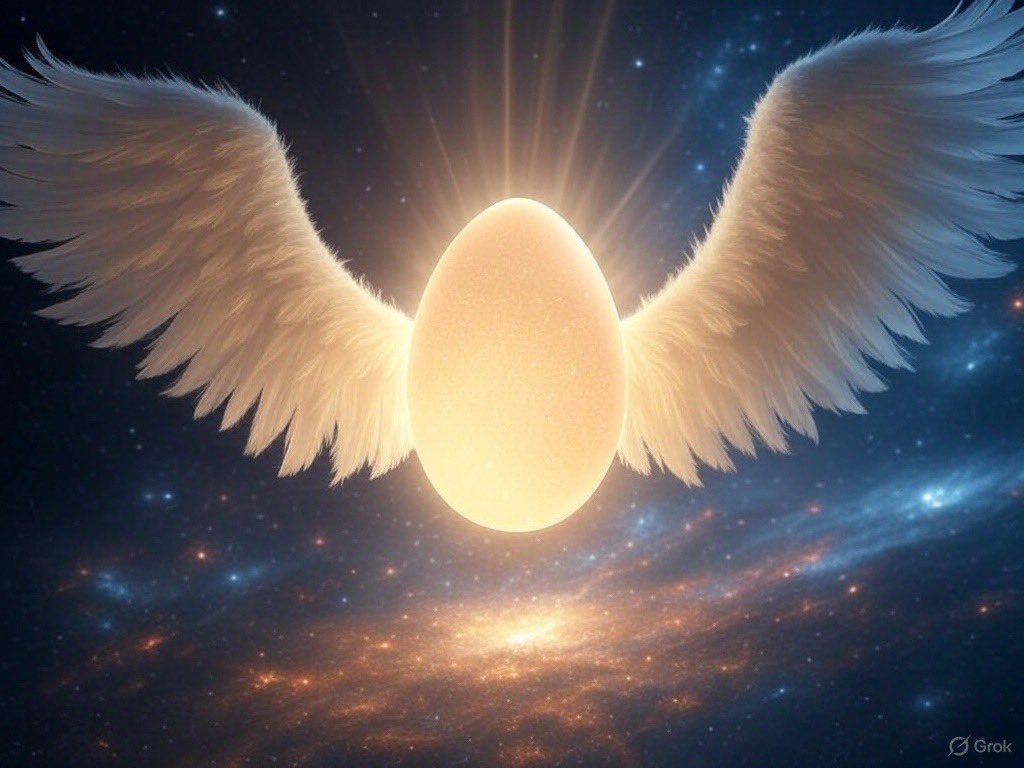
🚨 The cosmic egg, a universal motif in ancient mythologies, symbolizes creation’s origin. This symbol embodies potential, unity, & order from chaos, uniting diverse cultures. I’ve been posting about Order/Chaos recently but it’s also essential to understand this motif as it is universal. Below is a brief essay I’ve written. 👇🥚 1/2
The Cosmic Egg, A Universal Symbol of Creation
Across ancient mythologies, the cosmic egg emerges as a potent symbol of creation, a primordial form birthing the universe, gods, or life. From India to Polynesia, this motif captures humanitys quest to explain existence, embodying potential, unity, & order from chaos. This essay explores the cosmic egg in Hindu, Chinese, Egyptian, Greek, Finnish, Polynesian, & African myths, revealing its cultural nuances and shared meanings.
In Hindu cosmology, the cosmic egg, or Brahmanda, is central. Vedic texts describe a golden egg, Hiranyagarbha, floating in cosmic waters. Brahma, the creator, emerges, splitting the egg to form heaven and earth. This act marks creations dawn, w/ the egg as a vessel of divine potential. Upanishads link Hiranyagarbha to the suns generative power, tying it to cyclical time, where creation recurs across yugas. The Brahmanda symbolizes unity, a single source unfolding into multiplicity.
Chinese mythology offers Pangu, born within a cosmic egg of chaos. Breaking it, he separates yin and yang, forming sky and earth. Over millennia, Pangu holds them apart, dying to become nature, his eyes the sun, his blood rivers. Recorded in Hanera texts, this myth emphasizes balance, the egg as chaos ordered through sacrifice. Pangu embodies creation as transformation, the egg a crucible of cosmic harmony.
Egyptian myths feature a near egg motif. In Heliopolitan tales, Ra rises from a lotus or egglike form on a primeval mound amid Nuns chaotic waters. Hermopolitan stories describe a cosmic egg, laid by a celestial bird, birthing a creator. The egg, tied to solar rebirth, symbolizes order from disorder. Egyptian cosmology, cyclical like the suns journey, sees the egg as a seed of divine emergence, fertility, and renewal.
🧠🚨The Psychobiological Power of Myth: Insights from Campbell, Jung, and Eliade (Part 1 of 2):
Myths have long served as humanity’s narrative compass, guiding individuals & societies through the complexities of existence. My three favorite authors Joseph Campbell, Carl Jung, & Mircea Eliade offer distinct complementary perspectives on mythology as psychobiological constructs that shape human responses to universal experiences. Campbell viewed myths as innate releasing mechanisms (IRMs) that trigger instinctual responses, Jung sees them as expressions of a collective unconscious driven by archetypes, & Eliade interprets them as revelations of the sacred that connect humans to timeless truths. Modern neuroimaging studies provide empirical support for these theories, illuminating how myths engage neural systems to process emotions, meaning, and transcendence. Together, these perspectives reveal myths as dynamic tools that bridge biology, psychology, & culture, helping humans navigate life’s profound challenges. Joseph Campbell, in Primitive Mythology describes myths as psychobiological constructs that function as IRMs, where symbolic narratives act as “supernormal sign stimuli” triggering preprogrammed emotional and behavioral responses rooted in human biology. Myths like the “hero’s journey” engage neural systems such as the amygdala for emotional arousal and dopamine pathways for reward, guiding responses to stimuli like fear or community. Neuroimaging studies support this view, a 2016 NeuroImage study found that narrative comprehension activates the medial prefrontal cortex and temporoparietal junction, areas tied to emotional regulation and social cognition, suggesting myths shape stimulus processing. Similarly, a 2019 Cerebral Cortex study showed emotionally salient stories enhance amygdala-prefrontal connectivity, aligning with Campbell’s idea of myths as instinctual triggers. A 2021 Nature Communications study further demonstrated that narrative-driven emotional engagement boosts dopamine release in the nucleus accumbens, reinforcing Campbell’s claim that myths are rewarding and biologically resonant.
Carl Jung, in works like Symbols of Transformation (1912) and The Archetypes and the Collective Unconscious (1959), views myths as manifestations of the collective unconscious, a shared psychic reservoir of archetypes universal patterns like the Hero or Shadow that shape human thought and behavior across cultures. Myths, for Jung, are symbolic narratives that guide individuation, the integration of conscious and unconscious elements for self-realization. Modern neuroimaging studies lend credence to Jung’s ideas, a 2018 Social Cognitive and Affective Neuroscience study found that universal narrative patterns, such as hero-like figures, activate the medial prefrontal cortex and posterior cingulate cortex, areas linked to self-referential processing and social cognition, suggesting a neural basis for shared archetypal resonance. Additionally, a 2020 Journal of Neuroscience study showed that emotionally charged, archetypal stories enhance connectivity in the default mode network, supporting Jung’s claim that myths tap into universal psychological structures.
🧠Jungian Individuation 🚨🧵1/3
Carl Jung's concept of individuation stands as a central pillar of analytical psychology, offering a framework for understanding human psychological development. This process tracks the path by which an individual achieves psychological wholeness and self-realization.
💭⚡️Defining Individuation: Purpose and Goal of Psychological Wholeness 🧠
Individuation, a cornerstone of Jungian analytical psychology, represents the lifelong journey of integrating diverse aspects of the psyche both conscious and unconscious to forge an authentic self. Jung articulated this process as becoming "in-dividual," signifying an undivided or whole state of being. The ultimate aim is self-realization, which encompasses the discovery and fulfillment of one's full potential and purpose in life. This transformative endeavor necessitates the healing of divisions between conscious and unconscious elements, thereby leading to an expansion of consciousness. (DM me
For the full essay)
#Individuation #CarlJung #SelfDiscovery #PersonalGrowth #JungianPsychology
I tried to give it all away for free.
Now when the time comes, it will cost money.
The UFO stuff
The Ancient Myths
The Reason Christ came here are all the same thing.
@TheProjectUnity There’s a connection between spirituality and the UFO/UAP phenomenon. The ancient mythologies of the world are also connected and so if modern religion.
@RyLiberty Play stupid games, win stupid prizes.
If this was a random person, I would agree 100% but he wanted to be famous at any cost.
Now he is.
Actions have consequences.