How I Build My Optics Portfolio...
$LITE $COHR $AAOI $SMTC $NOK etc.
If you have been curious about the stocks I own and the % allocation behind them, you can see it here:
https://t.co/WhbQJerJC2
This article lays out generally where my long term core holdings sit
I am personally quite active around my core positions, trimming on rips and slowly adding on dips.
But for my long term core, I try to think about who is durable on a multi year timeframe throughout the different architectural transitions and who I would be the most comfortable holding through the volatility
So I built this ETF in this article to reflect that
IQE reiterating what the industry has said about InP:
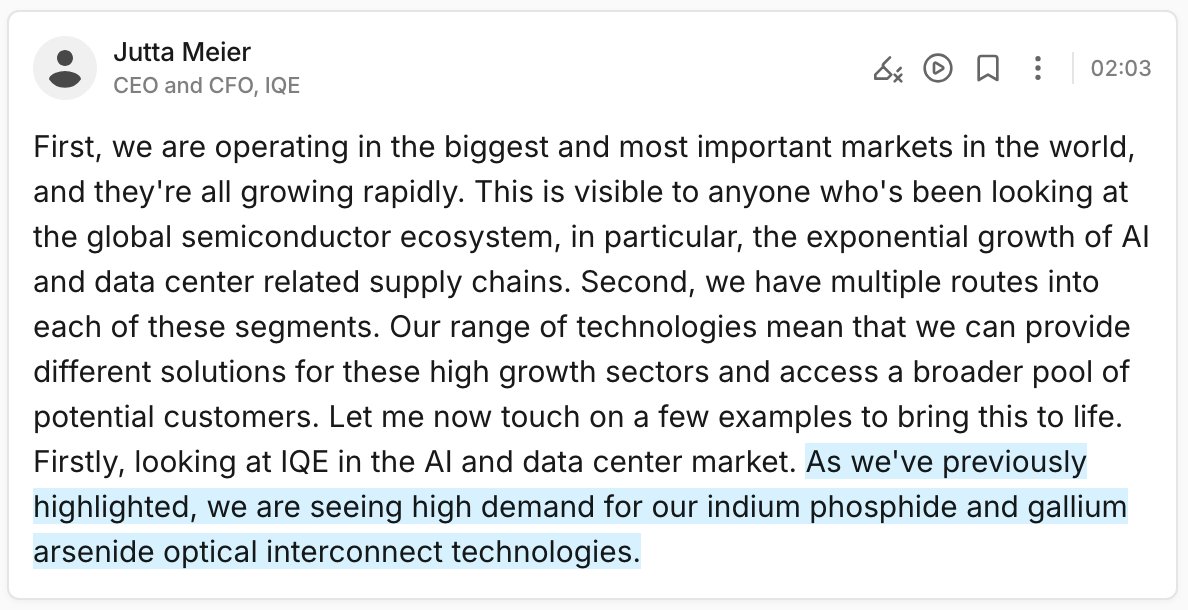
"As we've previously highlighted, we are seeing high demand for our indium phosphide and gallium arsenide optical interconnect technologies."
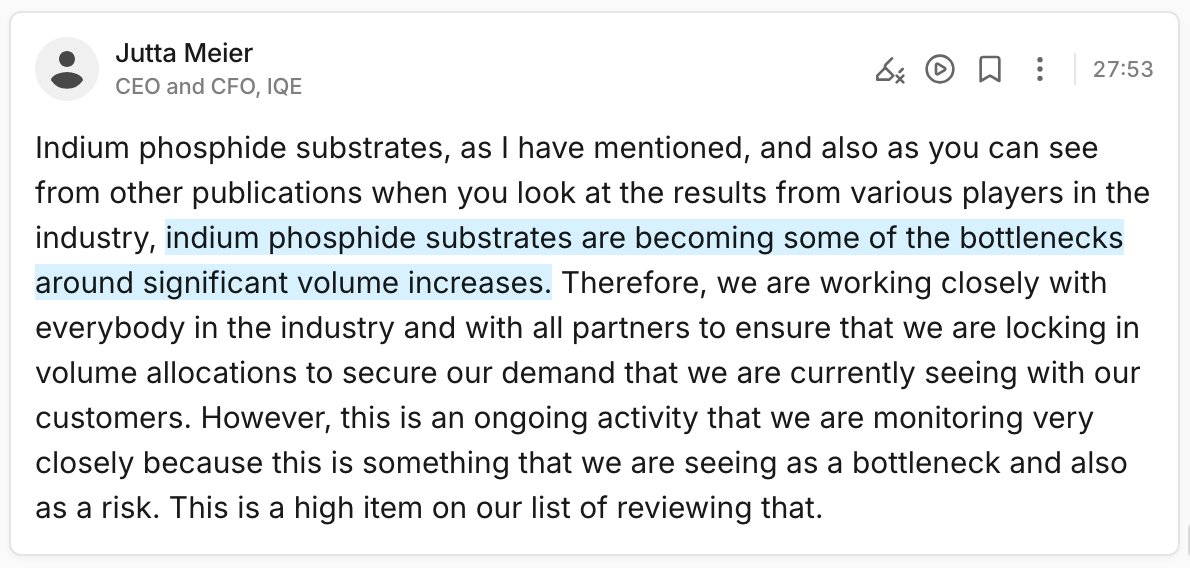
"Indium phosphide substrates are becoming some of the bottlenecks around significant volume increases."
$AXTI
If you are interested in humanoids, read this.
$CCXI $TSLA $OUST $VPG $AMBA
We know they are getting really capable. But when do they actually become economically feasible?
And what would make a customer go from a five-unit pilot to a 500-unit commercial order?
I broke down some of the most important adoption thresholds:
> uptime
> task success
> support requirements
> repair time
> utilization
> payback.
Then I mapped where the dollars could accrue across sensing, compute, motion, software and training data.
My main takeaway is that adoption can inflect before hardware costs fall dramatically.
Give it a read!
https://t.co/bqJ5TOIixr
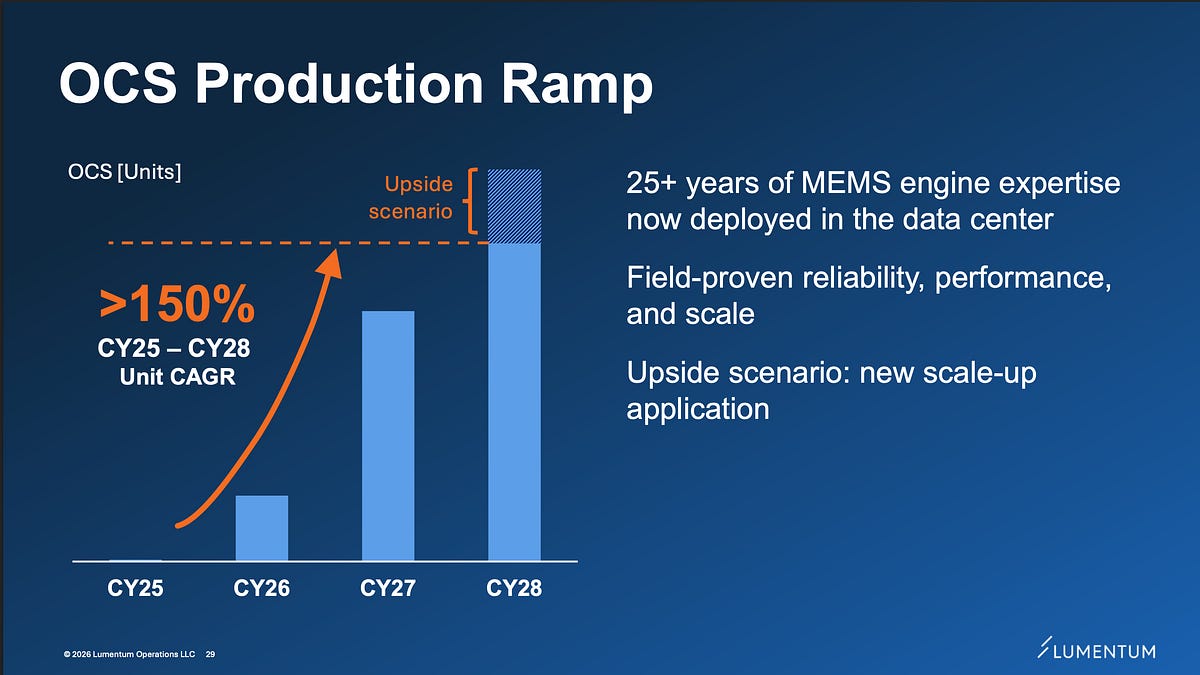
If you invest in optics, you need to understand OCS
$LITE $COHR
OCS stands for Optical circuit switching.
Very simplified, you are steering light paths.
The benefit it that traffic can stay optical longer which means fewer light to electronics to light conversions.
Which leads to lower power and lower latency.
Lumentum's path is MEMS mirrors which are esentailly tiny mirrors steering beams.
Their named use cases include spine / scale-out, optical scale-up, protection, and in-rack OCS to route around failed or overloaded GPUs / TPUs.
Hurlston was at Deutsche Bank on Aug 27 for a fireside and gave some nice insight here.
He said the largest OCS customer took orders up "very significantly" since the Aug 11 earnings call.
"We've seen a huge uptick in our order book and the order rate."
Aug print already had the first triple-digit OCS quarter in the FQ1 guide, "meaningfully above the 3-digit mark," tracking ~$400M in 2H. The Deutsche Bank take-up is the increment after all that.
Kathy's OFC TAM was $8B. Hurlston said that TAM now looks significantly under called, with new numbers at the next OFC.
The opportunity also extends beyond google and they are very happy with the customer breadth.
OCS growth over the next few years is definitely something to watch!
@AtlasShrug1 There is a lot of overlap out there! Lots of ways to differentiate as well. Ive got lots of really good things going on and lots of exciting things comin up so im not to keen to change things. Ive been having a lack of motivation to post on X lately but overtime that might change
Scale across has barely started
Scale out NPO has barely started
Scale out CPO has barely started
OCS has barely started
Scale up NPO hasn't started
Scale up CPO hasn't started
Scale in hasn't started
We are still so early on the actual optical buildout
@Sergeant991 totally, but were still gonna be building data centers like crazy for the foreseeable future. so this just shows their durability even in a strong market
This was a significant point on the $CIEN call
A hyperscaler told Gary Smith:
“If they stopped building data centers tomorrow, Gary, you probably wouldn’t notice for two years.”
So Ciena’s demand clearly is not dependent solely on new data-center construction. Even if new projects stopped immediately, the optical equipment already required for existing projects could continue supporting revenue for roughly two years.
If you know Ciena's history, that's significant. And it's nice to hear this whenever people discuss permit delays, DC cancellations etc.
Cien now expects more than $10 billion of backlog at year-end, with most of it requested for fiscal 2027. Management also indicated that supply constraints could persist through 2028, while customer commitments extend through 2029.
But stock down. It keeps just going down.
@WeiRen07 Yeah its been very weak. It was very expensive before last earnings. But I feel like its been much more fairly valued as of late. I think theres a major inflection in the 2nd half of 2027 and 2028 that isnt really being appreciated