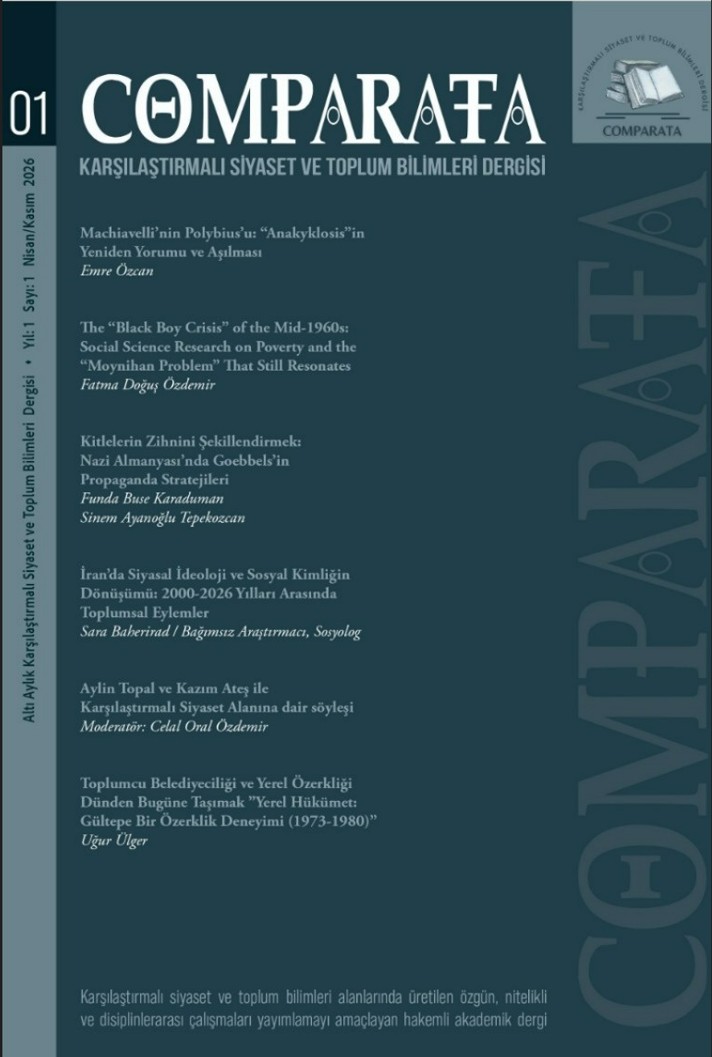
Bir süredir heyecanla üzerinde çalıştığımız dergimizin ilk sayısı çıktı 😀 Toplum ve siyasete dair karşılaştırmalı yazılarınızı bekliyoruz. Gelecek sayımız, Kasım'da.
Ankara üniverssitesi - 2026-2027 eğitim-öğretim yılı güz yarıyılında lisansüstü programlara ilişkin kontenjan ve başvuru duyurusu
https://t.co/lOT2E0gKJ6
Bölümümüz öğretim üyesi Prof. Dr. Erel Tellal'ın Onur İşçi ve Samuel Hirst tarafından kaleme alınan Kızıl Yıldız adlı esere ilişkin yazdığı Kitap İncelemesi Turkish Yearbook of International Relations Dergisinde (https://t.co/FiRGW6gnb3) yayımlanmıştır.
AÜ SBF Siyaset Bilimi ve Kamu Yönetimi Bölümü olarak, 26–27 Mart 2026 tarihlerinde Mülkiye Devlet, Hukuk ve Siyaset Kongresi’ni gerçekleştireceğiz. Kongremizin teması “Devletin Dönüşü” olup, programına bu sayfa üzerinden ulaşabilirsiniz. 👇 https://t.co/yLh7wAY9GP
🎧#Podcast - Davos’tan sonra Münih Güvenlik Konferansı’nda da öne çıkan mesaj ne? Büyük güçler haritayı zorla yeniden çizerken, orta güçler kenarda kalmaya mahkûm mu? Grönland bu bağlamda nasıl bir sınav? | Dr. Ayşe G. Çalık yazdı.
https://t.co/ZGYGdVh1Ib
Buzullarla kaplı uzak bir ada ve büyük hesaplar..Grönland sadece bir ada değil, büyük güçlerin yeni mücadele alanı.
Kuzey Kutbu’nda buzullar eriyor, küresel rekabet kızışıyor. Peki,Grönland neden dünyanın gündeminde? @metecubukcu ile @ntvpasaport 21.00 @ntv
Everyone says that the rules-based international order is dead, so long live realism.
Recently, the Council on Geostrategy published a report titled Britain’s World: The Strategy of Security in Twelve Geopolitical Maps (link below). The report shows how British-American-Australian strategy "stitches together" the Euro-Atlantic and the Indo-Pacific into a single logic of deterrence, with a particular focus on the undersea domain and the so-called "Wide North."
Let’s look at the same theme through the prism of "President Trump’s Greenland" - that is, a scenario of border revision that could sharply alter the political conditions for NATO, AUKUS, and the entire Western security architecture.
AUKUS is a trilateral defense and technology partnership between the United States, the United Kingdom, and Australia. It was designed to accelerate military capabilities and technological integration, primarily in the maritime domain.
AUKUS is positioned against CRINK - an informal alignment of China, Russia, Iran, and North Korea. This is presented through two main pillars:
• first, the expansion of Australia’s fleet of nuclear-powered attack submarines;
• second, cooperation on advanced technologies that determine advantage in modern warfare, including quantum capabilities, hypersonics, and other cutting-edge domains.
Crucially, the report frames AUKUS as more than just a tool for "deterring China in Asia." The authors argue that security theatres are interconnected: what happens in Europe is directly affected by China’s behaviour, as Beijing supports Russia, and together with the broader CRINK configuration exerts sustained, combined pressure on the West. In this logic, AUKUS becomes part of a longer-term strategy to contain this network. It does not "break" CRINK on its own, but it strengthens Western resilience by allowing pressure to be managed simultaneously in both the Euro-Atlantic and the Indo-Pacific, preventing the United States from becoming strategically overstretched.
This leads to the role of the AUKUS-NATO linkage. NATO remains the foundation of European security, but the report emphasises a "NATO first, but not NATO only" formula. Europe should be protected primarily through NATO, while faster and more technologically dense formats are built in parallel, especially where large institutions tend to move slowly. In this context, AUKUS functions as a complementary framework that enhances undersea and technological capabilities among allies.
Importantly, the report explicitly notes that British submarines developed within the AUKUS framework are likely to be deployed in the Atlantic even more than in the Indo-Pacific. This directly ties AUKUS to North Atlantic security - and therefore to the logic of deterring Russia and controlling the undersea domain.
A separate and critical line of analysis in the report focuses on the "Wide North": the Arctic approaches, the Greenland-Iceland-UK (GIUK) gap, Russia’s "bastion" strategy on the Kola Peninsula, and, in particular, the vulnerability of undersea cables and seabed infrastructure.
The authors describe this as a classic "grey-zone" environment, where Russia can act in ways that make direct attribution difficult, while the consequences for the West remain very real. In this picture, the key assets are not only ships and aircraft, but the ability to monitor what happens underwater, protect undersea communications, and rapidly repair damage.
‼️ This is precisely where it becomes clear why a forceful U.S. annexation of Greenland - or the collapse of NATO - would be toxic for AUKUS.
Technically, control over Greenland could strengthen U.S. positions in the North, but the political cost - the destruction of trust - would strike at the very foundations of AUKUS more severely than any operational gain could compensate.
AUKUS rests on long-term discipline and mutual trust: the transfer of nuclear technologies, shared production chains, the exchange of sensitive information, and sustained support from societies and parliaments.
If the United States were to seize territory from a NATO ally by force, it would immediately raise doubts about the reliability of American guarantees and trigger discussions about the need for additional "safeguards" against excessive dependence. In both the UK and Australia, this would almost inevitably increase the political toxicity of the partnership with the U.S. and make cooperation more conditional and transactional.
Even in this post-order world, security cannot be governed solely by the geopolitical logic of a century ago. If NATO begins to fracture, another problem emerges: resource overstretch and competing priorities. The United States would either be forced to "put out fires" in Europe - diverting resources such as shipbuilding capacity, submarine maintenance, personnel, intelligence, and logistics away from AUKUS - or sharply reduce its European commitments, creating a vacuum that Russia would exploit.
In both scenarios, the environment becomes more chaotic, which is precisely the most favourable condition for grey-zone attacks on undersea infrastructure, where attribution is difficult and allied coordination is absolutely essential.
Source: https://t.co/nv1jcY41E1](https://t.co/nv1jcY41E1
“Devletin Dönüşü” konulu Mülkiye Kongresi’ne 244 bildiri başvurusu geldi. Çok boyutlu katkılar var, etkileyici birikim. Başvuru sahiplerine teşekkürler.🌺 Hakem değerlendirme süreci başladı. Sonuçların 15 Aralık 2025’te ilanı için çalışıyoruz.
@AUSBFM
Azerbaijani scholar Dr. Nurlan Aliyev’s new book Reassessing Russia’s Security Policy has been highlighted by Foreign Policy as one of the essential readings for understanding how Russia thinks and acts in the international arena.
Sosyal medyada Trump’ın Suriye Devlet Başkanı Şara’ya parfüm sıkması hakkında çok fazla yorum yapılıyor. Bana göre bu görüntü, ‘Beyaz insanın misyonu’ ve ‘medeniyet götüren devlet’ algısına yönelik bir mesaj içeriyor. Keza parfüm kullanma inceliği de özellikle ‘medeniyet’ ve ‘temizlik’ algısını çağrıştırıyor, adeta karşısındakini ‘barbar’ olarak resmeden bir sembolik jest gibi görünüyor.
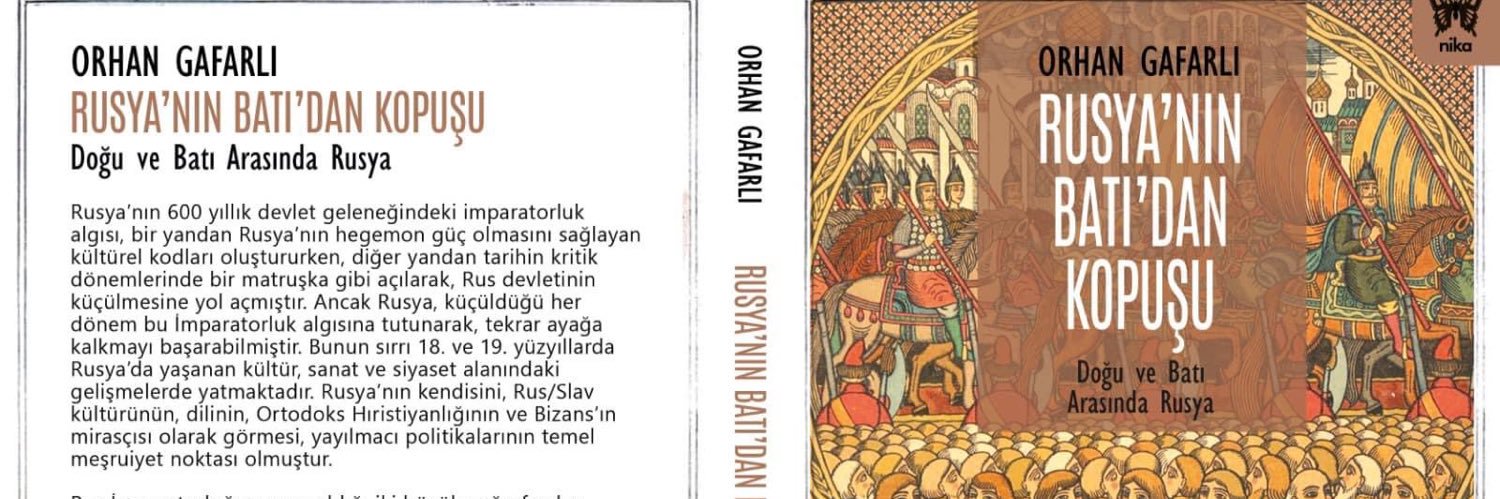
Aleksey Ivanov’un, Rus kimliğini “fetih” değil, “dönüşüm” üzerinden anlatır.
Mit, din ve tarih iç içe geçer: modern Rus ulusunun kök masalı.
Parma’nın Kalbi romanı (Сердце Пармы), pagan Ural dünyası ile Ortodoks Rusya arasındaki sınırda geçen bir tarihsel destan.
Çağdaş Rusya’yı anlamak için edebiyat ve deneme hala en güçlü rehberdir.
Bu seri, post-Sovyet kimlik, devlet ve birey ilişkisini, Rus muhafazakârlığı, liberalizmi ve sol entelektüel çizgiyi yansıtan yazarları bir araya getiriyor.
Sorokin, Pelevin, Limonov, Vodolazkin, Prilepin, Ulitskaya, Shishkin, Glukhovsky, Prokhanov, Travin, Akunin ve Aleksey Ivanov…
Sorokin’den Ivanov’a uzanan bu yazarlar, çağdaş Rusya’nın vicdanını, çelişkilerini ve kimliğini yazıyor. 📚🇷🇺