FSD v15 now starting to roll out – upgrading every part of the end-to-end driving network
Safety
25x better handling of safety critical cases
Tesla Reality View
Adds a live visualization of the drive that lets you see & control what FSD is planning to do
Navigation for start & end of the trip now learns end-to-end from fleet route preferences. Later v15 releases will expand this to the entire route.
You also should notice better detection of signs, animals, debris, potholes and standing water, plus more natural speed handling in school zones and inclement weather.
Lastly, FSD can now slow for speed cameras & Bike Rack Mode lets you enable FSD w/ bike racks or similar hitch accessories
Starlink Mobile is building the first fully-integrated US nationwide satellite and terrestrial network that will keep people connected on their phones no matter where they are. Our 5G base stations will leverage @Qualcomm chips to accelerate deployment, starting in 2027 🛰️📱
Here are my thoughts on the iPhone Duo after my first week of using it. I’ve really been enjoying the phone, and I think a lot of the negativity it’s getting are from people who never planned on buying it, and will jump on any opportunity to trash it. https://t.co/XhjWL4gQ9N
Hey @grok, is this true??
Some data centers now run on lab-grown human brain neurons derived from stem cells, wired directly to silicon chips via electrode arrays, and kept alive on life support. Fed sugar every few days. They play Doom. We don’t know if they’re conscious.
We'll be spending a lot more time trying to understand the outputs of language models. A few thoughts, tips & tricks:
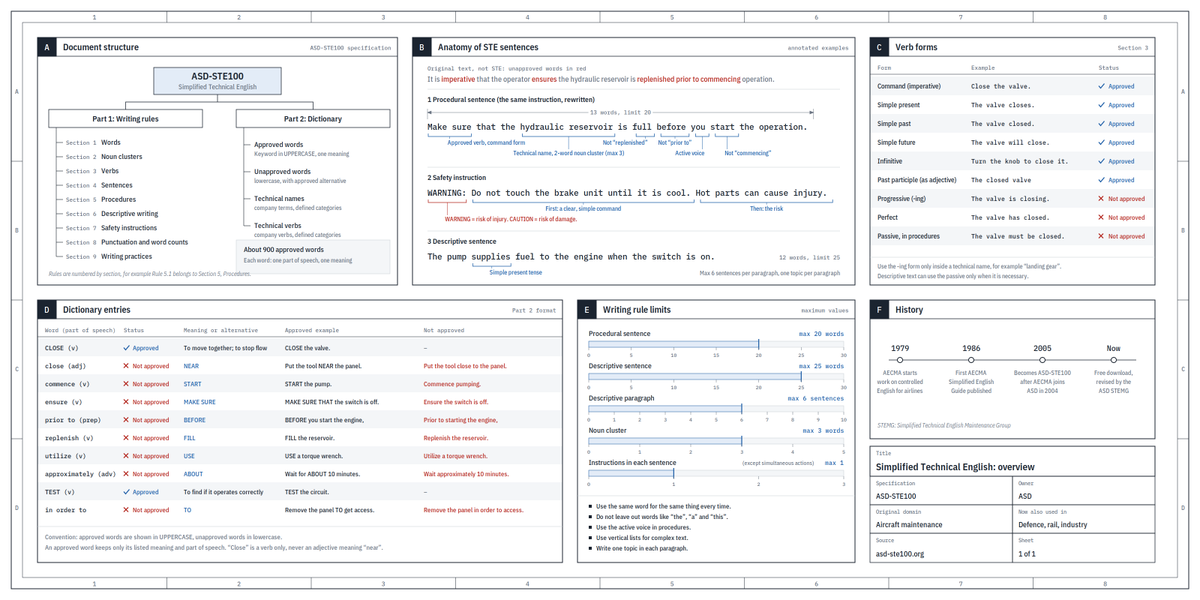
Writing. Something I've had success with: Ask your LLM to explain something in ASD-STE100, it's a controlled language specification originally developed for aerospace maintenance documentation. LLMs well-versed in this language and it comes with heavy constraints on clean writing style that I often find a lot more readable. Sometimes I've tried to soften it a bit e.g. ask for "80% of the way to ASD-STE100" because the spec is quite stringent. But even better:
Diagrams / images. Instead of writing, ask your LLM to create a diagram. These can be a lot easier to process, parse, and understand. But even better:
Web pages. Ask for output "in HTML" to get a beautiful, interactive webpage. LLMs are getting really good at frontend and can create beautiful experiences, animations, etc. But even better:
Explainer videos. The output format I am most bullish on is fully custom / bespoke explainer videos generated on any arbitrary topic. Experiment with things like "Create a 3b1b style video explainer on X. Use my ElevenLabs API key for audio narration". (you'd need an API key for the latter or you can ask your LLM to find you decent free alternatives that use your local compute). This is actually starting to work!
In summary:
- As LLMs get better, they will do more and more of the legwork autonomously, and a lot more of our work will rise up the abstractions into oversight and understanding.
- Luckily, LLMs can help here too because as intelligence and code are increasingly abundant, you can ask for large, custom, discardable software artifacts (e.g. web apps, video explainers) that would have never made sense to create before. Push the boundaries here and you'll be surprised.
The laugh track ends here.
Todd Phillips’ JOKER (2019), starring Joaquin Phoenix, Robert De Niro, Zazie Beetz and Frances Conroy, received 11 nominations at the 92nd Oscars and won two (Actor in a Leading Role - Joaquin Phoenix, Original Score - Hildur Guðnadóttir).
@gauravsabnis@grok
Can you compare the annual property tax on a similar 2 BHK apartment in Bandra West, Mumbai, versus a 2 bedroom apartment near Columbia University in Manhattan?
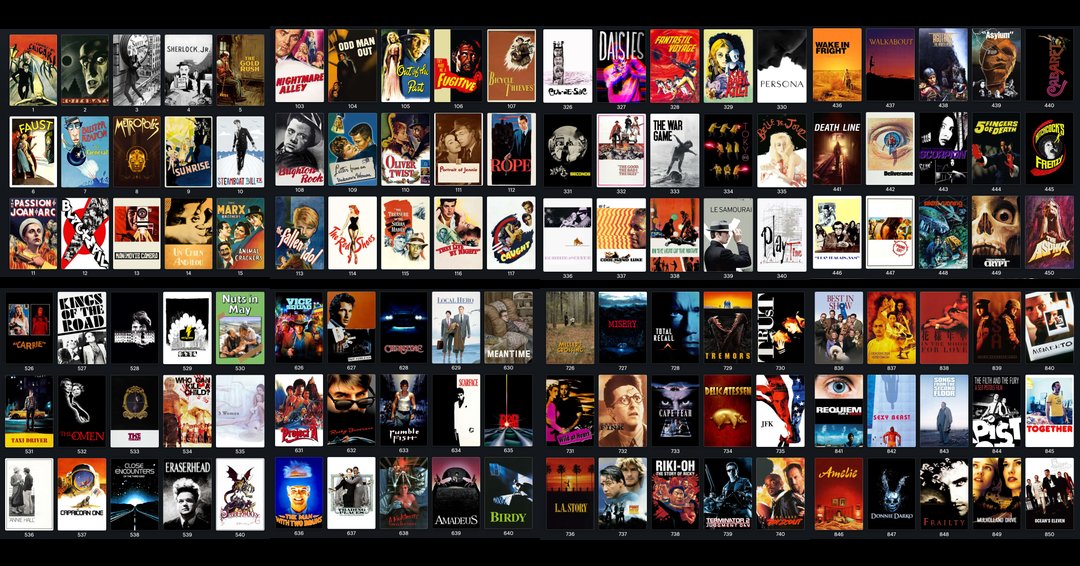
Ten years ago, I discovered a 700-strong list on @MUBI entitled ‘Edgar Wright’s Favorite Movies’, which came as something of a surprise, as I hadn’t written it. Though the American spelling of ‘favourite’ was a clue.
The list had been created by Sam DiSalle, so I reached out to ask how he had compiled it. He explained that it included every film I had ever said I liked in interviews, articles and polls. I asked if I could edit it and, over the next few months, after much addition and subtraction, gave him enough further suggestions to bring the grand total up to a round 1,000 films.
Every now and then I update it and thought I would do so ten years on. It is a very personal and entirely subjective selection of favourites from more than 100 years of cinema. Some people get extremely riled up about films they perceive to be ‘missing’, so please be warned: any comments along the lines of “What, no…?” will be deleted. It’s only one person’s list, and the great news is you can absolutely make your own. In fact, I encourage you to!
I enjoy keeping the list fluid for my own pleasure, amusement and reference. I’m sharing a recently updated version in the hope that you’ll have fun poring over it and diving into some films you haven’t seen, or perhaps haven’t even heard of. I should also apologise to my friends at @1000filmsblog for adding and removing titles. I really don’t mean to increase your workload! Anything that has ever appeared on the list remains valid; I simply like to cycle films in and out according to rewatches and new discoveries.
And, of course, enormous thanks to Sam DiSalle for helping me put it all together and maintain it over the years. Links to his MUBI and @letterboxd versions of the list are below. Film-watching is a lifetime pursuit, and there are still so many others out there for me to see. I hope these two lists are a great place to for you to start. Please give my regards to your eyeballs!
Two years of structured, vigorous exercise reversed about 20 years of age-related structural changes in the hearts of sedentary 50-year-olds
As the heart ages, it tends to shrink and stiffen, impairing cardiovascular function and increasing disease risk
Dr. Ben Levine’s team gradually built participants up to 5–6 hours of weekly training, combining Norwegian 4x4 intervals, endurance exercise, and twice-weekly strength work
By the end of the study, their 52-year-old hearts structurally resembled those of people roughly 20 years younger