Dlicom: Bringing Social Networking and Web3 Together
As the digital landscape continues to evolve, Web3 is creating new opportunities for how people connect, communicate and interact online. However, accessing these experiences often requires navigating multiple platforms and applications.
Dlicom aims to simplify this experience by bringing social networking and essential Web3 functionalities together within one platform.
Key features include:
→ Integrated Web3 Browser: Explore decentralized applications directly within Dlicom.
→ Social Networking: Share content, engage with others and participate in communities.
→ Encrypted Messaging: Communicate through private, encrypted conversations.
→ Self-Custody Multi-Chain Wallet: Manage digital assets while maintaining control of your wallet.
By combining these capabilities, Dlicom aims to create a more connected and accessible environment for everyday social interaction and Web3 exploration.
The vision is to reduce the complexity of navigating different digital services and make Web3 more approachable for a wider audience.
Dlicom -Discover More. Connect Better. Explore Web3.
@DlicomApp@dlicom_IN@0xVic7or@timcrypto@KhanIsrar324093
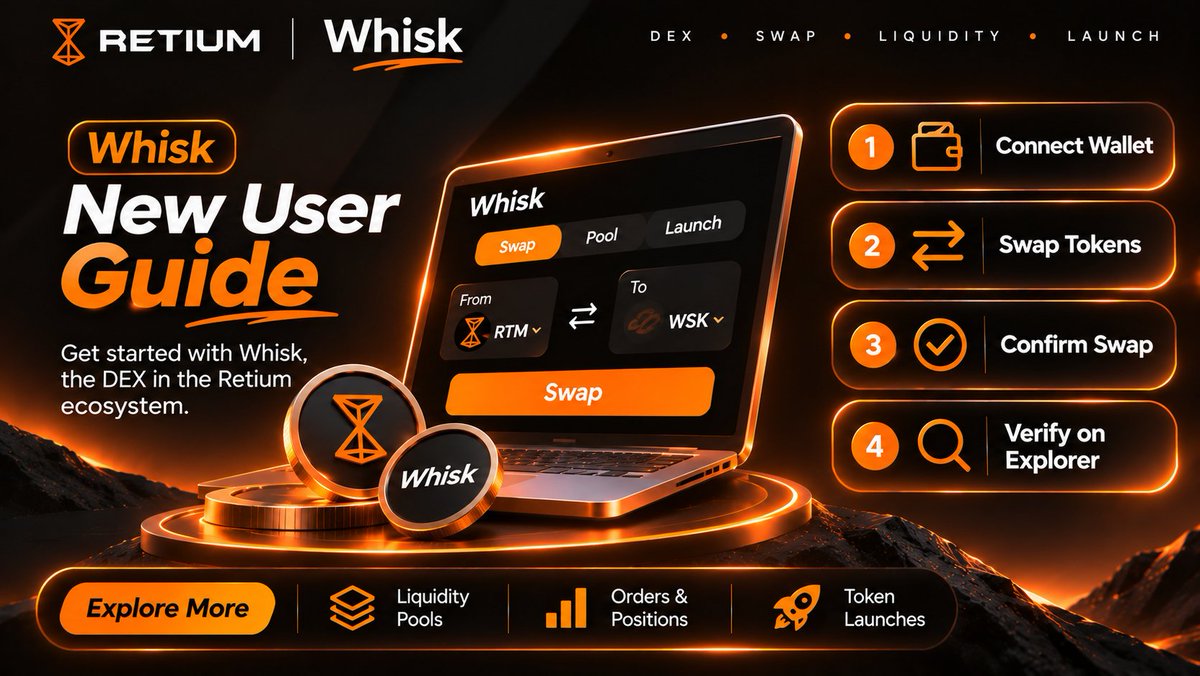
𝐍𝐞𝐰 𝐭𝐨 𝐖𝐡𝐢𝐬𝐤? 𝐇𝐞𝐫𝐞'𝐬 𝐇𝐨𝐰 𝐭𝐨 𝐆𝐞𝐭 𝐒𝐭𝐚𝐫𝐭𝐞𝐝 🧡
If you're exploring Whisk for the first time, here's a simple guide to understanding the platform and making your first swap.
𝐖𝐡𝐚𝐭 𝐢𝐬 𝐖𝐡𝐢𝐬𝐤?
Whisk is a decentralised exchange that started within the Retium ecosystem. It brings together token swaps, liquidity pools, trading tools and token launches.
𝐆𝐞𝐭𝐭𝐢𝐧𝐠 𝐒𝐭𝐚𝐫𝐭𝐞𝐝
→ Connect Your Wallet
Visit https://t.co/gdWlBF2wWD and connect your Retium Wallet. Make sure you're using the correct supported network.
→ Explore the Swap Section
Choose the token you want to exchange and the token you want to receive. Enter the amount you want to swap.
→ Review Before Confirming
Check the estimated output, minimum received, network and transaction details carefully before approving.
→ Confirm the Transaction
Approve the swap through your connected wallet and wait for the transaction to complete.
→ Verify Your Activity
Check your wallet balance and use the Retium Explorer to inspect your transaction on-chain.
𝐖𝐡𝐚𝐭 𝐄𝐥𝐬𝐞 𝐂𝐚𝐧 𝐘𝐨𝐮 𝐄𝐱𝐩𝐥𝐨𝐫𝐞?
Whisk offers more than swaps:
→ Liquidity Pools — explore liquidity provision and pool activity.
→ Orders & Positions — explore available trading tools and manage your positions.
→ Token Launches — discover token deployment and market creation features.
𝐀 𝐒𝐦𝐚𝐫𝐭 𝐓𝐢𝐩 𝐟𝐨𝐫 𝐁𝐞𝐠𝐢𝐧𝐧𝐞𝐫𝐬
Start with a small testnet transaction. Always verify the network and token details, and never share your wallet recovery phrase or private keys.
Remember, testnet assets have no monetary value. Focus on learning how the platform works rather than expecting financial rewards.
Explore Whisk. Learn by doing. Build your Web3 experience. 🧡
Whisk: https://t.co/gdWlBF2wWD
Retium: https://t.co/cbJwcIEZKJ
Explorer: https://t.co/rpQ5BTpe9X
@RetiumChain
Dlicom: Bringing Social Networking and Web3 Together
As the digital landscape continues to evolve, Web3 is creating new opportunities for how people connect, communicate and interact online. However, accessing these experiences often requires navigating multiple platforms and applications.
Dlicom aims to simplify this experience by bringing social networking and essential Web3 functionalities together within one platform.
Key features include:
→ Integrated Web3 Browser: Explore decentralized applications directly within Dlicom.
→ Social Networking: Share content, engage with others and participate in communities.
→ Encrypted Messaging: Communicate through private, encrypted conversations.
→ Self-Custody Multi-Chain Wallet: Manage digital assets while maintaining control of your wallet.
By combining these capabilities, Dlicom aims to create a more connected and accessible environment for everyday social interaction and Web3 exploration.
The vision is to reduce the complexity of navigating different digital services and make Web3 more approachable for a wider audience.
Dlicom -Discover More. Connect Better. Explore Web3.
@DlicomApp@dlicom_IN@0xVic7or@timcrypto@KhanIsrar324093
Your online reputation should be more than just a profile. 🧡
Think about how much time people spend building their reputation online.
They create content, contribute to communities, complete tasks, and participate in different platforms. But proving that activity to another platform isn't always easy.
This is an interesting problem that Web3 can help solve.
That's one area where @primus_labs caught my attention.
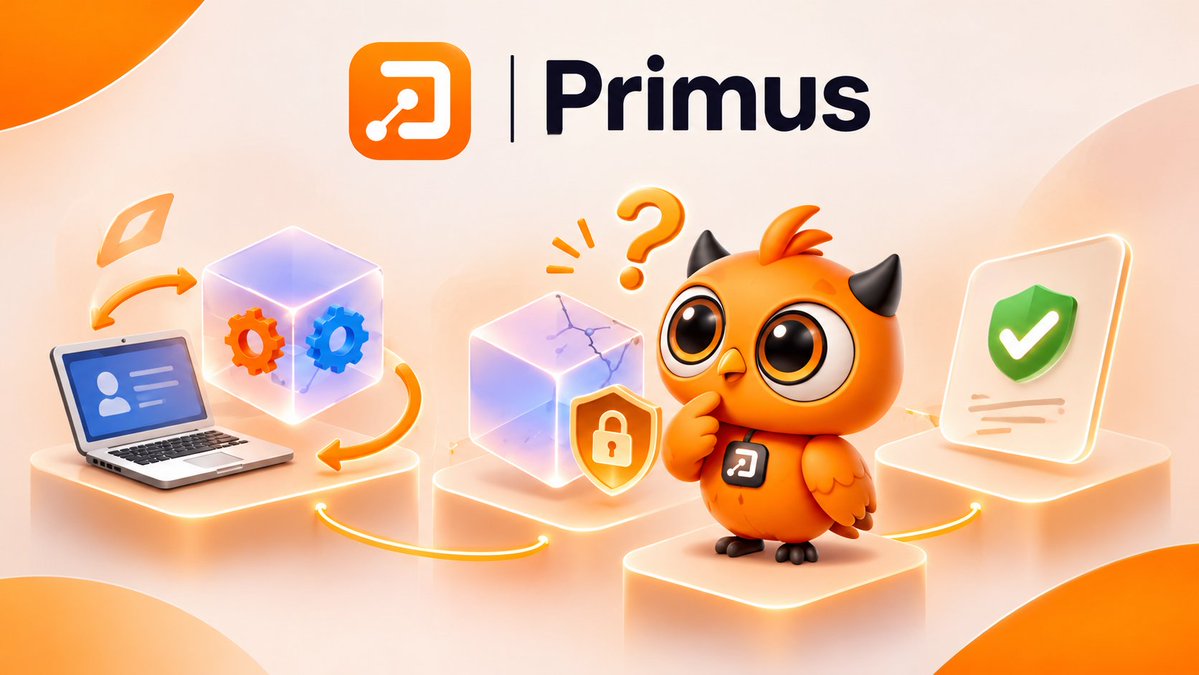
With privacy-preserving verification technologies like zkTLS, Primus is exploring ways to turn information from online platforms into verifiable proofs without unnecessarily exposing personal data.
Imagine being able to demonstrate your contributions and online achievements without sharing your entire digital history.
I think this could open interesting possibilities for:
🔸 Verifiable online reputation
🔸 Community contribution records
🔸 Digital identity and credentials
🔸 Trust-based Web3 applications
Your online activity should have value, and proving it shouldn't come at the cost of your privacy.
That's an interesting direction for Primus to explore.
#PrimusLabs
𝐑𝐞𝐭𝐢𝐮𝐦'𝐬 𝐓𝐰𝐨-𝐋𝐚𝐧𝐞 𝐀𝐫𝐜𝐡𝐢𝐭𝐞𝐜𝐭𝐮𝐫𝐞 𝐊𝐞𝐞𝐩𝐢𝐧𝐠 𝐃𝐢𝐟𝐟𝐞𝐫𝐞𝐧𝐭 𝐖𝐨𝐫𝐤𝐥𝐨𝐚𝐝𝐬 𝐒𝐞𝐩𝐚𝐫𝐚𝐭𝐞 🧡
Not every blockchain transaction creates the same kind of workload.
A simple token transfer and a complex smart contract interaction have very different execution requirements. Processing them through the same path can create unnecessary competition for resources.
Retium approaches this through a two-lane block architecture.
Here's the interesting part:
𝐓𝐫𝐚𝐧𝐬𝐟𝐞𝐫 𝐋𝐚𝐧𝐞
Regular transfers are routed into dedicated transfer blocks. This keeps straightforward payment activity separate from more demanding contract operations.
𝐂𝐨𝐧𝐭𝐫𝐚𝐜𝐭 𝐋𝐚𝐧𝐞
Smart contract calls are handled through separate contract blocks, allowing more complex execution to operate without directly competing with ordinary transfers for the same block space.
𝐖𝐡𝐲 𝐈𝐬 𝐓𝐡𝐢𝐬 𝐈𝐦𝐩𝐨𝐫𝐭𝐚𝐧𝐭?
→ Different workloads get their own execution paths.
→ Heavy contract activity is less likely to crowd out simple payments.
→ Multiple blocks can remain active simultaneously.
→ Transactions can be distributed across available blocks using their own identifiers.
The bigger idea is workload separation rather than treating every transaction as identical.
I find this architectural decision interesting because scalability isn't only about processing more transactions. It's also about organizing different types of work efficiently.
Different workloads. Separate lanes. One connected mesh.
That's another interesting piece of what Retium is building. 🧡
@RetiumChain
Web3 Adoption Starts with Better User Experiences.
Technology alone cannot bring more people into Web3. The experience needs to be simple enough for anyone to explore and use.
That's an important part of what makes @StartaleGroup interesting.
With the Startale App, users can explore different onchain activities without making everything feel complicated.
From discovering Mini Apps to swapping supported assets and exploring Earn Vault opportunities, the app brings multiple experiences together.
Another interesting part is STAR Points, which gives users an additional way to participate in the ecosystem through eligible activities.
For me, the real opportunity is making onchain technology useful beyond just crypto enthusiasts.
Better experiences can help more people discover what Web3 has to offer.
Making Web3 accessible is just as important as building it.
@soneium@0xRamz@businessj386
𝐓𝐡𝐞 𝐅𝐮𝐭𝐮𝐫𝐞 𝐨𝐟 𝐁𝐥𝐨𝐜𝐤𝐜𝐡𝐚𝐢𝐧 𝐒𝐭𝐚𝐫𝐭𝐬 𝐖𝐢𝐭𝐡 𝐁𝐞𝐭𝐭𝐞𝐫 𝐂𝐨𝐦𝐦𝐮𝐧𝐢𝐜𝐚𝐭𝐢𝐨𝐧
A blockchain network is only as efficient as its ability to keep participants connected.
Every block, transaction and piece of data needs to travel between distributed nodes. When that communication becomes slow or inefficient, it can limit the performance of the entire network.
This is the challenge @get_optimum is working to address.
Through its decentralized networking infrastructure, Optimum is focused on improving how information moves across blockchain networks.
With **mump2p and RLNC**, it aims to reduce propagation delays, minimize unnecessary data transfers and make peer-to-peer communication more resilient.
Why does this matter?
Because better data delivery can help validators stay synchronized, support growing network activity and create stronger foundations for applications built on blockchain.
Scaling isn't only about processing more transactions.
It's also about building a network that can move information efficiently as demand increases.
Faster communication. Smarter propagation. Stronger foundations for Web3.
That's the direction Optimum is working toward.
@discordflash@TheBl0ckBoy@CryptoSundayz
𝐖𝐄𝐁3 NEEDS MORE THAN TRANSPARENCY. IT NEEDS TRUST.
Think about how much information we share online every day. From financial activity to personal data, digital platforms know a lot about us.
But here's an interesting question:
Can we prove that information is genuine without exposing everything behind it?
I think this is one of the most important challenges for the next generation of Web3.
That's why I'm paying attention to @primus_labs .
Through technologies like zkTLS and zkFHE, Primus is exploring ways to make external data verifiable and enable computation on encrypted information while protecting sensitive details.
What makes this approach interesting is its potential beyond traditional blockchain applications.
Imagine DeFi platforms making decisions using verified information, AI agents accessing trustworthy data, and applications becoming more privacy-conscious without sacrificing verification.
Of course, technology alone isn't enough. Developer adoption, practical use cases, and real-world demand will ultimately determine how far these solutions can go.
But solving the relationship between data, trust, and privacy is a challenge worth taking seriously.
For me, that's what makes Primus worth watching.
The next stage of Web3 should not require users to choose between proving something and protecting their privacy.
#PrimusLabs
𝐄𝐱𝐩𝐥𝐨𝐫𝐞 𝐑𝐞𝐭𝐢𝐮𝐦 𝐁𝐞𝐲𝐨𝐧𝐝 𝐭𝐡𝐞 𝐖𝐚𝐥𝐥𝐞𝐭 🧡
A blockchain becomes easier to understand when you experience how its different components work together.
That's what makes the Retium testnet worth exploring.
Instead of focusing on just one feature, users can experience multiple parts of the ecosystem through a single testing journey.
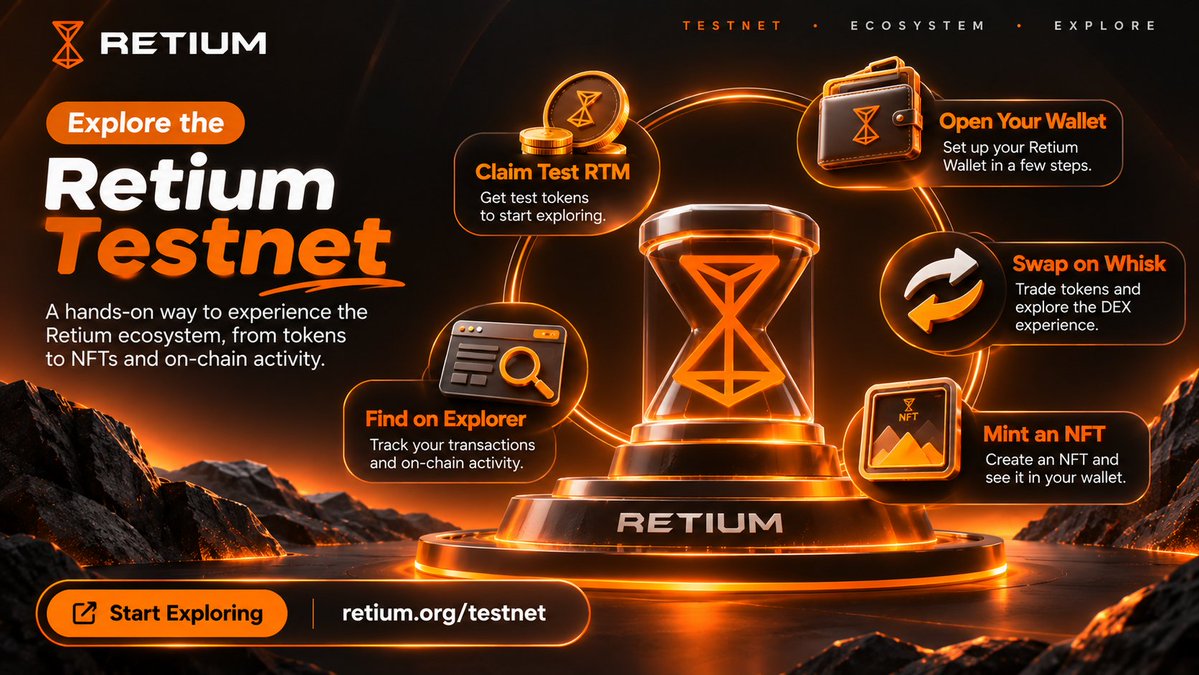
Start by claiming test RTM and opening the Retium Wallet. From there, explore token swaps through Whisk and discover how assets move within the ecosystem.
Want to explore something different? Head over to the NFT Launchpad, mint an NFT and check how it appears in your wallet.
The Retium Explorer completes the experience by letting you inspect your transactions and on-chain activity.
𝐖𝐡𝐚𝐭 𝐦𝐚𝐤𝐞𝐬 𝐭𝐡𝐢𝐬 𝐢𝐧𝐭𝐞𝐫𝐞𝐬𝐭𝐢𝐧𝐠?
Each interaction gives you a better understanding of a different layer:
→ Wallet: Managing your assets
→ Whisk: Exploring decentralised trading
→ NFT Launchpad: Creating and collecting digital assets
→ Explorer: Tracking and verifying network activity
These aren't isolated features. They represent different ways to interact with the same developing ecosystem.
For anyone interested in understanding what Retium is building, spending time on the testnet is more valuable than simply reading about its features.
Don't just follow the development. Explore the ecosystem yourself. 🧡
Testnet: https://t.co/fJXgpdpF3V
Wallet: https://t.co/AXYZP0MRrl
Whisk: https://t.co/POPohFIt41
NFT: https://t.co/NlKyJejBcx
Explorer: https://t.co/rpQ5BTpe9X
@RetiumChain
𝐖𝐡𝐚𝐭 𝐈𝐟 𝐁𝐥𝐨𝐜𝐤𝐜𝐡𝐚𝐢𝐧 𝐃𝐚𝐭𝐚 𝐃𝐢𝐝𝐧’𝐭 𝐇𝐚𝐯𝐞 𝐭𝐨 𝐖𝐚𝐢𝐭 𝐓𝐨 𝐓𝐫𝐚𝐯𝐞𝐥?
One overlooked challenge in blockchain networking is that receiving data and forwarding data don't always need to happen as two separate steps.
Traditional propagation can introduce delays when nodes depend on receiving enough of the original message before passing it further.
Optimum is exploring a different approach with mump2p and Random Linear Network Coding (RLNC).
Instead of treating every data packet as something that must reach its destination individually, RLNC allows nodes to work with coded combinations of data.
Here's what makes this interesting:
A node can begin forwarding received coded pieces before it has reconstructed the complete block. Other nodes can continue the process, helping information travel through the network without waiting for every intermediate participant to collect the entire original message first.
This changes the way we think about block propagation.
It's not simply about increasing network speed. It's about reducing unnecessary waiting at every stage of data delivery.
Optimum has also demonstrated promising results in its Ethereum Hoodi testing, reporting approximately 150ms average block propagation against a roughly 1-second Gossipsub baseline in its comparison across 30 globally distributed gateways.
The bigger opportunity is what this kind of improvement could mean for distributed blockchain networks.
More efficient communication can give validators additional time to receive and process blocks, while helping infrastructure handle increasingly demanding workloads.
And importantly, Optimum is pursuing this at the networking layer rather than replacing Ethereum's consensus mechanism.
The chain doesn't always need a new engine. Sometimes, it needs a better way to deliver the fuel.
That's the engineering direction that makes @get_optimum worth watching.
@discordflash@TheBl0ckBoy@CryptoSundayz
The digital world is bigger than just scrolling through a social feed.
With Dlicom, users can explore different experiences in one place from private messaging and communities to DliClips, content sharing, and a self-custody wallet.
Just like an astronaut exploring the unknown, Dlicom is opening the door to new possibilities in Web3 social.
One platform. Multiple experiences. Endless possibilities.
Dlicom Connect. Create. Explore Web3.🌌
@DlicomApp@dlicom_IN@KhanIsrar324093@timcrypto