- Just one dragonfly can consume over one hundred mosquitos in a day
- Dragonflies can fly backwards
- They have nearly 360-degree vision
- Their wings inhibit bacterial growth due to their natural structures
- They're actually beautiful
https://t.co/DJ4s7ieNWt
State of emergency declared in West Kelowna, as raging wildfires out of control spreads in Kelowna, British Columbia, Canada.
[read more: https://t.co/WOowncHUvD]
The smell of the air after a storm is caused by Geosmin: a chemical released by dead soil bacteria. Humans are sensitive to it, capable of detecting concentrations ~5 parts per trillion. It's theorised in our evolutionary past this helped us seek out water https://t.co/ssYs59LklV
Sinead O’Connor has died today.
She was fearless, outspoken, brave.
She was famous for calling out the roman Catholic Church for abuse of children and then ripping a photo of the pope at the time. This caused controversy at the time but she was right.
RIP #SineadOConnor
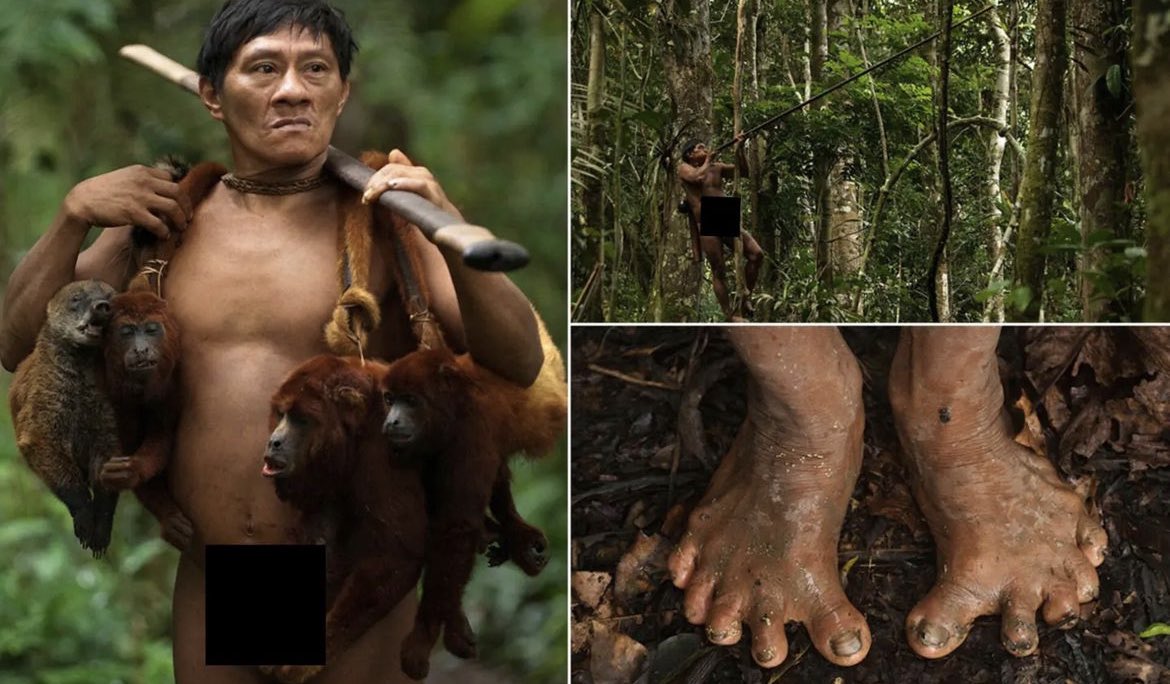
The Huaorani tribe, also known as Waorani or Waos, is an indigenous group residing in Eastern Ecuador within the Amazon rainforest. This isolated tribe, consisting of approximately 4,000 members, has a unique cultural and linguistic heritage. Their language is distinct and unrelated to any other known tongue, including Quechua, which is commonly spoken in Ecuador.
Due to their longstanding practice of tree climbing, a crucial skill for their way of life, the Huaorani people have experienced physical adaptations in their feet. The tribe primarily relies on hunting monkeys and other small game using spears and blow guns as a major food source. The combination of a limited gene pool, constant exposure to the challenging environment, and the necessity of climbing trees has resulted in the flattening of their feet. Some individuals within the tribe even exhibit the presence of six toes on each foot and six functional fingers on each hand. Interestingly, the structure of their feet undergoes changes over time, starting with straight toes at birth.
It is worth noting that the Huaorani tribe is not the sole example of human adaptation to specific environments. Certain tribes in Malaysia, for instance, have developed the ability to stay submerged underwater for extended periods to fish for pearls. Their lungs have evolved to process oxygen more efficiently in order to support this activity.
Moreover, the emergence of white skin in early humans who migrated to northern Europe can be attributed to the reduced sunlight in that region. White skin has a greater capacity to absorb vitamin D compared to dark skin, thus facilitating its production despite the limited sunlight.
In general, human feet may gradually become flatter over time when exposed to comparable environments, as the toes tend to spread out to provide enhanced grip and balance.
Can you see the snake?
Leanne Cooke photographed a deadly venomous Stephen's Banded snake in Maitland, Australia and this is the shot.
[source: https://t.co/tAGw7ZP3CM]
I recently came across data on who we spend our time with over the course of our lives.
The insights are simultaneously inspiring and depressing.
Here are 6 graphs everyone needs to see:
Two local artists and the team’s point guard Fred VanVleet have collaborated for a design of an Indigenous-inspired Raptors jersey, with its release Friday on the National Day of Truth and Reconciliation. https://t.co/Hkcyrjg2Ie
CUPE 🔥
“Pierre is a career politician who has been collecting a six-figure salary on the public’s dime since he was 24, and he’s spent every minute of his time in office fighting against fair wages, good pensions and a better life for working people.”
https://t.co/DrbdxzmohJ







![Rainmaker1973's tweet photo. Can you see the snake?
Leanne Cooke photographed a deadly venomous Stephen's Banded snake in Maitland, Australia and this is the shot.
[source: https://t.co/tAGw7ZP3CM] https://t.co/maEYsZ0mm2](https://pbs.twimg.com/media/Fo8KiOuXsAEUVRx.jpg)


