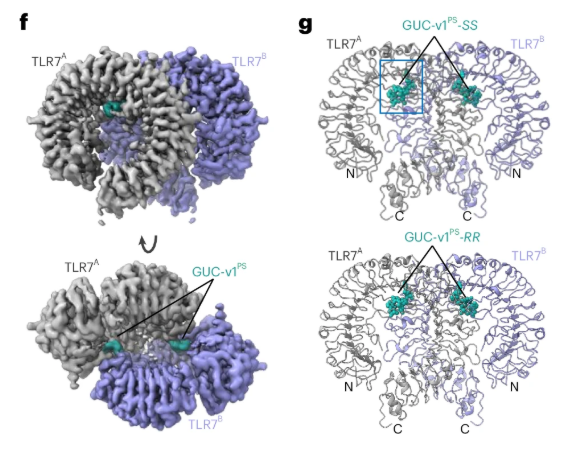
Ever wondered what happens to oligonucleotide therapeutics once they start to break down? In our new bioRxiv preprint, we provide a molecular dissection of how chemically modified 3‑base oligonucleotide fragments engage TLR7 and TLR8. Check it out! https://t.co/gndM4qCzlB
Researchers led by Drs. Michael Gantier (@GantierLab), Toshiyuki Shimizu, and Ben Corry (@CorryLab) show that modified #RNA from our own cells naturally blocks TLR7 and TLR8, preventing harmful immune activation.
📖: https://t.co/7PqpIURTMG
🔊: https://t.co/9WF95DtNbw
Recognition of RNA fragments by TLR7 and TLR8 helps to initiate the innate immune response.
This work redefines TLR7 and TLR8 sensing by introducing 2′-OMe guanosine as a natural immune checkpoint for their activation. @NatImmunol
🔗 https://t.co/C1ZymIb20y
@sciencescanner @3DiMMUNE We don't know yet. However it is conceivable that receptors such as TLR7/8 needed a built-in off-switch in their LRRs, and that it would have then evolved as a sensing mechanism when nucleic acids accumulate.
I am delighted to share our characterisation of natural antagonism of TLR7/8 in Nature Immunology. We propose a model where 2’O-Methyl RNA fragments keep TLR7/8 in check, preventing autoimmunity. > https://t.co/Kh8y8C8pMw
How does your immune system tell pathogenic RNA from your own, even though they’re made of the same stuff? Our latest paper with
@GantierLab
shows some self RNA act as an off switch preventing autoimmunity in the absence of pathogens. 🧬🔬⭐ https://t.co/GyNvzuVaJj
@3DiMMUNE We propose it is the accumulation of agonistic fragments (short RNAs and nucleosides which work cooperatively) which outcompetes the basal natural antagonism.
Excited to share our latest work on how microRNA length variants can be leveraged as disease biomarkers. Congratulations to Alex McAllan for all her work on this!
https://t.co/GIb9rvYiHU
For all RNA scientists in the Melbourne area: Join us at the next RNA Victoria Minisymposium on 27th of March at the Hudson Institute of Medical Research - details about the speakers and free registration at https://t.co/7mtGOwNT5A
We are thrilled to announce the official launch of the #RNAte Platform at @Hudson_Research, delivering huge advances in the development of #mRNA-based therapies. 🥳💪🏽
Read more about this revolutionary platform: https://t.co/uYc1LD40vc
@VicGovAu @VicGov_DJSIR
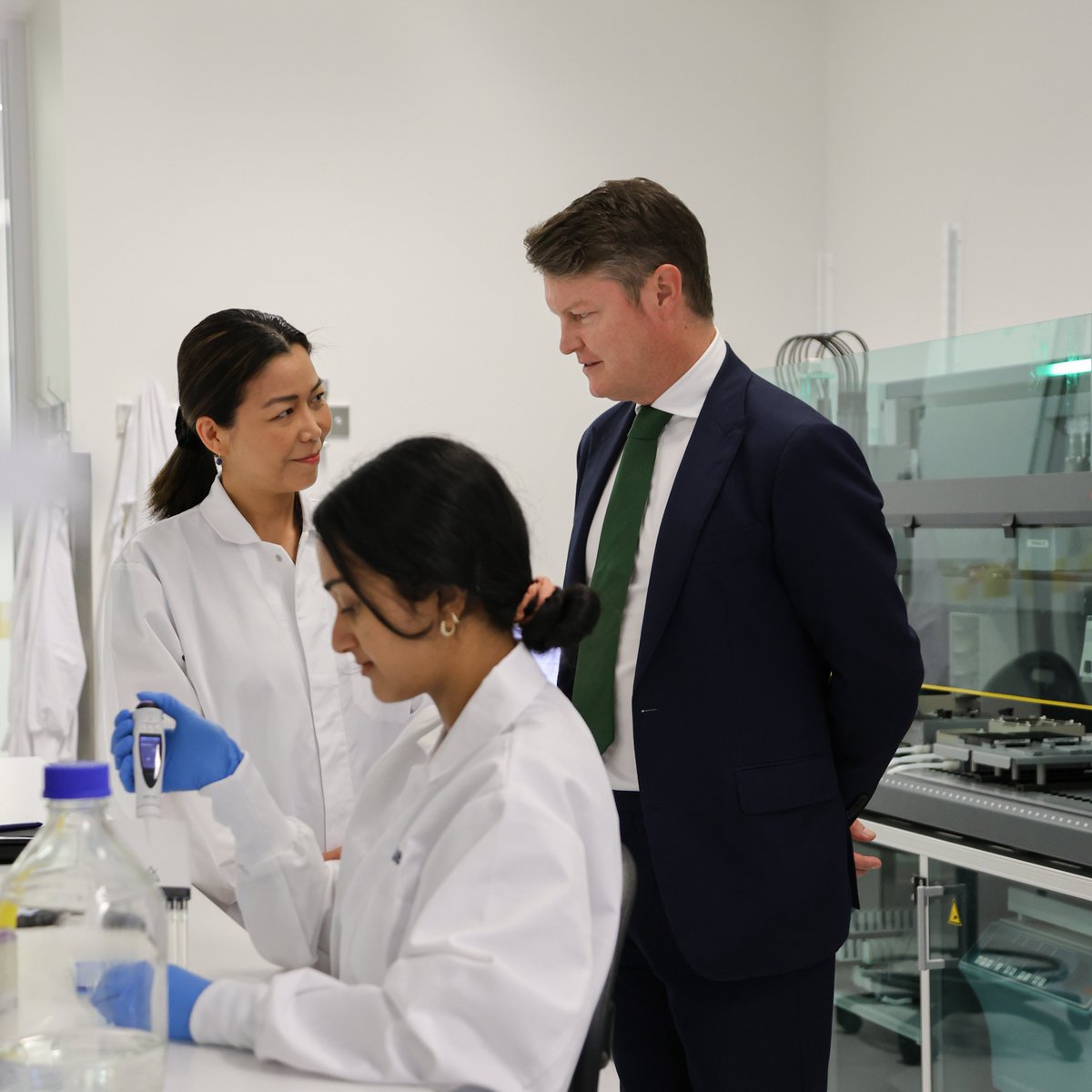
We recently welcomed Deputy Premier & Minister for Medical Research, The Hon @BenCarrollMP to Hudson Institute! 🙌
Minister Carroll went behind the scenes with some of our researchers, including our CEO & Director Prof Elizabeth Hartland, to learn more about our research.🔬
Exciting data to build our research program on thromboinflammation! So proud of this first research paper! Thanks to the many students and collaborators who contribute to this story! https://t.co/B8eDGLfETn
Our latest work, out today in @PLOSBiology suggests that not only do mammalian cells absorb bacteriophages, but they appear to use them as a resource to enhance growth!
https://t.co/6oGAXcD4Jp
This work was led by @marion_bichet and out on World Phage Week! #WorldPhageWeek