The transition from being no-coiner to coiner happen to me back in 2017.
1/n
BTC just hit $1000 (which I think was previous all time high) and some of the weird ones in my network started talking about ICOs.
Even if i compare all the cycles up to this point, I think experiencing the 2017 cycle first hand was probably one of the craziest experience I lived through.
I haven't gone through the glory hole experience personally but one night at 2am trying to deposit $ETH to a random address hoping they would send a token to my address, I thought "maybe this is what it's like" little bit scary and little bit exciting.
And one thing that I was lucky enough to have during all my years in crypto is "A Tribe." People who are as degenerate as you are and understand that this insanity is the new norm. Through numerous cycles this has always been the key for me to stay in the industry. The comfort knowing that if I'm insane for going all-in, then at least if everything goes bust I'll have friends that are just as dumb that I can laugh/cry with.
So when $BTC ETF was approved, I thought maybe new people entering the industry would benefit from having their own tribe.
Hence The Coiners @Coiners_io
Today a crazy quantum story just got wilder.
On March 31, the Google Quantum AI team published a landmark result on Shor's algorithm for elliptic curve cryptography. Technically, the paper was a bombshell: a dramatic 10x improvement over the state-of-the-art. As a stunt and wakeup call to the blockchain space, those optimisations were illustrated on secp256k1, the elliptic curve underlying Bitcoin and Ethereum signatures.
But perhaps the most striking part of the paper was sociological, not technical. Instead of following standard academic process, the optimisations were kept secret, hidden behind a zero-knowledge (ZK) proof. Google's accompanying blog post mentions they "engaged with the U.S. government". The ZK proof demonstrates the existence of algorithmic improvements without leaking details. Academic censorship with ZK, a historic first!
As a co-author of the Google paper I witnessed some of the context surrounding this censorship. To be honest, multiple aspects of that context don't sit well with me. As much as I believe the general public ought to know more, I am limited in my ability to whistleblow. Though let me be clear about one thing: the Google team's professionalism has been absolutely exemplary, and they deserve nothing but praise.
Censorship has a way of backfiring. The Streisand effect, where an attempt to bury something only draws more attention to it, is exactly what's unfolding today. First, Google's key optimisation has been rediscovered by the French. And in a thrilling turn of events, a collaborative Shor-at-home challenge just launched. The initiative, available at ecdsa[.]fail, breached a new Shor world record in a matter of hours.
Let's start with the rediscovery. Just two months after Google's paper, French quantum expert André Schrottenloher cracks the main secret optimisation. His paper, titled "Optimized Point Addition Circuits for Elliptic Curve Discrete Logarithms", landed on the arXiv today. Big congrats to André, who beat several other nerdsnipped experts to it. In a blog post also published today, Craig Gidney, the world expert on Shor optimisations, revealed that he'd been sitting on this very optimisation for a whole year under censorship pressure.
Interestingly, André missed a handful of minor optimisations, both from Google's original publication and from improvements found since. It's plausible there's still plenty of juice left to squeeze out of Shor, and this is exactly what the ecdsa[.]fail challenge is about. The verifier program developed for the ZK proof does double duty, automatically filtering for valid submissions. Dozens of compounding small and micro improvements are rolling in. As of the time of writing there's an 8.4% improvement to Google's circuit, as measured by the product of logical qubit count and Toffoli gate count. Nice!
The nerdsnipping ran deeper than anyone expected. Over the last few weeks it became clear it extended well beyond André and other quantum experts. Behind the scenes, a small army of amateurs quietly got to work. Inspired by Karpathy-style autoresearch, they turned AI on Shor. Ironically, the verifier program for the ZK proof makes an ideal reward function for AIs. The barrier to entry for this modern style of research is refreshingly low, with several non-experts, even a teenager, finding nice optimisations. Get in touch if you'd like to join a Telegram group with fellow autoresearchers :)
Part 2: neutral atoms and qday
The story doesn't end with Google. On the same day Google went public, a stealthy startup called Oratomic published its own Shor paper in a coordinated release. It made a splash, ultimately becoming the most upvoted paper on scirate[.]com, a website ranking arXiv papers.
Oratomic's claim was wild. By building on Google's logical optimisations and applying custom physical optimisations for neutral atoms, they claimed just 10K physical qubits were sufficient to run Shor's algorithm on secp256k1. That number is mind-bogglingly low.
Knowing essentially nothing about neutral atoms when Oratomic's paper landed, I was intrigued and decided to learn more about the tech. I fell straight down the rabbit hole and spent a couple hundred hours on the topic. I got a little obsessed and watched every YouTube video I could find and spoke to a bunch of experts.
My conclusion? The tech is real, very real. Even Google recently decided to start a neutral atom lab, a notable pivot from their sole focus on superconducting qubits. If you care about qday, i.e. the day a quantum computer will break the first piece of cryptography in production, neutral atoms demand your attention. I shared some of my learnings on Shor and neutral atoms in a 30min talk at the ZKProof cryptography conference. You can find it on YouTube by searching "zkproof neutral atom".
Here's an interesting observation about this duo of breakthrough papers: neither Google nor Oratomic say a word about what their results mean for qday. No timelines. Zero. Nada. That is especially baffling given that the whole point of whitehat quantum cryptanalysis is to inform qday estimations and help the general public make good decisions.
So let me attempt to partially fill the silence, similarly to what Scott Aaronson did in his April 29 post. Given everything I know, including scary non-public information, I now put the odds of qday by 2032 at 50%. 10% by 2030.
Anecdotally, the US government has its own date: 2035. Originating at the NSA and later adopted by NIST, it's when branches of the US government will be disallowed from using quantum-vulnerable cryptography. In plain language: with hindsight, that date is a joke and should be discounted entirely. I don't see how NIST avoids being forced to pull it forward by years.
Part 3: post-quantum cryptography
There are good reasons to sound the alarm today, but please do not panic. Rushing carelessly towards immature post-quantum cryptography is a recipe for disaster. IMO a good target date for migration is 2029, roughly 3.5 years out. 2029 happens to be the date selected by Google, Cloudflare, and the Ethereum Foundation.
These days most of my time goes to safely migrating Ethereum towards post-quantum cryptography as part of the broader lean Ethereum effort. There's a lot to do. We need to rip out and replace BLS signatures at the consensus layer, KZG commitments at the data layer, and ECDSA signatures at the execution layer.
The plan to get there is compelling, and is based on hash-based cryptography. Within the Ethereum Foundation we've developed a Swiss army knife called leanVM (github[.]com/leanEthereum/leanVM) powered by the magic of hash-based SNARKs. Thanks to truly exceptional work by Emile, Thomas, and others, its performance is derisked. Regarding security, leanVM is a jewel, a minimal zkVM crafted for end-to-end formal verification and maximum security.
Want to help? There are two $1M initiatives. First, the Proximity Prize (proximityprize[.]org). Solve a long-standing mathematical conjecture in coding theory, improve hash-based SNARKs, and go home a millionaire. Second, the Poseidon Initiative (poseidon-initiative[.]info), offers $1M for breaking Poseidon, the SNARK-friendly hash function.
Building apps has never been easier.
With Sites, Codex can turn your work, ideas, and plans into an interactive website or app your team can explore, use, and share with a URL.
Rolling out to Business and Enterprise plans, before expanding more broadly.
Following breakthrough results, we’re bringing longevity medicine to human trials.
We’ve raised a $435M Series C led by @foundersfund to make it happen.
Reprogramming cell age has the potential to create more healthy years for everyone. We're closer than ever to realizing it.
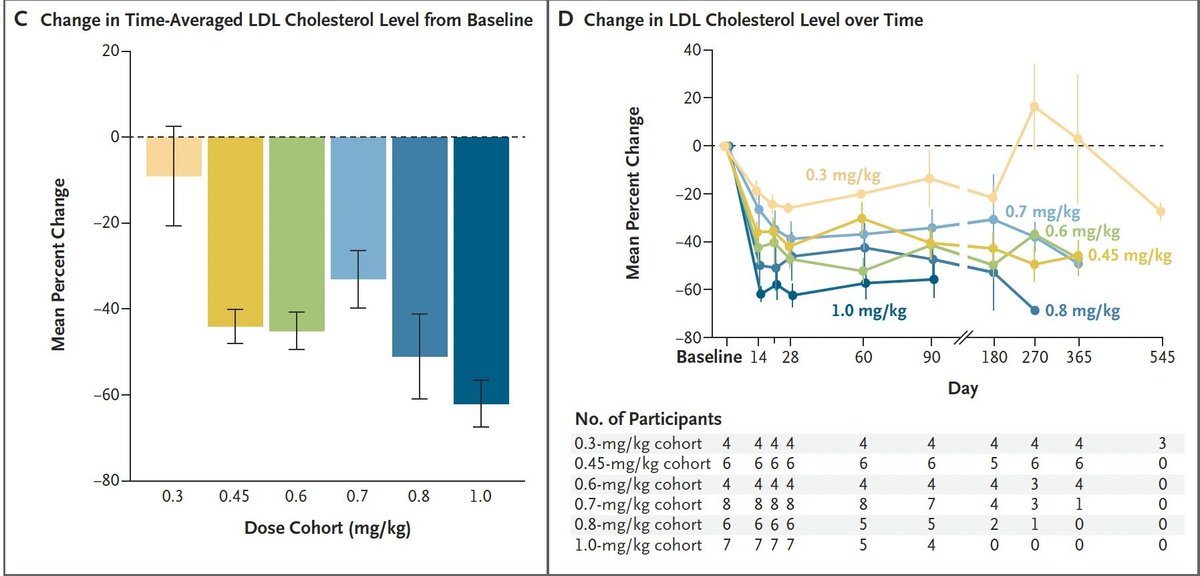
Eli Lilly has done it.
They've gone and made what seems to be a powerful, permanent gene therapy for LDL cholesterol.
That means they'll be able to effectively prevent most heart disease with a single infusion!
Earlier today, a malicious actor gained unauthorized access to Drift Protocol through a novel attack involving durable nonces, resulting in a rapid takeover of Drift’s Security Council administrative powers.
This was a highly sophisticated operation that appears to have involved multi-week preparation and staged execution, including the use of durable nonce accounts to pre-sign transactions that delayed execution.
Based on everything explored in the source code, here's the full technical recipe behind Claude Code's memory architecture:
[shared by claude code]
Claude Code’s memory system is actually insanely well-designed. It isn't like “store everything” but constrained, structured and self-healing memory.
The architecture is doing a few very non-obvious things:
> Memory = index, not storage
+ MEMORY.md is always loaded, but it’s just pointers (~150 chars/line)
+ actual knowledge lives outside, fetched only when needed
> 3-layer design (bandwidth aware)
+ index (always)
+ topic files (on-demand)
+ transcripts (never read, only grep’d)
> Strict write discipline
+ write to file → then update index
+ never dump content into the index
+ prevents entropy / context pollution
> Background “memory rewriting” (autoDream)
+ merges, dedupes, removes contradictions
+ converts vague → absolute
+ aggressively prunes
+ memory is continuously edited, not appended
> Staleness is first-class
+ if memory ≠ reality → memory is wrong
+ code-derived facts are never stored
+ index is forcibly truncated
> Isolation matters
+ consolidation runs in a forked subagent
+ limited tools → prevents corruption of main context
> Retrieval is skeptical, not blind
+ memory is a hint, not truth
+ model must verify before using
> What they don’t store is the real insight
+ no debugging logs, no code structure, no PR history
+ if it’s derivable, don’t persist it
🚨 Do you understand what happened in AI in the last 72 hours?
> OpenAI killed Sora (the standalone video app) 15 months after launch. "Side quests" are cancelled. Back to enterprise.
> OpenAI also shelved its planned erotic chatbot indefinitely. Even Big Tech has a "too weird" line.
> The White House dropped a national AI legislative framework: preempt state AI laws, push ‘AI dominance’, and put age-assurance/child safety front + center.
> Same framework: no new AI super-regulator… but a federal standard that bulldozes the patchwork.
> Also: data centers should generate power on-site so ratepayers don’t eat the bill. (AI is now an energy policy.)
> OpenAI (per FT) wants to almost double headcount to ~8,000 by end of 2026. If you thought the race was slowing down…
Pick one:
A) This is focus.
B) This is panic.
C) This is politics.
Reply with A/B/C and I’ll tell you what you’re missing.
Projects are now available in Cowork.
Keep your tasks and context in one place, focused on one area of work. Files and instructions stay on your computer.
Import existing projects in one click, or start fresh.
🚨 Do you understand what happened in the last 24 hours?
> Zuckerberg killed the Metaverse after burning $80 billion on cartoon avatars nobody used
> Sam Altman took $13 billion from Microsoft then sold OpenAI's cloud to Amazon for $50 billion.. Microsoft just found out they funded their own competition
> Anthropic made an AI that takes orders from your phone and does your work while you sleep..
> X dropped a dislike button AND a mute-entire-countries button in the same week..
> YouTube asking you to flag AI slop is just Google getting 2 billion people to train their next model for free
> 93% of US jobs can now be partly done by AI.. Same week companies started giving the weakest raises since 2008
> Apple started rejecting vibe-coded apps from the App Store
> xAI is paying Wall Street bankers $100/hour to teach Grok how to replace Wall Street bankers.. They're taking the money..
> A mystery AI model appeared on benchmarks beating everything.. Developers think DeepSeek is quietly testing their next weapon
> Bloomberg asked "Is the AI bubble about to burst" the same day Nvidia said the chip market will hit $1 trillion.. One of them is dead wrong..
> The UK government backed down on AI copyright after artists revolted.. First government to flinch
> The Fed said rate hikes are back on the table and blamed AI data centers for making inflation worse
And it's only Wednesday. See you tomorrow. It'll be worse.
If you're not following me you're finding out about this stuff 48 hours late from someone who read my post
this is actually insane
> be tech guy in australia
> adopt cancer riddled rescue dog, months to live
> not_going_to_give_you_up.mp4
> pay $3,000 to sequence her tumor DNA
> feed it to ChatGPT and AlphaFold
> zero background in biology
> identify mutated proteins, match them to drug targets
> design a custom mRNA cancer vaccine from scratch
> genomics professor is “gobsmacked” that some puppy lover did this on his own
> need ethics approval to administer it
> red tape takes longer than designing the vaccine
> 3 months, finally approved
> drive 10 hours to get rosie her first injection
> tumor halves
> coat gets glossy again
> dog is alive and happy
> professor: “if we can do this for a dog, why aren’t we rolling this out to humans?”
one man with a chatbot, and $3,000 just outperformed the entire pharmaceutical discovery pipeline.
we are going to cure so many diseases.
I dont think people realize how good things are going to get





![himanshustwts's tweet photo. Based on everything explored in the source code, here's the full technical recipe behind Claude Code's memory architecture:
[shared by claude code]
Claude Code’s memory system is actually insanely well-designed. It isn't like “store everything” but constrained, structured and self-healing memory.
The architecture is doing a few very non-obvious things:
> Memory = index, not storage
+ MEMORY.md is always loaded, but it’s just pointers (~150 chars/line)
+ actual knowledge lives outside, fetched only when needed
> 3-layer design (bandwidth aware)
+ index (always)
+ topic files (on-demand)
+ transcripts (never read, only grep’d)
> Strict write discipline
+ write to file → then update index
+ never dump content into the index
+ prevents entropy / context pollution
> Background “memory rewriting” (autoDream)
+ merges, dedupes, removes contradictions
+ converts vague → absolute
+ aggressively prunes
+ memory is continuously edited, not appended
> Staleness is first-class
+ if memory ≠ reality → memory is wrong
+ code-derived facts are never stored
+ index is forcibly truncated
> Isolation matters
+ consolidation runs in a forked subagent
+ limited tools → prevents corruption of main context
> Retrieval is skeptical, not blind
+ memory is a hint, not truth
+ model must verify before using
> What they don’t store is the real insight
+ no debugging logs, no code structure, no PR history
+ if it’s derivable, don’t persist it](https://pbs.twimg.com/media/HEu2icGbEAAvoFI.jpg)