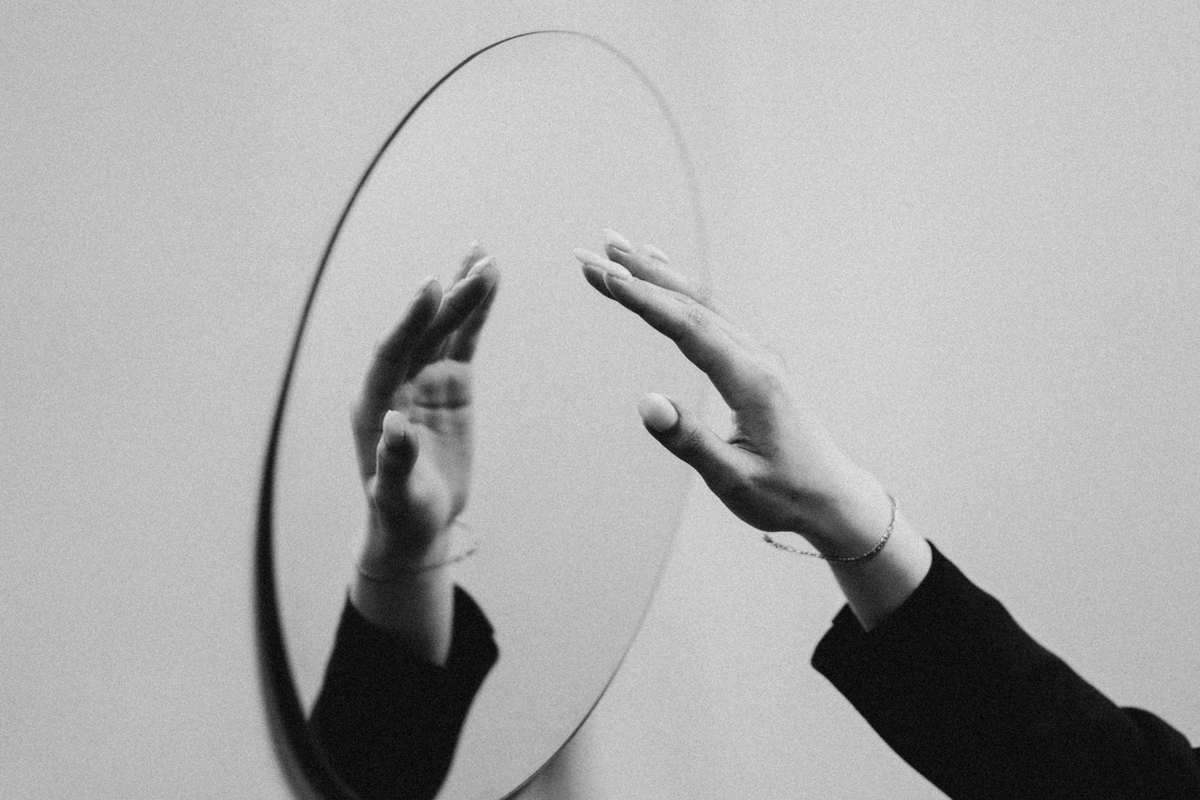
The Mirror and the Gap
Artificial intelligence offers a reflection of ourselves, yet something vital is missing from the picture.
New article by @GarrettWEnnis2 (link below):
A lot of the public discourse surrounding the issues of sex and sexuality avoids discussing the issue of what sex is ultimately*for*: promoting sports gambling.
Really sorry you feel that way, and that you don't hear the compassion in my comment. I don't disagree that people (me included!) who have struggled with experiences associated with ADHD are experiencing something real. It's just that I hope you see yourself as a whole person first, with nuance and depth. And also understand the vast collection of evidence doesn't support the idea that individuals with ADHD share a common pathology, with identifiable biomarkers or genetic architectures, or even symptom presentations.
This is how many psychiatric myths get started - someone speculates, people like the idea for various reasons, the phenomena is translated into neurobabble and suddenly its become a fact.
@dremilyanhalt I usually find this is code work for hyper-intellectulizer, some insights they have into themselves can be profound but they're bled dry of true recognition or meaning
@drjenwolkin Diagnosis is meant to roughly outline an initial treatment approach while keeping an open mind about alternative explanations for mechanism to target with psychotherapeutic support/interventions.
@graveair A little self loathing is adaptive, but not a foundation of self loathing. It has to be integrated with self-respect/love to lead to enduring change. "I have done wrong, I am weak in XYZ ways, but I deserve to try my best to be better, for myself/others/society etc."
This makes me think of Byung-Chul Han in The Burnout Society and Non-things. Experience needs duration, resistance, somewhere for attention to actually remain. When everything is frictionless, accelerated, and immediately replaceable, we don’t necessarily experience more—we move through more without much of it taking root.
Slowness gives things enough time to become part of us. A place, a person, a book, even boredom has to resist our impulse to immediately move on before it can really become an experience.
You can spend years trying to become impressive enough to never get rejected again. Or, you can accept that rejection is part of being seen, and go after the life you really want.
People in the west have been using psychedelics for introspection and psychological healing for decades, millenia for indigenous cultures. I would wait to make such stark assumptions.
People haven't been trying to modulate organo-electricity with military grade magnets out in wild, ever.
The diminishing effects of psychological treatment are a consequence of the use of naive statistical methods and winners curse/regression to the mean effects.
when anne carson said "I remember that sentence driving at me in the dark like a glacier. I felt like a ship going toward the South Pole and then all of a sudden a glacier comes zooming out of the dark" and when kafka said "A book must be the axe for the frozen sea within us"
This makes me think of Fisher’s hauntology—the sense that we were living among the ghosts of futures that never arrived, unable to imagine anything genuinely new.
Lately it feels like some capacity to dream is returning, but in a fractured way. Different countries, communities, subcultures, even different parts of ourselves seem to be imagining futures that barely touch each other.
There’s something hopeful in the return of possibility, but also something lonely about having to dream without a shared world to dream into.
@DrDoyleSays Adam Phillips in On Giving Up writes, “We give things up when we believe we can change; we give up when we believe we can’t.”
Sometimes starting over isn’t failure at all. It’s giving up the version of things that wasn’t working so there’s room to find out what else might.