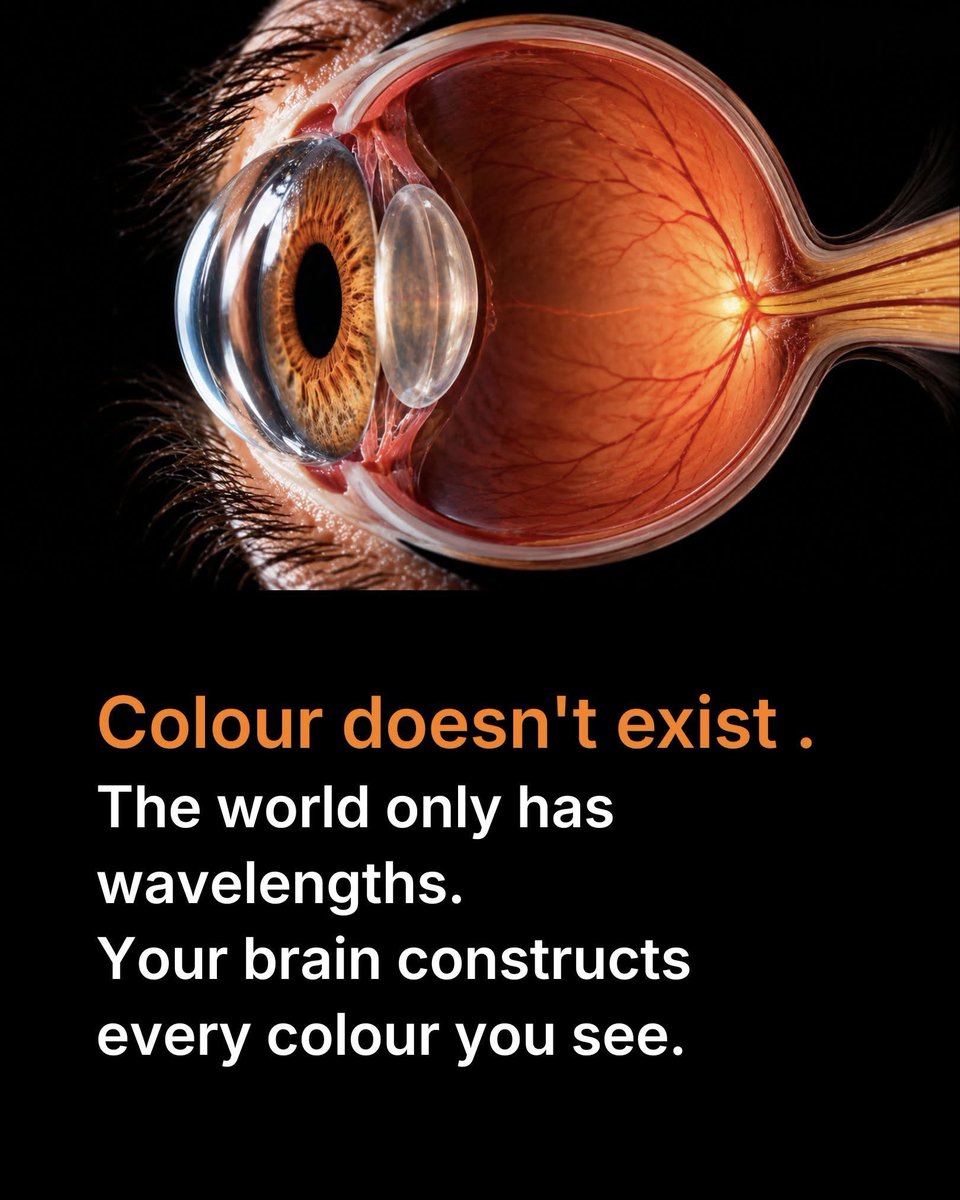
🧠 Your Brain Creates the Colours You See Every Day
The colours around you are real—but the experience of colour happens inside your brain.
When light enters your eyes, tiny cells in your retina called cone photoreceptors detect different wavelengths of light. Humans have three main types of cones, each sensitive to a different range of wavelengths.
Your brain compares the signals from these cones and turns them into the colourful world you experience every day.
Here's the fascinating part: light has wavelengths, but colour is a perception created by your nervous system. The sky's blue, a flower's red, and a rainbow's colours are experiences your brain builds from information received by your eyes.
You don't simply see the world as it is. Your brain interprets the light reaching your eyes and creates the colours you experience.
Source: OpenStax. (2025). Introduction to behavioral neuroscience: The retina.
Children with Autism were exposed to significantly higher concentrations of 19 toxic chemicals during early childhood, tooth analysis reveals.
Unlike traditional blood or urine tests that capture only brief snapshots of exposure, baby teeth serve as a biological time capsule. Developing from early pregnancy through early childhood, primary teeth absorb and retain trace compounds present in a child's environment.
In a recent pilot study conducted by researchers at the UT San Antonio Health Science Center, scientists examined shed teeth from 22 children diagnosed with autism and 16 neurotypical peers, uncovering an average of 300 chemical compounds per child across both groups.
When evaluating 60 frequently detected compounds, researchers found that 57 occurred in higher concentrations among children with autism, with 19 meeting statistical significance for elevated levels.
Remarkably, 39 of these substances are known developmental toxicants or hormone disruptors found in daily items like baby bottles, plastics, and fragrances.
While the authors emphasize that these findings do not prove a direct causal link, the chronic biological exposure documented in primary teeth highlights an urgent need for broader research into environmental chemical risks during early child development.
source: Heilbrun, L. P., Shay, A., & Gimeno Ruiz de Porras, D. (2026). A pilot autism case-control study of pesticides and plasticizers in shed baby teeth. Neurotoxicology and Teratology, 117, 107710.
43 years ago today: The Day The Pride Won Bedlam.
Trailing Oklahoma State 20-3 in the fourth quarter, band director Gene Thrailkill was escorted off the field by Stillwater Police for not having a sideline pass.
Thrailkill told the Pride to "start playing and don't stop until we're ahead!"
It’s estimated The Pride played “Boomer Sooner” around 300 times that day. It helped rally OU for an unforgettable 21-20 come-from-behind win.
After the game, Barry Switzer awarded a game ball to The Pride.
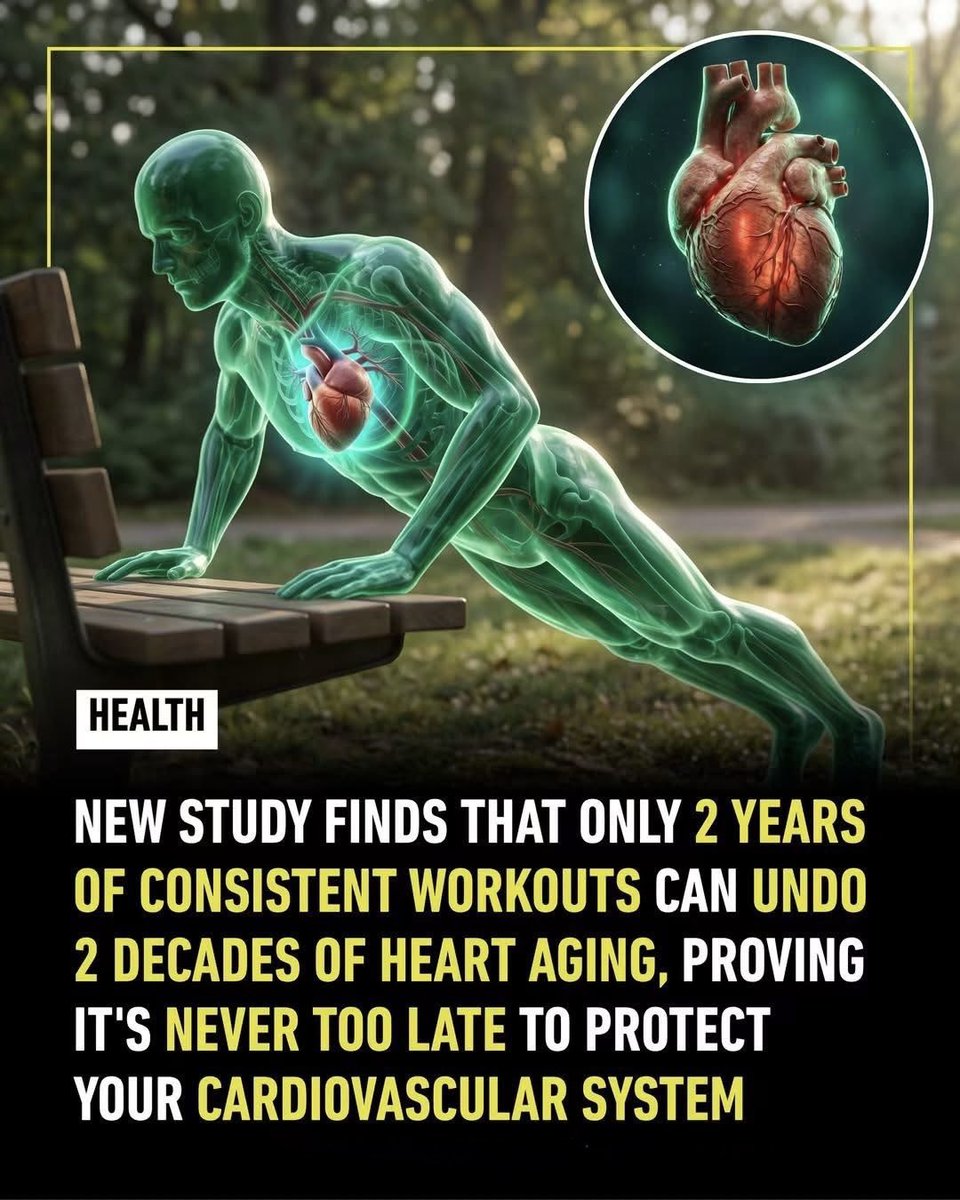
🚨 THE FREE HEART HACK SCIENCE DISCOVERED
What if one genuine laugh could do more for your heart than you ever imagined?
Research suggests that real laughter increases blood flow, helps blood vessels relax by releasing nitric oxide, and lowers stress hormones like cortisol.
These changes may support healthy blood pressure and overall cardiovascular health, with benefits lasting up to an hour.
Sometimes, spending time laughing with the people you love is more than just fun—it may be good medicine for your heart.
Source:
Miller, M., et al. (2005). Journal of the American College of Cardiology. University of Maryland School of Medicine.
Really happy for John Mateer.
He’s taken a lot of criticism, but when OU needed him the most, he stepped up and made some big-time throws on the final drive.
And now he’s got the biggest win of his career.
Way to go, John. 🫡
🚨 YOUR FUTURE HEALTH IS BEING BUILT BY THE CHOICES YOU MAKE TODAY
A first responder sees something many people never witness up close: the devastating consequences of years of poor health habits.
The frightening part? The damage can build silently for years before the warning signs appear. By the time serious symptoms show up, the consequences can be life-changing.
But here's the hopeful side: your choices today can change your tomorrow.
Moving your body, eating a balanced diet, getting enough sleep, and avoiding smoking can help lower your risk of serious diseases. You don't have to change everything overnight. Small, consistent steps can make a real difference.
Don't wait for a health scare to become the reason you finally change. Start today, while you still have the chance. Your future self may thank you for it.
Source:
World Health Organization. (2020). WHO guidelines on physical activity and sedentary behaviour.