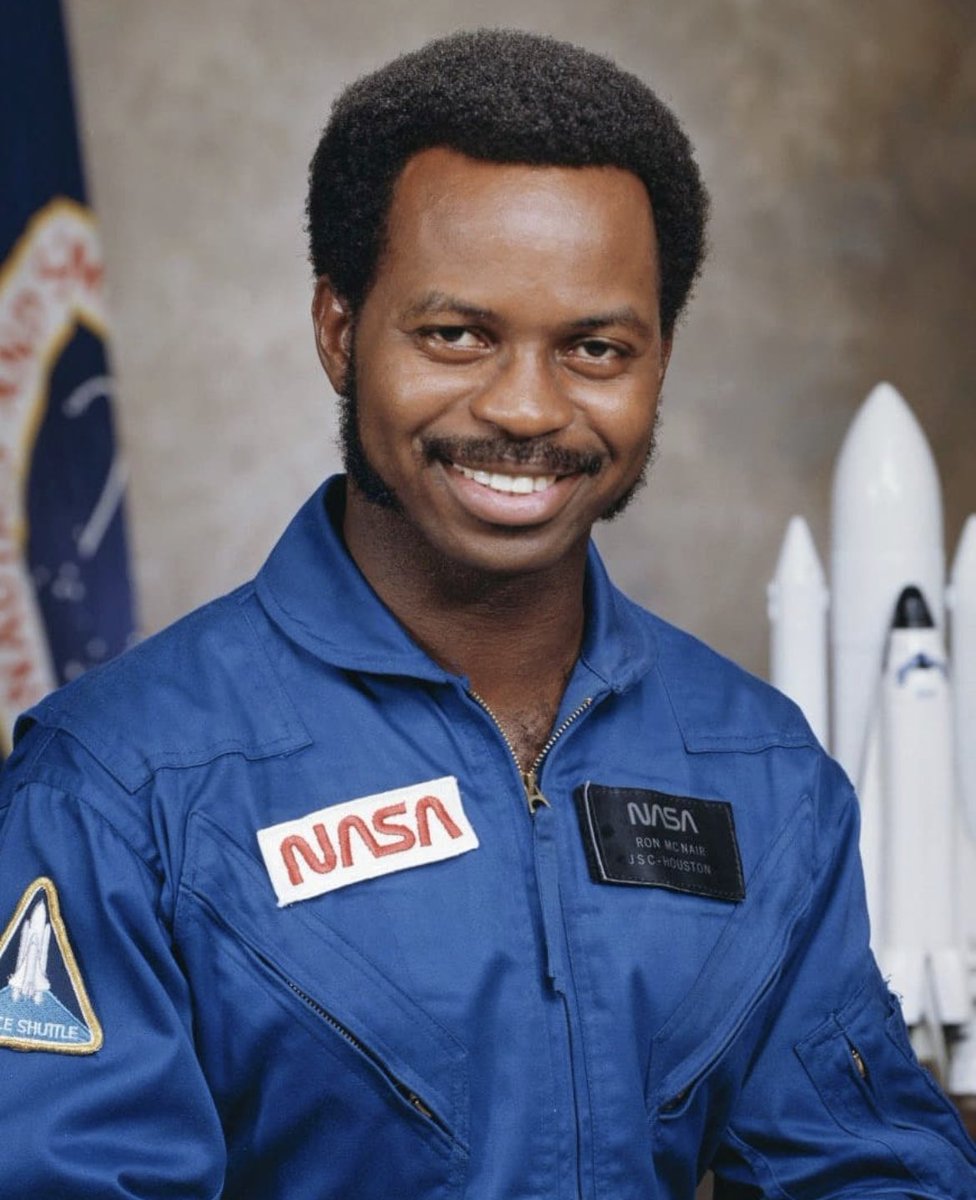
In 1959, 9-year-old Ronald McNair went to a public library in Lake City, South Carolina because he was looking for more advanced books on science.
Ronald's older brother, Carl, describes what happened next:
“So, as he was walking in there, all these folks were staring at him - because they were white folk only and they were looking at him and saying, you know, 'Who is this Negro? So, he politely positioned himself in line to check out his books. Well, this old librarian, she says, 'This library is not for coloreds.' He said, 'Well, I would like to check out these books.' She says, 'Young man, if you don't leave this library right now, I'm gonna call the police.' So he just propped himself up on the counter, and sat there, and said, 'I'll wait.'”
Ronald McNair eventually went on to get a PhD in Physics from MIT and was one of the 7 astronauts onboard the space shuttle Challenger when it was destroyed in flight in 1986. He was only 35 years old.
Today, the library that refused to lend him books is now named after him.
Harsh Truth: Your big goals are destroying your happiness.
3 reasons why (and what to do about it):
1. Extrinsic Focus
In a meta-analysis of 105 studies covering over 70,000 participants, researchers found that valuing and prioritizing extrinsic goals (over intrinsic goals) is a recipe for lower well-being.
My observation is that Big Goals tend to be extrinsic in nature:
• Promotion, title, or raise
• Financial achievement
• Hitting a specific follower count
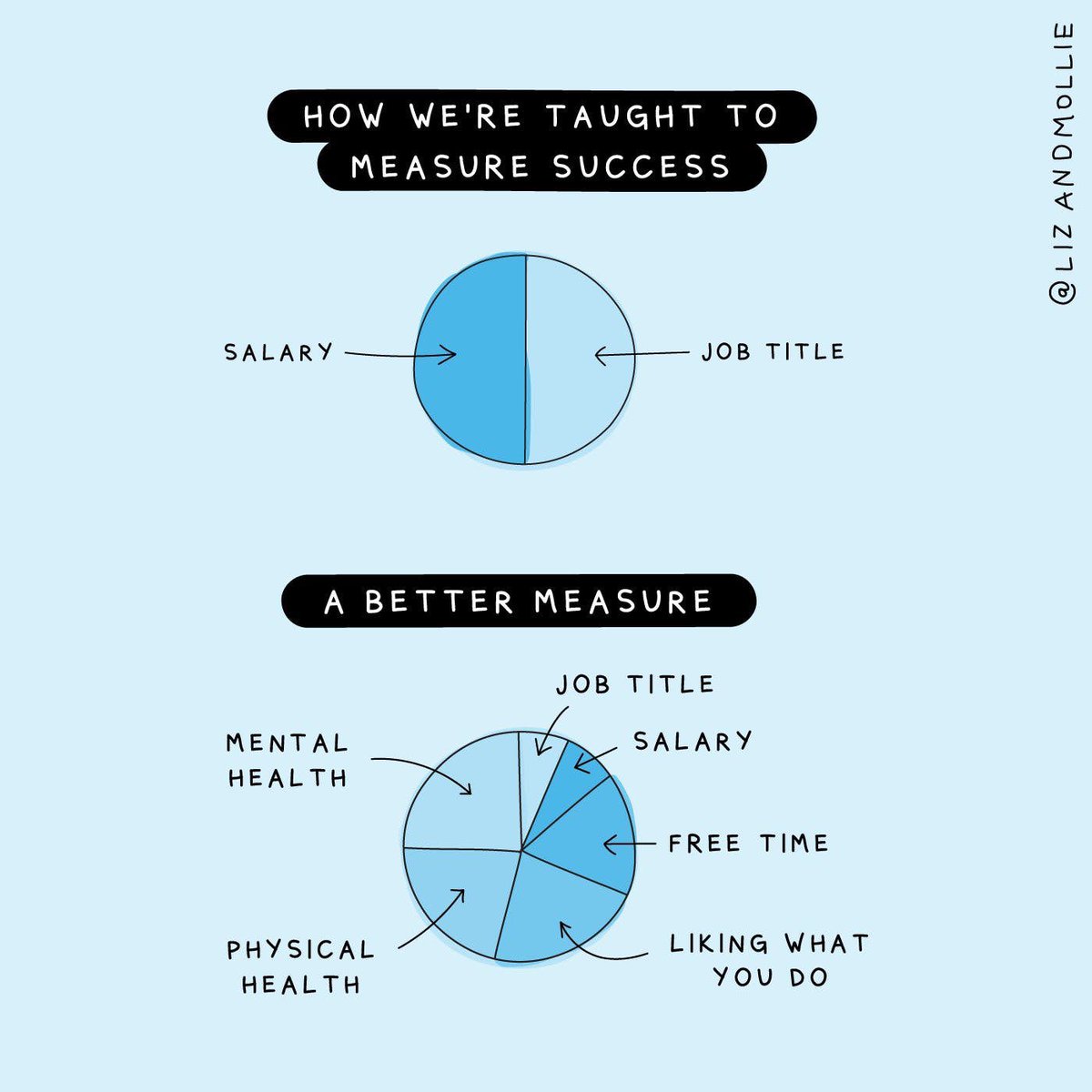
These Big Goals become how we define success for ourselves and our lives.
Achieving the last Big Goal is never enough, as we simply reset our scoreboard and need to achieve the next Big Goal to feel like a success.
By defining our success on the basis of these extrinsic goals, we are setting ourselves up for unhappiness.
2. The Arrival Fallacy
How many times have you assumed that your lasting happiness was on the other side of some Big Goal (a promotion, a pay raise, another degree, etc.)? How many times have you been proven wrong in this assumption?
The Arrival Fallacy is the term used to describe the false assumption that achieving a Big Goal will create that lasting happiness in our lives.
It's a "When, Then" psychology that says "when I achieve X, then I'll be happy." The reality is that achievement is not a lasting source of happiness.
3. Purpose Dissipation
When you are hunting a Big Goal, you wake up with a clear purpose.
After you achieve it, you wake up with no clear reason to push yourself. You feel a bit lost, as you may not know what you're working on or towards that day.
The focus on a singular Big Goal creates a purpose, but also destroys it once the Big Goal is achieved.
Ok, so what can we do about it?
Set direction with Big Goals, but focus on Micro Goals.
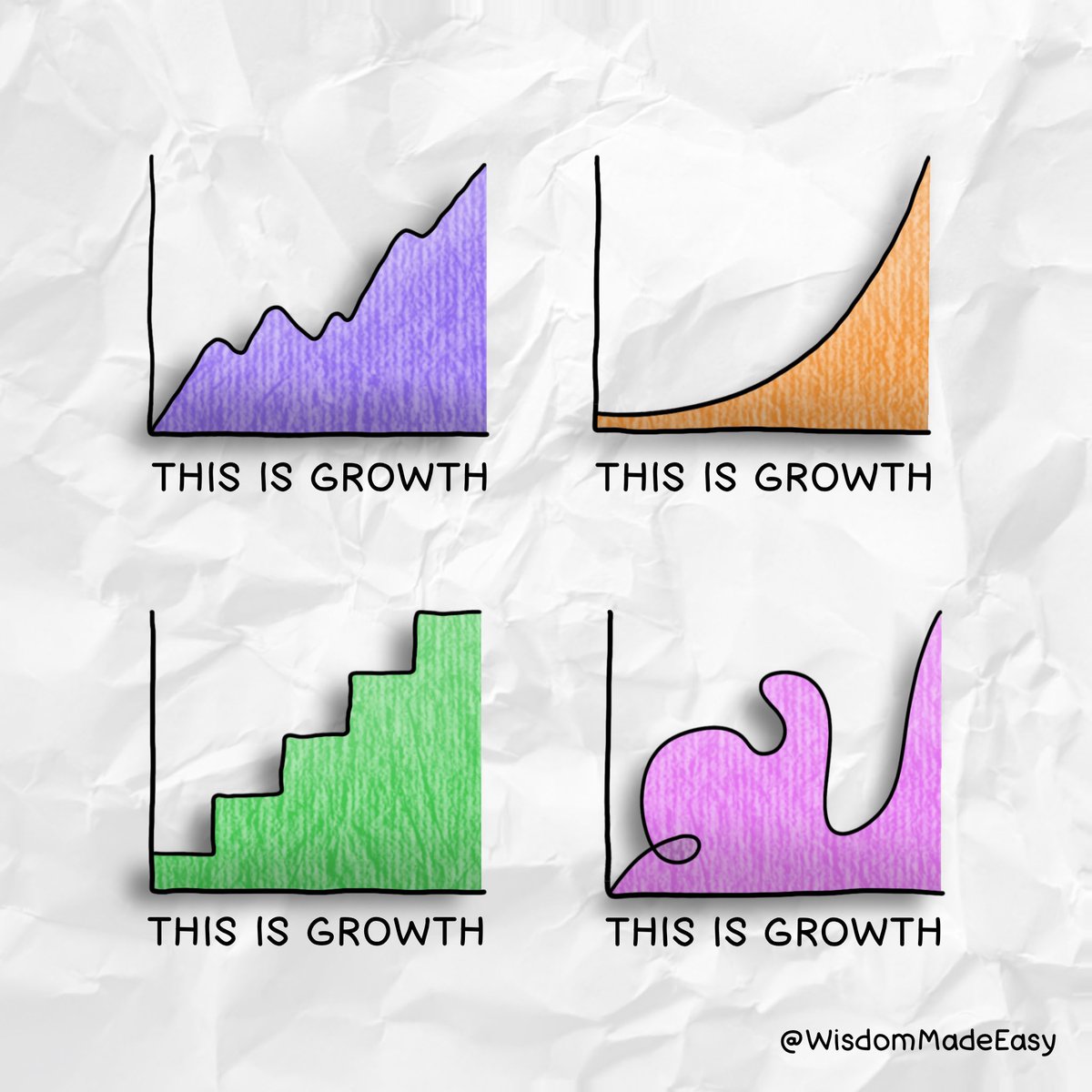
Micro Goals are small, incremental growth and development targets. They aren't the giant leaps, but the small steps that happen along the way.
Micro Goals solve the three main pain points of Big Goals:
• More intrinsic by nature—partially because they aren't big enough to share publicly for clout or external affirmation. They refocus you internally.
• Small enough that you don't tie some grand happiness assumptions to their achievement. They keep you motivated to grow, without the pressure that they will individually change your life.
• Continuous vs. discrete. There is no big purpose let down, because there is always another Micro Goal on the near-term horizon that you can use for motivation.
My go-forward approach is as follows:
1. Establish Big Goal to set direction.
2. Establish Micro Goals to set daily focus.
3. Adjust and course correct based on evidence.
Balancing the Big with a focus on the Micro is where I plan to thrive. Small is beautiful. A lot of small wins add up to something spectacular.
Remember: Ordinary becomes extraordinary.
***
If you enjoyed this or learned something, follow me @SahilBloom for more in future!
😉 Did you know? HSV (Hue-Saturation-Value) is the most common color model used in color pickers such as the one found in Google tools, as well as in many other office-like programs.
#datavisualization#dataviz#colors#hsv#colorpalette
Usually when we talk about Data we do it from one or more of the following 3 perspectives: 1) the way we think about data, 2) the ways in which is digitally stored and formatted, and 3) the way programs and languages handle data.
#data#analytics#datascience
"Visual displays provide the highest bandwidth channel from the computer to the human. Indeed, we acquire more information through vision than through all of the other senses combined."
- Colin Ware
#dataviz#visualization
@PieRatio@eddelbuettel@rstatstweet Indeed. And perhaps the worst part is the frustration and headaches experienced by my students, who for the most part are non-CS folks.
#RStats#Rprogramming Does anyone know why the below comparisons fail to return TRUE in R?
x = seq(from = 0, to = 1, by = 0.05)
# the following seem to fail (at least in R 4.2.1)
x[4] == 0.15
x[7] == 0.30
identical(x[4], 0.15)
# but this one works
all.equal(x[4], 0.15)
On average, time spent
- with family peaks at <15yo
- with friends peaks at 18
- with coworkers peaks at 30
- with children peaks at 40
- with your partner peaks at 70
- alone peaks at the end
fascinating chart (ht @Alex_Radke)
If you're a long-term investor the odds of experiencing a crushing bear market and a recession are 100% yet so many act surprised and shocked when it happens.