If you love crime documentaries, watch the Big 5 cartel of the taxi industry in South Africa and how they kill for money. There they believe you don’t retire from business— you die there. The only way to rise is to kill and the players are willing to risk it all.
Kenya's illicit alcohol market is now valued at Sh203 billion, making up 60% of the total alcohol consumed.
This costs the government over Sh120 billion in lost revenue and claims over 14,000 lives every year.
One thing about this life is that it doesn't have balance. Some will be educated and never work, some will only work on contracts and nothing permanent, some will be married, some will never get married, some have got all the money but can't make children, some don't have money but God blessed them with children, some got all the money but they are suffering from different kind of diseases that stops them from eating whatever they want.
In simple terms, be grateful for whatever is going right in your life, some things are beyond your control, and lastly, don't let the expectations and standards of the society control or put pressure on you.
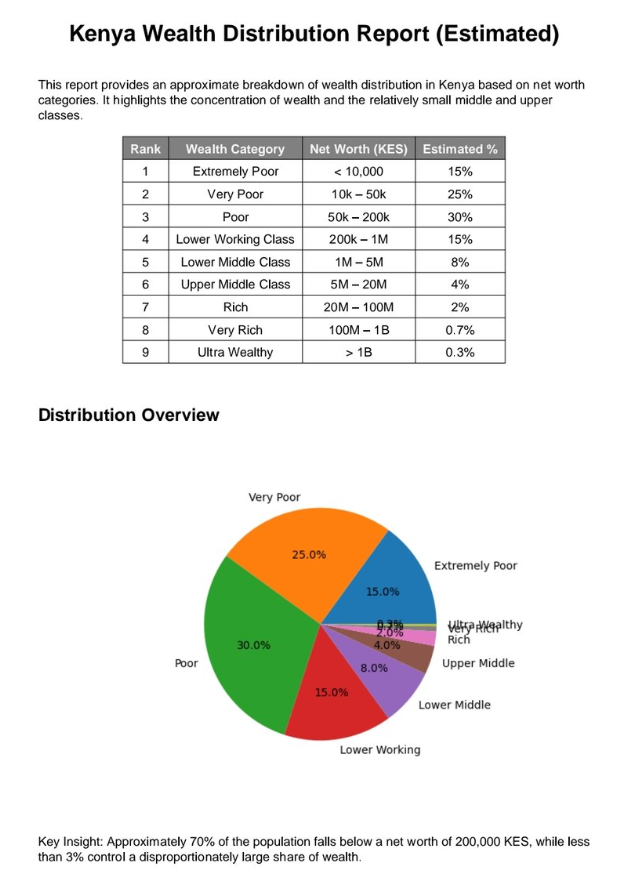
Wealth is what you don't see.
A person with KSh 20 million in productive assets:stocks, bonds, money market funds, or real estate, who drives a KSh 1.2 million Toyota is often perceived as struggling.
Meanwhile, someone with only KSh 250,000 in their current account with zero investment birth a salary may finance an KSh 8 million SUV with a six-year loan at 16% interest, and suddenly everyone assumes they're wealthy.
The first person has a strong balance sheet, growing net worth, and income-producing assets.
The second may simply have a high debt burden, negative cash flow, and a depreciating asset financed with expensive leverage.
Too many people confuse consumption with wealth, and lifestyle with financial freedom.
Kiambu County was meant to be the food supplier for Nairobi City. Its abundant arable land produced Coffee, Tea, Cereals, Vegetables & Fruits for City residents & for export.
Then Kiambu land owners with connivance of Kiambu County Government have decided to convert the County into a concrete jungle of bed-sitters!
Soon, Kenya will be importing food from Uganda to feed its City Citizens and the residents of Kiambu who were once farmers!
Without self-sufficiency in food production, a country can never be developed!
🚨 NEW: NTSA Camera Fines: Quick Guide
Speeding
• 1–5 km/h over: Warning
• 6–10 km/h: Sh500
• 11–15 km/h: Sh3,000
• 16–20 km/h: Sh10,000
⚠️ Over 20 km/h: Likely court process, not a minor offence.
Other fines
• No number plates: Sh10,000
• No inspection certificate: Sh10,000
• Seatbelt/phone use offences: Sh500–Sh3,000
Drivers have 7 days to appeal an automated fine.
The study of science, engineering, commerce, law, accounting, actuarial science is for the children of the poor & working class to slave for the children of the rich. The children of the rich study political science, philosophy, sociology and the classics.
An Arabic proverb says; “Keep your house clean like you're expecting guests.Keep your heart clean like you're expecting death.” This hits deep, a reminder we often forget.
In a society where mediocrity and theft are celebrated as achievements, the people who pursue excellence through honesty, hard work, merit, discipline, order and standards are considered wrongdoers.
Kuna mtu alisema Kenyan tech companies will bench mark with Amazon and Microsoft but when it comes to pay they bench mark with equity bank and saccos😂😂
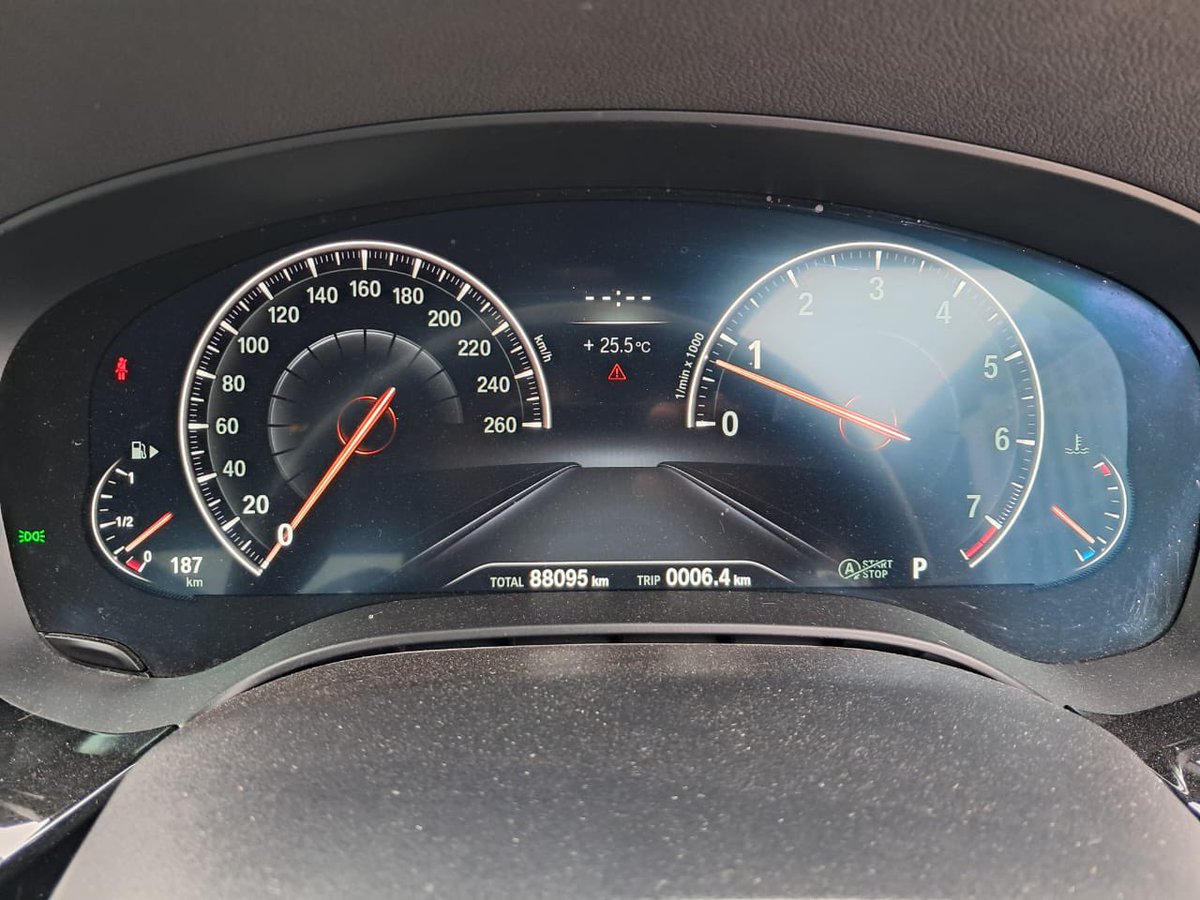
To verify Mileage for foreign used locally inspected foreign used units
Send an SMS with the message CH# your_chassis_number to 20023.
•This service allows you to verify the authenticity of the vehicle's inspection details and mileage directly from the KEBS database.
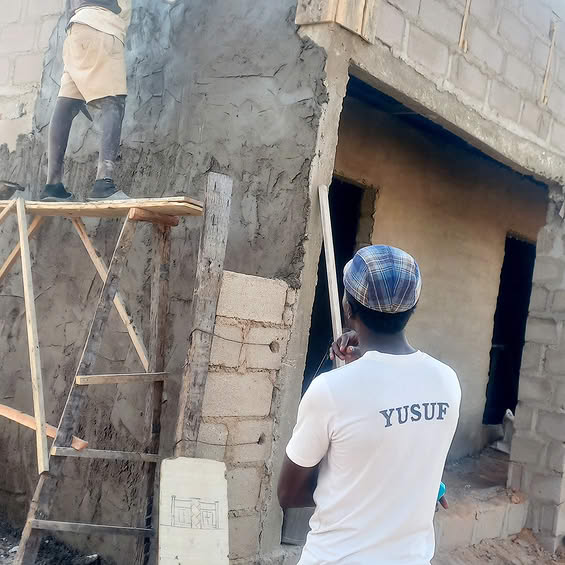
How to Know the Number of Bags of Cement Needed to Plaster a Room.
Today, I’ll break it down step by step on how you can calculate the number of cement bags required to plaster your building.
Let’s take a room of 12 × 12 feet (3.6 m × 3.6 m) with a headroom of 3.0 m.
Step 1: Surface Area
We are plastering four walls, each 3.6 m long × 3.0 m high.
Area of one wall = 3.6 m × 3.0 m = 10.8 m²
For four walls = 10.8 × 4 = 43.2 m²
Total plastering area = 43.2 m²
Step 2: Plaster Thickness
Typical plaster thickness = 15 mm (0.015 m).
Volume of plaster = 43.2 m² × 0.015 m = 0.648 m³
Step 3: Mix Ratio
Common plaster mix = 1:4 (cement : sand) by volume.
Total parts = 1 + 4 = 5
Cement portion = ⅕ × 0.648 = 0.1296 m³
Step 4: Convert Cement Volume to Bags
Volume of 1 bag of cement (50 kg) = 0.035 m³
Number of bags = 0.1296 ÷ 0.035 = 3.7
≈ approximately 4 bags of cement
Therefore, you will need about 4 bags of cement to plaster the room.
Apply this same method to other sections of your building, and you’re good to go.
If you found this helpful, kindly click the share button and let someone else learn from your timeline too.
(c) YusufA's
P.S: This is one of the most controversial takes I've seen.
Experts in the house, over to you.
A therapist who spent 40 years counseling couples on the brink of divorce wrote down the one conversation she wishes every couple would have before they get married.
She said: "If you have this conversation honestly, you will either save yourself decades of pain or build a foundation that can survive anything."
Here is the conversation…
The most ignored fact about money is that it flows toward value, leverage, and ownership—not effort. The market does not reward how hard you work; it rewards how much scalable value you create and control.
Income tied to time will always have a ceiling, but income tied to assets, systems, equity, distribution, and influence compounds. Money does not respond to need, passion, or busyness; it responds to scarcity, positioning, and impact.
Those who focus only on earning wages chase survival, while those who focus on building assets, brands, equity, and cash-flowing systems build wealth.
The uncomfortable truth is that effort alone does not create prosperity—leverage does.