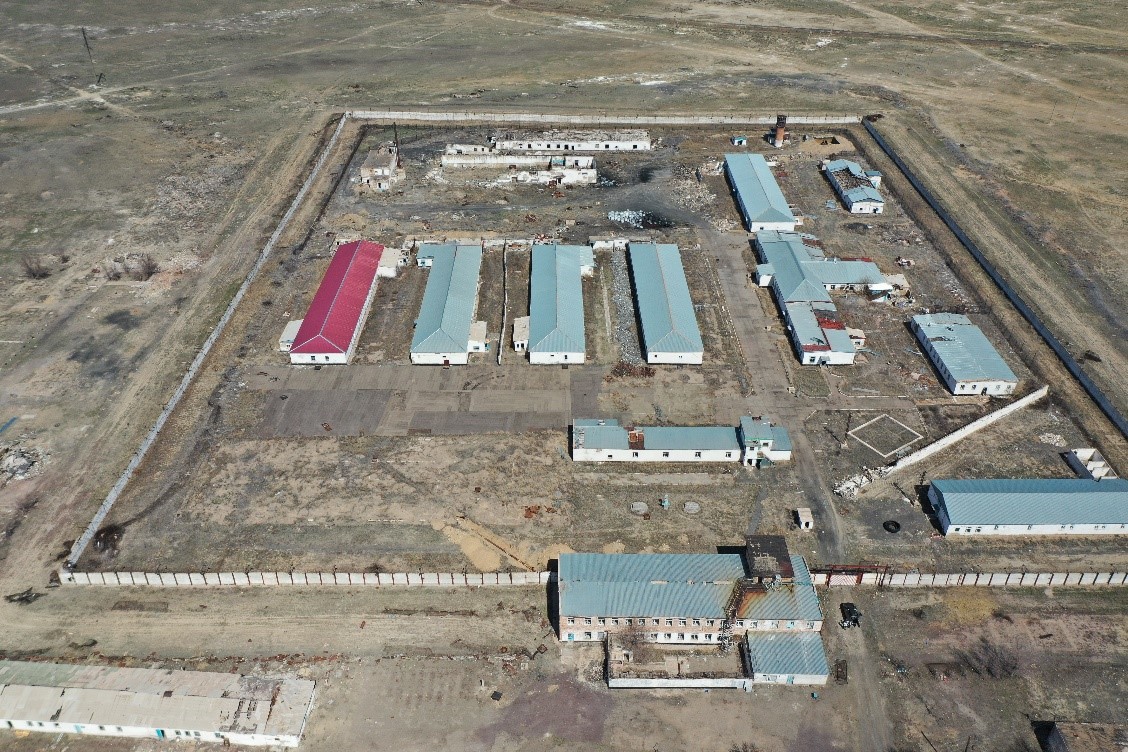
#Kazakhstan closed 15 Soviet-era penal colonies recently. The one pictured saw riots & fatal accidents in its last years. Yet communities opposed #prison closures - and for much more than economic reasons. Why? Our new article in Post-Soviet Affairs:
https://t.co/8ts2GDdYsR
@currys waited at home all day for installment and recycling services that never came. Second time now. Total disrespect for customers' time. CUR2675879339
Who remembers #Stalinist repression & how? We show a gendered pattern in #Russian families. Grandmas are keepers of family memory, recounting to often female kin. Memories are scripted around the cunning & stoicism of relatives not victimhood. Read more: https://t.co/t0KuAiat1Z
Space matters. And so are concepts. The fact that Navalny was (likely) murdered in a "penal colony" in Siberia's far north, beyond the Arctic Circle, is also part of a global history of convicts and colonialism, which has shaped much of what today's Russia is.
Really proud to have been part of this great project! And very much appreciate the invitation to bring #Kazakhstan into a global conversation about practices of #punishment@dalsantolp @LauraPiac8
The special issue Punishment in Global Peripheries is now out in Theoretical Criminology! It includes papers on Myanmar, Peru, Kazakhstan, Brazil, Israel/Palestine, China, & book reviews on Uganda, India, & Latin America 🇲🇲🇵🇪🇰🇿🇧🇷🇮🇱🇵🇸🇨🇳🇺🇬🇮🇳
Do take a look!
https://t.co/e8R5kOrfbX
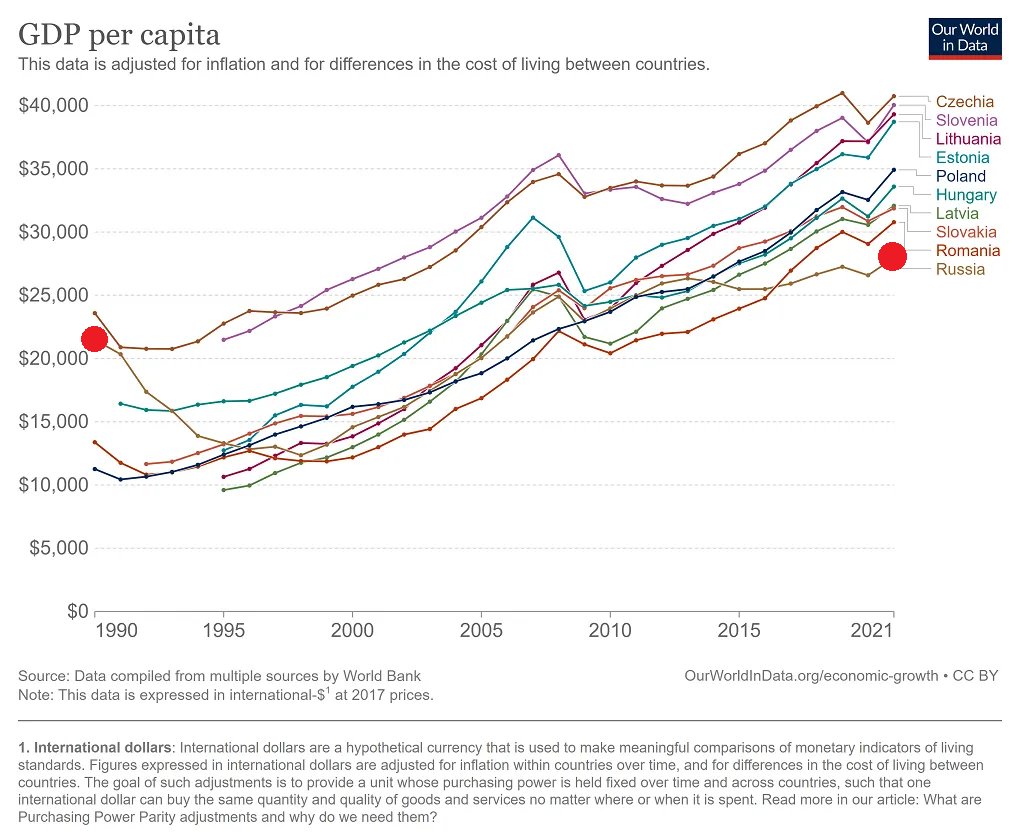
This graph tells a lot. At the beginning of the transition 30 years ago, Russians were richer than people in all newly-market East and North European countries. Now, they are poorer, on average, than all of them. For two major reasons: first, the depth of the 1990s crisis, and, no less important, second, the failure to grow after 2009. Putin first failed economic development, then started a war.
32 года с момента закрытия Семипалатинского полигона.
Масштабы катастрофы хорошо видны со спутника.
Дырка размером с футбольное поле, около 1 га площадью, и их чуть больше чем дофига.
Прекрасное наследие. Кто-то сейчас говорит про "мы вам города понастроили", а я хочу напомнить, что ещё и пастбища распахали, высушили Арал, отдали часть земли Узбекистану, устроили полигон под Сарышаганом и расстреляли ядерным оружием целую область.
С праздником! Пусть никогда больше подобное не повторится на земле свободных духом номадов.
From Komi to Kazakhstan the things of the Gulag still haunt the landscape. How do ordinary people experience and engage with these materials of the penal past? We have a new article out about it. If anyone is interested but needs access, let me know.
@stevenabarnes3 @LauraPiac8 Thanks! Would be good indeed to have your eyes on some of what we've done so far. Some local historians are able to access archival material.
@stevenabarnes3 @LauraPiac8 Thanks for sharing this Steve. There's a lot to study today. Can we get you back to Kazakhstan please? We are doing a lot of work on Karlag and it's legacies including properly mapping it. Would be great to have your input.
@bryan_gigantino@AllysonEdwards1@MSimanovskyy @jeff_hawn @APStylebook Yes, the moral imperative follows from the historical perspective but I don't think that's hidden. Bryan, could you please point me to readings that you consider the strongest arguments that the Soviet republics were not colonies? Trying to read up on this. Thanks!
@chbarts@LessCrime Hi Chris, if you're asking about my ghost crim paper, yes there is. The first four sentences of the intro sums it up through direct quoting a respondent, Semyon, who is an 'ordinary person' speaking all ordinary. I attach a screenshot. Just ask if you need access.
@LessCrime You're haven't critiqued the article. You've provided a snarky remark on an abstract. And you've tried to shame the BJC. One of your replies calls for it to publicly explain itself. Hence 'policing'. It's both poor form & bad academic practice.