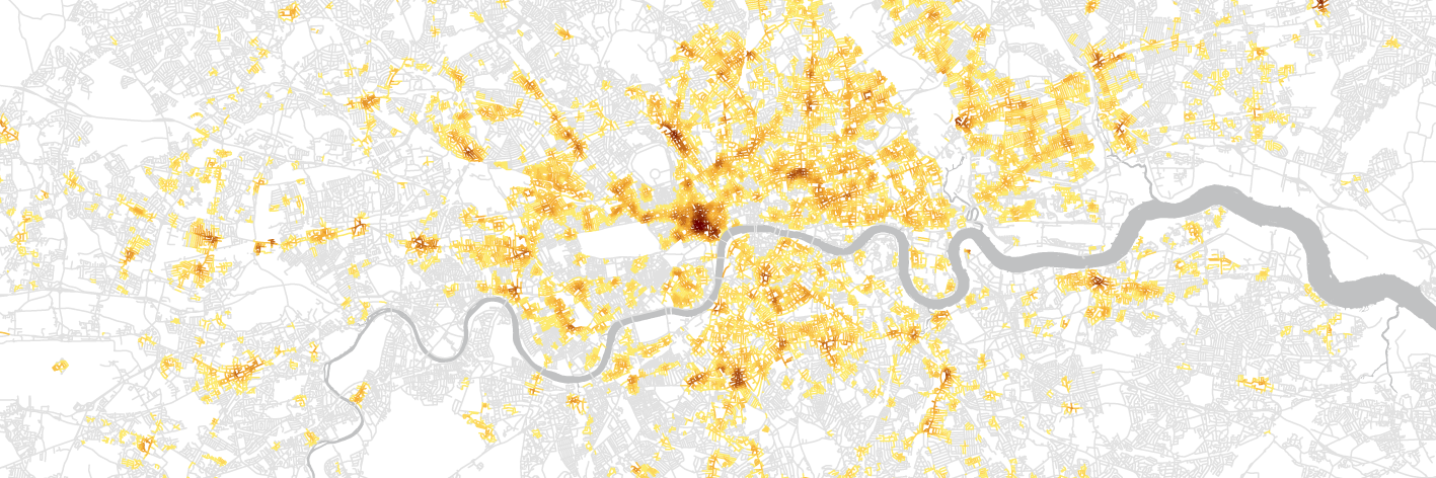
@Mark_A_K_W@FraserNelson For example, in 1995 the likelihood of being a victim of violence at least once in a year was about 4.7%, compared to 1.3% now. The chances of being a victim of theft have fallen from 31.4% to 7.1% over the same period.
@Mark_A_K_W@FraserNelson The Crime Survey does produce prevalence estimates (the likelihood of an average person being a victim of crime in any given year) and they show the same downward trend as in the charts Fraser posted.
…
@ThoughtMiss@c_r_5@BettyBoochichi2 Cops in the US discharge their firearms negligently hundreds (probably thousands, but there are no complete records) of times each year. British police firearms training is among the most rigorous in the world.
https://t.co/pdN29bkmSb
"The UK has fallen because two years ago someone who had probably never handled a gun before was photographed holding an empty gun the wrong way"
Is such a lame outrage chasing pile of tepid nonsense, you'd think the world had run out of things to be upset about.
This experiment finds a practitioner or global-south researcher without expensive institutional journal subscriptions can only access about 5% of criminology research.
Long past time more researchers (especially in the US) got serious about open access.
https://t.co/N7wAIcHefy
Useful short summary by @PizaEric of research evidence on the limited effect of CCTV (including automated numberplate recognition cameras) on crime and police outcomes.
https://t.co/wcjGnLH9tX
@Tomi_Tapio Sure, and it would have been good if the paper had reported the proportion of drivers who were speeding before and after, as well as the change in average speed. But it’s notable that the average before the alerts was over the speed limit and the average afterwards was under.
When a temporary speed trap (🇦🇺) appears on phone navigation apps (Waze, Google Maps, etc.), average vehicle speed on that road drops by about 4km/h.
One for academics still teaching students that offenders don't make rational choices, I guess. 😉
https://t.co/DbnA4nI7Zr
@Outcome_Code_18@onsenregime So, as I said before, it looks like the main cause of vetting failures was rushing to recruit people to meet the Home Office target and avoid the loss of funding missing the target would lead to. Although as it turned out the Met missed the target in any case.
Mark Rowley hits the nail on the head:
“If we're serious about policing London effectively … Why wouldn't we want people who understand and can connect with every part of one of the world's most globally connected cities?”
https://t.co/NOhTKpCrGs
@Outcome_Code_18@onsenregime Sorry for the slow reply– I don’t check Twitter mentions often.
It looks like the vetting review unit you mention overturned 114 cases (not all non-white) out of 5,073 applicants who weren’t properly vetted during the push to meet uplift targets.
https://t.co/QN3DIFBVir
The decision not to install immobilisers on Kia/Hyundai cars (🇺🇸) led to over 1.1 million extra vehicle thefts over 5 years.
Note: unlike other developed countries, the US doesn't require manufacturers to fit cars with immobilisers.
https://t.co/kSVfeDx7rk
@Ad_Victoriam25@obbsie There is no meaningful measure of population that makes London 15 times the size of Paris. The area covered by the Paris police has a population of about 5 million, compared to about 9 million for the Met in London.
@MarciusCoral@nofkngd@The_LCDC The Met has a slightly more restrictive policy on this for its own officers. But the bikes in the pictures aren’t from the Met so that policy wouldn’t apply.
All that said, it’s generally more considerate to park on yellow lines rather than in taxi/resident/disabled bays.
@MarciusCoral@nofkngd@The_LCDC The London Local Authorities and Transport for London Act 2003 (try saying that three times fast) exempts vehicles being used for police, fire and ambulance purposes (whether or not in an emergency) from parking restrictions in London.
I’ve heard Journal of Quantitative Criminology will soon require opens data/code…which will make it the only journal in the entire field to do so. In late 2026.
We should be embarrassed! Complete abrogation of basic scientific responsibility for decades. And seemingly no urgency from the editors of Criminology, Justice Quarterly, Criminology & Public Policy, or Journal of Experimental Criminology.
There was an effort to get there from the last two editors of criminology, but the new editors haven’t followed through.
Meanwhile, what year do you think the first preregistered RCT was published in the fields flagship journal Criminology? If you guessed 2026 then you win (proud to have authored that one 😁).
Embedding mental-health clinicians in police control rooms (🇺🇸) was associated with a small drop (about 7%) in police deployments to mental-health calls. Seems like this would have been a good opportunity for a randomised controlled trial, though.
https://t.co/ymEFcuU5MJ