Our demands are simple ,we want a strong, modern, fair and developed India. 🇮🇳
• Free & world class public education for every child
• Free, accessible & high-quality healthcare for all
• AQI below 25 in every major city
• Clean air, clean rivers & safe drinking water
• 5%+ GDP investment in R&D, science & innovation
• Indian universities in the global Top 100
• Strong public schools, libraries & research institutions
• End brain drain ,create opportunities at home
• Migration by choice, not compulsion
• A balanced mixed economy , strong private sector with strong public welfare
• Industrial Revolution 2.0, 3.0 & 4.0 revival in India
• Manufacturing led growth & high-skilled employment
• MSME empowerment with easy credit & lower compliance burden
• Energy security through renewables, nuclear & domestic production
• Global level infrastructure in transport, logistics & digital connectivity
• Smart villages & smart cities growing together
• Modern railways, ports, highways & public transport
• Affordable housing & planned urban development
• Zero hunger & zero extreme poverty
• Better wages, dignity & social security for workers
• Farmers with stable income, modern technology & market access
• Food processing & rural industrialization revolution
• Women’s safety, workforce participation & equal opportunity
• Skill development linked directly to industry needs
• AI, semiconductor, biotech & deep-tech leadership from India
• Data privacy, cybersecurity & digital rights protection
• Merit-based systems with innovative affirmative action
• Transparent & accountable governance at every level
• Faster, fairer & free judicial access for citizens
• Police, judicial & administrative reforms
• Strict action against corruption & misuse of taxpayers’ money
• Zero freebie politics,investment over appeasement
• Taxpayer money spent on productivity, education & healthcare
• Decentralization with empowered local governments
• National security with economic strength
• Strong diplomacy with strategic independence
• Sustainable growth without environmental destruction
• Sports, arts & culture investment at global standards
• Equal opportunities regardless of caste, religion, gender or region
• Dignity, opportunity & constitutional rights for every citizen
• Free judicial remedies and equal access to justice for every citizen
• Free and world-class education for all
• Free, accessible and high-quality healthcare for every Indian
• Beyond education, healthcare and justice, nothing else should be permanently free
• Welfare should empower citizens, not create dependency
• Taxpayers’ money must be invested in productivity, infrastructure, research and human development
• Subsidies should be targeted, transparent and temporary
• A nation grows through opportunity, innovation and merit , not freebie politics
A developed India is not a dream.
It is a national decision, a collective responsibility, and a generational mission. 🇮🇳
Why does so much Indian TV news sound permanently out of breath/breathless? Every debate feels like a national emergency, every headline like a battlefield dispatch. Anchors speak in rising crescendos, panels shout over one another, graphics often flash like alarm systems. The Iran war for instance is depicted on screen framed in flames and “mahayudh” screaming all over it. We are unique in this pitch of constant crescendo.
It is not merely a broadcasting style. It reflects something deeper about us.
Our television news evolved in the age of ratings wars, political spectacle and 24/7 competition for attention. Calmness came to be mistaken for dullness. Excitement became a business model.
Nationalism, grievance, triumphalism, insecurity, outrage, aspiration, wounded pride, civilisational assertion, all coexist simultaneously. The result is a media register that sounds permanently adrenalised.
But older Indian broadcasting was very different. Listen to archival Doordarshan clips from the 1970s or 80s. The tone was measured, restrained, even austere. News was delivered as information, not performance.
Television producers have learned that perpetual urgency creates emotional addiction. If everything is historic, explosive, shocking, decisive, existential, viewers remain physiologically engaged. The problem, of course, is exhaustion. Nations cannot permanently exist at emotional fever pitch without consequences for public discourse.
Today we often sound perpetually excited, perpetually mobilised, perpetually “on”. Perhaps television has become the mirror of a society itself in emotional overdrive: restless, aspirational, anxious, performative, seeking validation every minute.
The irony is that true authority rarely needs to shout. Confidence usually speaks in a quieter voice. So the raised pitch is not just acoustics. Today the country is increasingly performing itself to itself.
And yes, I know I am about to be eaten alive for saying this, on Indian television and social media alike. That is perfectly fine. But perhaps it is time we introspected a little on what we have become, and why we now seem unable simply to speak to one another in a normal tone.
Much of our television news increasingly resembles coloratura without pause: high-pitched, breathless, emotionally over-ornamented, forever climbing toward some impossible crescendo. Every night, the nation seems to be singing at full volume.
But societies cannot live permanently at operatic pitch. At some point, we must learn again the power of modulation, silence, restraint, and calm.
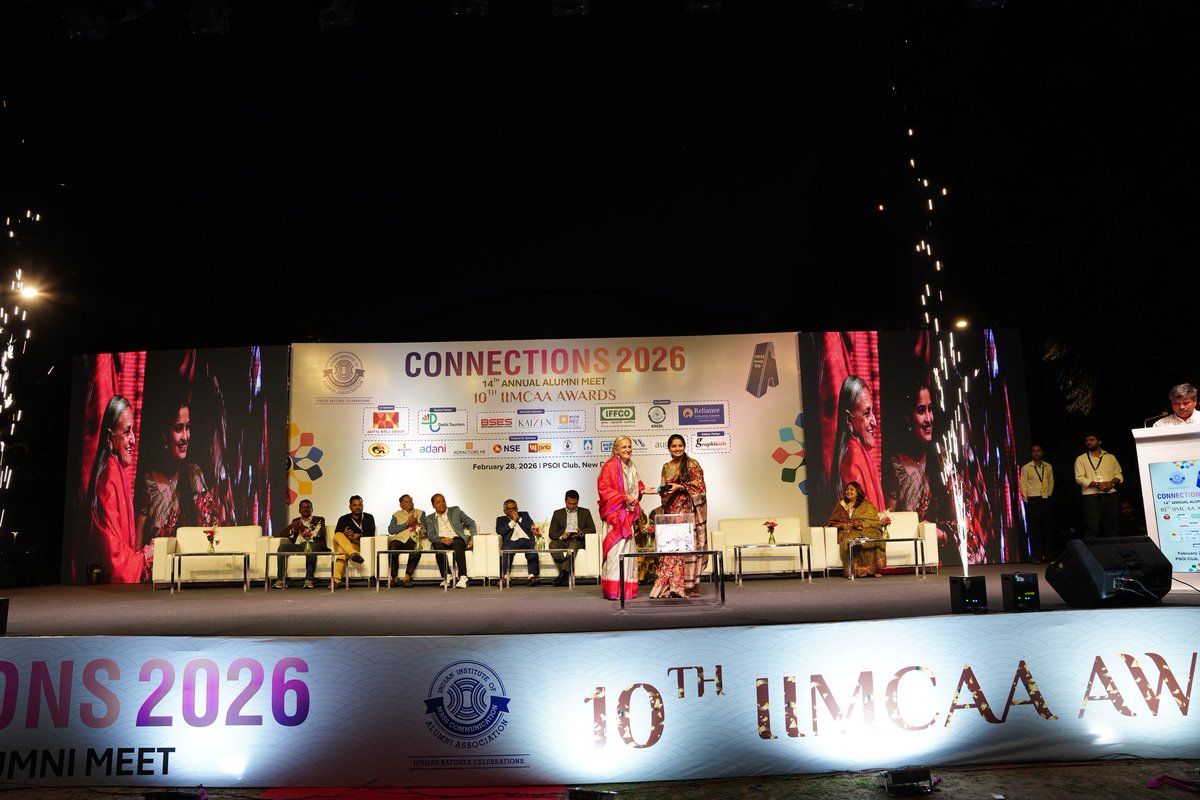
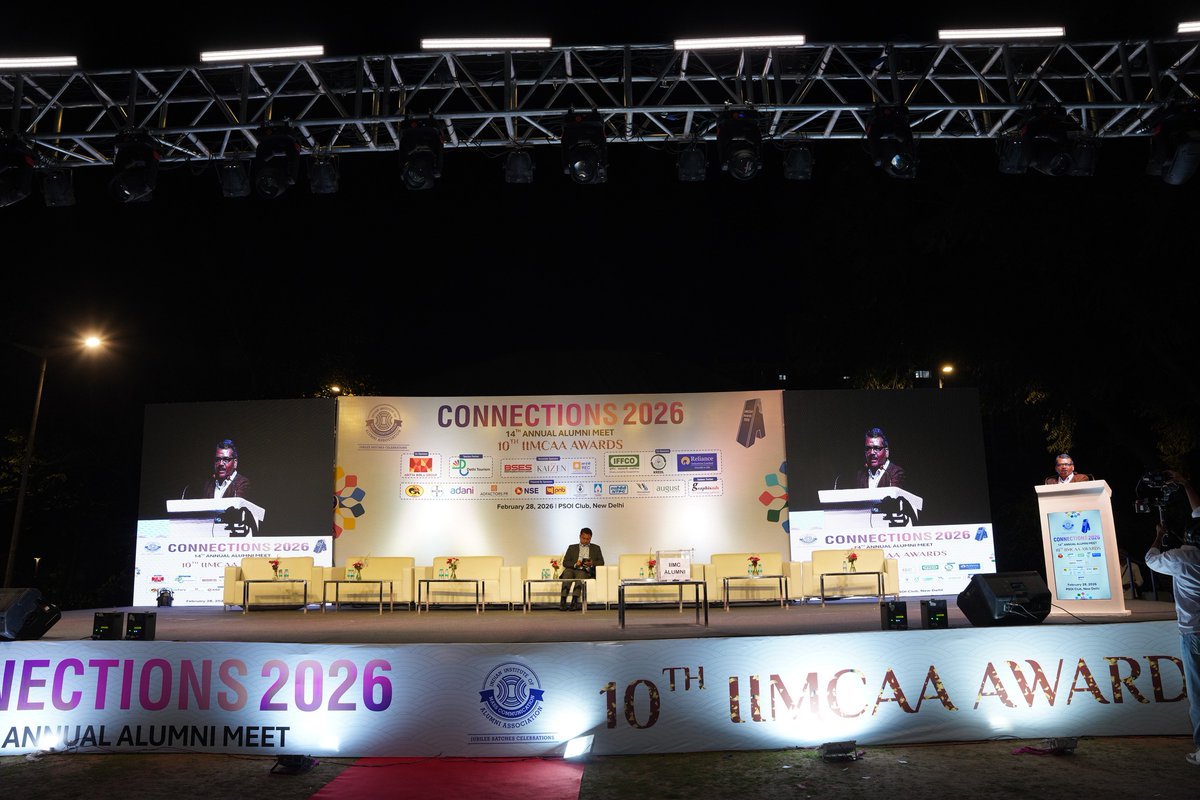
Delhi - 14th Connections & 10th IIMCAA Awards | 28 February 2026 #IIMC#IIMCAA#Connections#IIMCAAAwards 01/03
Full Album Link- https://t.co/vWSf5qRPm0
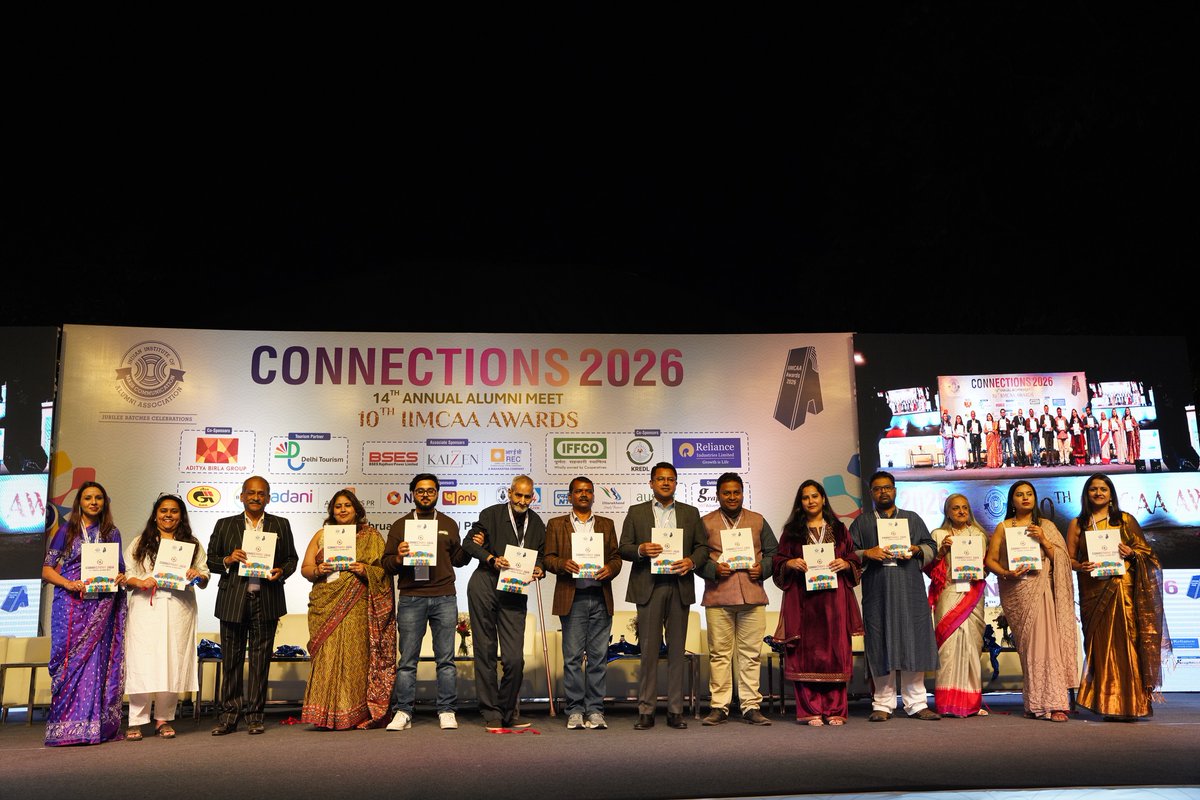
#WATCH | The Alumni Association of the Indian Institute of Mass Communication (IIMC) hosted the 14th Connections Meet, where winners of the 10th IIMCAA Awards were announced, and journalists were honoured for their contributions.
Maharashtra and Bihar received the Connecting Chapter Award, while DD News journalists were recognised with the Connecting Group Award. Golden and Silver Jubilee honours were also conferred on distinguished alumni.
@IIMC_India@IIMCAA #IIMC #IIMCAlumni #ConnectionsMeet #IMCAAwards
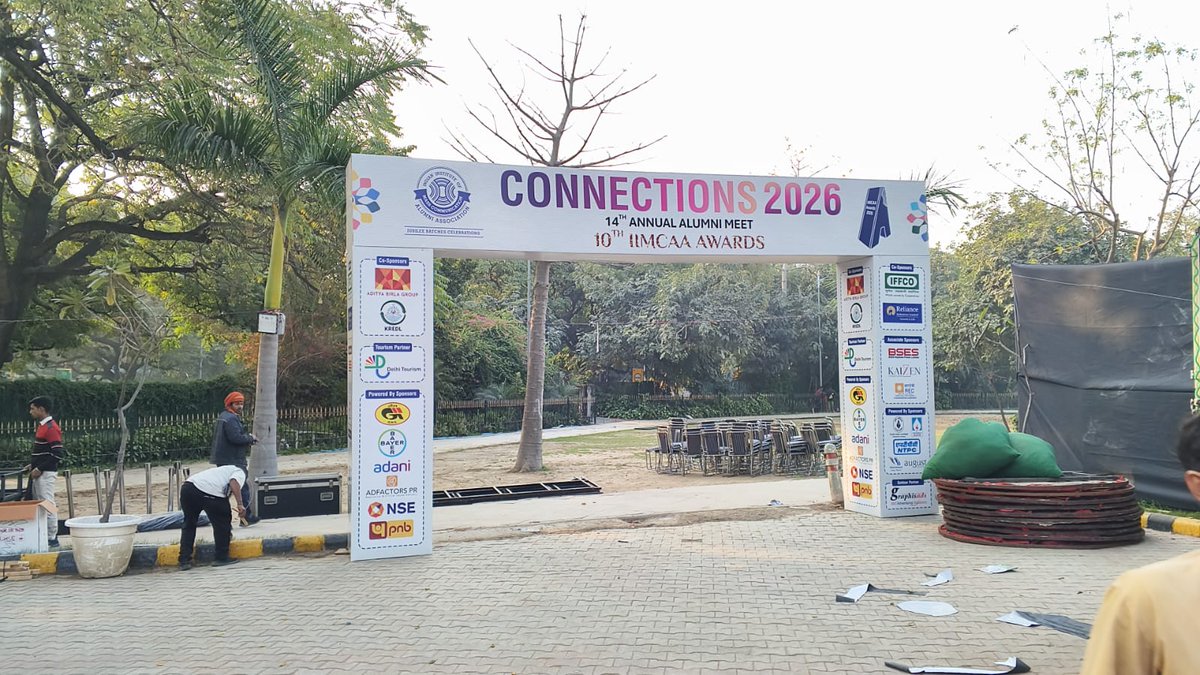
The wait is over. Connections 2026 is here!
Join us for the 14th Annual Alumni Meet and 10th IIMCAA Awards on February 28, 2026, PSOI Club, New Delhi.
A grand evening of reunions, recognition and celebration.
*Entry by invite only
#IIMC#IIMCAA#Connections#IIMCAAAwards
Ramesh kept his documents in a blue plastic folder inside the cupboard.
Electricity bills, insurance papers, tax returns all neatly arranged. Every March, he would sit at the dining table with a calculator and his reading glasses, making sure nothing was missed. His wife would tease him for being so particular.
“Even the government doesn’t care this much,” she once laughed.
But Ramesh cared.He believed that if you lived correctly, life would behave correctly in return.
You pay your taxes.
You buy health insurance.
You don’t bribe.
You stop at red lights.
You build things slowly, properly.
He had spent twenty-five years building small securities a modest flat in Mulund, a fixed deposit for his son’s education, a medical policy renewed every year without fail. He wasn’t rich, but he was careful. Careful felt close to safe.
That afternoon, the sun was harsh. The kind that makes the road shimmer.
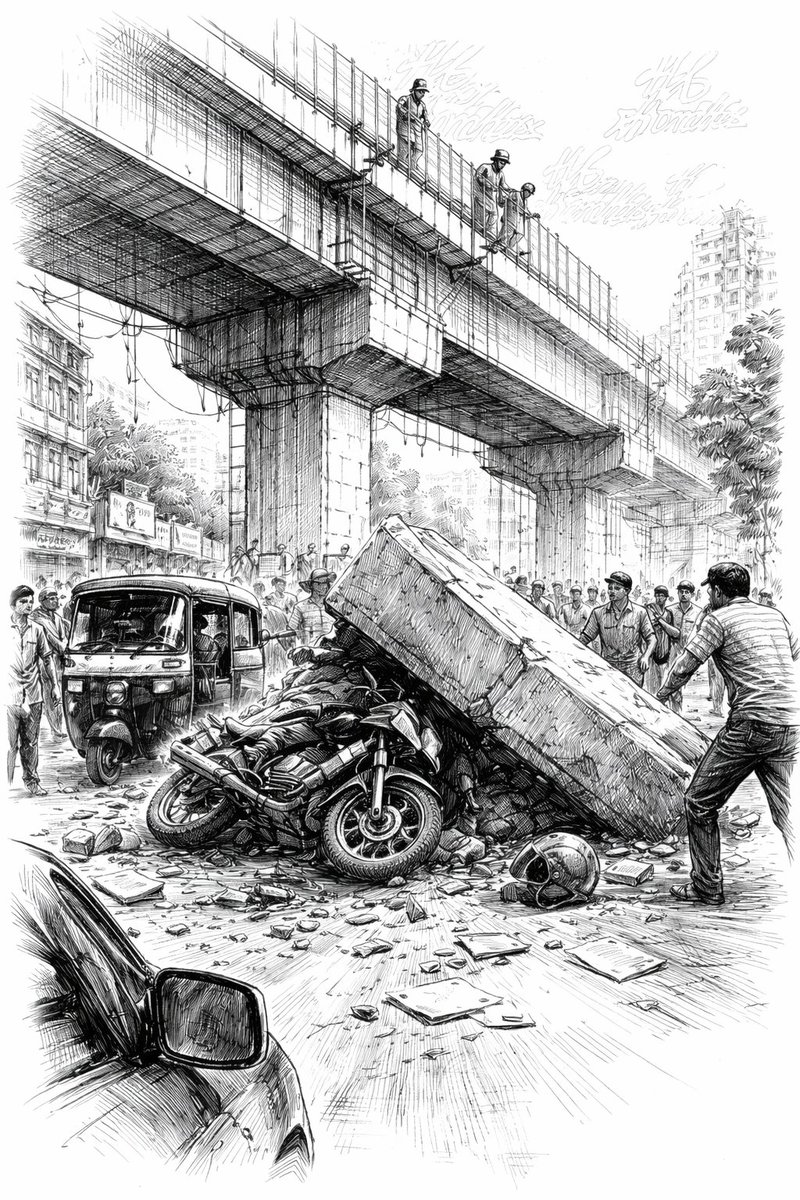
He stopped at the signal on LBS Road and wiped sweat from his neck. Above him, the metro line stood unfinished concrete segments resting on pillars like heavy thoughts paused mid-sentence. It had been under construction for so long that no one really noticed it anymore.
He had contributed to it too, in ways he never saw directly.
Through deductions on his payslip.
Through rising fuel prices.
Through the idea that the city would become better for his son.
The signal turned green.
He moved forward with everyone else.
The sound came suddenly a crack that didn’t belong to traffic. Some people later said they thought it was construction noise. Others said they felt the vibration before they heard it.
There was no time for understanding. Just weight.
Dust rose and covered everything in a pale cloud. For a few seconds, the afternoon disappeared.
When the air cleared, people were running. Someone was shouting instructions. A helmet lay on the road, cracked neatly down the middle.
By evening, traffic began moving again, squeezed around the debris. The metro pillars still stood. Work would pause, then resume. It always does.
At home, the blue plastic folder remained exactly where he had kept it.
The insurance policy was active.
The tax returns were up to date.
The investments were in order.
All the careful planning remained intact.
Only he did not.
In the days that followed, there were announcements, suspensions, fines. Numbers were discussed. Compensation was calculated. The language was official and steady.
But there is something unsettling about how quickly life can be translated into an amount.
Ramesh had done everything he was told a responsible citizen should do. He had believed that responsibility created a thin shield between you and chaos.
Yet that afternoon, beneath a structure meant to represent progress, the shield proved invisible.
The city will move faster one day when trains run overhead. People will look up at the smooth concrete and think of efficiency, convenience, growth.
Very few will think of the afternoon when something unfinished decided to fall.
And in a small flat in Mulund, a blue plastic folder will remain
perfectly arranged, carefully preserved presenting a quiet reminder that doing everything right does not always make a life heavier than concrete.
@priyankac19 What makes it even more relevant to India is the fact that the bulk of our
population is young and AI is taking/ going to take away entry level jobs. That will compound our unemployment issue. Policy makers must take note.
We seemed to be waging a war against education, literacy and scientific temper. This is no way to become a Vishwaguru or reap our demographic dividend!
The North vs South divide in the approach clearly shows the priorities. Watch..
The Press Club of India expresses profound sadness at the passing of its long-time member, Mark Tully.
An iconic journalist, a distinguished author and chronicler of India, Tully passed away at a private hospital in Delhi today, January 25. He was 90.
Known for his insightful reporting and deep understanding of India's social and political landscape, Tully's contributions to journalism, particularly during his tenure with the BBC, are invaluable. He was a pioneering legend of radio journalism.
Tully was an embodiment of fearless journalism which he conducted with utmost humility.
He was revered as the BBC’s “Voice of India” for his meticulous and timely reportage from a country which was then taking a slow and steady steps towards nation-building. After being sent back to London in 1969 following a ban on the BBC in India, Tully returned to New Delhi in 1971.
His return coincided with the 1971 India-Pakistan War and the Bangladesh Liberation War. His reporting during this time earned him immense credibility across South Asia.
His 1971 return to India marked the start of a long-term residency during which he covered major events in the sun-continent including the Emergency and Operation Blue Star India besides several prime ministerial assassinations in the region.
Someone who was passionate about ground-reporting and a storyteller par excellence, Tully was one of the few journalists present in Ayodhya on December 6, 1992, and he broke the news of the mosque's demolition to the world.
Tully authored approximately 10 books (both fiction and non-fiction) that explored India's social, political, and spiritual landscape.
One of his most famous works – No Full Stops In India – which was released in 1988, argued against the "Westernization" of India and celebrating its indigenous traditions.
For his contributions, he was knighted in the UK in 2002 and received the Padma Bhushan from India in 2005.
Our heartfelt condolences are extended to his family, friends, and all individuals who were touched by his remarkable journey and achievements. May he attain eternal peace.
@soumyavajpayee@IndiGo6E Indigo is selective in its approach to compensation @soumyavajpayee . My flight in Dec from Delhi to Bengaluru was also cancelled. I got the refund for the ticket but no compensation for the same. How badly they've treated all of us is a national disgrace
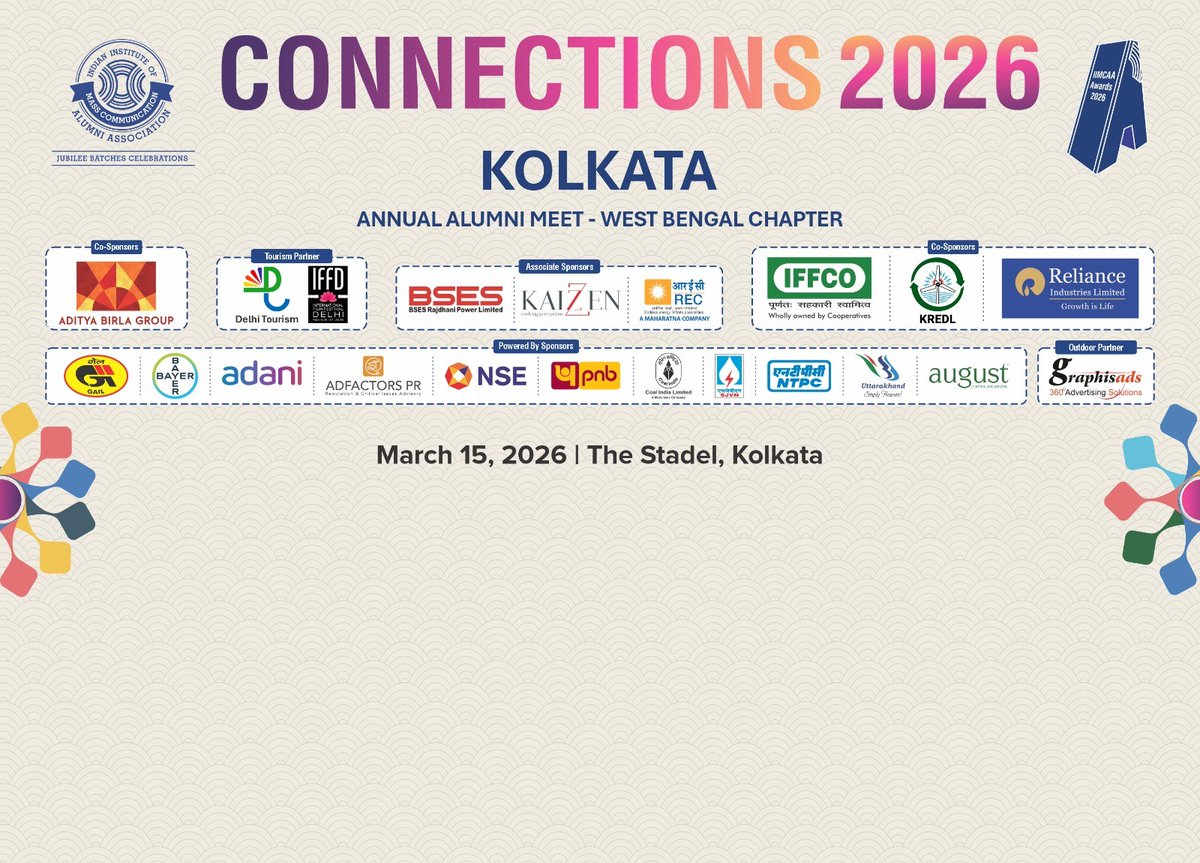
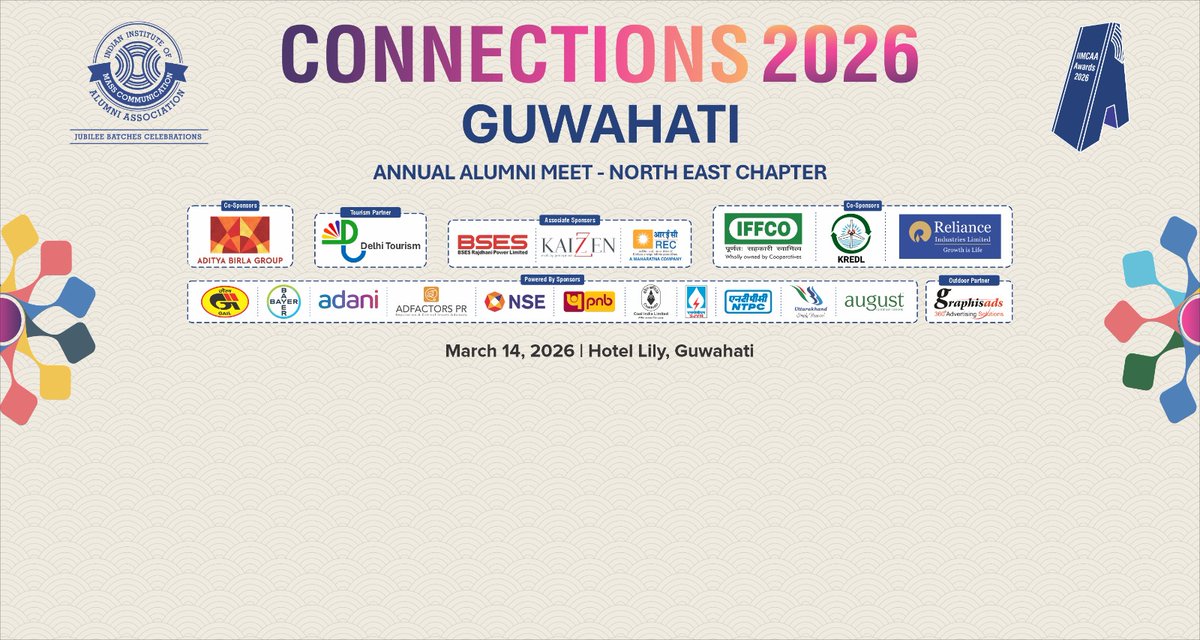
Connections Global Meet 2026 | 28th February, Saturday | PSOI Club, New Delhi
Scan QR Code or log on to https://t.co/pMu7MPXbyM to register based on the current status of your annual membership.
Lifetime Members will get an invite automatically closer to the date.
#IIMCAA #IIMCAAAwards #Connections