We are a women-led NGO working around women’s rights, equal opportunity for women, increased women's political participation & advancement of women voices
We're bursting with excitement and beaming with pride!
Your amazing support has earned us a prestigious recognition at the African Elites Awards, and we couldn't be more grateful!
This award is a powerful testament to the impactful work we do together, in making sure that the rights of women, girls and women with disabilities are protected, respected and included.
It fuels our passion to keep pushing for inclusivity, equality, and justice for our women.
Thank YOU for being a part of this incredible journey! Together, we are making a difference!
#africanelitesaward #awards #gsai
At GSAI, we recognize that climate action is inseparable from social justice, gender equality, and sustainable development. The impact of climate change is not felt equally, and vulnerable communities, especially women, children, and marginalized populations, often bear the greatest burden.
Nature is more than our environment, it is our lifeline, our protector, and our greatest teacher.
As the world marks World Environment Day 2026, we are reminded that the solutions to many of our climate challenges already exist within the ecosystems that sustain us. From forests and wetlands to rivers and biodiversity, nature continues to demonstrate resilience, balance, and renewal.
This year's theme challenges us to look to nature for inspiration, embrace sustainable practices, and commit to protecting our planet for generations to come. Building a resilient future requires collective action, inclusive leadership, and policies that place both people and the planet at the center of development.
Today, let us renew our commitment to environmental stewardship, climate justice, and a future where communities thrive in harmony with nature.
Because when we protect nature, we protect our climate. And when we protect our climate, we secure our future.
Inspired by Nature. For Climate. For Our Future.
#GSAI #WorldEnvironmentDay2026 #ClimateJustice #EnvironmentalSustainability
GSAI’s Women’s Weekly Dose this week focused on the topic “Money, Politics, and Gender: Are Women Being Priced Out of Leadership?” It was indeed Insightful and Enlightening.
Speaking on GSAI’s Weekly Women’s Dose Podcast Conversation on X (Twitter Space), Idrees Mahmud Gana spotlighted a critical reality: women are not just battling political competition, they are confronting a system where access to power is increasingly tied to access to money.
From costly nomination processes and expensive campaign logistics to delegate politics, patronage networks, and male-dominated political caucuses, the barriers facing women extend far beyond ambition. They are structural, financial, and deeply rooted in longstanding inequalities.
The conversation underscored a vital truth: waiving nomination forms alone cannot dismantle a system where women continue to face unequal access to wealth, property ownership, credit facilities, political networks, and decision-making spaces.
At Gender Strategy Advancement International (GSAI), we believe that democracy cannot thrive when economic barriers determine political participation. If women are being priced out of leadership, then inclusion remains incomplete.
The path to equitable representation requires more than promises, it demands intentional reforms, accessible political financing, stronger support systems, and a level playing field where leadership is determined by competence, vision, and service, not financial privilege.
Because when women are excluded from politics due to cost, democracy itself pays the price.
Missed the conversation? Listen here:
https://t.co/OOaYp35vmu
Follow @Genderstrategy for more impactful discussions.
#GSAI #WeeklyWomensDose #WomenInPolitics #PoliticalInclusion #GenderEquity
At GSAI, we believe that women’s leadership is fundamental to strengthening democracy, advancing social progress, and creating policies that work for everyone. From local communities to national assemblies, women bring valuable insights that enrich governance and drive meaningful change.
Annastacia Palaszczuk reminds the world that “Strong institutions are built when women are equally represented in power.”
Strong institutions are not built by exclusion; they are strengthened by inclusion.
When women are absent from decision-making tables, governance loses critical perspectives, lived experiences, and innovative solutions that are essential for sustainable development. Equal representation is not merely about fairness, it is about building institutions that are more responsive, accountable, and reflective of the societies they serve.
The future of strong institutions depends on breaking barriers, expanding opportunities, and ensuring that women are not just participants in governance but equal partners in shaping it.
Because when women are equally represented in power, institutions become stronger, democracy becomes deeper, and society becomes more just.
#GSAI #WomenInLeadership #InclusiveGovernance #GenderEquity
At GSAI, we believe that disability inclusion is a human rights imperative. It is about breaking barriers, challenging stereotypes, promoting accessibility, and creating systems where no one is left behind because of disability.
Dr. Adaora Onyechere Sydney-Jack reminds the world that, “Disability inclusion is not charity; it is justice, representation, dignity, and human rights.”
For far too long, disability inclusion has been framed as an act of goodwill rather than a matter of rights. But inclusion is not about sympathy, pity, or charity, it is about ensuring that every individual has equal access to opportunities, participation, representation, and dignity.
A truly inclusive society does not merely accommodate persons with disabilities; it recognizes their rights, values their contributions, amplifies their voices, and ensures their full participation in every sphere of life.
Justice is not achieved when opportunities are given as favors. Justice is achieved when inclusion becomes the standard, representation becomes the norm, and dignity is protected for all.
Because a society that includes persons with disabilities is not showing charity, it is demonstrating fairness, equality, and respect for human rights.
#GSAI #DisabilityInclusion #HumanRights #InclusionMatters
Today, on the International Day of Innocent Children Victims of Aggression, we pause to remember the millions of children around the world whose lives have been disrupted by war, displacement, exploitation, neglect, trafficking, abduction, and all forms of aggression. Behind every statistic is a child whose rights, innocence, and future deserve to be protected.
Every child deserves safety. Every child deserves protection. Every child deserves the chance to dream, learn, and thrive free from violence, conflict, abuse, and fear.
At Gender Strategy Advancement International (GSAI), we strongly condemn all acts of violence against children, including the recent reports of the kidnapping and abduction of children in Oyo State. Such acts are not only criminal but represent a grave violation of the rights, dignity, safety, and well-being of every child. No child should ever become a victim of insecurity, exploitation, or violence.
We call on relevant authorities to ensure swift action, accountability, and strengthened child protection mechanisms to safeguard vulnerable children and prevent future occurrences.
As we mark this important day, GSAI reaffirms its commitment to building a society where children are protected, heard, valued, and empowered. Protecting children is not merely a moral obligation, it is an investment in the future of our communities, our nation, and humanity as a whole.
Let us collectively strengthen our resolve to protect every child, defend their rights, amplify their voices, and create environments where they can grow in dignity, security, and hope.
Because every child protected today is a stronger future secured for tomorrow.
#GSAI #ChildProtection #ProtectEveryChild #EndViolenceAgainstChildren
At GSAI, we believe that women are not merely participants in governance, they are architects of progress. Their leadership strengthens institutions, enriches policymaking, and ensures that development responds to the needs of entire communities, not just a select few.
Sanna Marin reminds the world that “Modern governance demands diversity, and women must be at the center of it.”
The challenges of the 21st century require leadership that reflects the realities of the people it serves. From economic growth and social inclusion to climate action and democratic governance, diverse perspectives are no longer optional; they are essential.
Yet, women remain underrepresented in many of the spaces where critical decisions are made. When women's voices are absent, governance loses valuable insight, innovation, and lived experience that can drive more effective and inclusive solutions.
True inclusion is achieved when women are not on the margins of decision-making but at the center of shaping policies, influencing outcomes, and driving national development.
Because modern governance thrives on diversity, and sustainable progress depends on women leading, contributing, and transforming the future.
#GSAI #WomenInLeadership #InclusiveGovernance #GenderEquity #WomenInPolitics
At GSAI, we celebrate women whose courage transforms pain into purpose and whose voices inspire lasting change.
Oluwaseun Ayodeji Osowobi is one such trailblazer.
After surviving sexual violence while serving her country, she refused to be defined by her experience. Instead, she turned her story into a powerful movement for justice, dignity, and hope. Through the founding of the Stand to End Rape (STER) Initiative, Oluwaseun has become one of Nigeria’s most influential advocates against gender-based violence, championing the rights of women and girls across communities and creating safe spaces for survivors to heal, speak, and thrive.
Her work has impacted thousands of lives, challenged harmful norms, influenced policy conversations, and strengthened the fight against sexual violence, female genital mutilation, and gender inequality. From grassroots advocacy to global recognition, her journey reminds us that one voice can spark a movement and one act of courage can inspire a generation.
At GSAI, we honour Oluwaseun’s unwavering commitment to justice, survivor-centered advocacy, and the advancement of women's rights. Her story is a powerful reminder that leadership is not measured by titles, but by the lives transformed and the barriers broken.
Because when women rise from adversity to lead change, they do more than rewrite their own stories, they help reshape the future for others.
#GSAI #WomenWhoLead #GenderEquality #WomenRights #Leadership
This week on Women’s Weekly Dose, 🗓Join us tomorrow, Thursday, 4th June, 2026 |⏰ 6 PM | 📍 X space (Twitter).
As we dive deep into a powerful conversation that matters, "Money, Politics, and Gender: Are Women Being Priced Out of Leadership?”
Joining us is Idrees Mahmud Gana, a Political Science scholar and Researcher.
Tomorrow, He is going to address a critical question that sits at the intersection of democracy, inclusion, and leadership: “Money, Politics, and Gender: Are Women Being Priced Out of Leadership?”
In many democracies, the cost of political participation has become one of the greatest barriers to inclusion. For countless women with the vision, competence, and passion to lead, the challenge is not capability; it is access.
From expensive nomination forms and campaign financing to entrenched political structures and unequal access to resources, the political playing field remains far from level. As the cost of politics rises, many women are effectively pushed to the margins, limiting their ability to contest, compete, and contribute to decision-making processes.
At GSAI, we believe leadership should be determined by ideas, integrity, and impact, not by the size of one's financial resources. A democracy where only those who can afford to participate can lead is a democracy that excludes talent, diversity, and innovation.
As conversations around political reform and inclusive governance continue, it is time to ask difficult but necessary questions: Are women being priced out of leadership? And what must change to ensure that political participation is accessible to all?
Because when financial barriers silence women's voices, democracy loses. But when women are empowered to lead, societies gain stronger representation, better policies, and a more inclusive future.
Click: https://t.co/OOaYp35vmu to join in
#GSAI #WomenInPolitics #GenderEquity #InclusiveGovernance #WomenInLeadership
At GSAI, we believe that advancing women’s political participation is not about giving special privileges; it is about strengthening democracy itself. When women are empowered to lead, communities become more resilient, institutions become more responsive, and governance becomes more representative of the people it serves.
Martha Karua reminds the world that “A democracy that sidelines women is a democracy that limits its own progress.”
No nation can reach its full potential while half of its population remains underrepresented in the spaces where decisions are made.
Democracy is strongest when it reflects the diversity, experiences, and aspirations of all its citizens. Yet across many societies, women continue to face barriers that restrict their participation in politics, governance, and leadership. The result is not only exclusion, it is lost opportunities for innovation, inclusive policymaking, and sustainable development.
The future of democracy depends on inclusion. Progress depends on participation. And meaningful development depends on ensuring that women have an equal voice in shaping the decisions that affect our societies.
Because a democracy that works for women works better for everyone.
#GSAI #WomenInLeadership #InclusiveGovernance #GenderEquity
At GSAI, we believe that inclusive governance is essential to building a stronger and more equitable society. Women's participation in politics is not a matter of appearance; it is a matter of power, impact, and progress.
Political representation is not a symbolic gesture. It is about who sits at the decision-making table, whose voices shape policies, and whose priorities are reflected in governance.
Kemi Badenoch reminds the world that “Representation in politics is not about optics, it is about influence and outcomes.”
When women are absent from political leadership, communities lose valuable perspectives, and critical issues affecting families, livelihoods, education, healthcare, and economic empowerment risk being overlooked. True representation is measured not by the number of women visible in politics, but by their ability to influence decisions, drive reforms, and deliver meaningful outcomes.
As Nigeria continues the conversation on political inclusion and democratic reform, the goal must be clear: moving beyond visibility to meaningful representation that transforms lives and strengthens democracy.
Because when women have influence, communities thrive, institutions become more responsive, and democracy works better for everyone.
#GSAI #WomenInPolitics #InclusiveGovernance #GenderEquity
At GSAI, we believe that strong democracies are built on transparent processes, equal opportunities, and inclusive participation. When party primaries exclude women, young people, and other underrepresented groups, the consequences are felt throughout the entire democratic system.
Before Nigerians vote in 2027, political parties will decide who gets the opportunity to contest. That decision happens during party primaries, and if the process lacks transparency, accountability, and inclusion, democracy itself is weakened before election day.
This is why the Press Conference & Roundtable Dialogue on Inclusion, Transparency and Democratic Accountability of Political Party Primaries Ahead of the 2027 Elections is a conversation every Nigerian should pay attention to.
Theme: Audits on All Primaries
The future of Nigeria's democracy cannot be separated from the credibility of its political party primaries. Questions around fairness, internal party democracy, women's participation, youth inclusion, transparency, and accountability must be addressed now, not after candidates have already emerged.
This conversation is an opportunity to examine the state of political party primaries in Nigeria, demand greater accountability, and advocate for reforms that strengthen public trust in our democratic institutions.
Join the conversation on 3rd June 2026 on X Space and be part of the movement to ensure that Nigeria's democracy works for everyone.
Because credible elections begin with credible primaries.
The road to 2027 starts now.
Join in the conversation via this link: https://t.co/0M35Jb0b57
#GSAI #DemocraticAccountability #InclusiveGovernance #WomenInPolitics #Nigeria2027
As Nigeria prepares for the 2027 elections, Gender Strategy Advancement International (GSAI) expresses deep concern over the persistent and systemic exclusion of women from party primaries and political decision-making processes.
Democracy thrives on participation, representation, and equal opportunity. Yet, for too many women, the path to political leadership remains obstructed by structural barriers, unequal access to resources, discriminatory practices, and deeply rooted stereotypes.
The challenge is not a lack of capable women.
The challenge is a system that continues to make participation more difficult for women than for men.
Political parties serve as the gateway to public office. When women are excluded at the primary level, they are effectively excluded from leadership, governance, and the opportunity to shape national development.
At GSAI, we maintain that Nigeria cannot achieve inclusive governance while half of its population remains underrepresented in the spaces where critical decisions are made.
As the nation looks toward 2027, this is a defining moment to move beyond rhetoric and take deliberate action to dismantle barriers, expand opportunities, and ensure that women are not merely invited into the process but are empowered to compete, lead, and win.
Because a democracy that excludes women cannot fully represent the people it claims to serve.
Read more on: https://t.co/4QVt2YmacS
#GSAI #WomenInPolitics #2027Elections #InclusiveGovernance #ReservedSeatsBill
The deliberate exclusion of women from party primaries is more than a political concern, it is a direct challenge to democratic inclusion and equal representation.
Political parties are the gateway to leadership. When women are denied fair access to nomination processes, opportunities, and party structures, democracy itself is weakened.
Women constitute a significant percentage of Nigeria’s population and continue to contribute immensely to national development, yet their participation in political decision-making remains disproportionately low.
At Gender Strategy Advancement International (GSAI), we believe that inclusion must begin where leadership journeys start. Political participation cannot be selective, and representation cannot be achieved when barriers are intentionally or systematically placed before women.
The conversation is no longer about whether women are qualified to lead. The evidence is clear.
The real question is whether our political systems are prepared to create a level playing field where women can contest, compete, and win on equal terms.
A stronger democracy requires more women at the table, not fewer.
Because exclusion undermines representation, but inclusion strengthens democracy.
Read more on: https://t.co/Ysls9Ljz5J
#GSAI #WomenInPolitics #GenderEquity #InclusiveGovernance
At Gender Strategy Advancement International (GSAI), we believe that inclusive leadership is not just about representation; it is about results.
Samia Suluhu Hassan reminds the world that “When women lead nations, leadership becomes more responsive to people’s real needs.”
When women are present in leadership and decision-making spaces, governance becomes more responsive, policies become more people-centered, and development becomes more inclusive. Women bring unique perspectives, lived experiences, and solutions that strengthen institutions and address the realities faced by families, communities, and nations.
Yet across many democracies, women remain underrepresented where critical decisions are made. This is not merely a gender issue; it is a development challenge. A society cannot fully thrive when half of its population is excluded from shaping its future.
As we continue to advocate for greater political participation, gender-responsive policies, and inclusive governance, GSAI remains committed to amplifying the voices of women and creating pathways for leadership at every level.
Because when women lead, communities prosper, institutions become stronger, and democracy works better for everyone.
#GSAI #WomenInLeadership #InclusiveGovernance #GenderEquity
Promises made to women must not become promises forgotten.
Across Nigeria, commitments to gender inclusion, political participation, economic empowerment, and equal representation have too often remained on paper while women continue to face barriers in leadership, governance, and decision-making spaces.
The growing concerns raised by women representatives reflect a deeper challenge: the gap between political promises and meaningful action.
At Gender Strategy Advancement International (GSAI), we believe that true progress is measured not by declarations, but by outcomes. Women deserve more than symbolic commitments; they deserve policies, opportunities, and reforms that translate into real inclusion and tangible impact.
As conversations around representation and democratic participation continue, stakeholders must move beyond rhetoric and demonstrate the political will necessary to advance gender equity.
The future of inclusive governance depends on keeping promises, honoring commitments, and ensuring that women are not merely acknowledged but actively empowered.
Because when promises to women are broken, democracy loses credibility. When they are fulfilled, society moves forward.
Read more on: https://t.co/LDxy3yHMyO
#GSAI #GenderEquity #InclusiveGovernance #WomenPoliticalParticipation
A new week is another opportunity to lead with purpose, challenge limitations, and create impact that truly matters.
At Gender Strategy Advancement International (GSAI), we begin this week with a renewed commitment to advancing inclusion, amplifying women’s voices, promoting equity, and driving conversations that inspire meaningful change across Africa.
This week, may we continue to build systems that are fairer, communities that are more inclusive, and opportunities that leave no one behind.
Let this be a week of courage, intentional action, collaboration, and transformation.
Because real progress begins when advocacy turns into action.
Happy New Week from all of us at GSAI.
#GSAI #HappyNewWeek #Inclusion #GenderEquity #SocialImpact
Welcome to a new month filled with new possibilities, renewed purpose, and greater opportunities to create meaningful impact.
As we step into June, Gender Strategy Advancement International (GSAI) reaffirms its commitment to advancing gender equity, inclusive leadership, social justice, and sustainable development across communities.
May this month inspire us to challenge barriers, amplify unheard voices, strengthen partnerships, and continue building a future where every woman, girl, youth, and marginalized group has the opportunity to thrive.
Progress begins with courage.
Transformation begins with action.
And lasting change begins when we choose inclusion over exclusion.
As we embrace a new month, let us remain intentional, hopeful, and committed to creating the equitable society we envision.
Here's to a June of impact, growth, leadership, and possibilities.
Happy New Month from all of us at GSAI!
#GSAI #HappyNewMonth #June2026 #GenderEquity
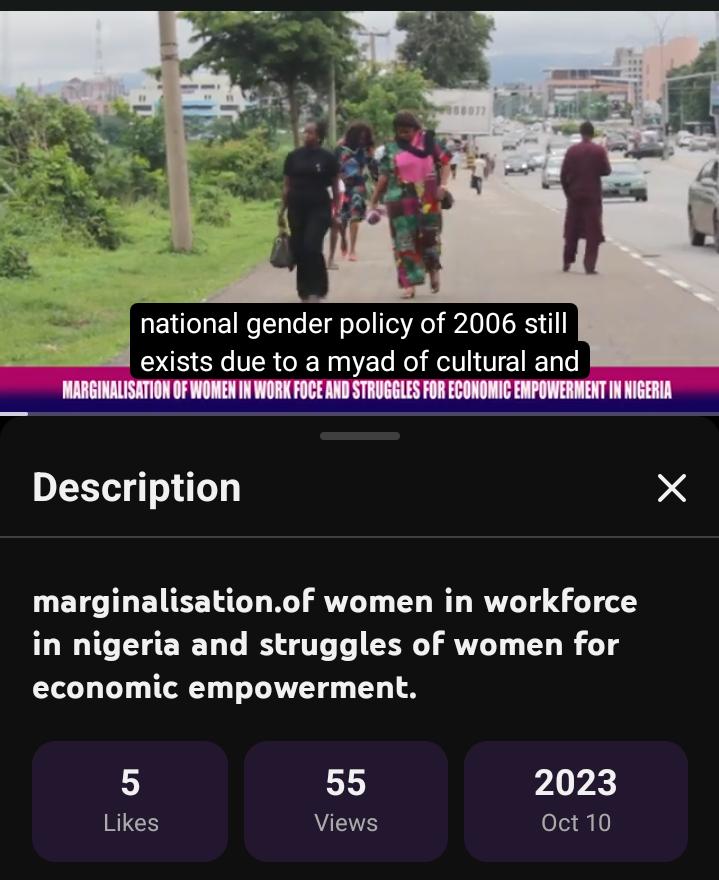
At Gender Strategy Advancement International (GSAI), we believe that economic empowerment is more than income; it is dignity, independence, inclusion, voice, and power.
Across Nigeria, millions of women continue to power homes, businesses, markets, and communities, yet remain structurally excluded from equal opportunities, leadership spaces, financial access, and economic decision-making.
The marginalization of women in the workforce is not just a gender issue; it is a national development challenge.
From unequal pay and workplace discrimination to limited access to funding, leadership roles, and economic resources, too many women are forced to work twice as hard for opportunities that should already be equal.
Yet despite these barriers, Nigerian women continue to rise.
They continue to build, lead, innovate, sustain families, and drive economic growth across sectors.
A society cannot truly prosper while half of its population continues to face systemic exclusion.
The future of Nigeria’s growth depends on creating systems where women are not marginalized but fully empowered to thrive, lead, and contribute without barriers.
Because when women succeed, economies grow, communities strengthen, and nations prosper.
Click the link below to watch more on the Investigative Report done by GSAI, proudly supported by Wole Soyinka Center for Investigative Reporting and MacArthur Foundation.
https://t.co/TAfJibxHtU
#GSAI #WomenEmpowerment #EconomicInclusion #GenderEquity #WomenInLeadership
“Too many African films still portray disability through rejection, pity, and dependency instead of strength and humanity.” — Johnson Flomo
At Gender Strategy Advancement International (GSAI), we believe storytelling shapes culture, and culture shapes inclusion.
For too long, disability narratives across films, media, and digital spaces have been framed through stereotypes that reduce persons with disabilities to objects of pity rather than individuals with dignity, talent, leadership, and agency.
Representation matters.
The stories we tell influence how society sees, treats, and includes people.
It is time to move beyond narratives of limitation and begin amplifying stories of resilience, innovation, contribution, excellence, and humanity.
Africa’s storytelling must evolve from sympathy to respect, from exclusion to inclusion, and from stereotypes to authentic representation.
Because disability is not a tragedy, exclusion is.
#GSAI #DisabilityRights #InclusiveStorytelling #RepresentationMatters #HumanRights